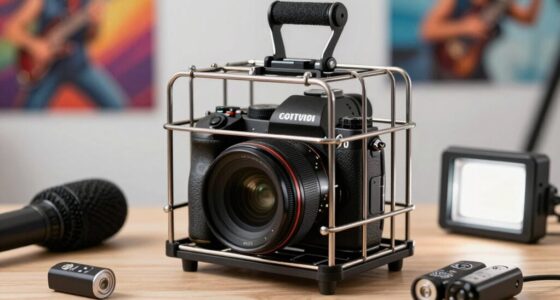
When buying equipment, you focus on reliability, efficiency, and industry standards for client work, ensuring consistent professional results. For passion projects, you prioritize features that inspire creativity and experimentation, with more flexibility in spending. Balancing these needs means upgrading gradually and planning ahead for both types of work. To truly understand how to navigate these choices and make smarter investments, you’ll find valuable insights if you keep exploring further.

Get sports gear delivered free with Prime
- Fast, free delivery on millions of items
- Prime Video, Amazon Music and more included
- Member-only deals all year
Key Takeaways
- Client work prioritizes reliable, professional-grade equipment to ensure consistent quality and meet industry standards.
- Passion projects focus on inspiring features and creative flexibility, often allowing for more experimental or budget-conscious choices.
- Upgrading equipment strategically balances long-term value and current project needs across both client and passion work.
- Equipment choices for clients emphasize durability and performance, while passion gear emphasizes innovation and personal interest.
- Decision-making involves weighing immediate project demands against long-term benefits and potential growth opportunities.

When you’re choosing equipment or tools, it’s important to recognize that buying for client work often has different priorities than investing in passion projects. Client work demands reliability, efficiency, and consistency, so your equipment upgrades should focus on durability and performance. You need gear that can handle tight deadlines and produce professional results every time. This means carefully considering budget considerations, balancing the need for quality with the costs involved. For client projects, cutting corners isn’t an option—your tools must meet industry standards to satisfy clients and uphold your reputation. Sometimes, this means investing in higher-end equipment or more advanced features to ensure smooth workflows and top-tier output.
On the other hand, passion projects are a different story. They’re driven by personal interest, creativity, or experimentation, so your investment might lean more towards what excites you rather than what’s strictly necessary. Equipment upgrades for passion projects can be more flexible; you might prioritize features that inspire you or allow for more experimentation, even if they aren’t essential. Budget considerations become more relaxed here, as you’re often working within your means, and the goal is to enjoy the process rather than meet client deadlines. It’s about fueling your passion and exploring new ideas, which sometimes means splurging on that fancy camera lens or that high-end editing software just because it sparks your creativity. Recognizing the importance of reliable equipment can help you make smarter decisions, especially when your passion project unexpectedly gains popularity or turns into a paid gig. Additionally, understanding the value of long-term investments can lead to better planning when upgrading your gear over time.
Furthermore, considering upgrading gradually allows you to build a versatile setup tailored to both personal and professional needs without overwhelming your budget. A thoughtful approach to equipment lifecycle can help extend the usability of your gear, making each purchase more strategic. However, it’s also worth noting that long-term investments in quality equipment can benefit both types of projects, ensuring you’re prepared for unexpected opportunities or growth. It’s crucial to recognize that sometimes, the line between these two worlds blurs. For example, if a passion project unexpectedly gains traction or turns into a paid gig, the equipment you initially bought for fun might need an upgrade to meet professional standards. Conversely, if you’re consistently working with clients, neglecting equipment upgrades to save money can hurt your efficiency and quality over time. Budget considerations shouldn’t be overlooked, but they must be balanced against the long-term benefits of reliable, high-quality tools.
Ultimately, your approach to buying equipment hinges on your goals. For client work, prioritize proven performance, durability, and industry standards, even if it means a bigger upfront investment. For passion projects, focus on what fuels your creativity and makes the process enjoyable, keeping budget considerations in mind but allowing room for experimentation. Recognizing these distinctions helps you make smarter choices, ensuring your gear supports your work and passions without unnecessary expense or compromise.
Products Worth Considering

GoPro HERO Compact Waterproof 4K Action Camera

GoPro HERO8 Black Waterproof Action Camera

GoPro LIT HERO Waterproof Action Camera with Built-In Light
As an affiliate, we earn on qualifying purchases.
Frequently Asked Questions
How Do Budget Constraints Differ Between Client Work and Passion Projects?
You’ll find that budget constraints differ considerably between client work and passion projects. In client work, there’s usually less budget flexibility, so you must prioritize creative investments carefully to meet client expectations without overspending. For passion projects, you’re often more flexible, allowing for greater creative investments, but that also means managing your budget wisely to sustain your enthusiasm and resources over time. Balancing both types requires strategic financial planning.
What Legal Considerations Are Unique to Client Versus Personal Projects?
When working on client projects, you must prioritize legal considerations like intellectual property rights and confidentiality agreements to protect your client’s assets and info. Personal projects, on the other hand, generally don’t involve such restrictions, allowing more creative freedom. Always guarantee you understand and adhere to these legal obligations in client work to avoid disputes or legal issues, while personal projects give you more flexibility in ownership and confidentiality.
How Does Project Scope Influence Purchasing Decisions in Each Context?
Your project scope dramatically influences your purchasing decisions, whether for client work or passion projects. In client work, strict scope limits protect creative freedom and manage risks, forcing you to buy precisely what’s needed. For passion projects, broader scope offers more creative freedom, but risk management becomes essential to avoid overspending. You adapt your purchasing strategy accordingly, balancing ambition with practicality to guarantee your vision stays within manageable bounds.
Are There Specific Tools Better Suited for Client Work Versus Passion Projects?
For client work, you’ll want tools with strong software upgrades and excellent hardware compatibility, ensuring stability and professional quality. You might prefer enterprise-level software that’s regularly updated and compatible with your hardware setup. For passion projects, you’re often more flexible, so affordable or experimental tools with less frequent upgrades work fine. Prioritize software that aligns with your hardware and offers reliable support, especially when working on professional client projects.
How Do Deadlines Impact Purchasing Priorities for Each Type of Project?
Deadlines shape your purchasing priorities by balancing creative freedom and emotional investment. For client work, tight deadlines push you to buy efficient, professional tools that guarantee timely delivery, often limiting creative freedom. Conversely, passion projects allow more flexibility, so you invest emotionally in unique tools that foster creativity without strict time constraints. Deadlines influence whether you prioritize speed and practicality or emotional fulfillment and artistic expression, shaping your buying decisions accordingly.
Conclusion
So, whether you’re splurging on client work or pouring your soul into passion projects, remember—every purchase isn’t just a transaction; it’s a battle between practicality and passion, a decision that could reshape your entire creative universe. Choose wisely, because one wrong move could turn your vibrant dreams into dull, forgotten relics. In this wild, unpredictable ride of creation, your spending habits wield more power than you realize—capable of building empires or demolishing your artistic soul in an instant.