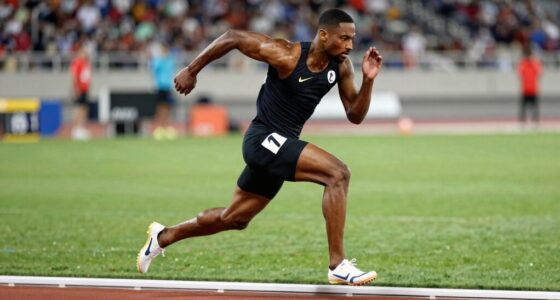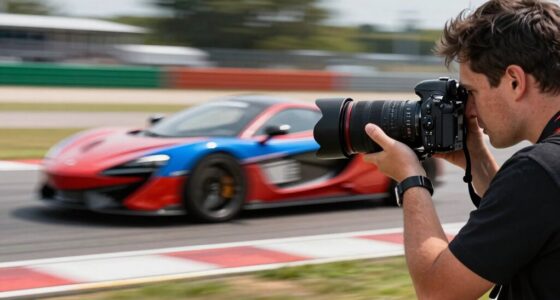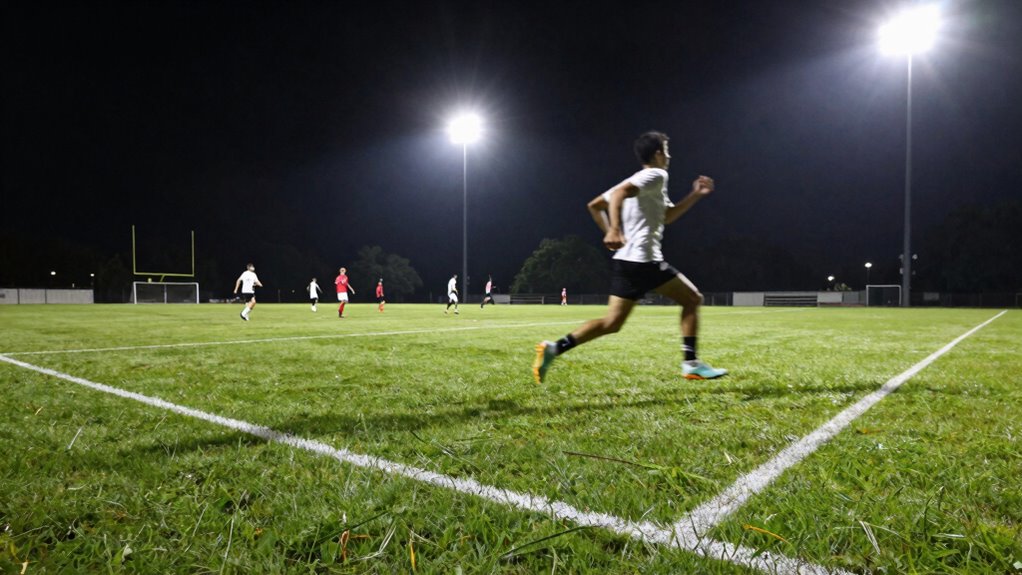

To shoot under stadium lights efficiently, set your camera to a wide aperture (f/2.8 or lower) and keep ISO high but balanced (around 1600-3200) to handle low light. Use shutter speeds of at least 1/500 sec to freeze motion, and switch to continuous shooting mode for action shots. Position yourself to avoid glare, angle to reduce shadows, and keep your gear ready for quick adjustments. If you keep these tips in mind, you’ll capture sharp, well-exposed images fast—more useful advice follows.

Get sports gear delivered free — and shop member deals
- Fast, free delivery on millions of items
- Access to Prime Big Deal Days deals on October 6–7
- Prime Video, Amazon Music and more included
Key Takeaways
- Pre-set your camera with optimal settings (wide aperture, high ISO, fast shutter speed) before action begins.
- Position yourself to avoid direct glare into stadium lights and minimize lens flare.
- Use continuous shooting mode to capture multiple shots quickly during fast-paced moments.
- Adjust exposure and metering settings rapidly as lighting conditions change.
- Equip lenses with image stabilization and use lens hoods to maintain contrast and reduce glare.
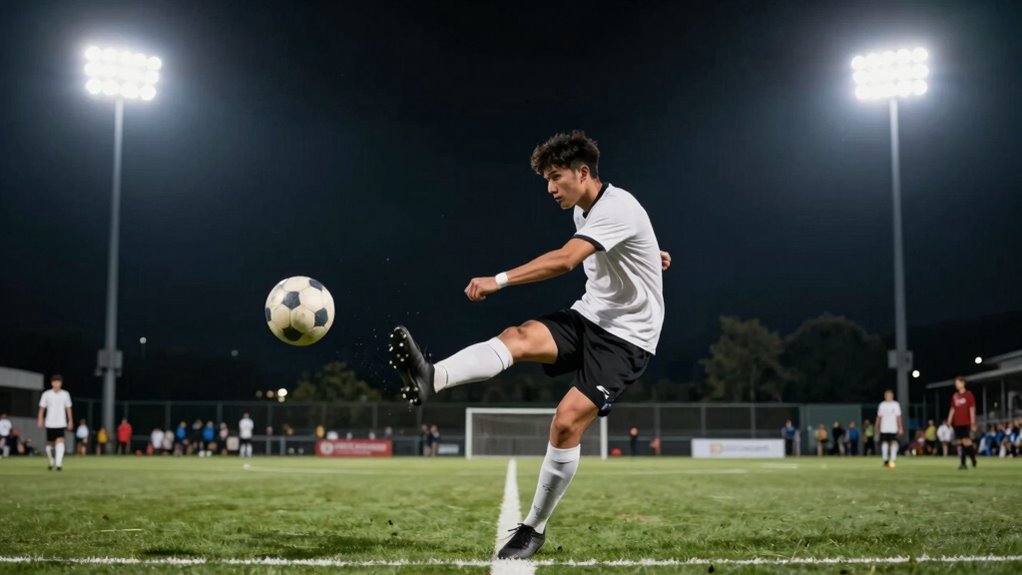
Shooting under stadium lights can be challenging, but with the right techniques, you can capture sharp, well-exposed images even in low-light conditions. The key is understanding how to optimize your lighting techniques and camera settings to adapt to the uneven and often harsh lighting environment of a stadium. First, you want to prioritize your camera settings for the best results. Use a wide aperture, such as f/2.8 or lower if possible, to let in as much light as you can. This allows your camera to gather more illumination without needing excessively high ISO settings. Speaking of ISO, set it to a level that balances exposure and noise. Typically, starting around ISO 1600 or 3200 works well, but you may need to increase it if the lighting is particularly dim. Be cautious, though—higher ISO can introduce noise, so consider using noise reduction in post-processing if necessary.
Next, adjust your shutter speed to freeze motion without blurring. Since players are constantly moving, aim for at least 1/500th of a second or faster for action shots. If you’re photographing a slower moment, you can go slightly slower, but keep in mind that too slow a shutter speed will result in motion blur. To help with this, switch your camera to continuous shooting mode, so you can take multiple shots in quick succession and increase your chances of capturing a perfect moment. Additionally, understanding your low-light capabilities can help you make quicker adjustments and optimize your shots efficiently. Familiarity with your camera’s exposure settings can also significantly improve your shooting speed during dynamic moments.
Lighting techniques also play a significant role. Stadium lights can be uneven or create harsh shadows, so position yourself to take advantage of the most even lighting. If possible, avoid shooting directly into the lights, which can cause flare and reduce contrast. Instead, angle yourself to sideline or behind the lights, which helps illuminate your subject evenly and reduces glare. Using a lens hood can also block stray light and improve contrast.
In addition, consider using a lens with image stabilization if your camera or lens has that feature. This helps counteract camera shake, especially when using slower shutter speeds. Finally, stay alert and ready to adjust your settings quickly. Lighting conditions can change as the game progresses or as the sun sets, so being flexible with your camera settings and understanding your camera’s capabilities ensures you don’t waste time fiddling during critical moments. A light metering technique can also assist in achieving proper exposure in tricky lighting situations. With these lighting techniques and smart camera settings, you’ll be better prepared to shoot under stadium lights efficiently and achieve sharp, well-exposed images every time.
As an affiliate, we earn on qualifying purchases.
Frequently Asked Questions
What Camera Settings Are Best for Stadium Lighting?
You should set your camera to a fast shutter speed, around 1/500 or higher, to freeze action. Use a wide aperture like f/2.8 to let in more light, and boost ISO as needed, but don’t go too high to avoid grain. Keep your equipment well-maintained and use appropriate camera accessories like a fast lens and sturdy tripod. Regular equipment checks guarantee ideal performance during stadium lighting conditions.
How Do I Prevent Motion Blur in Low Light?
To prevent motion blur in low light, you need to focus on camera stabilization and motion reduction. Use a tripod or a stable surface to keep your camera steady, and enable image stabilization if available. Increase your shutter speed to freeze motion, but balance it with a suitable ISO and aperture to maintain proper exposure. These steps will help you capture sharp images even in challenging stadium lighting conditions.
What Lens Is Ideal for Night Sports Photography?
For night sports photography, you want a fast lens with great lens versatility, like a 24-70mm f/2.8 zoom. It handles different situations and offers wide apertures for low light. Regular equipment maintenance guarantees your lens stays clean and free of dust, which is key for sharp images. This combo helps you capture clear, vibrant shots under stadium lights without wasting time adjusting gear or battling poor image quality.
How Can I Improve Focus in Bright Stadiums?
To improve focus in bright stadiums, stay alert to the stadium atmosphere and anticipate player movements. Use autofocus modes like continuous or AI Servo to track fast-moving players effectively. Keep your lens and camera settings optimized for bright conditions, such as a narrow aperture and fast shutter speed. Practice panning smoothly to follow quick actions, helping your camera lock focus precisely and capture sharp images amidst the dynamic energy of the game.
What’s the Best Way to Handle Glare From Stadium Lights?
Ever wonder how to handle glare from stadium lights effectively? You should use glare reduction techniques like shading your lens or adjusting your angle to minimize direct light. Additionally, employing light diffusion filters can soften harsh lighting and improve image clarity. By combining these methods, you’ll reduce glare, enhance your shots’ quality, and maintain focus despite challenging lighting conditions. Isn’t it worth trying these strategies for better stadium photography?
image stabilization lens for sports photography
As an affiliate, we earn on qualifying purchases.
As an affiliate, we earn on qualifying purchases.
Conclusion
Shooting under stadium lights is like steering through a lively dance—your camera needs to move smoothly and confidently. Stay prepared, adjust your settings quickly, and don’t let the bright glare throw you off. With practice, you’ll dance effortlessly through those challenging moments, capturing stunning shots without wasting time. Remember, each shot is a step in your performance, so keep your rhythm steady and enjoy the spotlight—your perfect shot is just a click away.
camera lens hood for low light shooting
As an affiliate, we earn on qualifying purchases.
As an affiliate, we earn on qualifying purchases.
high ISO camera for sports events
As an affiliate, we earn on qualifying purchases.
As an affiliate, we earn on qualifying purchases.
NFL season / tailgating Picks
team gear
As an affiliate, we earn on qualifying purchases.