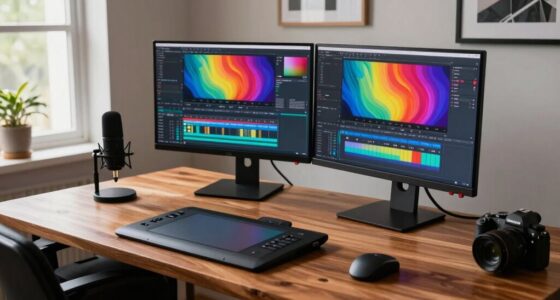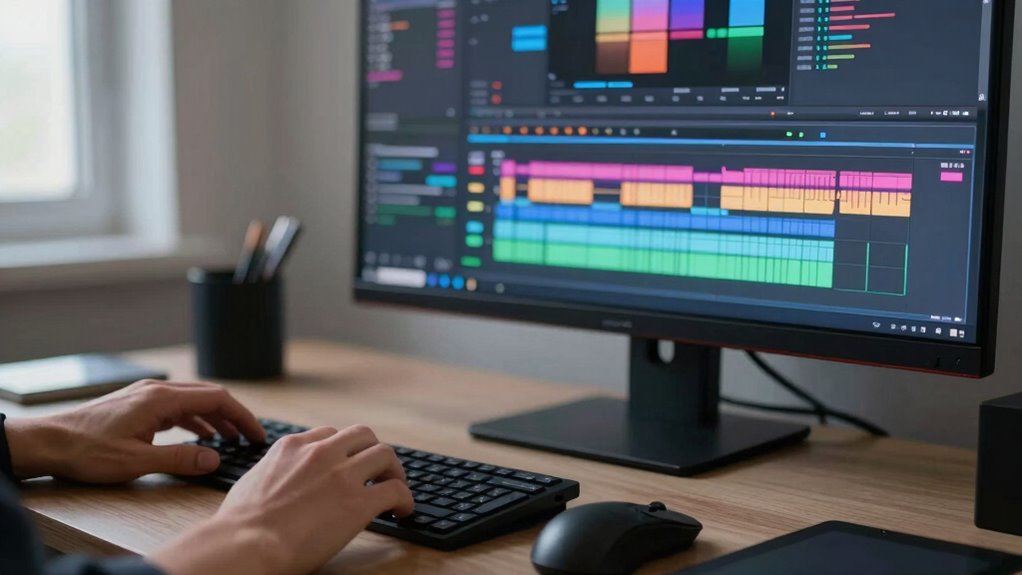

When your edit timeline feels slow, it can seriously disrupt your workflow and creativity. Sluggish performance isn’t just about your hardware; poorly optimized software, cluttered interfaces, or inefficient system architecture also play a role. These issues cause delays, making simple tasks feel frustrating and breaking your focus. Fixing these problems can boost your editing speed and confidence. Keep looking into these causes, and you’ll discover ways to make your editing smoother and more efficient.

Get sports gear delivered free with Prime
- Fast, free delivery on millions of items
- Prime Video, Amazon Music and more included
- Member-only deals all year
Key Takeaways
- Poorly optimized rendering can cause lag regardless of hardware, disrupting editing flow.
- User interface design impacts responsiveness, making simple actions feel sluggish.
- Software architecture influences system responsiveness, affecting timeline interactions and overall efficiency.
- Hardware strength alone isn’t enough; software efficiency and optimization are crucial.
- Delays during editing tasks break focus and reduce productivity, emphasizing the importance of smooth performance.
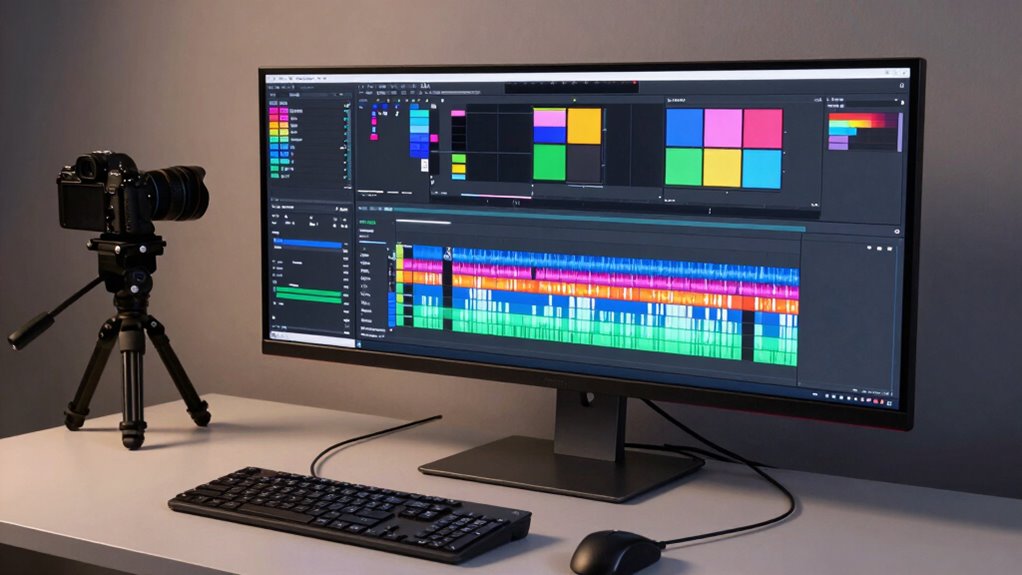
When your edit timeline feels sluggish, it’s tempting to blame your hardware or software, but the real issue often runs deeper. It’s not just about the power of your computer or the speed of your editing software; it’s also about how well the system’s design supports your workflow. Rendering performance plays a significant role here. When your timeline lags, it’s often because the software struggles to process complex edits smoothly. This isn’t solely a hardware problem—it’s also about how efficiently the software renders previews and final outputs. If rendering tasks are poorly optimized, even a high-end machine can get bogged down, causing delays that frustrate your editing rhythm.
Optimized rendering and thoughtful software design keep your timeline smooth and your creativity flowing.
But beyond raw processing power, user interface design has a profound impact on your experience. A cluttered, unintuitive interface can slow you down more than you realize. When tools are hard to find or poorly organized, you waste precious time searching for the right feature or navigating menus. Over time, this friction can cause your entire editing process to feel sluggish, not because your hardware can’t handle the workload, but because the interface doesn’t support your efficiency. A well-designed user interface streamlines your workflow, allowing you to focus on creative decisions instead of fighting the software. Additionally, software architecture influences how well your editing environment adapts to different workflows and hardware configurations, impacting overall responsiveness. Understanding how your software manages timeline interactions can help you identify bottlenecks and optimize your setup for smoother editing.
It’s worth considering how your software manages timeline interactions. When you drag clips, make cuts, or add effects, how responsive is the interface? If there’s lag or delay, it disrupts your focus and hampers productivity. Good UI design minimizes these disruptions by providing immediate feedback and intuitive controls, which helps maintain your editing momentum. If your software’s interface feels cumbersome, it can make even simple edits seem like a chore, amplifying the perception that your system is slow. Recognizing the importance of rendering efficiency can help you identify bottlenecks and optimize your setup for smoother editing. Properly managing system responsiveness is also crucial to prevent unnecessary slowdowns during intensive tasks.
As an affiliate, we earn on qualifying purchases.
Frequently Asked Questions
How Can I Identify if My Hardware Is Causing the Slowdown?
You can identify if your hardware’s causing the slowdown by running hardware diagnostics on your system. If the diagnostics show your CPU, RAM, or storage are underperforming, that’s likely the culprit. Consider system upgrades like adding RAM or switching to a faster SSD. Upgrading hardware often boosts performance, making your editing workflow smoother. Regular diagnostics help you stay ahead of issues before they impact your editing timeline considerably.
Are There Specific Software Settings That Impact Timeline Performance?
Like a well-oiled machine, your software settings can markedly impact timeline performance. To optimize workflow, check your playback resolution and disable high-quality rendering during editing. Adjust user interface preferences to reduce visual effects that slow down performance, such as turning off unnecessary thumbnails or previews. These tweaks help your timeline run smoothly, ensuring a seamless editing experience. Small changes can make a big difference—don’t overlook these key settings.
Does Background Processing Affect Editing Responsiveness?
Yes, background processing can impact your editing responsiveness. When your software runs rendering artifacts or manages cache in the background, it uses system resources that could otherwise improve real-time playback. Proper cache management helps keep your timeline smooth, but if background tasks are heavy, they slow down responsiveness. To optimize, pause unnecessary background processes, clear cache regularly, and make certain your system has enough resources for smooth editing.
How Do Plugin Conflicts Influence Timeline Speed?
Imagine your timeline as a bustling highway; plugin conflicts act like sudden roadblocks, slowing traffic and causing jams. These conflicts disrupt timeline optimization by overloading your system with incompatible processes, leading to lag and delayed responsiveness. To keep things flowing smoothly, identify and resolve plugin conflicts promptly. Streamlining your plugins guarantees your editing highway stays clear, so your timeline runs swiftly and your workflow remains efficient.
Can External Storage Solutions Improve Edit Timeline Performance?
Yes, external storage solutions like cloud storage and external drives can improve your edit timeline performance. Cloud storage offers quick access to files without overloading your system, while external drives provide faster data transfer rates, reducing lag. Using high-speed external drives minimizes read/write bottlenecks, leading to smoother editing. Incorporating these solutions helps you work more efficiently, especially with large files or complex projects.
editing software optimization tools
As an affiliate, we earn on qualifying purchases.
As an affiliate, we earn on qualifying purchases.
Conclusion
Understanding why your edit timeline feels slow is like finding the missing piece of a puzzle; it unlocks smoother editing. When you recognize the factors at play, you can optimize your workflow and avoid frustration. Think of it as tuning an instrument—you’ll perform better and create more seamlessly. Don’t let a sluggish timeline hold you back; instead, tackle the causes head-on and make your editing experience as swift as a cheetah in full sprint.
high performance SSD for editing
As an affiliate, we earn on qualifying purchases.
As an affiliate, we earn on qualifying purchases.
ergonomic editing keyboard and mouse
As an affiliate, we earn on qualifying purchases.
As an affiliate, we earn on qualifying purchases.
NFL season / tailgating Picks
team gear
As an affiliate, we earn on qualifying purchases.