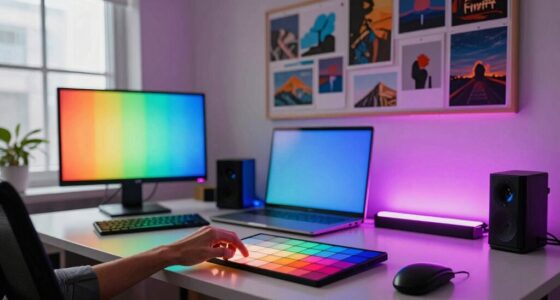
To manage mixed lighting confidently, start by mastering the fundamentals of balancing color temperature and controlling light layering. Observe your natural and artificial sources carefully, adjusting white balance and positioning lights to create harmony. Choose bulbs and fixtures that match your desired mood, and use diffusers or dimmers to fix common issues like harsh shadows or hotspots. With practice, you’ll develop a keen eye for fine-tuning every detail, and if you keep exploring, you’ll master professional lighting techniques.

Get sports gear delivered free with Prime
- Fast, free delivery on millions of items
- Prime Video, Amazon Music and more included
- Member-only deals all year
Key Takeaways
- Balance color temperatures between natural and artificial light to maintain consistent scene hues.
- Use white balance adjustments or gray cards to accurately gauge and correct color shifts.
- Control light layering with modifiers and positioning to soften shadows and add depth.
- Match artificial light temperature to daylight (~5500K) for seamless integration.
- Fix mixed lighting issues by diffusing harsh shadows, adjusting diffusion, and employing dimmers.
adjustable dimmer switches for LED bulbs
As an affiliate, we earn on qualifying purchases.
As an affiliate, we earn on qualifying purchases.
Master the Basics of Managing Mixed Lighting
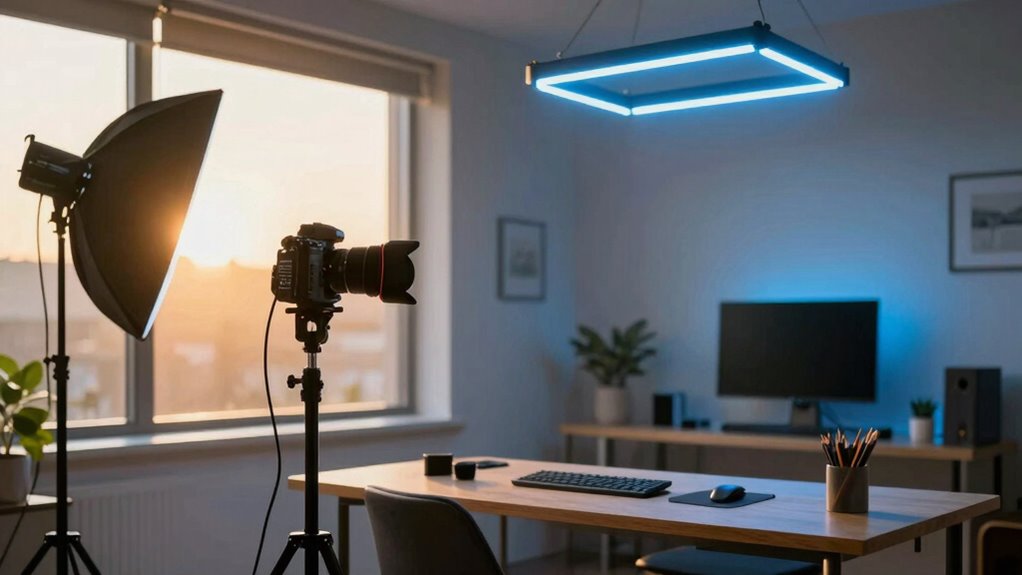
Understanding the fundamentals of managing mixed lighting is essential for achieving consistent and high-quality photos. One key aspect is balancing color temperature, which varies between natural and artificial light sources. Warm indoor lights contrast with cooler daylight, so adjusting your camera’s white balance helps maintain color harmony. Light layering involves controlling how different light sources interact within your scene. You can soften harsh shadows or create depth by strategically positioning lights or using modifiers. Recognizing how these elements influence each other allows you to make quick adjustments, preventing color casts or uneven illumination. Developing an awareness of color temperature differences and how they interact empowers you to make more precise adjustments, resulting in more accurate and vibrant photos. Additionally, understanding light layering techniques can help you craft more dynamic and visually appealing compositions. Being mindful of light interactions enables you to better predict how different sources will combine, ensuring your lighting remains balanced and natural. Paying attention to the spectral qualities of each light source can further enhance your control over the final image quality.
white balance gray card for photography
As an affiliate, we earn on qualifying purchases.
As an affiliate, we earn on qualifying purchases.
How to Identify Your Natural and Artificial Light Sources?
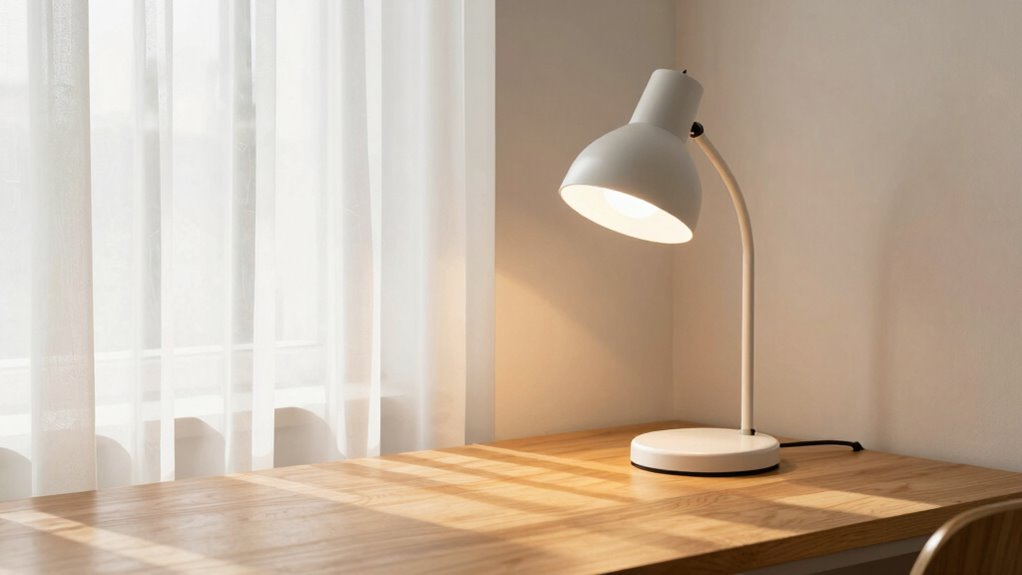
To effectively manage mixed lighting, you need to identify the specific sources of natural and artificial light in your scene. Natural light typically has a warmer or cooler color temperature depending on the time of day, which influences how your scene appears. Artificial light sources, like bulbs and LEDs, often have a different color temperature, creating a noticeable contrast. Pay attention to light layering—how natural and artificial lights interact and overlap. Observe the direction, intensity, and color of each source. Use your camera’s white balance settings or a gray card to gauge color temperature differences. Recognizing these elements helps you plan adjustments, ensuring your lighting sources maintain color harmony, rather than clash, making your scene look cohesive and intentional. Being aware of color temperature differences allows for more precise control over the overall ambiance. Understanding how different light sources contribute to the scene’s lighting dynamics can further improve your management skills, especially when considering light layering and how it affects the mood. Additionally, analyzing the light interactions can help you achieve a more natural or stylized look, depending on your creative goals.
softbox diffusers for studio lighting
As an affiliate, we earn on qualifying purchases.
As an affiliate, we earn on qualifying purchases.
Balance Daylight and Artificial Light for a Cohesive Look

Balancing daylight and artificial light requires careful adjustment to create a seamless, natural-looking scene. Start by matching their color temperatures; daylight is typically around 5500K, so choose artificial lighting that complements this to avoid jarring shifts. Use light layering—adding different light sources at various levels and intensities—to create depth and cohesion. If your room gets plenty of natural light, use warmer or dimmer artificial lights to balance out the scene, preventing it from feeling overly cool or harsh. Consistency in color temperature across your lighting sources helps maintain a unified look, even as natural light changes throughout the day. Understanding color temperature is key to achieving the right balance and ensuring your space feels harmonious, inviting, and well-designed. Adjusting your lighting setup based on natural light patterns can further enhance the cohesiveness of your environment.
color temperature adjustable LED bulbs
As an affiliate, we earn on qualifying purchases.
As an affiliate, we earn on qualifying purchases.
Choose the Right Bulbs and Fixtures for Your Space

Choosing the right bulbs and fixtures allows you to tailor your lighting to suit your space’s needs and style. To do this effectively, consider these key points:
- Match the color temperature to your space—warm tones (2700K-3000K) create cozy atmospheres, while cool tones (4000K-5000K) energize areas.
- Select fixture styles that complement your decor—sleek modern designs suit minimalist spaces, while vintage fixtures add charm.
- Use dimmable bulbs to adjust brightness based on activity and mood.
- Mix fixture types, like recessed lights with pendant fixtures, to layer light and add visual interest.
Fix Common Mixed Lighting Problems and Fine-Tune Your Setup

Mixed lighting can create uneven color tones and glare that disrupt the harmony of your space. To fix common problems, prioritize matching color temperature for a consistent look and adjust light diffusion to soften harsh shadows. If you notice hotspots or glare, add diffusers or lampshades to spread light evenly. Use dimmers to fine-tune brightness levels, preventing overexposure or underlit areas. Experiment with positioning to reduce reflections and glare, ensuring a smooth gradation between different light sources. Remember, balancing color temperature and light diffusion is key to a cohesive environment. Understanding lighting principles can help you make more informed adjustments and achieve a professional finish. Additionally, being aware of lighting design fundamentals can guide you in creating more balanced and visually appealing setups, especially when considering how indoor air quality can influence overall comfort and ambiance.
Frequently Asked Questions
How Do Color Temperatures Affect Mixed Lighting Harmony?
Color temperatures directly influence your mixed lighting harmony by affecting color balance and ambient contrast. Warmer temperatures create cozy, inviting tones, while cooler temperatures add crispness. When combining different light sources, aim to match their color temperatures or adjust the white balance to reduce harsh contrasts. This helps maintain a cohesive look, ensuring your scene feels natural and balanced, without distracting color clashes or overwhelming ambient contrast.
Can Smart Lighting Systems Improve Mixed Lighting Management?
Yes, smart lighting systems can substantially improve mixed lighting management. With lighting automation, you can easily adjust color temperatures and brightness levels to create a harmonious environment. These systems also enhance energy efficiency by automatically dimming or turning off lights when not needed. You gain precise control, making it simple to balance different light sources and achieve a consistent, comfortable ambiance without wasting energy.
What Tools Are Best for Measuring Light Quality and Consistency?
You should use a light meter or spectrometer for measuring light quality and consistency, especially during lighting calibration. These tools help you accurately assess brightness, color temperature, and fixture compatibility, ensuring uniform lighting. A good-quality light meter offers precise readings, while spectrometers provide detailed spectral data. Regular measurements with these tools help you maintain consistent lighting conditions and optimize fixture performance, making your lighting setup look professional and well-balanced.
How Does Room Size Influence Lighting Choices and Adjustments?
Room size directly influences your lighting choices and adjustments. In larger spaces, you need more fixtures or higher-output bulbs to guarantee even illumination, aiding space optimization. Proper fixture placement becomes essential—spread lights strategically to avoid dark spots and highlight key areas. For smaller rooms, scale down your lighting and focus on accent or task lights. Adjustments may involve dimmers or additional fixtures to balance brightness and create a comfortable environment.
Are There Specific Design Styles That Suit Mixed Lighting Better?
Certain design styles, like eclectic, modern, or intermediate, work well with mixed lighting because they embrace variety and contrast. When you choose lighting fixtures, focus on lighting placement that highlights key areas and creates layers, while selecting fixtures that complement the style—sleek for modern, ornate for eclectic. This approach allows you to blend different lighting types seamlessly, enhancing your space’s overall aesthetic and functionality.
Conclusion
So, now you’re a mixed lighting pro—who knew it was this easy? Just remember, even the best setups might still throw a little shade (literally). Don’t stress over the occasional mismatch; it’s all part of the charm. After all, perfect lighting is overrated—and if your space looks good enough to make your Instagram followers jealous, you’re doing just fine. Happy lighting, and don’t forget to turn off the lights when you leave!
Halloween Picks
halloween
As an affiliate, we earn on qualifying purchases.