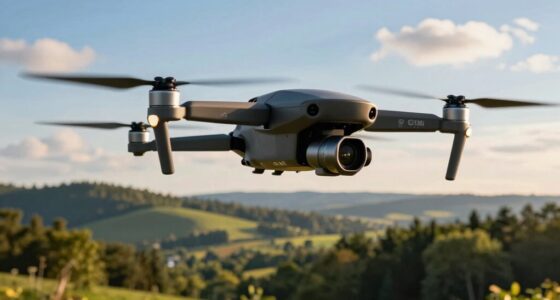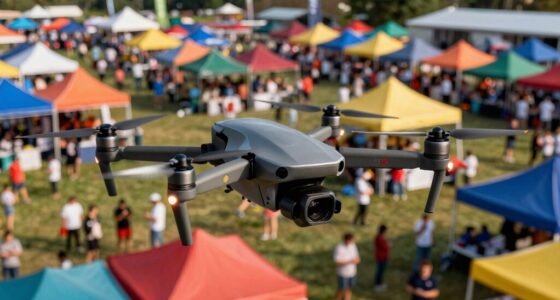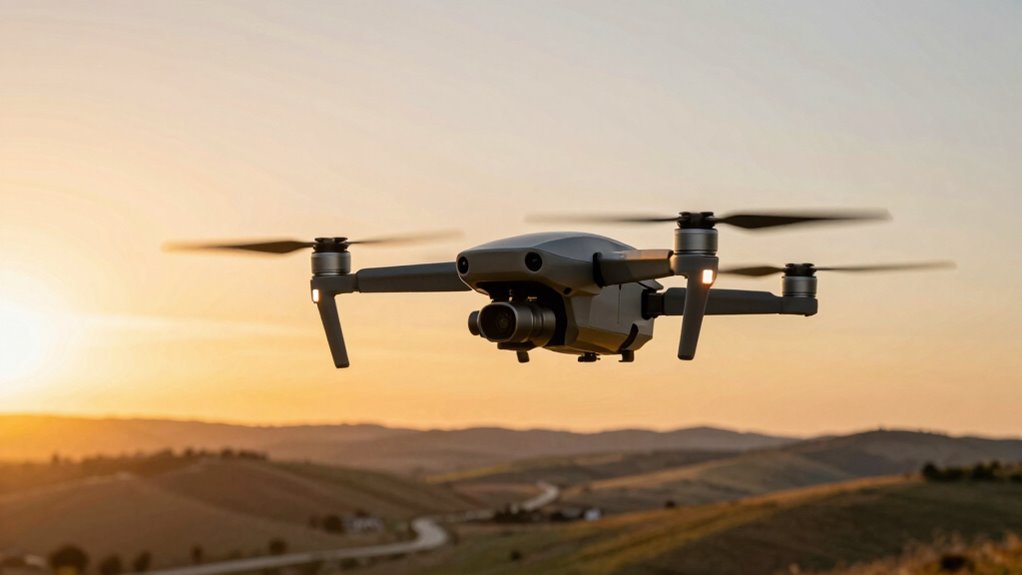
The real story behind drone movement fundamentals for cinematic shots is that mastering smooth, deliberate controls is key to professional footage. Proper calibration guarantees your drone responds predictably, preventing erratic movements, while managing battery life keeps your shots uninterrupted. Practice subtle movements like pans and tilts, varying altitude and angles to add depth. When you combine these skills, your footage becomes immersive and polished. Keep exploring these techniques, and you’ll discover even more ways to elevate your cinematic drone shots.
Prime for Young Adults — start your free trial
Fast free delivery, streaming and member deals for eligible 18–24 year olds.
As an affiliate, we earn on qualifying purchases.
Key Takeaways
- Proper calibration ensures predictable drone behavior, enabling smooth, professional cinematic movements.
- Mastering slow, controlled movements like pans and tilts creates fluid, visually appealing shots.
- Effective flight planning and battery management prevent interruptions, maintaining shot continuity.
- Varying altitude and angles enhances depth, adding cinematic interest to footage.
- Regular practice of fundamental techniques leads to precise control and immersive, high-quality drone cinematography.
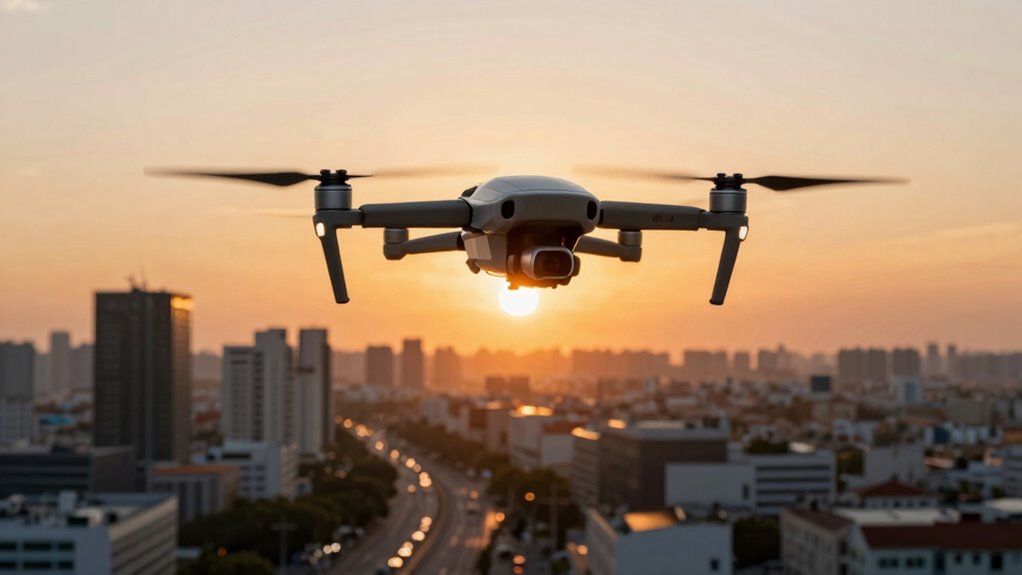
Capturing cinematic shots with a drone requires more than just flying it around; understanding fundamental movement techniques can transform ordinary footage into visually compelling scenes. To achieve this, you need to master the basics of drone control and the nuances that make shots feel smooth and professional. One critical aspect is drone calibration. Before you start shooting, verify your drone is properly calibrated—this means syncing the compass, IMU, and gimbal. Proper calibration prevents erratic movements or drifting, which can ruin your shot and waste valuable time. When your drone is accurately calibrated, its movements are more predictable, allowing you to execute precise maneuvers that add a polished look to your footage.
Alongside calibration, battery life optimization plays a pivotal role in maintaining smooth, continuous shots. Knowing your drone’s battery capacity and managing power consumption allows you to plan your shots accordingly, avoiding mid-flight interruptions or forced landings. You should always keep an eye on the remaining battery, especially during complex movements or long takes, and bring spare batteries if needed. Efficient flight planning includes avoiding unnecessary altitude changes or rapid accelerations that drain power quickly. When you optimize your drone’s battery life, you gain more flexibility to experiment with different angles and smooth tracking shots without fear of losing power unexpectedly. Additionally, understanding the impact of battery management on your entire filming session can help you make smarter decisions during shoots. Recognizing battery performance variations can help you adapt your flight plan on the fly, ensuring your shots stay consistent. Incorporating flight planning strategies that consider your drone’s capabilities allows for more intentional and effective cinematography.
Mastering fundamental movement techniques is essential to elevate your cinematic footage. Practice slow, deliberate movements like gentle pans and tilts, which add a cinematic feel and help tell your story more effectively. Use smooth transitions between shots—like gradual ascents or descents—rather than abrupt changes, which can feel jarring. Understanding the importance of altitude control is also key; flying at varying heights can add depth to your shots and create dynamic perspectives. Incorporating precise control and steady, controlled movements can help avoid shaky footage, and learn to anticipate your drone’s response to your inputs so that your shots remain fluid and professional. Additionally, drone calibration ensures your movements are precise and reliable, making your shots more consistent and visually appealing.
Finally, understanding how to coordinate your control inputs with your shot intent makes all the difference. Whether you’re executing a sweeping drone shot or a subtle zoom-in, clarity in your movement plan ensures your footage looks intentional and cinematic. When combined with proper calibration and battery management, these fundamental techniques empower you to push your drone footage from good to great. With practice, these principles become second nature, and your cinematic shots will become more compelling, immersive, and polished than ever before.
As an affiliate, we earn on qualifying purchases.
Frequently Asked Questions
What Are the Best Drones for Cinematic Filming?
You should consider drones like the DJI Inspire 2 or the Autel EVO Lite+ for cinematic filming. These drones excel in drone stabilization and feature advanced camera gimbals, ensuring smooth, professional footage. Their robust stabilization systems let you capture steady shots even in challenging conditions. The high-quality camera gimbals on these models deliver crisp, cinematic visuals, making them ideal choices for filmmakers aiming for top-tier aerial shots.
How Do Weather Conditions Affect Drone Shots?
Weather conditions greatly impact your drone shots, with wind turbulence being a major factor. Studies show strong gusts can cause up to 50% loss of stability. You’ll notice temperature effects too; cold air can reduce battery life and affect motor performance, leading to shaky footage. Always check wind speeds and temperature forecasts before flying. Adjust your flight plan accordingly to guarantee smooth, cinematic shots and avoid crashes caused by unpredictable weather.
What Safety Precautions Are Essential During Drone Operation?
You should always prioritize safety during drone operation by following essential precautions. Familiarize yourself with emergency procedures, like quickly landing or shutting down the drone if something goes wrong. Regular maintenance tips, such as checking batteries, propellers, and sensors, help prevent malfunctions. Keep a safe distance from people and obstacles, and always operate within legal guidelines. These steps guarantee safe, successful flights and protect both you and your equipment.
How Can Beginners Learn Drone Flying Skills Quickly?
To learn drone flying skills quickly, focus on practicing aerial stability and control techniques. Start with small, manageable flights in open areas to build confidence. Use simulator apps to refine your control skills without risking damage. Pay attention to how your movements affect the drone’s stability, and gradually increase complexity. Consistent practice helps you develop muscle memory, making flying smoother and more precise over time.
What Legal Restrictions Exist for Commercial Drone Filming?
Think of flying a drone commercially as steering a busy river; you need to follow certain rules to keep everyone safe. You must adhere to regulatory compliance, such as obtaining necessary permits and respecting no-fly zones. Privacy concerns also act like invisible boundaries, preventing you from capturing images that could invade someone’s privacy. Ignoring these restrictions risks fines or legal trouble, so always stay informed and respect the rules while filming.
cinematic drone gimbal stabilizer
As an affiliate, we earn on qualifying purchases.
As an affiliate, we earn on qualifying purchases.
Conclusion
Understanding drone movement fundamentals unleashes your ability to craft stunning cinematic shots. Don’t worry if you’re new—practice makes perfect, and even small adjustments can elevate your footage dramatically. By mastering these basics, you’ll avoid shaky or awkward shots, ensuring your visuals captivate viewers. So, embrace the learning process, experiment freely, and trust that with time, your drone footage will look more professional than ever. Your cinematic journey starts now—ready to take flight?
As an affiliate, we earn on qualifying purchases.
professional drone control transmitter
As an affiliate, we earn on qualifying purchases.
As an affiliate, we earn on qualifying purchases.
Flea & tick season Picks
flea and tick prevention
As an affiliate, we earn on qualifying purchases.