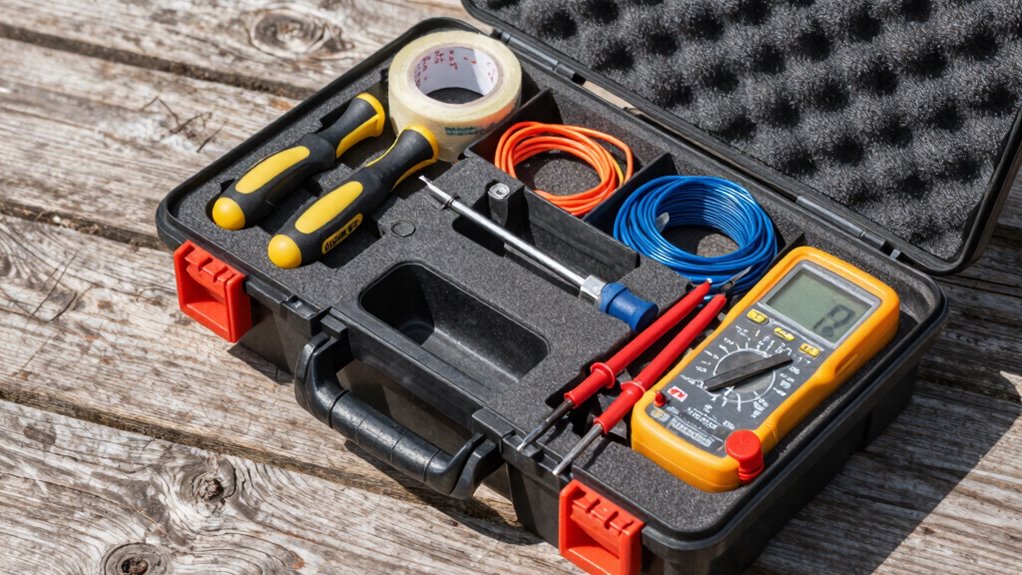

A smarter field repair kit keeps you prepared for quick fixes that prevent costly downtime. Focus on essential tools like screwdrivers, pliers, and a sharp knife, and guarantee they’re well-maintained, clean, and sharp. Choose durable, weather-resistant storage to protect your gear and organize it for quick access. Regularly inspect and care for your tools to extend their life and reliability. Keep these tips in mind, and you’ll be ready for anything — more expert advice comes next.

Get sports gear delivered free with Prime
- Fast, free delivery on millions of items
- Prime Video, Amazon Music and more included
- Member-only deals all year
Key Takeaways
- Select durable, high-quality tools suited for challenging field conditions to ensure longevity and reliable performance.
- Regularly inspect, clean, and maintain tools to prevent wear, damage, and ensure they function properly when needed.
- Organize tools in protective storage solutions to prevent environmental damage and facilitate quick access during repairs.
- Include essential tools for common minor issues to enable quick fixes and minimize downtime.
- Prioritize safety by choosing sharp, well-maintained tools and adhering to proper handling and storage practices.

When you’re out in the field, having a well-stocked repair kit can mean the difference between a minor inconvenience and a major setback. The key to effective field repairs lies not just in what tools you carry, but also in how well you maintain and organize them. Tool maintenance is essential; dull blades, rusty fasteners, or malfunctioning equipment slow you down and can compromise the quality of your work. Regularly inspect your tools, clean them after use, and lubricate moving parts to keep everything in top shape. Sharp blades, properly cleaned and stored, cut down on effort and reduce the risk of accidents. By investing time in tool maintenance, you extend the lifespan of your gear and guarantee it works when you need it most. Additionally, understanding the importance of tool durability can help you select the right tools designed to withstand challenging field conditions. Proper storage solutions not only help organize your tools but also contribute to tool longevity, ensuring your equipment remains reliable over time. Using durable storage containers can further protect your tools from environmental damage and make transportation easier. Good storage solutions also protect your tools from damage and environmental elements, such as moisture or dirt, prolonging their usability. Incorporating environmental protection into your storage practices is crucial for maintaining optimal tool performance in various conditions. Paying attention to regular maintenance practices can further enhance your tools’ resilience and performance in the field.
Products Worth Considering

GoPro HERO Compact Waterproof 4K Action Camera

Therabody Theragun Sense 2nd Generation Percussion Massage Gun, Black

YETI Tundra 35 Cooler
As an affiliate, we earn on qualifying purchases.
Frequently Asked Questions
How Do I Choose the Right Repair Kit for My Specific Field Needs?
To choose the right repair kit, consider your specific field needs first. Look for a kit with tools known for tool durability, so they withstand tough conditions. Also, prioritize kit organization—compact, clearly labeled compartments help you find what you need quickly. Think about the common repairs you’ll encounter, and select a kit that balances durability with organized storage, ensuring you’re prepared for any situation in your field.
Are There Eco-Friendly or Reusable Field Repair Kits Available?
Yes, eco-friendly and reusable field repair kits are available. You find kits made from eco-friendly materials that reduce environmental impact, and many feature reusable components like durable patches, multi-use tools, and reusable containers. These kits promote sustainability, minimize waste, and save money over time. By choosing such options, you’re supporting eco-conscious practices while ensuring you’re prepared for repairs in the field.
What Safety Precautions Should I Follow When Using Repair Tools in the Field?
When using repair tools in the field, always wear personal protective equipment like gloves and safety glasses to prevent injuries. Keep your tools in good condition through regular maintenance, guaranteeing they work safely and effectively. Be cautious of sharp edges or hot surfaces, and follow proper handling procedures. By staying alert and maintaining your tools, you reduce risks and ensure a safer, more efficient repair process.
How Often Should I Update or Replace My Field Repair Kit?
You should update or replace your field repair kit regularly, ideally every 6 to 12 months, to guarantee weather resistance and tool durability. Frequent use, exposure to harsh environments, or signs of wear mean you might need to refresh your tools sooner. Check for rust, corrosion, or damage, and replace worn-out items promptly. Keeping your kit up-to-date guarantees reliable performance and safety during repairs in the field.
Can I Customize a Repair Kit for Specialized Equipment or Environments?
Yes, you can customize a repair kit for specialized equipment or environments by including specialized tools tailored to your needs. Focus on creating custom configurations that address specific tasks, ensuring you have the right tools for unique challenges. This approach improves efficiency and effectiveness in field repairs. Regularly review and update your kit to keep it aligned with evolving equipment requirements and environmental conditions.
Conclusion
Think of your field repair kit as your trusty toolbox in a storm—preparedness turns chaos into calm. I remember fixing a broken bike during a muddy trail run, thanks to my kit’s pliers and patches. Just like a seasoned sailor relies on their compass, having the right essentials keeps you steady and confident. When you pack smart, you’re ready for any surprise—because in the wild, a little preparation makes all the difference.