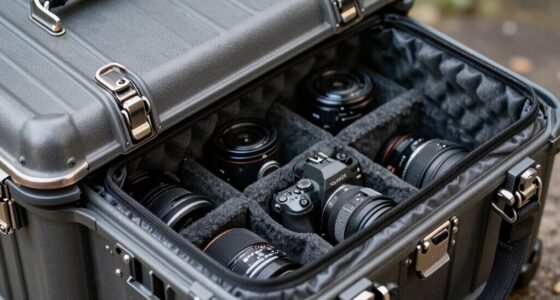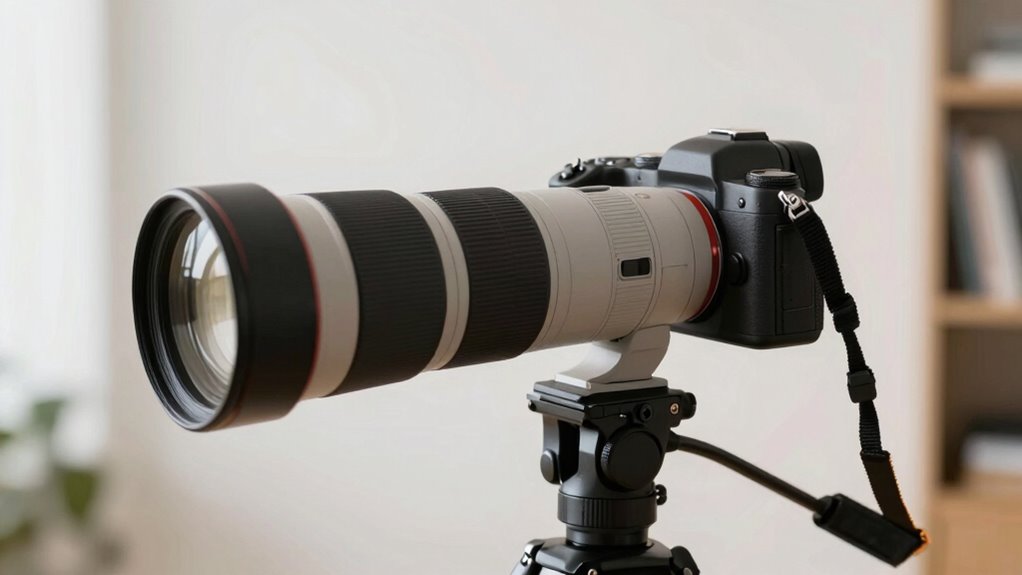
To balance heavy lenses on support gear, start by adjusting the camera’s center of gravity with counterweights or support systems, like a gimbal or shoulder rig. Make certain the lens is securely mounted, and evenly distribute weight across your shoulders and back to prevent fatigue. Proper ergonomics help you stay steady and avoid camera shake. Focus on securing the setup, and you’ll improve stability. Keep going, and you’ll discover more tips to enhance your filming experience.
Key Takeaways
- Adjust counterbalance weights on support gear to evenly distribute lens weight and prevent tipping.
- Ensure proper camera and lens mounting to maintain a low center of gravity.
- Use quick-release plates for precise positioning and easy adjustments.
- Balance the setup by aligning the lens and camera along the support’s axis.
- Regularly check and fine-tune weight distribution during shoots for optimal stability.
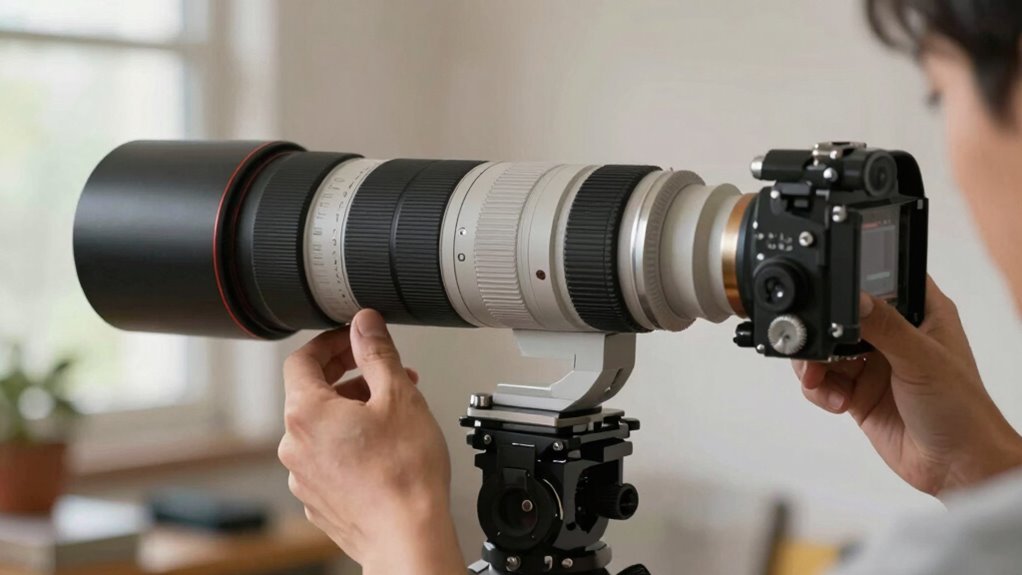
Balancing heavy lenses can be challenging, especially if you’re aiming for sharp, steady shots. When you’re working with substantial glass, even the slightest movement can throw off your composition and result in blurry footage. To tackle this, you need to think beyond just the support gear—you have to contemplate lighting techniques and post-processing tips that help you maximize stability and image quality. Proper lighting can make a significant difference, especially if you’re shooting in low light conditions or trying to minimize camera shake. Using diffused, consistent lighting reduces the need for long exposures or high ISO settings, which can introduce noise and make stabilization more critical. When lighting is well-balanced, your camera can focus better, and you’ll get cleaner shots that require less post-processing correction. Additionally, understanding how to manage camera weight distribution effectively can further enhance your stability during shoots. Paying attention to the center of gravity of your setup can help prevent unnecessary strain and improve overall balance. Support gear like tripods, gimbals, and shoulder rigs are your first line of defense against camera shake, but they must be used correctly. Adjust the tripod’s center column and legs to ensure a solid, level base. Use a counterbalance system—add weights or counterweights to the support to offset the lens’s weight. This makes the setup more stable and reduces strain on the tripod head or gimbal. If you’re using a shoulder rig, ensure the rig is snug and that the weight distribution is even across your shoulders and back. This helps prevent fatigue and maintains steadiness during longer shoots. Moreover, understanding the impact of camera ergonomics can lead to more natural and stable handling, especially during extended filming sessions.
Proper lighting enhances stability, reduces camera shake, and improves focus for sharper, more professional footage with heavy lenses.
When it comes to post-processing tips, stabilization can be enhanced after the fact. Use editing software with stabilization features to smooth out any residual jitters in your footage. If you’re shooting photos, consider sharpening and noise reduction tools to improve clarity, especially if you had to push ISO settings due to lighting constraints. Additionally, cropping slightly in post can help remove any unstable edges or shake that wasn’t fully corrected during filming. Remember, though, that the best approach is to get it right in-camera, so focus on your support gear and lighting setup first. Ultimately, balancing heavy lenses is a combination of technique and preparation. Invest time in setting up your support gear correctly, optimize your lighting to reduce camera strain, and use post-processing to fine-tune your shots. With these strategies, you’ll find it easier to keep your footage steady and professional-looking, no matter how heavy your lens might be.
As an affiliate, we earn on qualifying purchases.
Frequently Asked Questions
Can I Use Household Objects to Stabilize Heavy Lenses?
Yes, you can use household objects for DIY stabilization of heavy lenses. Items like books, canned goods, or sturdy boxes can act as makeshift supports or weight counters to help balance your gear. Household hacks like using rubber bands or velcro straps can also secure lenses or support arms. Just guarantee whatever you use is stable and won’t cause damage to your equipment, making your setup safer and more effective.
How Often Should I Check the Lens Balance During a Shoot?
You should check the lens balance frequently during a shoot, especially after adjusting the camera setup or changing lenses. Regularly inspecting guarantees ideal lens calibration and maintains good camera ergonomics, preventing strain or accidental drops. Every 15-30 minutes is a good rule of thumb, but trust your instincts—if the camera feels uneven or uncomfortable, check immediately. Consistent checks keep your gear stable and your shots sharp.
Are There Specific Support Gear Brands Better for Heavy Lenses?
Some brands stand out for supporting heavy lenses, especially when considering lens compatibility and support gear ergonomics. Look for options like Manfrotto, DJI, or Tilta, which design gear specifically for heavy setups. These brands offer sturdy, well-balanced support systems that reduce strain and improve stability. Always check if the support gear is compatible with your lens weight and size, ensuring better ergonomics and a smoother shooting experience.
What Are Quick Fixes if My Support Gear Feels Unstable?
If your support gear feels unstable, focus on improving tripod stability by tightening all locks and ensuring the legs are evenly spread. Use grip techniques like gripping the support arm firmly and maintaining a steady stance to reduce wobbling. Adding a weight or sandbag to the tripod’s base can also enhance stability. Regularly check for loose parts and balance your lens properly to prevent future instability and capture sharp images.
How Do Weight Distributions Affect Camera Movement and Shots?
Think of your camera setup as a tightrope walker—balance is everything. Proper weight distribution directly impacts camera stability and movement, making your shots smoother or shakier. When your gear’s weight is uneven, it’s like trying to dance on a rocking boat—your shots become unstable and less professional. To get steady shots, distribute weight evenly, keeping the center of gravity low, and you’ll find your camera moves like a well-oiled machine.
As an affiliate, we earn on qualifying purchases.
Conclusion
Balancing heavy lenses might seem tricky, but with the right support gear and techniques, you can shoot smoothly and confidently. Imagine you’re capturing a fast-moving sports event—your steady setup keeps everything in sharp focus, even when the action heats up. Just like a seasoned creator adjusting their rig before a big shot, you can master your gear to guarantee every shot is stable and professional. Keep practicing, and your shots will always be picture-perfect.
gimbal stabilizer for heavy lenses
As an affiliate, we earn on qualifying purchases.
As an affiliate, we earn on qualifying purchases.
As an affiliate, we earn on qualifying purchases.