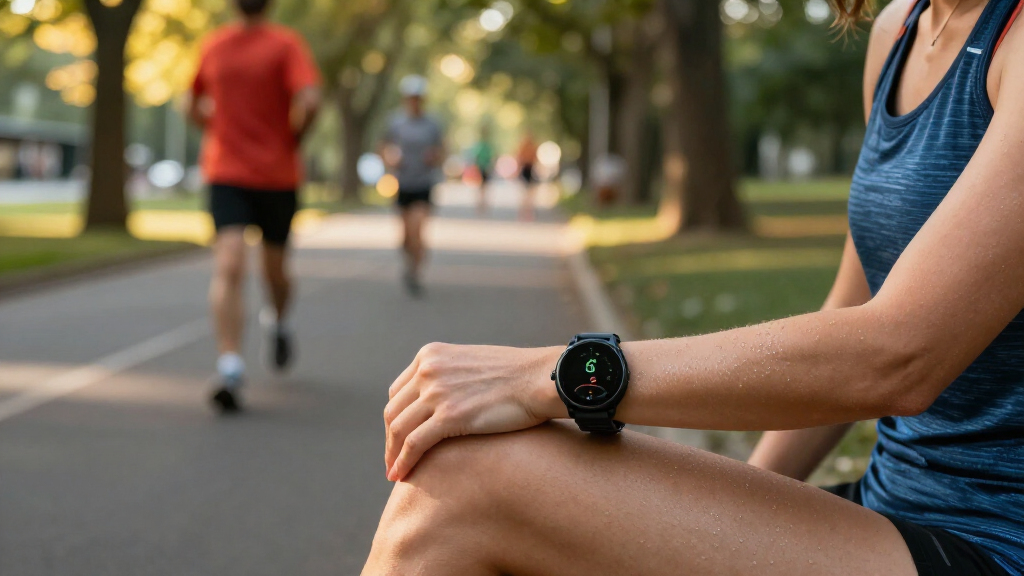

Choosing a sports and fitness watch often comes down to whether you want a tool built around training or a smartwatch that also tracks workouts. The Garmin Forerunner 265 and Apple Watch Series 10 cover everyday activity, exercise, heart rate, and health features, but they serve different priorities. Garmin offers longer battery life and more dedicated training guidance; Apple delivers a richer app and communication experience, especially for iPhone users. Choose Garmin if workouts, recovery trends, and fewer charging stops lead your decision. Choose Apple if calls, apps, and day-to-day convenience matter as much as exercise.

Get sports gear delivered free with Prime
- Fast, free delivery on millions of items
- Prime Video, Amazon Music and more included
- Member-only deals all year

Smartwatch with 1.96-Inch HD Touchscreen, Bluetooth Calling, Fitness Tracking, and IP68 Water Resistance
- ✔ Display: 1.96-inch HD OLED touchscreen
- ✔ Sports modes: 113+
- ✔ Health tracking: Heart rate, sleep, and steps

T7 Smartwatch with Bluetooth Calling, 1.83-Inch Touchscreen, Fitness and Sleep Tracking, IP67 Water Resistance, Jet Black
- ✔ Display: 1.83-inch touchscreen
- ✔ Health tracking: Heart rate, blood oxygen, stress, and sleep
- ✔ Fitness tracking: Multiple modes; steps, distance, calories, and workout duration
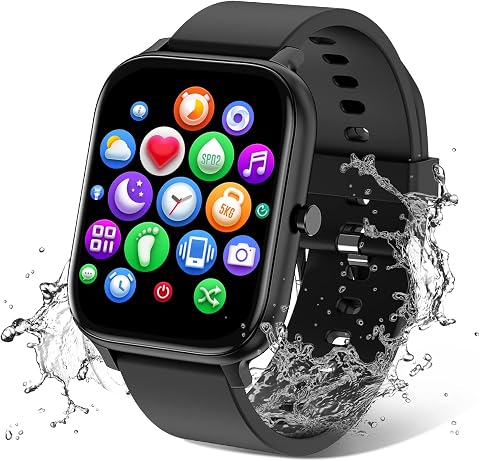
Torjalph Smart Watch with 1.83-Inch Touchscreen, IP68 Water Resistance, Fitness Tracking, and Bluetooth Notifications
- ✔ Screen: 1.83-inch listed; another detail says 1.69 inches
- ✔ Resolution: 240 × 284
- ✔ Sports modes: 12
At a Glance
| Criteria | Garmin Forerunner 265 | Apple Watch Series 10 | Winner |
|---|---|---|---|
| Training guidance | Training status, readiness, workout suggestions, and recovery estimates | Workout tracking, activity rings, and Fitness app integration; fewer dedicated training metrics | A |
| Battery life | Several days of typical use; substantially longer than Apple Watch | Generally requires daily charging, especially with regular workouts | A |
| GPS and workout tracking | Multiband GPS and extensive sport profiles | GPS workout tracking and broad workout support | A |
| Smartwatch features | Notifications, music controls, and Garmin Connect IQ apps | Strong apps, calls, messages, Apple Pay, and iPhone integration | B |
| Health tracking | Heart rate, sleep, stress, and wellness trends | Heart rate, sleep, ECG, temperature sensing, and other health features | B |
| Phone compatibility | Works with iPhone and Android, with feature differences | Designed for iPhone; no Android pairing | A |
| Value | Better fit for frequent training and long outings | Worth the premium for users who use its smart features daily | Depends |
Smartwatch with 1.96-Inch HD Touchscreen, Bluetooth Calling, Fitness Tracking, and IP68 Water Resistance
For shoppers who want one watch to cover a wide mix of activities, this model has the strongest sports case in the group: it lists more than 113 sports modes, compared with 12 on the Torjalph and an unspecified number of modes on the T7. That breadth may make it easier to choose a relevant workout profile, while its 1.96-inch HD OLED screen gives notifications and activity summaries more room than the two 1.83-inch alternatives.It also balances exercise tracking with everyday phone features. Heart rate, sleep, and steps sit alongside Bluetooth calls, app notifications, music controls, alarms, and weather. The T7 offers more explicitly listed wellness measurements, including blood oxygen and stress, and claims longer battery life; this pick instead leans on its wider stated activity selection and larger display. We should keep the GPS limitation in mind: route tracking requires a connected phone, so it is less convenient for runners who leave their phone behind.The listed IP68 rating sounds more workout-friendly than the T7’s IP67, but water-resistance labels can be interpreted differently by manufacturers. We should check the maker’s activity guidance before swimming with it. Battery life is stated as up to seven days and will vary with use. This is our best overall choice for broad everyday fitness tracking, provided we accept phone-dependent GPS and verify water guidance.
Pros:
- Lists more than 113 sports modes, the broadest stated selection here.
- Large 1.96-inch HD OLED touchscreen with customizable faces.
- Supports Bluetooth calls, app notifications, and practical music and alarm tools.
- Tracks heart rate, sleep, and steps.
Cons:
- GPS functionality depends on a connected smartphone.
- Up to seven days of battery life may vary with use.
- Water-resistance wording should be checked against the intended activity.
Best for: Buyers who want a large display, Bluetooth calling, and a broad choice of workout modes for varied everyday exercise.
Not ideal for: Runners who need standalone GPS or buyers who require clearly documented pool suitability without checking the manufacturer’s guidance.
Bottom line: We recommend it as the most versatile pick in this group for buyers who prioritize workout variety and a large screen over standalone GPS.
“We recommend it as the most versatile pick in this group for buyers who prioritize workout variety and a large screen over standalone GPS.”
T7 Smartwatch with Bluetooth Calling, 1.83-Inch Touchscreen, Fitness and Sleep Tracking, IP67 Water Resistance, Jet Black
The T7 is the practical alternative for buyers who would rather charge less often and see a wider set of wellness readings. Its stated battery life reaches up to 10 days, three days beyond the first watch’s claim, and it tracks heart rate, blood oxygen, stress, and sleep. That makes its feature mix more wellness-oriented than the 1.96-inch model, whose listed health tracking centers on heart rate, sleep, and steps.For exercise, the T7 records steps, distance, calories, and workout duration across multiple sport modes. The description does not give a mode count, so we cannot compare its coverage directly with the first watch’s 113-plus modes. Its 1.83-inch touchscreen is also smaller than the first model’s, though close in size to the Torjalph. Bluetooth calling and notifications, plus a timer, stopwatch, phone finder, and remote shutter, give it a useful daily role beyond workouts.The biggest constraint is its IP67 rating: the supplied guidance says it is suitable for sweat, rain, and handwashing, but not swimming or hot showers. It also has no GPS, so distance and routes should not be mistaken for independent satellite tracking. Compared with the first pick, the T7 trades a larger screen and a much broader stated mode list for longer battery life and more listed wellness measures. Choose it for ordinary training and daily wear; skip it for pool use or phone-free route recording.
Pros:
- Up to 10 days of stated battery life.
- Tracks heart rate, blood oxygen, stress, and sleep.
- Supports Bluetooth calls, notifications, and multiple sport modes.
- Includes timer, stopwatch, phone finder, and remote shutter.
Cons:
- No GPS is listed.
- IP67 guidance excludes swimming and hot showers.
- The sports-mode count is not specified, limiting comparison with the first watch.
Best for: Buyers who prioritize a longer stated battery interval, wellness readings, and everyday calling over swimming or standalone route tracking.
Not ideal for: Swimmers, hot-shower wearers, and runners who want GPS tracking without carrying a phone.
Bottom line: We would choose the T7 for its battery claim and wellness feature mix, as long as our workouts stay within its stated water limits.
“We would choose the T7 for its battery claim and wellness feature mix, as long as our workouts stay within its stated water limits.”
Torjalph Smart Watch with 1.83-Inch Touchscreen, IP68 Water Resistance, Fitness Tracking, and Bluetooth Notifications
The Torjalph keeps the feature set focused: it lists 12 sports modes, including walking, running, cycling, and swimming, and pairs those with heart rate, blood pressure, blood oxygen, and sleep monitoring. That may suit someone who wants familiar activity categories and basic phone alerts. In contrast, the first watch’s 113-plus modes offer a broader menu for varied workouts, while the T7 gives a longer stated battery life and adds stress tracking.Its 1.83-inch color touchscreen and more than 200 watch faces are in the same general size class as the T7. The Torjalph also supports Bluetooth call and message notifications, music controls, and a silicone strap. Battery life is stated as five to seven days, with a three-hour charging time, so it has a shorter or comparable interval to the first model and falls behind the T7’s up-to-10-day claim.We rank it third because the product details are less consistent: the screen is described as both 1.69 and 1.83 inches, and water resistance appears as both IP67 and IP68. It also requires the Da Fit app and a Bluetooth connection to a compatible phone. Those uncertainties make it a harder recommendation for buyers who need predictable fit or plan to swim. It can still make sense for basic tracking, but the first watch is more compelling for activity variety and the T7 is clearer about its water limits and battery claim.
Pros:
- Includes 12 modes covering common activities such as walking, running, and cycling.
- Tracks heart rate, blood pressure, blood oxygen, and sleep.
- Supports call and message notifications and music controls.
- Offers more than 200 customizable watch faces.
Cons:
- Product details conflict on both screen size and water-resistance rating.
- Lists only 12 sports modes, fewer than the first model.
- Requires Da Fit app setup and Bluetooth pairing.
Best for: Buyers seeking a straightforward watch for common activities, sleep tracking, and phone notifications who are comfortable checking the product details before purchase.
Not ideal for: Buyers who need a confirmed screen size, clear water-resistance guidance, a broad sports-mode selection, or standalone GPS.
Bottom line: We see the Torjalph as a basic activity and notification option, but its inconsistent specifications make the other two easier to recommend.
“We see the Torjalph as a basic activity and notification option, but its inconsistent specifications make the other two easier to recommend.”
As an Amazon Associate we earn from qualifying purchases.
Key Differences
The biggest practical split is training depth versus general convenience. Garmin treats running and structured exercise as the central job: it can interpret recent training, suggest workouts, and provide readiness and recovery context. That is useful for people following a plan or building consistency, though estimates should be treated as guidance rather than medical or coaching verdicts. Apple tracks workouts well and makes activity visible through its rings and Fitness app, but it does not offer the same built-in training analysis.
Battery life changes how each watch fits into a routine. The Forerunner can go multiple days between charges, making it easier to track sleep, take a weekend trip, or record a long event without planning around a charger. The Series 10 is more capable as a wrist computer, but frequent charging is part of ownership. In return, it handles apps, communications, and iPhone features more naturally. That makes Apple a better everyday companion for people who want one watch to do many jobs.
Neither is the universal winner. Garmin is the stronger sports watch for regular runners and endurance-minded users; Apple is the stronger all-around smartwatch for iPhone owners who exercise but also want a broad app and communication experience. The price premium on Apple makes sense when those features get daily use. If training metrics and battery are the priorities, paying for a more connected platform may add little value.
Detailed Comparison
Training guidance (Garmin Forerunner 265 wins — major)
Garmin wins by a major margin for people who want direction beyond recording workouts. The Forerunner 265 provides training status, readiness signals, suggested sessions, and recovery estimates in a sports-focused interface. Apple records sessions and supports structured workouts, but its strengths are activity tracking and integration with the Fitness app, rather than interpreting a training load. For a runner following a plan, Garmin can make the watch a more useful daily training tool; for casual exercise, Apple’s simpler approach may be enough.
Battery life (Garmin Forerunner 265 wins — major)
Garmin wins by a major margin. Its multi-day battery life is better suited to long workouts, trips, and continuous wear for sleep tracking. The Series 10 typically needs daily charging, and GPS workouts can make charging more frequent. Apple users get a more capable app and communication platform, but must make charging part of their routine. If you dislike frequent charging or need reliable tracking over a long event, Garmin is the practical choice.
GPS and workout tracking (Garmin Forerunner 265 wins — moderate)
Garmin has a moderate edge for dedicated sports use. The Forerunner 265 includes multiband GPS and a wide range of sport profiles, which appeal to runners who train in challenging environments or want detailed activity records. Apple offers strong GPS workout tracking and broad exercise support for general fitness. The difference matters most to people who scrutinize route data and train outdoors often; occasional gym sessions or walks are well served by either.
Smartwatch features (Apple Watch Series 10 wins — major)
Apple wins by a major margin. Series 10 is designed to handle calls, messages, apps, Apple Pay, and other iPhone-connected tasks from the wrist. Garmin provides notifications, music controls, and a selection of apps, but the experience is more limited. If you want the watch to reduce how often you reach for your phone, Apple is more capable. If notifications are enough and training takes priority, Garmin’s lighter smart feature set may be preferable.
Health tracking (Apple Watch Series 10 wins — moderate)
Apple has a moderate advantage in health features, with capabilities such as ECG and temperature sensing alongside heart rate and sleep tracking. Garmin emphasizes wellness trends such as sleep, stress, and recovery in a training context. Which is more useful depends on whether you want a wider set of health functions or health signals tied to exercise decisions. Neither watch replaces clinical equipment or a medical assessment.
Phone compatibility (Garmin Forerunner 265 wins — major)
Garmin wins for flexibility. The Forerunner 265 works with both iPhone and Android, though some connected features vary by phone. Apple Watch Series 10 requires an iPhone and is not a practical choice for Android owners. For iPhone users, Apple’s integration is a strength; for anyone who may switch platforms or already uses Android, Garmin is the clear fit.
Value (moderate difference)
The better value depends on what you use. Garmin’s price is easier to justify when its training analysis, GPS tools, and battery life support regular exercise. Apple costs more in the broader smartwatch comparison, but the extra spend can be worthwhile if calls, apps, health features, and iPhone integration are part of everyday use. Paying more for Apple makes little sense if you mostly want workout tracking; paying for Garmin’s training features makes little sense if you rarely train beyond casual activity.
Garmin Forerunner 265: Pros and Cons
Pros:
- Long battery life supports multi-day wear and extended activities.
- Purpose-built training metrics and workout suggestions.
- Multiband GPS and wide sport support.
- Compatible with both iPhone and Android.
Cons:
- Smartwatch apps and communication features are more limited.
- Training estimates can feel unnecessary to casual exercisers.
- Some phone-connected features vary by platform.
Apple Watch Series 10: Pros and Cons
Pros:
- Strong app, call, message, and payment features for iPhone users.
- Broad health tracking, including ECG and temperature sensing.
- Convenient integration with Apple’s Fitness app and services.
- Works well as a daily smartwatch as well as a workout tracker.
Cons:
- Requires much more frequent charging.
- Not compatible with Android phones.
- Offers less built-in training analysis for structured sports training.
Who Should Choose What
Choose Garmin Forerunner 265 if:
- You run or train several times a week and want readiness, recovery, and training guidance.
- You need multi-day battery life for long outings, travel, or continuous sleep tracking.
- You use Android or want to keep the option to switch phone platforms.
- You value sport-specific tracking more than a large app ecosystem.
Choose Apple Watch Series 10 if:
- You use an iPhone and want calls, messages, apps, and payments on your wrist.
- You exercise for general fitness and prefer activity tracking over detailed training analysis.
- You will use Apple’s health and Fitness features throughout the day.
- You are comfortable charging frequently in exchange for broader smartwatch features.
Skip both if: Skip both if you need a low-cost, basic step and workout tracker, or if you need a certified medical monitor for a health condition.
Value for Money
Value depends on whether the watch’s defining features will change your routine. Garmin earns its cost for regular runners and other active users who will use training analysis, GPS tools, and extended battery life. Those advantages are less compelling if you exercise casually and mainly want notifications. Apple earns its higher cost for iPhone owners who will use its apps, communication tools, payments, and health functions every day. If your main goal is logging workouts, paying more for Apple’s broader platform may not improve your fitness routine; if you want a capable smartwatch that also tracks exercise, the premium can be worthwhile.
Final Verdict
Choose the Garmin Forerunner 265 if sports performance, training guidance, phone flexibility, and battery life are the deciding factors. It is the stronger choice for runners and consistent exercisers who want the watch to inform their training. Choose the Apple Watch Series 10 if you own an iPhone and want a general-purpose smartwatch that handles daily communication, apps, and health features alongside workouts. The biggest deciding factor is whether you want your watch to guide training or to extend your phone. For dedicated sports use, Garmin is the better recommendation; for a connected iPhone lifestyle with fitness tracking, Apple is the better fit.
Frequently Asked Questions
Which is better for running, Garmin Forerunner 265 or Apple Watch Series 10?
The Forerunner 265 is better for runners who want training status, recovery context, workout suggestions, and longer battery life. The Apple Watch Series 10 tracks runs and suits casual runners who value iPhone features just as much as training data.
Is Apple Watch Series 10 worth paying more for over Garmin?
It can be worth the extra cost if you use its iPhone-connected apps, calls, messages, payments, and health features often. If your priority is training analysis and longer battery life, Garmin usually offers more relevant value.
Can I use Garmin Forerunner 265 with an iPhone?
Yes. It pairs with iPhone as well as Android, though connected features differ by platform. Apple Watch Series 10 requires an iPhone.
Which watch has better battery life?
The Garmin Forerunner 265 lasts substantially longer between charges. Apple Watch Series 10 is generally a daily-charge watch, particularly for people who record workouts and wear it overnight.