
TL;DR

Get sports gear delivered free with Prime
- Fast, free delivery on millions of items
- Prime Video, Amazon Music and more included
- Member-only deals all year
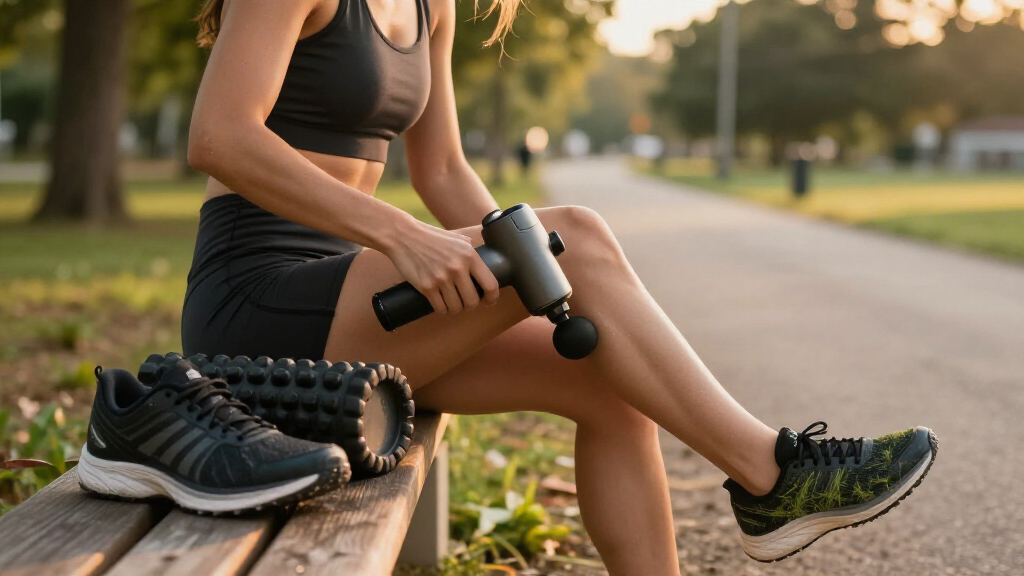
Sports recovery massage guns, also called percussive therapy devices, use a motorized head to deliver repeated pulses to soft tissue. They may briefly ease perceived tightness or soreness and improve range of motion, but evidence that they heal injuries, prevent soreness, or speed muscle repair is limited. Use light pressure on large muscles, avoid sensitive or injured areas, and keep sleep, food, fluids, and sensible training at the heart of recovery.
A massage gun can make a tight calf feel looser in a few minutes, but it cannot turn a hard training session into a shortcut to recovery. That distinction matters when a buzzing device promises to flush lactic acid, prevent injuries, or repair sore muscles faster.
Sports recovery massage guns, also called percussive therapy devices, use a motorized head to deliver repeated pulses to soft tissue. Small studies suggest they may temporarily ease perceived soreness or tightness and improve range of motion, but the research does not establish them as a way to heal injuries or boost long-term performance.
This guide explains what a massage gun can realistically do, how to use one without overdoing it, when to avoid it, and what matters when you shop. You’ll also see where it fits beside ordinary recovery habits: sleep, enough food and fluids, rest, and gradual training progression.
A massage gun may offer temporary relief from perceived tightness or soreness, but it is not proven to speed muscle repair, prevent injury, or create lasting p…
Start on a low setting, use light pressure, keep the head moving over a large muscle, and stop if you feel sharp pain, numbness, tingling, bruising, or worseni…
Avoid bones, joints, the spine, the head, the front and sides of the neck, bruises, open wounds, and areas with reduced sensation.
Ask a clinician before use if you have relevant health risks, recent surgery, pregnancy-related concerns, or a suspected or new injury.
Choose a device for comfort and control; stall force, extra attachments, and maximum power do not prove better recovery.
What a massage gun can—and can’t—do for sore muscles
Sports recovery massage guns deliver quick mechanical pulses to soft tissue, and their best-supported role is short-term comfort, not faster healing. A brief, gentle session may make a tight muscle feel easier to move or temporarily improve range of motion, but it does not reliably repair muscle damage or prevent an injury.
The device’s sensation depends on several features: its speed, force, amplitude (how far the head travels), attachment, and the pressure you apply. A soft, low setting on a broad calf muscle feels very different from pushing a hard attachment into a tender knot. More intensity does not automatically mean a better result.
Research remains limited and often measures immediate changes after one session, such as flexibility or how sore someone says they feel. That is useful information, but it is not proof of lasting athletic gains. Claims that a massage gun flushes lactic acid, breaks up scar tissue, or dramatically accelerates muscle repair are not well established.
For example, after a weekend run, your calves may feel less stiff after a short pass with a massage gun. You may still feel delayed-onset muscle soreness the next day, because the device hasn’t erased the underlying response to hard exercise. Think of it as a comfort tool, not a repair crew.
As an affiliate, we earn on qualifying purchases.
Use a massage gun safely with this simple routine
Sports recovery massage guns are safest when you start gently, keep the head moving, and work briefly across a large muscle. There is no single evidence-based dose that suits everyone, so follow your device’s directions and treat discomfort as a reason to ease off—not as proof that the tool is working.
- Choose a large muscle. Start with an area such as your thigh or calf, not a joint or a bony spot.
- Use a low setting and light pressure. Let the device’s weight do most of the work.
- Keep moving. Glide slowly across the muscle rather than holding the head on one tender point.
- Stop if symptoms worsen. Sharp pain, numbness, tingling, bruising, or increasing soreness are warning signs.
For instance, after an easy bike ride, you might make a brief, comfortable pass over the quadriceps while seated. If you find yourself clenching your jaw or bracing against the pressure, lower the setting or stop. A massage session should not feel like a test of toughness.
People with blood-clot risk, bleeding disorders, significant circulation or nerve problems, recent surgery, pregnancy-related concerns, or serious medical conditions should ask a clinician before using one. Do not use a massage gun on a suspected tear, fracture, new injury, unexplained pain, or significant swelling without medical advice.
percussive therapy device for muscle soreness
As an affiliate, we earn on qualifying purchases.
As an affiliate, we earn on qualifying purchases.
Choose safe places to treat—and skip sensitive areas
A massage gun belongs on comfortable, fleshy muscle—not on bones, joints, the spine, the head, or the front and sides of your neck. Avoid open wounds, bruises, and places where you have reduced sensation, because you may not notice harmful pressure soon enough.
Broad areas such as the quads, hamstrings, calves, and glutes are often easier to treat gently than small, delicate spots. Even there, stay alert: a sore muscle can feel tender, but sharp or electric pain, pins and needles, or a patch of numbness is a sign to stop rather than press harder.
Imagine your shoulder feels tight after carrying a heavy backpack. Working lightly across the fleshy upper-back muscles may feel soothing, but pressing the device into the bony shoulder joint or along the side of your neck is a poor gamble. The same principle applies anywhere: target muscle, not bone or a nerve-sensitive area.
When you’re unsure whether a symptom comes from ordinary exercise soreness or an injury, skip the device and ask a healthcare professional. A massage gun is not a diagnostic tool. Severe or persistent pain, new weakness, major swelling, or symptoms after a fall deserve proper evaluation rather than a longer session.
massage gun with adjustable stall force
As an affiliate, we earn on qualifying purchases.
As an affiliate, we earn on qualifying purchases.
Decide when to use it and what result to expect
Use a massage gun before exercise only as a brief, gentle comfort measure, or after exercise if it helps you feel less tight. It should not replace a warm-up, cooldown, or sensible rest, and aggressive treatment just before hard training can leave an area uncomfortable.
Some people like a light pass over their calves before a run because it helps them feel less stiff. Others prefer using the device later while relaxing at home. There is no universally proven timing or session length; begin briefly, follow the manufacturer’s instructions, and judge the result by comfort and movement rather than by how much force you can tolerate.
When you have delayed-onset muscle soreness (DOMS), the device may make the sensation more manageable for a while. That does not mean it has removed DOMS or sped the muscle’s recovery. If your legs are deeply sore after your first hill workout, a massage gun can’t make a hard session disappear; an easier day may do more for you.
Pay attention to the next few hours, not just the first minute. If a treatment leaves you more tender, bruised, or sore the following day, use less pressure, choose another recovery option, or stop. Comfort is the goal; chasing a temporary sensation at the cost of irritated tissue misses the point.
muscle recovery massage gun attachments
As an affiliate, we earn on qualifying purchases.
As an affiliate, we earn on qualifying purchases.
Compare massage guns, rollers, and hands-on massage
No recovery tool wins for every person or every situation: a massage gun offers portable, targeted pulses, while a foam roller covers broader areas and hands-on massage lets a practitioner adjust pressure. Your choice depends on what feels comfortable, the area you want to address, your budget, and whether you need professional care.
| Option | What it does well | Tradeoff |
|---|---|---|
| Massage gun | Targets a small area and travels easily in a gym bag. | Can irritate tissue if you press hard or linger. |
| Foam roller | Covers larger muscle groups using your body weight. | May feel awkward or intense on a tender area. |
| Hands-on massage | A practitioner can adapt pressure and technique. | Costs more and requires an appointment. |
For example, after a long ride, a roller may feel more practical for working across both thighs, while a massage gun may be easier to aim at one tight calf. If you have persistent pain or a diagnosed injury, a qualified clinician can assess the cause in a way a device cannot.
There is no clear universal winner. Try the gentlest option that fits your needs, and don’t assume that a stronger sensation means more benefit. If one method leaves you feeling worse, it is reasonable to choose another—or simply rest.
Shop for comfort and usability, not the biggest power claim
The best massage gun for you is one you can hold comfortably, control gently, and use without irritation—not necessarily the model with the most attachments or highest advertised force. Weight, grip, noise, battery life, speed settings, warranty, and ease of cleaning can matter more in everyday use than a long feature list.
Manufacturers may advertise app guidance, quieter motors, multiple modes, or heat and cooling attachments. Those are product features, not proof of better recovery. Similarly, stall force tells you how much pressure the motor tolerates before slowing or stopping; it does not measure clinical effectiveness.
Picture checking a device in a shop or borrowing a friend’s: if it strains your wrist after a minute or the handle makes your hand cramp, extra power will not solve that problem. A lighter model with a comfortable grip may be easier to use on your own thigh or calf without leaning your body weight into it.
Choose attachments you can use safely and settings that let you start low. You do not need a special head for every muscle group to get basic convenience. A solid warranty and straightforward controls may be more useful than a high attachment count, especially if you only plan to use the device occasionally.
Keep the recovery habits that matter more than the device
A massage gun is an optional extra; your recovery foundation is sleep, adequate food and fluids, appropriate rest, and gradual training progression. No attachment can make up for repeated hard workouts with too little sleep or a sudden jump in mileage.
For instance, if you run three miles comfortably and then double your distance in one weekend, a massage gun may help your calves feel temporarily looser, but it cannot make that training increase sensible. A gradual plan gives your body time to adapt, while rest days and enough energy from food support the work you ask it to do.
Professional coaching can help beginners build that progression and spot when a training plan asks too much too soon. If you’re new to strength training or returning after time away, a coach can help you distinguish normal effort from a pattern that keeps aggravating the same area. Seek medical guidance for severe, unusual, or persistent symptoms.
Keep the tradeoff clear: a device can add convenience, but fundamentals do the heavy lifting. If you enjoy a gentle session and it helps you feel ready to move, it may earn a place in your routine. If you don’t notice a useful effect, you are not missing a proven shortcut by leaving it in the drawer.
Frequently Asked Questions
Do massage guns actually work?
They may temporarily reduce perceived tightness or soreness and improve range of motion for some people. Research remains limited, and it does not establish massage guns as a way to heal injuries, prevent them, or speed muscle repair.
How long should I use a massage gun on one muscle?
There is no single evidence-based time that fits everyone. Start with a brief, gentle pass at a low setting, keep the head moving, and follow your device’s directions rather than pressing on one spot for a long time.
Can I use a massage gun every day?
Some healthy people use one gently, but frequent or forceful treatment can irritate tissue or cause bruising. Reduce use or stop if soreness increases, and ask a clinician if you have a health condition that could make percussion unsafe.
Can a massage gun help delayed-onset muscle soreness?
It may make DOMS feel more manageable temporarily, but it has not been shown to reliably eliminate soreness or repair muscle faster. If your soreness is severe, persistent, or unusual, don’t use the device to mask it.
Are expensive massage guns more effective?
Not necessarily. Comfortable weight, a manageable grip, reliable controls, low noise, and a useful warranty may matter more than maximum speed or many attachments. Product features do not prove stronger recovery benefits.
Can I use a massage gun on an injury?
Do not use one on a suspected fracture, acute muscle tear, significant swelling, unexplained pain, or a new injury without medical guidance. A device cannot diagnose the problem, and severe or persistent symptoms call for professional care.
Conclusion
Use a massage gun as a gentle, optional way to ease temporary tightness—not as a promise of faster healing. Start lightly, stay on comfortable muscle, and stop when your body gives you a warning.
Then give recovery its real foundation: sensible training, enough rest, food, and sleep. The quietest, most powerful tool in your recovery kit may still be a good night’s rest.
NFL season / tailgating Picks
team gear
As an affiliate, we earn on qualifying purchases.