Many creators overlook how much lighting manipulation and equipment choices impact gymnastics photos. Positioning yourself with light behind or from the side reduces shadows and glare, making your shots clearer. Using fast lenses and autofocus is essential for sharp action shots. Sticking to just camera settings without considering lighting or equipment limits your potential. Mastering these techniques can drastically improve your results. Keep exploring, and you’ll discover how fine-tuning your approach can elevate your gymnastics photography even more.

Get sports gear delivered free with Prime
- Fast, free delivery on millions of items
- Prime Video, Amazon Music and more included
- Member-only deals all year
Key Takeaways
- Creators often overlook the importance of lighting positioning to reduce shadows and glare, crucial for clear gymnastics shots.
- Many miss adjusting camera settings dynamically based on changing lighting conditions during routines.
- Focusing on proper equipment choice, like fast autofocus and telephoto lenses, is frequently underestimated for capturing fast movements.
- Shot planning and positioning without understanding routine flow can result in missed key moments.
- Creators tend to neglect advanced lighting techniques, such as diffusing harsh light or using reflectors, to enhance image quality.
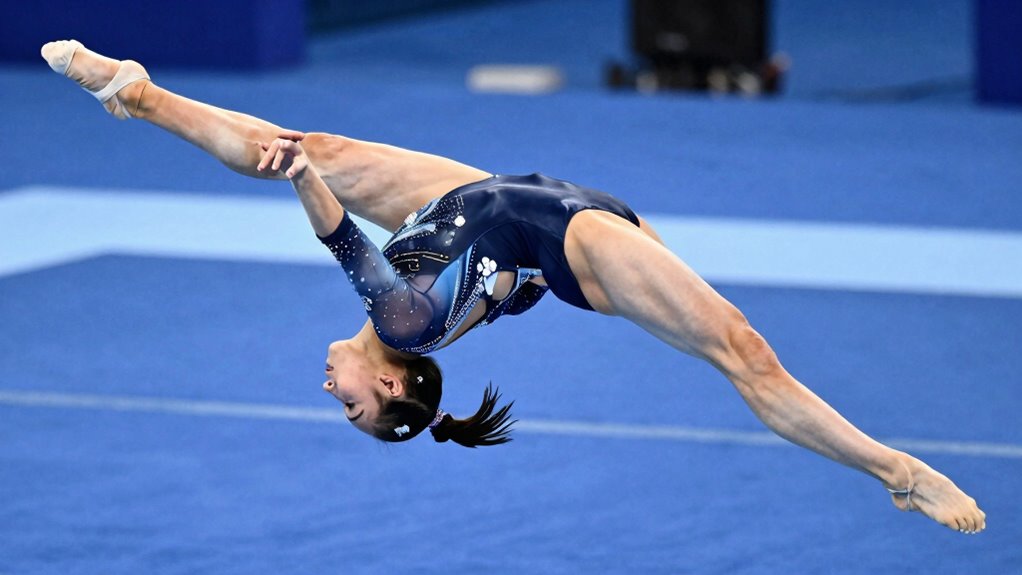
Capturing dynamic gymnastics moments requires more than just a good camera; it demands technique and timing. When you’re on the sidelines, it’s tempting to focus solely on your camera settings, but understanding lighting techniques is just as crucial. Gymnastics often takes place in varying lighting conditions—bright gymnasiums, shadowed areas, or uneven lighting from windows—so knowing how to adapt is key. Use fast shutter speeds to freeze motion, but also pay attention to the light source. If the gym’s lighting is harsh, consider adjusting your ISO or aperture to prevent overexposure. In low-light situations, a wide aperture and higher ISO can help, but be mindful of noise. The goal is to maintain sharpness without sacrificing image quality.
Adapt camera settings to lighting conditions for sharp, well-exposed gymnastics photos in any environment.
Your equipment choices play a significant role here, too. Telephoto lenses are a must-have—they allow you to capture close-up action from a distance and help isolate the gymnast from a busy background. A lens with a wide aperture (f/2.8 or wider) gives you more flexibility in low-light conditions and creates a pleasing background blur, which makes your subject stand out. Fast autofocus systems are equally important because gymnasts move quickly and unpredictably. Invest in a camera with reliable autofocus tracking, so you’re constantly locked onto the athlete even during complex flips or spins. A sturdy, lightweight tripod or monopod can also help stabilize your shots when you’re shooting at slower shutter speeds, especially in indoor environments where lighting might be less than ideal.
Many creators overlook the importance of planning their shot angles and understanding the flow of routines. Position yourself where you have a clear line of sight and enough space to anticipate the gymnast’s movement. Remember, lighting techniques extend beyond just camera settings—they include the way you position yourself relative to the light source. Shooting with the light behind you or from the side can reduce shadows and glare, giving your photos more clarity. Additionally, consider how your equipment choices can influence your shooting style; for example, a wide-angle lens might be perfect for capturing entire routines, while a telephoto is better for close-up expressions or details. Properly understanding lighting conditions and how they can be manipulated is often overlooked but essential for achieving optimal results. Being aware of lighting variability and adjusting your approach accordingly ensures more consistent and striking images.
Furthermore, developing an awareness of lighting techniques such as diffusing harsh light or utilizing reflectors can dramatically improve your indoor gymnastics shots. In the end, mastering gymnastics photography isn’t just about capturing moments—it’s about understanding how to manipulate lighting techniques and making smart equipment choices. When you pay attention to these often-missed details, your images will gain sharpness, clarity, and a sense of movement that truly stands out. Many creators overlook these nuances, but once you incorporate them into your workflow, you’ll notice a significant difference in your results.
gymnastics photography telephoto lens
As an affiliate, we earn on qualifying purchases.
As an affiliate, we earn on qualifying purchases.
Frequently Asked Questions
How Do I Choose the Best Lens for Gymnastics Photography?
You should choose a lens with a fast aperture, ideally f/2.8 or wider, to freeze motion and handle indoor lighting. Opt for focal length choices around 70-200mm, giving you flexibility to capture both close-up and distant shots without disturbing the action. Prioritize lenses with good autofocus and image stabilization. This combination helps you stay agile, guarantees sharp images, and captures the dynamic energy of gymnastics routines.
What Camera Settings Are Ideal for Capturing Fast Gymnastics Moves?
To capture fast gymnastics moves, set your camera to a fast shutter speed, around 1/1000 sec, to freeze motion and prevent motion blur. Use continuous autofocus (AI Servo or AF-C) to keep athletes sharp as they move quickly. Adjust ISO as needed for proper exposure, especially in lower light. Practicing these autofocus techniques and quick shutter speeds guarantees you freeze dynamic moments, creating sharp, impactful gymnastics photos.
How Can I Improve My Timing to Catch Perfect Moments?
To improve your timing and catch perfect moments, focus on honing your timing precision by anticipating the gymnast’s movements. Use continuous autofocus and burst mode to capture multiple frames, increasing your chances of getting that ideal shot. Practice observing their rhythm to avoid motion blur, and stay alert for peak action points. With consistent practice, your shots will become sharper, and you’ll master capturing those fleeting, perfect gymnastics moments.
Is It Better to Shoot in RAW or JPEG for Gymnastics?
Shooting in RAW is better for gymnastics, as it allows you to capture more detail and adjust posing techniques and lighting later. During athlete preparation, you’ll want to anticipate their movements and capture those fleeting moments. RAW files give you greater flexibility to fine-tune exposure and colors, ensuring you preserve the action’s intensity. JPEGs might be quicker but limit your editing options, so go RAW for professional results.
How Do I Manage Lighting in Indoor Gymnastics Venues?
To manage lighting in indoor gymnastics venues, you need to optimize studio lighting and control ambient illumination. Use fast lenses with wide apertures to let in more light, and set your camera to a high ISO to compensate for low light conditions. Position your flashes or strobes strategically to fill shadows without overexposing. Adjust your white balance to match the ambient illumination, ensuring vibrant, clear images of the gymnasts in action.
fast autofocus camera for sports
As an affiliate, we earn on qualifying purchases.
As an affiliate, we earn on qualifying purchases.
Conclusion
Don’t forget the fundamentals: focus, flash, and framing. Mastering these may seem simple, but they’re the foundation for fantastic gymnastics photos. By balancing brightness, capturing bold movements, and honing your hustle, you’ll elevate your images from good to great. Remember, the real reward lies in the details you don’t overlook. So stay sharp, shoot smart, and let your lens lead you to legendary shots that truly showcase the spirit and strength of every gymnast.
lighting reflectors for indoor photography
As an affiliate, we earn on qualifying purchases.
As an affiliate, we earn on qualifying purchases.
As an affiliate, we earn on qualifying purchases.
Halloween Picks
halloween
As an affiliate, we earn on qualifying purchases.