
When choosing between DSLR and mirrorless camera kits for sports photography, focus on speed and adaptability. DSLRs excel with high-speed autofocus and versatile zoom lenses like the 70-200mm f/2.8. Mirrorless options are lightweight and offer fast frame rates, making them great for action shots. Both types require mastery of techniques like tracking and panning for the best results. Your choice of gear and skills can make a real difference in capturing thrilling moments, and there’s more to explore.
Get ready for Prime Big Deal Days — try Prime free
Exclusive member deals on October 6–7, plus fast free delivery. Cancel anytime.
As an affiliate, we earn on qualifying purchases.
Key Takeaways
- Gear Type: The choice between DSLR and mirrorless kits affects shooting style and adaptability to various sports environments.
- Autofocus Speed: High-speed autofocus is crucial for freezing fast-paced action and ensuring sharp images of moving subjects.
- Lens Selection: A versatile lens, like a 70-200mm f/2.8 for DSLRs or prime lenses for mirrorless, enhances low-light performance and reach.
- Shooting Techniques: Mastering techniques like panning and continuous shooting is essential for capturing dynamic moments effectively.
- Preparation and Practice: Skill development and familiarity with equipment significantly impact the ability to tell compelling stories through sports photography.
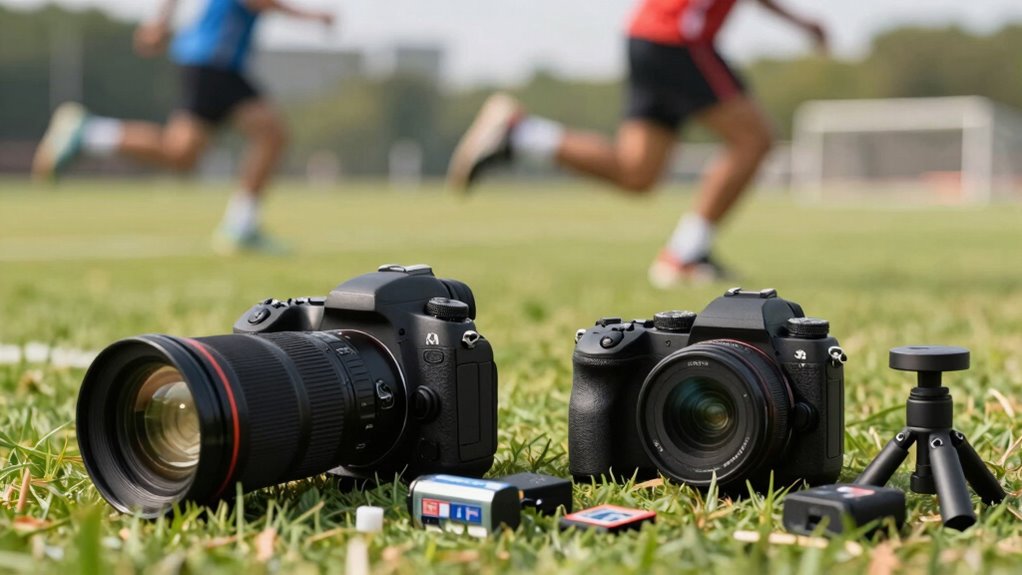
When you’re capturing the fast-paced action of sports, having the right camera kit can make all the difference. You want gear that not only withstands the rigors of the environment but also enhances your ability to shoot dynamic scenes. Two essential camera kits stand out for sports photographers, each offering distinct advantages based on your specific needs and shooting techniques.
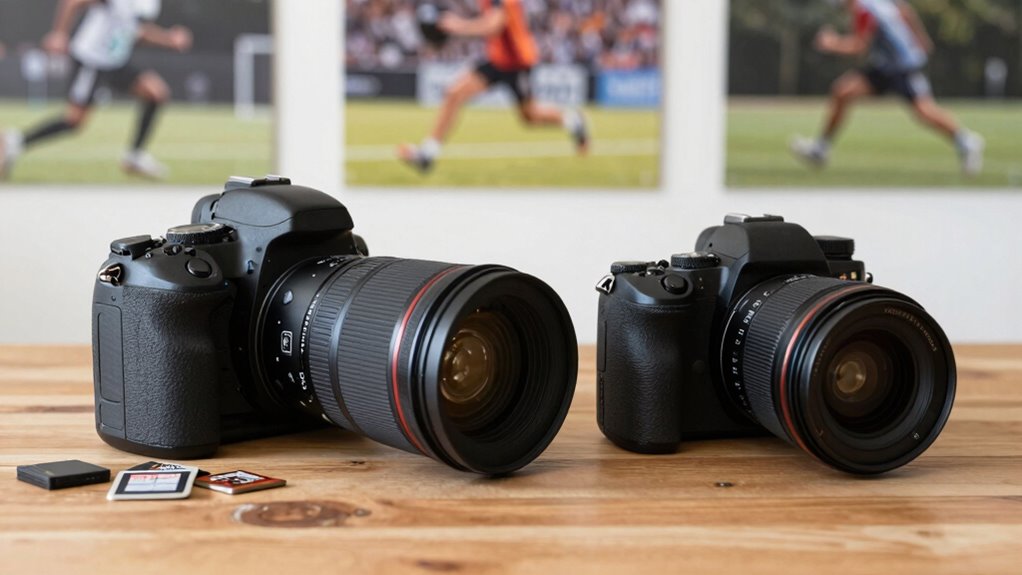
First, consider a DSLR camera kit. A robust DSLR can handle high-speed autofocus and burst shooting, fundamental for freezing those fleeting moments on the field. Pair it with a versatile zoom lens, like a 70-200mm f/2.8. This lens option is popular among sports photographers because it offers a great balance of reach and low-light performance. You’ll find that the f/2.8 aperture allows you to maintain fast shutter speeds, which is essential for capturing sharp images of athletes in motion. With this setup, you can quickly zoom in or out, adapting to the action without missing a beat. Additionally, investing in fast autofocus systems can greatly improve your ability to keep up with rapid movements. Incorporating burst mode techniques can also help you capture multiple frames in quick succession, increasing your chances of getting that perfect shot.
Consider a DSLR kit with a 70-200mm f/2.8 lens for capturing sharp, dynamic sports action effortlessly.
Next, think about mirrorless camera kits. These have gained popularity for their compact size and weight, making them easier to maneuver during events. A good mirrorless option might include a camera with high frame rates and a fast autofocus system, paired with a prime lens like a 50mm f/1.8 or a 35mm f/1.4. While prime lenses can limit your framing options, they excel in low-light conditions and offer stunning image quality. This setup encourages you to refine your shooting techniques. You’ll need to anticipate the action and move to get the right composition, which can ultimately improve your skills. Also, selecting the right gear can significantly impact your ability to adapt quickly during fast-paced sports moments.
Regardless of which kit you choose, mastering your shooting techniques is critical. You’ll want to practice tracking subjects as they move, using continuous shooting modes to capture sequences of action. Don’t underestimate the importance of knowing when to pan your camera, either; it can create dramatic motion blur while keeping your subject sharp. Developing these skills is often as important as the gear itself, especially when you aim to tell compelling stories through sports images.
In the end, whether you go with a DSLR or a mirrorless setup, what truly matters is how you use your gear. The right lens options and shooting techniques will elevate your sports photography, allowing you to tell compelling stories through your images. So gear up, practice, and get ready to capture the thrill of the game!
As an affiliate, we earn on qualifying purchases.
Frequently Asked Questions
How Do I Choose Between Mirrorless and DSLR Cameras for Sports Photography?
When you’re choosing between mirrorless and DSLR cameras for sports photography, consider what you need. Mirrorless advantages include faster autofocus and lighter weight, making them easier to handle during action shots. On the other hand, DSLR features often provide superior battery life and an optical viewfinder, which some photographers prefer. Think about your shooting style and whether you prioritize speed and portability or traditional handling and durability. Your choice should match your specific needs.
What Lens Focal Lengths Are Best for Capturing Fast-Moving Subjects?
To capture fast-moving subjects, you’ll want fast lenses with focal lengths between 70mm and 300mm. Think of it like a cheetah in full sprint; you need the right tools to keep pace. A 70-200mm lens is versatile for most sports, while a 300mm can help you reach distant action without losing detail. The right focal length lets you frame the moment perfectly, ensuring you don’t miss that split-second thrill.
How Important Is Continuous Shooting Speed for Sports Photography?
Continuous shooting speed is essential for sports photography. You need quick shutter response to capture those split-second moments, and a high buffering capacity guarantees you won’t miss action while waiting for your camera to catch up. When athletes are moving fast, every frame counts, and a slower camera can lead to missed opportunities. So, make certain your gear can handle rapid bursts to get the best shots during intense action.
Are Prime Lenses Better Than Zoom Lenses for Sports Action Shots?
Prime lenses often outperform zoom lenses for sports action shots, with studies showing they can deliver sharper images due to fewer moving parts. While prime lens advantages include superior low-light performance and better image quality, zoom lens flexibility allows you to adapt quickly to changing scenes. If you find yourself in dynamic environments, having both can enhance your shooting experience, giving you the best of both worlds for capturing fast-paced action.
What Accessories Are Essential for Sports Photography Besides the Camera and Lens?
For sports photography, you’ll want a few essential accessories besides your camera and lens. A sturdy tripod provides stability, ensuring sharp shots during fast action. Lighting equipment, like portable flashes or reflectors, can help in low-light situations, enhancing your images. Don’t forget extra memory cards and batteries, as you’ll need them for long events. A comfortable camera strap also makes a huge difference, allowing you to shoot for hours without strain.
As an affiliate, we earn on qualifying purchases.
Conclusion
In the world of sports photography, your camera kit is like a well-tuned athlete—each piece plays a crucial role in achieving greatness. Whether it’s the speed of your shutter or the clarity of your lens, every element matters in capturing that perfect moment. Embrace the tools that resonate with your style and let them propel you toward stunning shots. Remember, it’s not just about the gear; it’s about how you wield it to tell your story.
As an affiliate, we earn on qualifying purchases.
fast autofocus camera for sports
As an affiliate, we earn on qualifying purchases.
As an affiliate, we earn on qualifying purchases.
Fall yard work Picks
leaf blowers
As an affiliate, we earn on qualifying purchases.