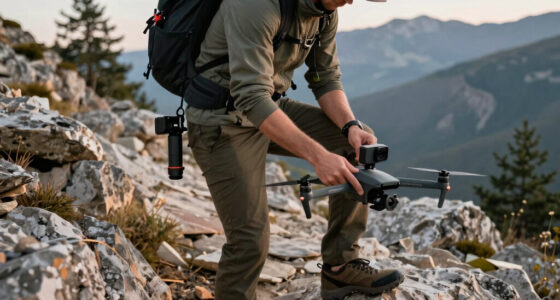
For outdoor sports, I would start with the Canon EOS R10 if you want fast bursts and two lenses in one kit, or choose the EOS R7 if detailed crops, in-body stabilization, and advanced video matter more. The Rebel T7 is the lower-complexity DSLR option, but its slower burst rate makes it a tougher fit for fast, unpredictable action. These cameras differ most in autofocus and shooting speed, lens reach and handling, and how much room they leave for video or future growth.

Get sports gear delivered free with Prime
- Fast, free delivery on millions of items
- Prime Video, Amazon Music and more included
- Member-only deals all year
My ranking favors the R10 as the most rounded action kit, because its stated burst rate and included wide-to-telephoto coverage suit varied outdoor events. The R7 earns the premium-oriented spot for resolution and stabilization, though its included lens still has a variable f/4-5.6 aperture. The T7 gives beginners two useful focal-length ranges and an optical viewfinder, but it cannot keep up with the mirrorless models’ burst speeds. I focus here on tracking action, capturing a usable sequence, reaching athletes from the sidelines, and managing the compromises that show up outdoors.
Complete the kit



Key Takeaways
- The EOS R10 is my best overall choice here: its listed 23 fps electronic burst rate and subject tracking favor fast action, while its two included lenses cover both general shooting and distant subjects.
- The EOS R7 is the strongest fit for buyers who want 32.5MP files, in-body stabilization, and oversampled 4K up to 60p, but its bundle includes only the 75-300mm lens.
- The Rebel T7 offers a starter DSLR kit with both an 18–55mm and a 75–300mm lens, but its 3 fps continuous shooting is a real limitation for rapid plays.
- A long lens helps frame athletes from a distance, but the bundled 75-300mm lenses have variable f/4-5.6 apertures; dim light can still call for a faster lens or higher ISO.
- Choose by the action you photograph: R10 for speed and kit versatility, R7 for resolution and stabilization, and T7 for basic still photography with a traditional optical viewfinder.
| Canon EOS R10 Mirrorless Camera Bundle with 18-150mm and 75-300mm Lenses |  | Best Overall for Fast, Varied Outdoor Action | Sensor: 24.2MP APS-C CMOS | Lens mount: Canon RF | Included lenses: RF-S 18-150mm f/3.5-6.3 IS STM; RF 75-300mm f/4-5.6 | VIEW LATEST PRICE | See Our Full Breakdown |
| Canon EOS R7 Mirrorless Camera with RF 75-300mm Lens Bundle |  | Best for Resolution, Stabilization, and Hybrid Shooting | Sensor: 32.5MP APS-C CMOS | Included lens: Canon RF 75-300mm f/4-5.6 | Continuous shooting: Up to 15 fps | VIEW LATEST PRICE | See Our Full Breakdown |
| Canon EOS Rebel T7 DSLR Camera Double Zoom Lens Kit |  | Best Beginner DSLR Kit for Slower Action | Camera type: DSLR | Sensor: 24.1MP APS-C CMOS | Included lenses: EF-S 18–55mm and EF 75–300mm | VIEW LATEST PRICE | See Our Full Breakdown |
| cameras for outdoor sports photography | Sensor | Continuous shooting | Video | Autofocus |
|---|---|---|---|---|
| Canon EOS R10 Mirrorless Camer | 24.2MP APS-C CMOS | Up to 23 fps electronic | Oversampled 4K UHD from 6K; Full HD slow motion | Subject detection for people, animals, and vehicles |
| Canon EOS R7 Mirrorless Camera | 32.5MP APS-C CMOS | Up to 15 fps | Oversampled 4K UHD up to 60p; Full HD up to 120p | Dual Pixel AF II |
| Canon EOS Rebel T7 DSLR Camera | 24.1MP APS-C CMOS | 3 fps | Full HD 1080p | 9-point AF with AI Servo AF |
More Details on Our Top Picks
Canon EOS R10 Mirrorless Camera Bundle with 18-150mm and 75-300mm Lenses
The EOS R10 is my best overall pick because it pairs the highest listed burst rate in this lineup with a kit that is ready for more than one shooting distance. Its electronic continuous shooting reaches up to 23 fps, and the described subject-tracking autofocus recognizes people, animals, and vehicles. That combination is useful when a runner changes direction, a cyclist approaches quickly, or a play unfolds faster than a single carefully timed frame allows. Burst rate is not a guarantee of a sharp keeper, but it gives you more frames from which to choose.
The bundle is especially flexible beside the R7 kit. The R10 includes an 18-150mm lens and a 75-300mm lens, so you can use the shorter zoom for nearby action, warmups, sidelines, and wider scenes, then switch to the longer lens when the subject is far across a field. The R7’s included telephoto is useful for reach, but its bundle does not list a second general-purpose lens. If you are starting with no compatible glass, that difference matters more than an accessory bag or card.
For outdoor shooters who also record clips, the R10 offers oversampled 4K from 6K and Full HD slow motion, along with Wi-Fi and Bluetooth for sharing or remote shooting. Its 24.2MP APS-C sensor gives room for moderate cropping, though the R7’s 32.5MP file offers more detail to work with when you need to crop a distant subject. The R10 is lighter in capability than a dedicated high-resolution body, but its balance of speed, tracking, and two-lens coverage makes it the easier one-kit recommendation.
The main limit is the included 75-300mm f/4-5.6 lens. It can frame distant athletes in bright conditions, yet the variable maximum aperture gives less light as you zoom in than a faster telephoto might. That can mean raising ISO or accepting slower shutter speeds when the sun drops. There is no built-in flash listed, though a flash is rarely the answer for distant outdoor action. I would pick the R10 over the T7 for fast sports without hesitation; I would pick the R7 instead when resolution, in-body stabilization, or 4K/60p video matters more than maximum burst speed and a two-lens starter kit.
Pros:- Up to 23 fps electronic continuous shooting suits brief, fast-moving moments.
- Subject detection tracks people, animals, and vehicles.
- The 18-150mm and 75-300mm lenses cover general scenes through distant action.
- Oversampled 4K video and wireless connectivity add flexibility beyond stills.
Cons:- The included 75-300mm lens has a variable f/4-5.6 maximum aperture, which can constrain shutter speed in fading light.
- No built-in flash is included, and the R7 offers higher resolution plus in-body stabilization.
Best for: Photographers who want a fast mirrorless body, subject tracking, and both everyday and telephoto coverage in one starter bundle.
Not ideal for: Buyers who need a brighter telephoto lens for late-day action, want the R7’s higher resolution and in-body stabilization, or prefer a built-in flash.
- Sensor:24.2MP APS-C CMOS
- Lens mount:Canon RF
- Included lenses:RF-S 18-150mm f/3.5-6.3 IS STM; RF 75-300mm f/4-5.6
- Continuous shooting:Up to 23 fps electronic
- Video:Oversampled 4K UHD from 6K; Full HD slow motion
- Autofocus:Subject detection for people, animals, and vehicles
- Connectivity:Wi-Fi, Bluetooth, HDMI
- Weight:2 lb
Our verdict“I recommend the EOS R10 as the most versatile action kit here, especially for buyers who value fast bursts and two useful focal-length ranges over maximum resolution.”
Canon EOS R7 Mirrorless Camera with RF 75-300mm Lens Bundle
The EOS R7 is the more advanced stills-and-video choice in this group. Its 32.5MP APS-C sensor gives you extra detail compared with the R10 and T7, which can be helpful when you cannot move closer and need to crop around an athlete. It also includes in-body image stabilization, a feature the supplied R10 specifications do not list for the body. Stabilization can help steady framing and reduce camera shake in appropriate situations, although it does not freeze a moving athlete; a sufficiently fast shutter speed still matters for action.
For sports bursts, the R7 is listed at up to 15 fps. That is slower than the R10’s stated 23 fps electronic burst rate, but well ahead of the Rebel T7’s 3 fps. The R7’s Dual Pixel AF II and subject-tracking autofocus make it a more action-oriented option than the older entry-level DSLR. I would choose it over the R10 when the extra resolution, stabilization, and richer video modes are more valuable than the R10’s higher listed burst ceiling.
Video is a notable point of difference: the R7 records oversampled 4K up to 60p and Full HD up to 120p. That gives a sports shooter more flexibility for smooth motion or slow-motion sequences than the R10’s described video offer, and it is a substantial step beyond the T7’s Full HD 1080p limit. If your coverage includes both stills and clips, this package is the strongest video-oriented body in the lineup.
The bundle’s practical compromise is its lens selection. It includes a 75-300mm f/4-5.6 telephoto, but no shorter zoom is listed. That reach can be useful from the sidelines, yet it is not as flexible for nearby scenes or broad event coverage as the R10’s pair of lenses. The variable aperture also remains a concern when light fades. The R7 weighs a listed 2 pounds, the same as the R10, so neither has a clear weight advantage in the supplied specifications. I see this as the pick for a buyer building around a higher-detail body and willing to add a wider lens later, rather than the simplest all-in-one kit.
Pros:- 32.5MP APS-C sensor provides more cropping detail than the other two cameras here.
- In-body image stabilization helps steady the camera in suitable shooting situations.
- Up to 15 fps continuous shooting and Dual Pixel AF II support action photography.
- Oversampled 4K up to 60p and Full HD up to 120p suit sports video.
Cons:- The bundle lists only a 75-300mm telephoto, leaving wider event coverage to an additional lens.
- The included lens has a variable f/4-5.6 maximum aperture, and the listed body weight is 2 pounds.
Best for: Sports photographers who prioritize cropping detail, in-body stabilization, and high-frame-rate 4K video, and who are comfortable adding another lens for wider coverage.
Not ideal for: Buyers seeking the highest stated burst rate or a two-lens package ready for both nearby and distant subjects.
- Sensor:32.5MP APS-C CMOS
- Included lens:Canon RF 75-300mm f/4-5.6
- Continuous shooting:Up to 15 fps
- Video:Oversampled 4K UHD up to 60p; Full HD up to 120p
- Image stabilization:In-body
- Autofocus:Dual Pixel AF II
- Memory card:64GB UHS-II SDXC
- Weight:2 lb
Our verdict“I would choose the EOS R7 when detail, stabilization, and 4K/60p matter more than the R10’s faster listed burst rate and more complete lens bundle.”
Canon EOS Rebel T7 DSLR Camera Double Zoom Lens Kit
The Rebel T7 is the entry-level pick for someone who wants a traditional DSLR with two zoom lenses and straightforward automatic or manual modes. Its 24.1MP APS-C sensor is close in resolution to the R10’s 24.2MP sensor, and the included EF-S 18–55mm and EF 75–300mm lenses cover general views and distant subjects. For a beginner learning how focal length changes framing, that range is useful; for a field sport, the long zoom can bring action closer in the frame than the short kit lens.
Its biggest weakness beside the mirrorless cameras is unmistakable: continuous shooting is limited to 3 fps. The R10’s listed 23 fps and the R7’s 15 fps give them far more frames per second from which to select a peak moment. That difference matters during a sprint finish, a jump, or a quick turn. The T7 can still photograph sports, especially predictable or slower action, but the photographer will need to anticipate the moment rather than rely on a rapid burst.
The autofocus system is also more basic on paper: a 9-point AF system with AI Servo AF, compared with subject-tracking and Dual Pixel AF II descriptions for the mirrorless models. Its optical viewfinder provides a direct, traditional way to follow a scene, and the camera has both automatic and manual modes. Those qualities make it approachable for learning, but they do not erase its action-speed limits. The listed viewfinder coverage is approximately 95%, a detail to keep in mind when composing tightly.
Video is another clear separation. The T7 records Full HD 1080p, whereas the R10 offers oversampled 4K and the R7 reaches oversampled 4K up to 60p. Its built-in Wi-Fi and NFC support wireless sharing, but the body and kit are listed at 3 pounds, heavier than either mirrorless option’s 2-pound listing. I would favor the T7 over the R10 only when a beginner values a basic DSLR experience and the two-lens kit more than burst speed and advanced video. For regularly photographing fast sports, I would save the T7’s place in the lineup for slower action and choose one of the mirrorless bodies instead.
Pros:- The 24.1MP APS-C sensor supports detailed still images.
- Two included lenses span everyday framing and telephoto reach.
- Automatic and manual modes suit photographers learning camera controls.
- The optical viewfinder and built-in Wi-Fi and NFC offer a traditional DSLR workflow with wireless sharing.
Cons:- The 3 fps continuous shooting rate is far behind both mirrorless alternatives for rapid action.
- Its 9-point autofocus and Full HD-only video are less capable than the R10 and R7 specifications.
- The listed 3-pound weight is higher than the 2-pound mirrorless models.
Best for: New photographers learning DSLR controls who want both a standard zoom and a telephoto zoom for casual outdoor events or slower-moving sports.
Not ideal for: Anyone covering fast, unpredictable action, needing high burst rates, or wanting 4K video and newer subject-tracking features.
- Camera type:DSLR
- Sensor:24.1MP APS-C CMOS
- Included lenses:EF-S 18–55mm and EF 75–300mm
- Continuous shooting:3 fps
- Autofocus:9-point AF with AI Servo AF
- Video:Full HD 1080p
- Viewfinder:Optical, approximately 95% coverage
- Weight:3 lb
Our verdict“I recommend the Rebel T7 for learning and slower outdoor action, not for buyers who need to catch a high percentage of fleeting sports moments.”
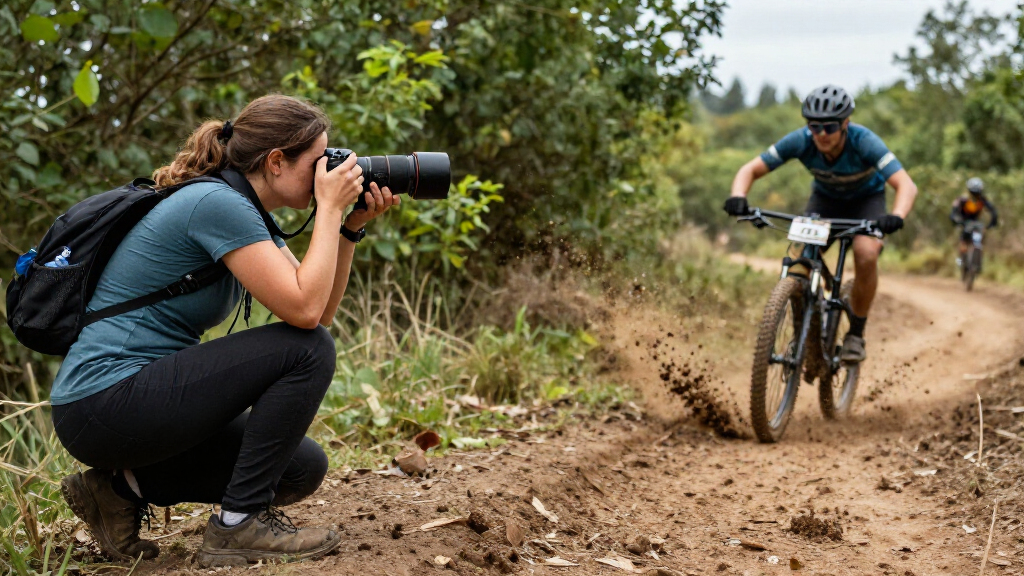
How We Picked
I ranked these cameras for outdoor sports photography, not for general-purpose use. That means I gave the most weight to the traits that help capture action: continuous shooting rate, autofocus capabilities described in the supplied product details, sensor resolution for cropping, stabilization, and included lens coverage. A camera may have a strong specification on paper, but the value of that feature depends on the type of sport and the distance between photographer and subject.
I put the EOS R10 first because its listed electronic burst rate reaches 23 fps and its subject-detection autofocus is described as tracking people, animals, and vehicles. Its two included lenses also give a new owner a broader starting range than the R7 bundle, which includes a telephoto lens alone. The R7 ranks close behind: its 32.5MP sensor, in-body stabilization, and oversampled 4K up to 60p make it the more capable choice for cropping and mixed stills-video work, while its listed maximum burst rate is 15 fps.
The Rebel T7 ranks third for this particular job, not because it cannot make sports photographs, but because its 3 fps rate and 9-point autofocus system are less suited to catching brief moments in fast play. Its two-lens kit and optical viewfinder can still make sense for a new photographer covering slower action or learning exposure control. I also noted weight, video limits, and practical kit contents. I did not treat included accessories as substitutes for a fast lens, and I did not assume unprovided performance details such as weather sealing or autofocus behavior beyond the supplied descriptions.
All three bundles include a telephoto zoom, but none of the supplied descriptions establishes that the included lens has a constant wide aperture. Their reach is useful for field sports and distant subjects; the f/4-5.6 range can be limiting as daylight fades. My ranking reflects that shared constraint as well as each camera body’s differences.
| cameras for outdoor sports photography | Included lenses | Video |
|---|---|---|
| Canon EOS R10 Mirrorless Camer | RF-S 18-150mm f/3.5-6.3 IS STM; RF 75-300mm f/4-5.6 | Oversampled 4K UHD from 6K; Full HD slow motion |
| Canon EOS R7 Mirrorless Camera | — | Oversampled 4K UHD up to 60p; Full HD up to 120p |
| Canon EOS Rebel T7 DSLR Camera | EF-S 18–55mm and EF 75–300mm | Full HD 1080p |
Factors to Consider When Choosing Best Cameras For Outdoor Sports Photography
For outdoor sports, choosing a camera is a balance between action speed, reach, and light. A high burst rate can capture more phases of a play, but it does not make a slow lens brighter. A telephoto zoom frames distant athletes, yet a wide view can matter for nearby action, team scenes, and the surroundings that give an event context. I would match the body and lens kit to where you shoot, how quickly the sport moves, and whether you mainly deliver still photos or video.
Burst rate and autofocus for decisive moments
Continuous shooting rate indicates how many frames a camera can record per second under its stated conditions. In this comparison, the R10 lists up to 23 fps, the R7 up to 15 fps, and the T7 3 fps. That makes the R10 the clear specification-led choice for sequences of fast action, while the R7 remains a meaningful step ahead of the DSLR. A higher rate can help when the best expression, ball position, or stride lasts only a fraction of a second.
Autofocus matters just as much. The R10’s subject detection is described for people, animals, and vehicles, and the R7 lists Dual Pixel AF II. The T7 has a 9-point system with AI Servo AF. Those descriptions distinguish the mirrorless bodies as the more action-focused options in this group. Still, no camera removes the need to keep the subject in the focus area and choose an appropriate shutter speed. If you photograph a sport with predictable movement, anticipation can compensate for some of the T7’s lower burst rate; for erratic play, I would favor the R10 or R7.
Choose lens reach for the venue
When you cannot approach the field, a telephoto lens helps fill more of the frame with the athlete. Each bundle listed here includes a 75-300mm lens, giving buyers a long focal-length option. The R10 goes further by adding an 18-150mm zoom, while the T7 includes an 18–55mm lens alongside its telephoto. The R7 package lists only the 75-300mm, so it is the least complete kit for broad scenes and close sidelines unless you already have another compatible lens.
Lens range does not tell the whole story. Both modern bundles’ listed telephoto lenses have a variable f/4-5.6 maximum aperture. At longer focal lengths and later in the day, less light reaches the sensor, which can make a fast shutter speed harder to maintain without raising ISO. If dusk sports are common, plan for the possibility of adding a brighter telephoto lens. For daytime events, the bundled reach may be a useful starting point, but I would not assume it will perform like a faster lens in low light.
Resolution, cropping, and stabilization
When you photograph from a fixed position, you may not always fill the frame with the action. The R7’s 32.5MP sensor records more pixels than the R10’s 24.2MP and T7’s 24.1MP sensors, providing more room to crop while retaining detail. This can be valuable when an athlete is small in the original frame, but cropping cannot replace optical reach or recover detail that was never captured. The R10 and T7 still offer similar stated resolution, and either may be enough for many web or moderate-size output needs.
The R7 also lists in-body image stabilization. Stabilization can reduce the effect of camera movement when framing or shooting at slower shutter speeds, but it does not stop a player from moving. For sharp sports action, shutter speed remains the key tool for freezing motion. I would treat stabilization as a helpful extra for still subjects, panning, or mixed event coverage, not as a substitute for a fast shutter or a brighter lens.
Think about video before choosing a body
If video is part of your event coverage, the R7 has the broadest stated options: oversampled 4K up to 60p and Full HD up to 120p. The R10 records oversampled 4K from 6K and Full HD slow motion, while the T7 is limited to Full HD 1080p in the supplied description. That makes the R7 the better match for buyers who plan to make higher-frame-rate 4K clips, and the R10 a capable middle ground for a stills-first owner who also wants 4K.
Video needs can change how you value a kit. A second lens may be more useful than a higher video mode if you switch frequently between wide context and distant play. On the other hand, if you already own compatible lenses, the R7 body’s capture modes and resolution become more persuasive. I would not pay attention to the format headline alone; consider which focal lengths you need and whether your editing and delivery workflow benefits from the available modes.
Account for handling and the whole kit
Outdoor events can involve long stretches standing, walking, and tracking a subject through the viewfinder. The R10 and R7 are each listed at 2 pounds, while the T7 is listed at 3 pounds. Weight can matter when carrying a body plus a telephoto lens, although the figures provided do not establish whether every bundle component is included in those measurements. The R10 bundle also lists a memory card, bag, battery, charger, and other small accessories; the R7 bundle lists a card, bag, battery, and related items.
For a first camera kit, included accessories reduce the number of initial pieces to assemble, but they should not drive the ranking over action performance. The most consequential choice is still the camera and lens combination. If you need wide and distant framing immediately, the R10’s pair is the most flexible of these bundles. If you already have an appropriate lens or plan to add one, the R7 may be the more capable body. The T7’s two-lens setup is broad, but its speed and weight are genuine compromises for sports use.
Match the camera to your sport and shooting position
Field sports often keep the photographer far from the subject, so telephoto reach and autofocus tracking take priority. Races, cycling, and outdoor events can bring athletes closer and farther away in quick succession, making the R10’s included 18-150mm plus 75-300mm coverage practical. For sports that move slowly or follow a predictable path, the T7 may be sufficient if you are learning and can time individual frames. The R7 suits a photographer who wants to crop more heavily or pair stills with advanced video.
Before choosing, ask whether your most common challenge is missing the peak moment, being too far away, or working with poor light. The R10 addresses burst speed and flexible kit coverage. The R7 adds resolution, stabilization, and stronger stated video modes. The T7 offers a basic DSLR experience and two zooms, but it asks for more precise timing. That distinction is more useful than treating all three as interchangeable cameras with similar sensor sizes.
Frequently Asked Questions
Which camera in this lineup is best for fast outdoor sports?
I would choose the Canon EOS R10 for fast, unpredictable action because it has the highest listed continuous shooting rate here, up to 23 fps, plus subject detection for people, animals, and vehicles. The R7 is also a strong action option at up to 15 fps and has Dual Pixel AF II, while the T7’s 3 fps rate is better suited to slower or more predictable moments.
Is the EOS R7 a better choice than the EOS R10?
It depends on which advantages matter most to you. The R7 offers 32.5MP resolution, in-body stabilization, and oversampled 4K up to 60p, making it a better fit for cropping and hybrid video work. The R10 has a higher stated burst rate and includes both an 18-150mm and 75-300mm lens, so I prefer it as a ready-to-shoot general sports kit.
Can the Rebel T7 photograph sports?
Yes, especially slower action or events where you can anticipate when a moment will happen. Its 24.1MP APS-C sensor and included 75-300mm lens can frame distant subjects, but the 3 fps burst rate and 9-point autofocus put it behind the R10 and R7 for fast play. I would choose it as a learning DSLR rather than as the strongest option for unpredictable action.
Are the included 75-300mm lenses suitable for outdoor sports?
They provide useful telephoto reach for photographing athletes from a distance, particularly in daylight. The listed lenses have a variable f/4-5.6 maximum aperture, which can limit light at longer focal lengths as the day gets darker. For late-afternoon or evening games, you may need to raise ISO or consider a brighter compatible telephoto lens to help maintain a fast shutter speed.
Which bundle is most complete for someone starting from scratch?
The R10 bundle is the most versatile starting kit in this comparison because it includes both an 18-150mm lens and a 75-300mm lens, covering general views and distant action. The T7 also includes two lenses, but it has much slower continuous shooting and older, simpler autofocus specifications. The R7 bundle includes a useful telephoto, though buyers who need wider coverage will want another lens.
Conclusion
My overall recommendation is the Canon EOS R10 for most outdoor sports photographers in this group. Its 23 fps listed burst rate, subject-detection autofocus, and two included lenses make it the strongest all-around kit for changing distances and fast moments. Choose the EOS R7 if you value higher-resolution cropping, in-body stabilization, and 4K up to 60p more than the R10’s higher stated burst speed and broader lens bundle; plan for another lens if you need wide coverage. Pick the Rebel T7 if you are learning with a DSLR and primarily photograph slower action, while accepting that 3 fps is a serious limit for fast play. For every option, remember that the included 75-300mm lens’s variable aperture can become a constraint in fading light.