

The best trail running headlamp in this roundup is the Fenix HL18R-T V2.0, a running-focused option with an 800-lumen maximum output. The Petzl IKO CORE stands out for runners prioritizing a lightweight, distinctive fit, while the Nitecore NU27 offers USB-C charging and a more compact approach. Choosing among these trail running headlamps means balancing beam output, comfort, runtime, weather protection, and whether you want a rechargeable or replaceable-battery design. Higher output can help on dark, technical trails, but it may bring more weight or faster battery drain. Read on for the full breakdown and advice on matching a headlamp to your routes.

Get sports gear delivered free with Prime
- Fast, free delivery on millions of items
- Prime Video, Amazon Music and more included
- Member-only deals all year
Complete the kit


Key Takeaways
- Running-specific fit is a meaningful separator: the Fenix HL18R-T V2.0 and Petzl IKO CORE are more directly oriented toward movement than general-purpose options such as the Black Diamond Cosmo 350.
- Maximum lumens do not tell the whole story: the Fenix HM65R-T V2.0 and Nitecore NU43 offer high-output headroom, but runners should also weigh comfort, beam control, and battery demands.
- Compact models favor carry comfort over maximum output: the Nitecore NU20 Classic, NU25 UL, and NU27 suit runners who value a small rechargeable light for familiar routes.
- Rechargeable choices vary in versatility: USB-C models offer convenient charging, while the Black Diamond Cosmo 350’s battery-based format can appeal when charging access is limited.
- Multipacks and broad-beam designs involve compromises: the LHKNL two-pack and wide-beam generic option may suit backup or casual use, but dedicated runners should check fit, beam reach, and weather protection carefully.
| Black Diamond Cosmo 350 Headlamp |  | Best for Battery Flexibility | Maximum brightness: 350 lumens | Power source: 3 AAA batteries or compatible BD 1500 Li-ion battery | Included batteries: 3 AAA | VIEW LATEST PRICE | See Our Full Breakdown |
| Nitecore NU20 Classic Ultralight Headlamp, 360 Lumens |  | Best Compact Pick | Weight: 1.34 oz | Maximum brightness: 360 lumens | Beam distance: 119 yards | VIEW LATEST PRICE | See Our Full Breakdown |
| Black Diamond Storm 500-R Rechargeable Headlamp | 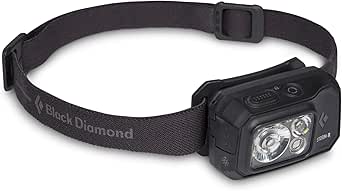 | Best for Wet, Demanding Trails | Maximum brightness: 500 lumens | Battery: 2400 mAh lithium-ion, rechargeable | Charging: Micro-USB | VIEW LATEST PRICE | See Our Full Breakdown |
| Petzl IKO CORE Rechargeable Headlamp, 500 Lumens |  | Best for Multisport Versatility | Brightness: 500 lumens | Weight: 79 g | Battery: CORE rechargeable lithium-ion battery, 1250 mAh; compatible with 3 AAA batteries | VIEW LATEST PRICE | See Our Full Breakdown |
| Fenix HL18R-T V2.0 800-Lumen Trail Running Headlamp |  | Best for Technical Night Running | Maximum output: 800 lumens | Beam distance: Up to 136 yards (126 meters) | Light modes: 4 white, 4 warm white, and 2 red | VIEW LATEST PRICE | See Our Full Breakdown |
| Nitecore NU27 USB-C Rechargeable Headlamp, 600 Lumens |  | Best for Versatile Light Color | Maximum brightness: 600 lumens | Beam distance: 134 yards | Light colors: Warm, neutral, and cool white; red | VIEW LATEST PRICE | See Our Full Breakdown |
| Lepro Rechargeable LED Headlamp, 5 Modes, IPX4 Waterproof, Black |  | Best for Simple, Short Runs | Maximum brightness: 300 lumens | White brightness: 150 lumens | Beam distance: Up to 500 feet | VIEW LATEST PRICE | See Our Full Breakdown |
| Nitecore NU25 UL 400-Lumen USB-C Rechargeable Headlamp |  | Best Compact Pick | Maximum brightness: 400 lumens | Maximum beam distance: 144 yards | Weight: 1.65 ounces | VIEW LATEST PRICE | See Our Full Breakdown |
| Fenix HM65R-T V2.0 USB-C Rechargeable Running Headlamp |  | Best for High-Output Technical Trails | Maximum brightness: 1600 lumens | Beam distance: 185 yards | Light colors: White and warm white | VIEW LATEST PRICE | See Our Full Breakdown |
| Nitecore UT27 MCT Pro 800-Lumen Rechargeable Headlamp |  | Best for Backup Power Flexibility | Maximum brightness: 800 lumens | Beam distance: 183 yards | Light modes: 3000K warm, 4500K neutral, 6500K cool, and steady or flashing red | VIEW LATEST PRICE | See Our Full Breakdown |
| EverBrite 360-Lumen Rechargeable Headlamp with White, Red, and SOS Modes |  | Best Lightweight Budget-Style Pick | Maximum brightness: 360 lumens | Beam distance: 76 yards | Weight: About 1.34 oz | VIEW LATEST PRICE | See Our Full Breakdown |
| LHKNL Rechargeable LED Headlamps, 2-Pack |  | Best Shared-Use Two-Pack | Pack size: 2 headlamps | Brightness: 1200 lumens | Battery capacity: 1500 mAh | VIEW LATEST PRICE | See Our Full Breakdown |
| Nitecore NU43 Rechargeable Headlamp, 1400 Lumens |  | Best for Technical, High-Speed Trails | Maximum brightness: 1400 lumens | Beam distance: 142 yards | Battery life: 10 hours | VIEW LATEST PRICE | See Our Full Breakdown |
| Rechargeable LED Headlamp – 1500 Lumens, 230° Wide Beam, 3 Modes, IPX6 Waterproof, Includes Tail Light and Clips |  | Best Wide-Beam Visibility | Brightness: 1500 lumens | Beam angle: 230° | Battery capacity: 5000 mAh | VIEW LATEST PRICE | See Our Full Breakdown |
| trail running headlamp | Water resistance | Weight | Maximum brightness | Beam distance |
|---|---|---|---|---|
| Black Diamond Cosmo 350 Headla | IP67; submersion up to 1 meter for 30 minutes | — | 350 lumens | — |
| Nitecore NU20 Classic Ultralig | IP66 | 1.34 oz | 360 lumens | 119 yards |
| Black Diamond Storm 500-R Rech | Waterproof | — | 500 lumens | — |
| Petzl IKO CORE Rechargeable He | IPX4 | 79 g | — | — |
| Fenix HL18R-T V2.0 800-Lumen T | IP66 | 3.63 oz with sport headband; 4 oz listed item weight | — | Up to 136 yards (126 meters) |
| Nitecore NU27 USB-C Rechargeab | IP66 | 1.92 ounces | 600 lumens | 134 yards |
| Lepro Rechargeable LED Headlam | IPX4 | 2.86 ounces | 300 lumens | Up to 500 feet |
| Nitecore NU25 UL 400-Lumen USB | IP66 | 1.65 ounces | 400 lumens | — |
| Fenix HM65R-T V2.0 USB-C Recha | IP68 | 4.96 ounces | 1600 lumens | 185 yards |
| Nitecore UT27 MCT Pro 800-Lume | IP66 | 2.61 ounces with headband and battery | 800 lumens | 183 yards |
| EverBrite 360-Lumen Rechargeab | IP54 | About 1.34 oz | 360 lumens | 76 yards |
| LHKNL Rechargeable LED Headlam | IPX4 | 1.87 oz | — | — |
| Nitecore NU43 Rechargeable Hea | Waterproof | 4.09 oz | 1400 lumens | 142 yards |
| Rechargeable LED Headlamp | IPX6 | 270 g | — | — |
More Details on Our Top Picks
Black Diamond Cosmo 350 Headlamp
The Cosmo 350 suits runners who want a straightforward lamp with a backup power plan: it runs on the included AAA batteries or a compatible BD 1500 rechargeable battery. Its IP67 rating offers stronger water protection than the Petzl IKO CORE’s IPX4 rating, a useful distinction for wet-weather routes. At 350 lumens, though, it has less stated output than the rechargeable Storm 500-R and Fenix HL18R-T V2.0, so it is a better match for familiar trails and moderate pace than for fast running on dark, technical terrain. Dimming and red night vision add flexibility, but the rechargeable battery is not included. I’d choose it for replaceable-battery convenience, not maximum brightness or a ready-to-recharge setup.
Pros:- Runs on included AAA batteries or a compatible rechargeable BD 1500 battery
- IP67 rating provides substantial water protection
- Dimming, strobe, and red night-vision modes support varied tasks
- Up to 350 lumens in a head-mounted design
Cons:- Rechargeable BD 1500 battery is not included
- Lower maximum output than the Storm 500-R and Fenix HL18R-T V2.0
- Needs to be dried completely after wet use
Best for: Trail runners who prefer carrying spare AAA batteries and want strong water protection for rainy or muddy outings.
Not ideal for: Runners who need a bright beam for fast technical descents or want USB charging without buying an extra battery.
- Maximum brightness:350 lumens
- Power source:3 AAA batteries or compatible BD 1500 Li-ion battery
- Included batteries:3 AAA
- Lighting modes:Dimming, strobe, red night vision
- Water resistance:IP67; submersion up to 1 meter for 30 minutes
- Material:Polycarbonate
- Dimensions:4 x 3 x 2 in
- Warranty:3 years
Our verdict“Choose the Cosmo 350 if replaceable AAA power and IP67 protection matter more to you than high output or built-in USB charging.”
Nitecore NU20 Classic Ultralight Headlamp, 360 Lumens
At 1.34 oz, the Nitecore NU20 Classic is the lightest-feeling choice in this group by listed weight, making it appealing to runners who want less gear on their head. Its USB-C rechargeable battery avoids the Cosmo 350’s need for AAA replacements or a separately purchased rechargeable cell, while SOS and Beacon modes add useful signaling options. The tradeoff is a modest 360-lumen ceiling: the Storm 500-R and Fenix HL18R-T V2.0 offer more output for runners who need extra visibility on rough, unfamiliar trails. The NU20’s IP66 protection and 1-meter impact rating suit outdoor use, and its listed 97-hour low-mode runtime favors conservative settings. That figure is for low, not a promise of long runtime at full brightness; red light lasts only two hours.
Pros:- Lightweight at 1.34 oz
- USB-C rechargeable battery
- Includes SOS and Beacon modes alongside white and red light
- Up to 97 hours of runtime on low
Cons:- Maximum output is lower than the Storm 500-R and Fenix HL18R-T V2.0
- Red-light runtime is 2 hours
- The 97-hour runtime applies to low mode, not maximum brightness
Best for: Weight-conscious runners on familiar routes who want USB-C charging, signaling modes, and a very light headlamp.
Not ideal for: Runners who need sustained high output, extended red-light use, or maximum brightness for technical night trails.
- Weight:1.34 oz
- Maximum brightness:360 lumens
- Beam distance:119 yards
- Battery life:Up to 97 hours on low
- Charging:USB-C
- Water resistance:IP66
- Impact resistance:1 m
- Light modes:Three white-light brightness levels, red light, SOS, Beacon, and reading light
- Warranty:2 years
Our verdict“Pick the NU20 Classic if minimizing headlamp weight matters more than having the strongest beam or long red-light runtime.”
Black Diamond Storm 500-R Rechargeable Headlamp
The Storm 500-R is the more capable Black Diamond choice here for runners who want a brighter rechargeable lamp and water protection that goes beyond the Cosmo 350’s already strong IP67 rating: the Storm is described as waterproof, though no specific IP code is provided. Its 500-lumen output gives it more headroom than the 350-lumen Cosmo for poorly lit routes, while dimming and red night vision help keep light controlled at camp or on easier sections. It also has an integrated 2400 mAh battery, so there is no need to choose between AAA and a rechargeable cell as with the Cosmo. The main compromise is charging by micro-USB, an older connector than the USB-C ports on the Nitecore NU20 Classic and Fenix HL18R-T V2.0. Battery runtime and beam distance are not specified here, which makes planning longer outings harder.
Pros:- Up to 500 lumens, more output than the Cosmo 350
- Integrated rechargeable 2400 mAh lithium-ion battery
- Waterproof construction
- Includes dimming, strobe, and red night-vision modes
Cons:- Charges via micro-USB rather than USB-C
- No runtime or beam-distance figure is provided in the product data
- Does not offer the AAA backup option available on the Cosmo 350
Best for: Runners who want a 500-lumen rechargeable headlamp with waterproof construction and do not mind carrying a micro-USB cable.
Not ideal for: Runners standardizing on USB-C or those who need stated runtime and beam-distance figures to plan long, remote outings.
- Maximum brightness:500 lumens
- Battery:2400 mAh lithium-ion, rechargeable
- Charging:Micro-USB
- Lighting modes:Full strength, dimming, strobe, red night vision
- Water resistance:Waterproof
- Mounting type:Head mount
- Material:Polycarbonate
- Warranty:3 years
Our verdict“Choose the Storm 500-R for a brighter, waterproof rechargeable option if micro-USB charging and unspecified runtime figures are acceptable.”
Petzl IKO CORE Rechargeable Headlamp, 500 Lumens
The Petzl IKO CORE earns its place for runners who want one light for trail sessions and camp use, rather than the most weather-protected running setup. Its 79 g weight, flexible AIRFIT headband, and ability to work as a neck light or lantern make it more adaptable than the head-only Black Diamond Storm 500-R. It also offers two beam types and a listed maximum runtime of 100 hours, though that maximum should not be read as full-output endurance. Power flexibility depends on the version: the product description says a CORE battery is included, while the supplied cons say the standard IKO model sells it separately, so buyers should verify the package contents. Its IPX4 rating is a clear limitation beside the Cosmo 350’s IP67 and the Fenix’s IP66 ratings, making it less suited to heavy rain or water exposure.
Pros:- Lightweight at 79 g
- Can be worn on the head or neck, or used as a lantern
- Supports the CORE rechargeable battery and three AAA batteries
- Folds flat for compact storage
Cons:- IPX4 water resistance is lower than the IP66 and IP67 ratings listed for other picks
- CORE battery inclusion varies in the supplied product information, so package contents need checking
- Maximum runtime does not indicate how long it runs at 500 lumens
Best for: Runners who also camp or travel and value a light that can be worn on the head or neck and used as a small lantern.
Not ideal for: Runners who regularly face heavy rain or want the strongest water protection; its IPX4 rating is below the Cosmo 350 and Fenix HL18R-T V2.0.
- Brightness:500 lumens
- Weight:79 g
- Battery:CORE rechargeable lithium-ion battery, 1250 mAh; compatible with 3 AAA batteries
- Lighting levels:3
- Beam types:2
- Maximum runtime:100 hours
- Light path distance:100 meters
- Water resistance:IPX4
- Mounting options:Head, neck, table, tent pole, or tree
Our verdict“Choose the IKO CORE if you want a versatile running and camp light, but favor the Cosmo 350 or Fenix for stronger stated water protection.”
Fenix HL18R-T V2.0 800-Lumen Trail Running Headlamp
The Fenix HL18R-T V2.0 leads this five-light group on stated maximum output, making it the strongest fit for runners who want more light available for fast descents or dark, uneven trails. Its 800 lumens and 136-yard beam distance exceed the Storm 500-R and Petzl IKO CORE, while warm-white and red modes give it more lighting choices than those simpler alternatives. USB-C charging is convenient, and the AAA option provides a fallback the NU20 Classic does not offer. Fenix lists up to 160 hours of runtime, but that maximum varies by brightness and mode, so it does not mean 160 hours at peak output. The 3.63 oz weight with sport headband is also heavier than the NU20 Classic’s 1.34 oz. Its IP66 rating and 1-meter impact resistance suit rough outdoor use, but this is a feature-rich choice rather than a minimal one.
Pros:- Highest stated maximum output in this group at 800 lumens
- USB-C charging plus compatibility with three AAA batteries
- White, warm-white, and red lighting modes
- IP66 rating and 1-meter impact resistance
Cons:- Heavier than the Nitecore NU20 Classic at 3.63 oz with the sport headband
- The 160-hour maximum runtime varies by brightness and mode
- Listed weight differs between the headband configuration and item measurement
Best for: Trail runners tackling technical, poorly lit routes who want high maximum output, multiple light tones, and either USB-C or AAA power.
Not ideal for: Runners prioritizing the lightest possible headlamp or seeking a simple, low-weight setup for familiar, well-marked trails.
- Maximum output:800 lumens
- Beam distance:Up to 136 yards (126 meters)
- Light modes:4 white, 4 warm white, and 2 red
- Power options:USB-C rechargeable or 3 AAA batteries
- Charging time:3 hours
- Runtime:Up to 160 hours
- Weight:3.63 oz with sport headband; 4 oz listed item weight
- Water resistance:IP66
- Impact resistance:1 meter
Our verdict“Choose the Fenix HL18R-T V2.0 if you need the brightest, most adaptable beam here and accept extra weight for that capability.”
Nitecore NU27 USB-C Rechargeable Headlamp, 600 Lumens
The Nitecore NU27 makes sense for trail runners who want more control over the character of their light than a single white beam provides. Its warm, neutral, and cool white settings let runners choose a beam tone to suit changing conditions, while red light adds a lower-glare option at camp or during a stop. At 600 lumens, it offers more peak output than the NU25 UL, though that extra brightness comes with a small weight increase: 1.92 ounces versus 1.65.
USB-C charging, IP66 protection, and a one-meter impact rating suit regular outdoor use, and the included diffusing stuff sack adds some flexibility off the trail. The tradeoff is that 600 lumens is less reserve than the Fenix HM65R-T V2.0’s 1600-lumen maximum. Its 57-hour figure also depends on mode, so I would not treat it as a high-output runtime estimate.
Pros:- Three white color temperatures plus red light give useful choices for different trail and camp tasks.
- USB-C charging and a battery status indicator make charge management more straightforward.
- IP66 water resistance and one-meter impact resistance suit wet, rugged outings.
- Includes a headband, clip, charging cable, and diffusing stuff sack.
Cons:- The 600-lumen maximum is modest beside the Fenix HM65R-T V2.0’s 1600-lumen output.
- The stated 57-hour maximum runtime varies by mode and should not be read as runtime at full brightness.
- At 1.92 ounces, it is heavier than the Nitecore NU25 UL.
Best for: Trail runners who want several white-light tones and red light in a compact, USB-C rechargeable lamp.
Not ideal for: Runners who need the brightest possible beam for fast descents; the Fenix HM65R-T V2.0 offers substantially higher peak output.
- Maximum brightness:600 lumens
- Beam distance:134 yards
- Light colors:Warm, neutral, and cool white; red
- Charging:USB-C
- Maximum runtime:Up to 57 hours
- Water resistance:IP66
- Impact resistance:Up to 1 meter
- Weight:1.92 ounces
Our verdict“Choose the NU27 if adjustable white-light tone and practical red light matter more than having the roundup’s highest peak output.”
Lepro Rechargeable LED Headlamp, 5 Modes, IPX4 Waterproof, Black
The Lepro Rechargeable LED Headlamp is the straightforward option here: five modes cover three white-light settings and two red-light choices, without the extra color-temperature controls found on the Nitecore NU27 or NU25 UL. Its 45-degree adjustable angle lets a runner aim the beam toward the trail rather than directly ahead, a helpful bit of flexibility when moving between paths and nearby tasks.
Its 300-lumen maximum is better suited to familiar routes and moderate pace than technical descents, where the Fenix HM65R-T V2.0 has much more output. The Lepro claims up to 30 hours per charge, but mode affects runtime, and the IPX4 rating is less protective than the IP66 rating on the Nitecore models. At 2.86 ounces, it is also heavier than both. I’d pick it for uncomplicated outings, not for runners seeking a particularly light or weather-hardened setup.
Pros:- Five modes provide straightforward white-light and red-light choices.
- The 45-degree angle adjustment helps direct light toward the ground.
- Up to 30 hours of stated runtime can suit repeated shorter outings between charges.
- USB-C cable is included for recharging.
Cons:- The 300-lumen maximum is limited beside the 600-lumen Nitecore NU27 and 1600-lumen Fenix HM65R-T V2.0.
- IPX4 protection is less robust than the IP66 ratings on the Nitecore NU27 and NU25 UL.
- At 2.86 ounces, it weighs more than the NU25 UL and NU27.
Best for: New or occasional trail runners on familiar routes who want basic white and red modes with an adjustable beam angle.
Not ideal for: Runners on exposed, wet, or technical trails who need stronger weather protection, lighter weight, or more peak output.
- Maximum brightness:300 lumens
- White brightness:150 lumens
- Beam distance:Up to 500 feet
- Light modes:5: 3 white and 2 red
- Battery life:Up to 30 hours
- Water resistance:IPX4
- Weight:2.86 ounces
- Adjustable angle:45 degrees
Our verdict“Pick the Lepro for simple modes and angle adjustment on familiar trails, but choose a brighter, more weather-resistant lamp for demanding conditions.”
Nitecore NU25 UL 400-Lumen USB-C Rechargeable Headlamp
For runners who put low weight ahead of extra brightness, the Nitecore NU25 UL is the clearest fit in this group. At 1.65 ounces, it is lighter than the NU27 and far lighter than the Lepro, while still offering warm, natural, and cool white light plus red, SOS, and beacon modes. Its 400-lumen ceiling is a step below the NU27’s 600 lumens, so the choice is a compact carry and a little less output versus a brighter beam.
The 144-yard beam distance is slightly longer on paper than the NU27’s 134 yards, though that figure does not tell the whole story about trail visibility. IP66 protection, one-meter impact resistance, and USB-C charging make the NU25 UL more suited to rough weather than the Lepro. Its 45-hour maximum runtime varies by mode, and runners who routinely need a very bright beam may prefer the Fenix HM65R-T V2.0.
Pros:- At 1.65 ounces, it is the lightest of these five options.
- Warm, natural, and cool white settings plus red light support varied trail and camp use.
- IP66 water resistance and one-meter impact resistance add protection in rough conditions.
- USB-C recharge and a stated maximum runtime of up to 45 hours support repeat use.
Cons:- Its 400-lumen maximum is lower than the NU27’s 600 lumens and the Fenix HM65R-T V2.0’s 1600 lumens.
- The 45-hour runtime depends on the selected mode and is not a full-output estimate.
- The supplied USB-C cable means charging still depends on access to a compatible power source.
Best for: Weight-conscious trail runners who want several light colors and weather protection for regular training and longer outings.
Not ideal for: Runners who prioritize high output for fast, technical descents; the Fenix HM65R-T V2.0 provides a much higher maximum brightness.
- Maximum brightness:400 lumens
- Maximum beam distance:144 yards
- Weight:1.65 ounces
- Light modes:Warm, natural, and cool white; red, SOS, and beacon
- Charging:USB-C rechargeable
- Maximum runtime:Up to 45 hours
- Water resistance:IP66
- Impact resistance:Up to 1 meter
Our verdict“Choose the NU25 UL if minimizing headlamp weight matters more than matching the NU27’s output or the Fenix’s high-brightness reserve.”
Fenix HM65R-T V2.0 USB-C Rechargeable Running Headlamp
The Fenix HM65R-T V2.0 is the performance-focused choice for runners who need a strong beam on rough or fast-moving terrain. Its 1600-lumen maximum and 185-yard beam distance give it far more stated reach than the Nitecore NU27 or NU25 UL, which can help reveal obstacles sooner on dark, technical trails. White and warm-white beams offer a simpler color selection than Nitecore’s three white temperatures, but the Fenix pairs its output with a magnesium alloy frame and an adjustable reflective headband designed for a secure running fit.
Protection is a standout: IP68 waterproofing and impact resistance up to two meters exceed the listed ratings of the other lamps in this batch. The tradeoff is weight. At 4.96 ounces, it is substantially heavier than the NU25 UL, so minimalist runners may find that model more appealing. The stated runtime of over 600 hours is setting-dependent, and should not be confused with runtime at maximum output.
Pros:- The 1600-lumen maximum and 185-yard beam distance provide the most stated output and reach in this batch.
- White and warm-white beams offer two options for different lighting preferences.
- IP68 waterproofing and two-meter impact resistance provide strong protection for demanding outings.
- Adjustable reflective headband is designed for a steady running fit.
Cons:- At 4.96 ounces, it is much heavier than the Nitecore NU25 UL and NU27.
- It offers white and warm-white beams rather than the wider selection of white color temperatures on the NU27 and NU25 UL.
- The over-600-hour maximum runtime depends on the selected light setting.
Best for: Trail runners who tackle technical, unlit routes and value strong reach, a running-oriented fit, and high water and impact protection.
Not ideal for: Runners prioritizing the lightest possible setup; the Nitecore NU25 UL weighs 1.65 ounces compared with this lamp’s 4.96 ounces.
- Maximum brightness:1600 lumens
- Beam distance:185 yards
- Light colors:White and warm white
- Charging:USB-C rechargeable
- Maximum stated runtime:Over 600 hours
- Material:Magnesium alloy
- Water resistance:IP68
- Impact resistance:Up to 2 meters
- Weight:4.96 ounces
Our verdict“Choose the Fenix when beam power and rugged protection outweigh the extra weight on technical night runs.”
Nitecore UT27 MCT Pro 800-Lumen Rechargeable Headlamp
The Nitecore UT27 MCT Pro stands apart for runners who do not want to rely on one power source. It includes two USB-C rechargeable battery packs and can also run on three AAA batteries, giving it a practical fallback for trips where charging is uncertain. Its 800-lumen maximum sits between the Nitecore NU27’s 600 lumens and the Fenix HM65R-T V2.0’s 1600, while the 183-yard beam distance comes close to the Fenix’s stated reach.
Three white color temperatures and steady or flashing red light offer a broad set of lighting choices, and the reflective, sweat-diverting headband is tailored to active use. IP66 protection and one-meter impact resistance match the NU27, but not the Fenix’s IP68 and two-meter ratings. Its 2.61-ounce weight is also higher than the NU25 UL’s, making this a better match for adaptable power than for ultralight running.
Pros:- Includes two USB-C rechargeable battery packs and supports three AAA batteries as an alternative power source.
- Three white color temperatures and steady or flashing red light provide several lighting choices.
- The 800-lumen maximum and 183-yard beam distance suit runners seeking more reach than the NU27 provides.
- Reflective, sweat-diverting headband and IP66 protection are suited to active outdoor use.
Cons:- At 2.61 ounces, it is heavier than the NU25 UL and NU27.
- IP66 protection and one-meter impact resistance are below the Fenix HM65R-T V2.0’s IP68 and two-meter ratings.
- AAA backup batteries are not included, so that alternative power option requires separate batteries.
Best for: Trail runners who take longer trips or want a rechargeable lamp with AAA battery backup when charging access is uncertain.
Not ideal for: Minimalist runners who want the lightest headlamp, or runners who need the Fenix HM65R-T V2.0’s higher output and stronger stated protection.
- Maximum brightness:800 lumens
- Beam distance:183 yards
- Light modes:3000K warm, 4500K neutral, 6500K cool, and steady or flashing red
- Power:USB-C rechargeable battery pack or 3 AAA batteries
- Included batteries:2 HLB1500 USB-C rechargeable battery packs
- Weight:2.61 ounces with headband and battery
- Water resistance:IP66
- Impact resistance:Up to 1 meter
Our verdict“Pick the UT27 MCT Pro if battery flexibility and broad lighting choices matter more than ultralight weight or the Fenix’s maximum output.”
EverBrite 360-Lumen Rechargeable Headlamp with White, Red, and SOS Modes
At about 1.34 ounces, this EverBrite is a lighter, simpler choice for short trail runs than the Nitecore NU43, which offers far more output but weighs more than four ounces. Its 360-lumen maximum and 76-yard beam suit familiar routes and moderate pace, while the white and red modes give runners options for trail visibility and preserving night vision. Nine modes, memory, and a lockout function add flexibility, though frequent mode changes may feel like more control than a basic run requires. The built-in 500 mAh battery keeps the setup compact, but it cannot be swapped on a long outing. IP54 protection handles splashes, not submersion, so this is better for fair-weather runs than exposed, wet adventures.
Pros:- Lightweight 1.34-ounce design reduces head-borne weight
- White and red light options, including SOS and Turbo modes
- Memory and lockout functions help manage settings and prevent accidental activation
- USB-C charging and adjustable 0°–45° tilt
Cons:- Built-in 500 mAh battery cannot be replaced during a long outing
- IP54 rating protects against splashes but not immersion
- 360-lumen maximum and 76-yard beam are less suited to fast running on technical trails
Best for: Runners on short, familiar trails who prioritize a low-weight lamp with red-light capability and USB-C charging.
Not ideal for: Runners tackling long, technical routes or heavy rain who need greater reach, a replaceable battery, or stronger water protection.
- Maximum brightness:360 lumens
- Beam distance:76 yards
- Weight:About 1.34 oz
- Lighting modes:9
- Battery:Built-in, non-removable 500 mAh lithium-ion, 3.7 V
- Charging:USB-C
- Water resistance:IP54
- Tilt:0°–45°
Our verdict“Choose the EverBrite for lightweight, short-to-moderate runs where red light matters more than high-output trail coverage.”
LHKNL Rechargeable LED Headlamps, 2-Pack
The LHKNL pair is the practical choice for runners who want a spare lamp or need to outfit a running partner without buying two separate models. Each headlamp offers white and red light, eight modes, motion-sensor control, and a 60° pivot; that gives it more adjustment and a higher listed brightness than the EverBrite 360-Lumen, though the figures alone do not establish how usable that brightness is on a trail. At 1.87 ounces per lamp, it remains light enough for casual runs, but its 4–10-hour stated battery life calls for charging before longer outings. The IPX4 rating is splash resistance, not a license for sustained rain or immersion. Compared with dedicated running models like the Fenix HL18R-T V2.0, this pair favors quantity and convenience over a more trail-focused single-lamp setup.
Pros:- Two headlamps in one set make it easy to keep a spare or share with a partner
- White and red lighting with eight modes
- Motion-sensor control and long-press controls offer flexible operation
- 60° pivot and adjustable elastic headband help direct and position the light
Cons:- Listed runtime of 4–10 hours may not cover longer outings without advance charging
- IPX4 protection is for splashes rather than immersion or sustained harsh weather
- Two-pack convenience does not replace the trail-focused features of a dedicated running lamp
Best for: Running partners, households, or beginners who want two rechargeable lamps for short, familiar routes and occasional outdoor use.
Not ideal for: Solo runners on long or technical trails who need dependable extended runtime, rugged weather protection, or a more specialized running fit.
- Pack size:2 headlamps
- Brightness:1200 lumens
- Battery capacity:1500 mAh
- Battery life:4–10 hours
- Weight:1.87 oz
- Water resistance:IPX4
- Lighting modes:8
- Head adjustment:60° pivot
Our verdict“Pick the LHKNL two-pack if shared use and having a spare matter more than long-run endurance or specialist trail performance.”
Nitecore NU43 Rechargeable Headlamp, 1400 Lumens
For runners who want to see farther ahead before committing to a fast step, the NU43 pairs a 1400-lumen maximum with a stated 142-yard beam—substantially more reach than the EverBrite 360-Lumen. Its spotlight and floodlight modes address different trail needs: the spot reaches down the route, while the flood spreads light closer to the feet. A proximity sensor dims the lamp near objects, which can help prevent close-range glare, and USB-C charging is listed as taking under two hours. At 4.09 ounces, though, it is a heavier choice than compact options such as the Nitecore NU20 Classic. The stated 10-hour battery life lacks mode-specific detail, so buyers cannot tell how long high output lasts. This is the stronger pick for demanding terrain, not the lightest setup for everyday mileage.
Pros:- 1400-lumen maximum and 142-yard stated beam reach
- Spotlight, floodlight, and red-light modes support different visibility needs
- Proximity sensor dims the light near close objects
- USB-C charging is listed as fully completing in under two hours
Cons:- At 4.09 ounces, it is heavier than compact models such as the Nitecore NU20 Classic
- The 10-hour runtime listing does not specify duration by brightness mode
- High maximum output may be unnecessary for runners on well-lit or familiar routes
Best for: Experienced runners on dark, technical routes who value long beam reach, adjustable beam types, and high output.
Not ideal for: Runners prioritizing minimum head weight or needing clear, mode-specific runtime figures for long outings at high brightness.
- Maximum brightness:1400 lumens
- Beam distance:142 yards
- Battery life:10 hours
- Charging:USB-C; full charge listed in under 2 hours
- Weight:4.09 oz
- Water resistance:Waterproof
- Light modes:Spotlight, floodlight, and red light
- Material:Anodized aluminum
Our verdict“Choose the NU43 when long reach and high-output beam options matter more than keeping your running setup ultralight.”
Rechargeable LED Headlamp – 1500 Lumens, 230° Wide Beam, 3 Modes, IPX6 Waterproof, Includes Tail Light and Clips
The defining feature here is the 230° beam, which spreads light across a broad field rather than concentrating it down the trail like the Nitecore NU43’s spotlight. That can help with peripheral awareness on open, uncomplicated paths, and the included red tail light adds rear visibility. The 5000 mAh USB-C battery and listed six-hour high-mode runtime give it a longer stated high setting than the LHKNL pair’s 4–10-hour overall range, though runtime conditions are not specified. The tradeoff is substantial: at 270 g, it is far heavier than the EverBrite or NU43, a noticeable burden for running. Three modes also offer less lighting flexibility than either of those models. Its IPX6 rating suits wetter conditions, but the broad-beam design and weight make it better for slower outings than fast technical trails.
Pros:- 230° beam provides broad peripheral illumination
- Includes a red tail light for rear visibility
- 5000 mAh battery with USB-C charging
- IPX6 waterproof protection and listed six-hour high-mode runtime
Cons:- At 270 g, it is much heavier than the EverBrite and Nitecore NU43
- Three modes provide less flexibility than the NU43’s spotlight, floodlight, and red-light options
- Six-hour high-mode runtime may not suit longer runs at maximum output
Best for: Runners on open routes who prioritize wide peripheral illumination, rear visibility, and stronger water protection over low weight.
Not ideal for: Fast or technical trail runners who need a light, stable headlamp with a focused beam and more fine-grained lighting modes.
- Brightness:1500 lumens
- Beam angle:230°
- Battery capacity:5000 mAh
- Charging:USB Type-C
- Modes:High, low, and strobe; red tail light
- Runtime:6 hours high; 12 hours low
- Weight:270 g
- Water resistance:IPX6
Our verdict“Choose this wide-beam lamp for slower, open-route runs where peripheral and rear visibility outweigh a lightweight, focused setup.”

How We Picked
I judged these trail running headlamps by how well their stated features serve running on uneven, dark routes—not by maximum lumens alone. The main factors were output and beam usefulness, stability during movement, weight and strap design, battery type and charging convenience, weather protection, and whether controls seem practical with cold or gloved hands. I also considered how well each lamp could serve as a running light rather than merely a general-purpose headlamp.
The order favors models with a clearer running fit and a balanced mix of useful light, wearability, and practical power options. Compact models rank well for low-bulk use but do not replace higher-output choices for technical trails; high-output designs must justify their added capability against likely weight and battery tradeoffs. General-purpose lamps, multipacks, and products with broad claims rank lower when their stated features offer less evidence of a running-focused design. Specifications can vary by configuration, so I recommend checking the current manufacturer details before buying.
| trail running headlamp | Charging |
|---|---|
| Black Diamond Cosmo 350 Headla | — |
| Nitecore NU20 Classic Ultralig | USB-C |
| Black Diamond Storm 500-R Rech | Micro-USB |
| Petzl IKO CORE Rechargeable He | — |
| Fenix HL18R-T V2.0 800-Lumen T | — |
| Nitecore NU27 USB-C Rechargeab | USB-C |
| Lepro Rechargeable LED Headlam | — |
| Nitecore NU25 UL 400-Lumen USB | USB-C rechargeable |
| Fenix HM65R-T V2.0 USB-C Recha | USB-C rechargeable |
| Nitecore UT27 MCT Pro 800-Lume | — |
| EverBrite 360-Lumen Rechargeab | USB-C |
| LHKNL Rechargeable LED Headlam | — |
| Nitecore NU43 Rechargeable Hea | USB-C; full charge listed in under 2 hours |
| Rechargeable LED Headlamp | USB Type-C |
Factors to Consider When Choosing Trail Running Headlamps
Before choosing a lamp, match it to the trail and pace you actually run. A familiar, lit path puts different demands on a headlamp than a rocky descent in the woods, and a high lumen figure cannot compensate for poor fit or an unhelpful beam. These factors can help narrow the field beyond the individual product differences above.
Match Beam Reach to Trail Speed
On smooth or familiar paths, a modest beam may be enough to see the route and stay visible to others. Faster running and technical terrain call for more reach and useful spill around the central beam, so you can spot turns, roots, and rocks before reaching them. A single maximum-output number does not reveal how evenly a light illuminates the ground or how long it can sustain that setting. Check available brightness levels and runtime at each setting rather than choosing solely by the headline lumen figure. A common mistake is buying maximum output for every run, then avoiding it because battery life or glare becomes inconvenient.
Prioritize a Stable Fit Over a Bare Weight Claim
Head movement is part of running, so a lamp that shifts or bounces can distract even if it is light on a scale. Look for a strap arrangement that can be adjusted securely without excessive pressure, and consider whether the lamp can sit comfortably over a hat or winter layer. A top strap may improve stability for some runners, though it can add setup and bulk. If possible, check the lamp’s listed weight with its battery and strap included; bare-unit weights can make comparisons misleading. A compact light may be the better choice for steady training, while a heavier model may be reasonable when its added beam or runtime serves a specific route.
Choose Battery Convenience for Your Routine
USB-C charging suits runners who can recharge between outings and want fewer disposable batteries in regular use. Replaceable batteries can be useful on longer trips or when charging access is uncertain, especially if you carry spares. Neither approach is automatically better: rechargeable models depend on planning, while spare batteries add weight and require compatible replacements. Check whether the advertised runtime applies to a low setting or a brighter one, since the difference can change how often you need to charge. For long night runs, a backup light or power plan matters more than a large maximum-output claim.
Treat Weather Protection as a Route Decision
Weather resistance matters when rain, mud, or sweat are part of your usual runs, but protection ratings do not mean every lamp is suited to every exposure. Compare the manufacturer’s stated rating and limits, and check whether the charging port has a cover or other protection. A lamp intended for occasional fair-weather outings may be adequate for paved paths but less reassuring for remote routes where failure leaves you without light. Do not assume that a product described as waterproof can be submerged or cleaned in any way. For wet-season running, favor clear protection details and a design you can inspect and maintain.
Look for Controls You Can Use at Pace
When you are moving, simple controls make it easier to change brightness without stopping or cycling through unwanted modes. Check whether the switch is easy to find by touch and whether the mode sequence is clear. Red light can be useful around a campsite or when preserving night vision, but it is not a substitute for a forward-facing trail beam. Strobe and SOS modes may have situational value, though they should not drive the purchase if the everyday beam and fit are weak. If you often run with gloves, prioritize accessible buttons and a control layout you can operate without removing them.
Pay for Capability You Will Use
Extra output, multiple beam colors, and larger batteries can be valuable when your routes are remote, technical, or long. For short runs on familiar paths, those features may add weight or complexity without making the outing better. Think about your most demanding regular route, not the rarest possible scenario, then decide whether a more capable lamp or a lighter everyday model fits your routine. A dependable backup can be a better use of your kit than carrying one oversized headlamp for every outing. Compare the complete setup—lamp, strap, charging needs, and any spare power—rather than treating the headlamp as an isolated spec sheet.
Frequently Asked Questions
Is an 800-lumen headlamp necessary for trail running?
Not for every route. A lower-output lamp can work well on familiar paths or where streetlights provide some background visibility, while higher output can help reveal obstacles sooner on dark, technical trails. The useful question is whether the beam gives you enough reach at your running speed and whether it can sustain that brightness for the full outing. Check runtime at the setting you expect to use rather than assuming the maximum setting lasts through a long run. For remote routes, carrying a backup light can matter more than selecting the largest lumen figure.
Should I choose a rechargeable or replaceable-battery headlamp?
Choose based on where and how you recharge. USB-C models are convenient when you can top up at home between runs, while replaceable batteries can be easier to manage on trips without reliable charging access. Think about the longest outing you plan to do and whether you are willing to carry spares or a charging source. Also compare runtime at practical brightness levels, since battery format alone does not predict how long the lamp will last. If the headlamp is your only light on remote trails, plan for a backup regardless of battery type.
Can a lightweight headlamp handle technical trails?
It can, if its beam reaches far enough for your pace and its fit stays secure while you move. Lightweight designs reduce bulk, which many runners appreciate on shorter or familiar routes, but some compact models offer less output than larger options. Compare beam pattern and usable brightness settings, not just weight and maximum lumens. A lamp that shifts or leaves shadows on the trail can be a worse choice than a slightly heavier one. Try to match the light to your fastest pace on your darkest regular route.
Do I need a separate chest light as well as a headlamp?
A chest light is optional, but some runners like the lower angle because it can make surface texture and shadows easier to read. A headlamp points where you look, which helps when checking signs or scanning around a bend. Combining the two can reduce dark spots, though it adds weight, charging, and setup. Start with a headlamp that fits securely and provides a useful beam for your route before adding another light. For long or remote runs, a small backup light may be more useful than a second primary beam.
What should I check before using a new headlamp on a night race?
Run with it on a familiar route before race day and check for bounce, pressure points, and control access while wearing your usual cap or layers. Test the brightness setting you plan to use and confirm that the battery can cover the expected outing with a sensible margin. Make sure you know how to switch modes without cycling blindly, and check whether the lamp remains comfortable after a longer run. Review race rules for permitted lights and battery requirements. Carry a backup or spare power option when the course is remote or the event lasts several hours.
Conclusion
For most trail runners, the Fenix HL18R-T V2.0 is my best overall pick because its running-focused design and 800-lumen maximum make it a strong fit for varied night routes. For a lighter, compact rechargeable option, I would look to the Nitecore NU27; runners seeking a distinctive lightweight fit can favor the Petzl IKO CORE. The Black Diamond Cosmo 350 is my best value-style choice for runners who want a straightforward general-purpose lamp, while the Nitecore NU25 UL is a sensible beginner pick for shorter, familiar outings where low bulk matters more than high output. For demanding routes and greater output headroom, consider the Fenix HM65R-T V2.0 or Nitecore NU43, but accept that a more capable lamp may bring added bulk and battery planning. If you need a backup or casual-use light, the multipack and broad-beam options have a place; for a primary technical-trail lamp, I would favor a model with clearer running fit, beam, and weather details.
Halloween Picks
halloween
As an affiliate, we earn on qualifying purchases.