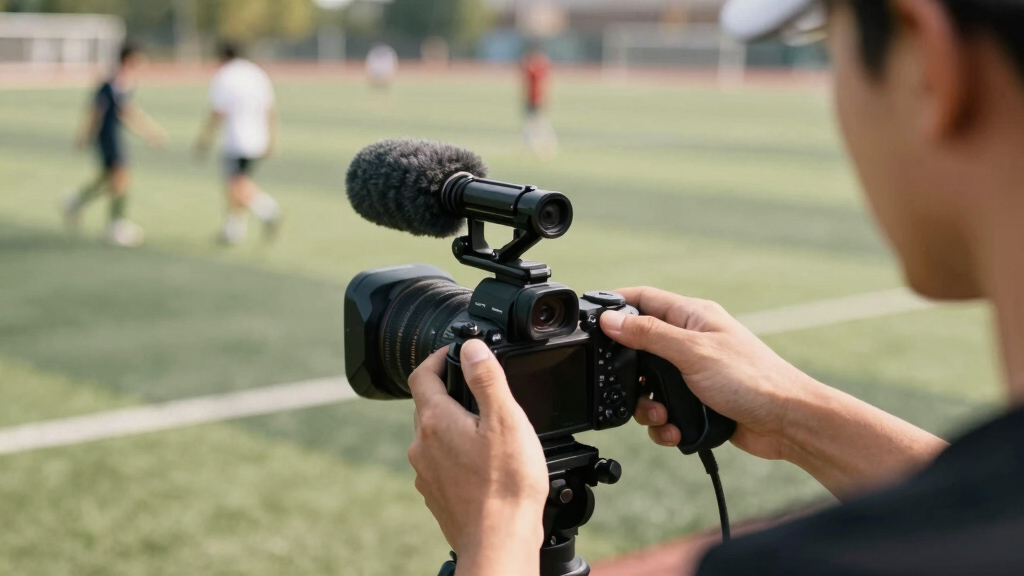

Choosing the best shotgun microphones for sports videography requires balancing directional audio precision with rugged portability, as outdoor environments present unique acoustic challenges like wind and crowd noise. My analysis identifies the Sony ECM-B1M as the top overall choice due to its digital signal processing that isolates game action from background stadium roar, while the Rode VideoMic NTG stands out for its versatile analog flexibility and compact form factor. The primary tradeoff you will face is between digital noise rejection, which offers cleaner isolated audio but often requires specific camera compatibility, and analog compatibility, which works with nearly any camera but demands superior wind protection. This guide breaks down how each model handles high-impact sports scenarios, helping you match the right pickup pattern and mounting system to your specific field conditions.

Get sports gear delivered free with Prime
- Fast, free delivery on millions of items
- Prime Video, Amazon Music and more included
- Member-only deals all year
Complete the kit


Key Takeaways
- Digital shotgun mics like the Sony ECM-B1M offer superior noise floor management in chaotic stadium environments compared to analog alternatives.
- Wind noise remains the single biggest threat to sports audio; models with integrated digital wind filters reduce the need for bulky external blimps.
- Supercardioid patterns provide a better balance of isolation and ambient context for team sports than tight lobar patterns, which can feel sterile.
- Camera hot shoe stability is critical for handheld sports shooting; lighter mics reduce fatigue and camera shake during long sideline sessions.
- XLR outputs on premium models allow for external recorder redundancy, a necessary safety net for high-stakes broadcast-quality sports production.
| Sony ECM-B1M Digital Shotgun Microphone |  | Best for Sony Camera Owners | Brand: Sony | Model: ECM-B1M | Polar Pattern: Hyper Cardioid | VIEW LATEST PRICE | See Our Full Breakdown |
| Rode VideoMic NTG Camera-mount Shotgun Microphone, Black |  | Best Overall Versatility | Brand: Rode | Model: VideoMic NTG | Polar Pattern: Supercardioid | VIEW LATEST PRICE | See Our Full Breakdown |
| RØDE VideoMic GO II Helix Ultra-Compact On-Camera Shotgun Microphone |  | Best Lightweight Option | Brand: RØDE | Model: VideoMic GO II Helix | Polar Pattern: Super Cardioid | VIEW LATEST PRICE | See Our Full Breakdown |
| RØDE VideoMic Pro+ On-Camera Shotgun Microphone |  | Best for Professional Workflows | Brand: RØDE | Model: VideoMic Pro+ | Polar Pattern: Unidirectional | VIEW LATEST PRICE | See Our Full Breakdown |
| Sennheiser MKE 600 Shotgun Microphone with Auray Shock Mount and Windshield |  | Best for XLR/Pro Audio Setups | Brand: Sennheiser | Model: MKE 600 | Polar Pattern: Unidirectional | VIEW LATEST PRICE | See Our Full Breakdown |
| Comica VM20 Shotgun Microphone for Camera and Smartphone | 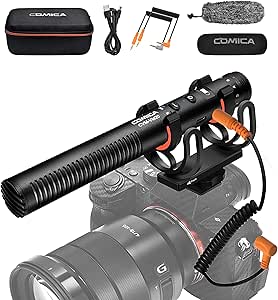 | Best for Long-Form Event Coverage | Battery Life: Up to 60 hours | Polar Pattern: Super Cardioid | Weight: 84 grams | VIEW LATEST PRICE | See Our Full Breakdown |
| Sennheiser MKE 400 Directional On-Camera Shotgun Microphone |  | Best for Audio Monitoring | Connectivity: 3.5 mm TRS and TRRS | Polar Pattern: Supercardioid | Power Source: 1 AAA Battery | VIEW LATEST PRICE | See Our Full Breakdown |
| Movo X1-Mini Supercardioid Shotgun Microphone |  | Best for Smartphone-First Shooters | Connectivity: 3.5 mm and USB-C | Polar Pattern: Supercardioid | Power: Plug-in power (Battery-free) | VIEW LATEST PRICE | See Our Full Breakdown |
| Movo VXR10 Universal Shotgun Microphone |  | Best Budget Entry Point | Weight: 51 g | Polar Pattern: Unidirectional | Power Source: No battery required | VIEW LATEST PRICE | See Our Full Breakdown |
| Sony ECM-M1 Digital Shotgun Microphone |  | Best for Sony Camera Users | Connectivity: Multi Interface (MI) Shoe | Recording Modes: 8 | Weight: 2.3 oz | VIEW LATEST PRICE | See Our Full Breakdown |
| Sennheiser MKE 600 Shotgun Microphone Bundle with Shockmount, XLR Cable, and Cleaning Cloth |  | Best for Professional Sports Broadcasters | Brand: Sennheiser | Model Name: MKE 600 | Microphone Form Factor: Shotgun | VIEW LATEST PRICE | See Our Full Breakdown |
| shotgun microphones for sports videography | Polar Pattern | Weight | Connectivity | Power Source |
|---|---|---|---|---|
| Sony ECM-B1M Digital Shotgun M | Hyper Cardioid | 2.88 ounces | MI Shoe (Digital), 3.5mm | Rechargeable Battery Pack |
| Rode VideoMic NTG Camera-mount | Supercardioid | 94g | 3.5mm TRS, USB-C | Internal Rechargeable Battery |
| RØDE VideoMic GO II Helix Ultr | Super Cardioid | 60g | 3.5mm TRS, USB-C | Camera/Device Powered |
| RØDE VideoMic Pro+ On-Camera S | Unidirectional | 4.32 oz | 3.5mm TRS | AA Batteries, LB-1, or USB |
| Sennheiser MKE 600 Shotgun Mic | Unidirectional | 128 g | XLR | Battery or Phantom Power |
| Comica VM20 Shotgun Microphone | Super Cardioid | 84 grams | — | — |
| Sennheiser MKE 400 Directional | Supercardioid | 344 g | 3.5 mm TRS and TRRS | 1 AAA Battery |
| Movo X1-Mini Supercardioid Sho | Supercardioid | — | 3.5 mm and USB-C | — |
| Movo VXR10 Universal Shotgun M | Unidirectional | 51 g | — | No battery required |
| Sony ECM-M1 Digital Shotgun Mi | — | 2.3 oz | Multi Interface (MI) Shoe | — |
| Sennheiser MKE 600 Shotgun Mic | Unidirectional | — | — | Battery Powered / Phantom Power |
More Details on Our Top Picks
Sony ECM-B1M Digital Shotgun Microphone
This microphone stands out because it bypasses analog interference entirely. By using the Multi Interface (MI) shoe, the Sony ECM-B1M sends a digital signal directly to compatible Sony cameras, eliminating the noise often found in 3.5mm jack connections. Compared to the analog Rode VideoMic NTG, this offers a cleaner, more consistent signal path that is ideal for professional sports coverage where audio clarity is non-negotiable.
The eight-capsule design allows for variable directivity, letting you switch between patterns to isolate the field action from crowd noise. However, this digital convenience comes with a significant limitation: it only works fully with specific Sony cameras. If you use a Canon or Nikon, you lose the digital benefits and revert to a basic analog connection, making this a niche choice for mixed-camera setups.
Pros:- Lossless digital audio transmission via MI shoe
- Variable directivity with three selectable patterns
- Extremely compact and lightweight form factor
- Advanced DSP reduces wind and handling noise
Cons:- Requires specific Sony camera models for full functionality
- Uses a non-standard rechargeable battery pack
- Limited analog compatibility compared to universal mics
Best for: Sony Alpha series camera owners who demand the cleanest possible digital audio signal without external recorders.
Not ideal for: Shooters using non-Sony cameras or those who need a universal analog connection for mixed-brand gear.
- Brand:Sony
- Model:ECM-B1M
- Polar Pattern:Hyper Cardioid
- Connectivity:MI Shoe (Digital), 3.5mm
- Signal-to-Noise Ratio:70 dB
- Weight:2.88 ounces
- Power Source:Rechargeable Battery Pack
- Warranty:1 year manufacturer
Our verdict“The definitive choice for Sony shooters who want plug-and-play digital audio quality.”
Rode VideoMic NTG Camera-mount Shotgun Microphone, Black
The Rode VideoMic NTG is the most adaptable option in this lineup, bridging the gap between camera audio and computer recording. Unlike the Sony ECM-B1M, which is locked into the Sony ecosystem, the NTG features an auto-sensing 3.5mm output and a USB-C port, allowing it to work seamlessly with cameras, phones, and laptops. Its flat frequency response delivers natural sound that requires minimal post-production EQ, a distinct advantage for fast-turnaround sports edits.
While it lacks the digital transmission of Sony’s MI shoe, its infinitely variable gain control lets you dial in levels precisely at the source, preventing the distortion common with fixed-level analog mics. It is heavier than the Rode VideoMic GO II, but the added weight brings a metal body and superior shock isolation, making it more durable for field sports.
Pros:- Dual connectivity via 3.5mm and USB-C
- Broadcast-grade flat frequency response
- Auto-sensing output detects connected devices automatically
- Metal construction with high-pass filter and safety channel
Cons:- Requires specific cables for some iOS devices
- Firmware updates needed for full feature set
- Heavier than ultra-compact alternatives
Best for: Content creators who switch between cameras, smartphones, and computers and need one reliable microphone for all devices.
Not ideal for: Users who prefer a strictly analog workflow without firmware updates or USB connectivity features.
- Brand:Rode
- Model:VideoMic NTG
- Polar Pattern:Supercardioid
- Frequency Response:20 Hz – 20 kHz
- Connectivity:3.5mm TRS, USB-C
- Self-Noise:Low
- Weight:94g
- Power Source:Internal Rechargeable Battery
Our verdict“A versatile powerhouse that adapts to any device while maintaining broadcast-quality audio fidelity.”
RØDE VideoMic GO II Helix Ultra-Compact On-Camera Shotgun Microphone
Weighing just 60 grams, the RØDE VideoMic GO II is the lightest entry here, designed to disappear on your camera rig. It solves the battery anxiety of the Rode VideoMic Pro+ by being completely battery-free, drawing power directly from the camera or phone. This makes it ideal for long-duration sports events where swapping batteries is impractical.
However, this simplicity comes at a cost. Unlike the Sennheiser MKE 600, which has physical switches for filters and pads, the GO II relies on RØDE Central software for advanced settings. If you forget to configure your high-pass filter via an app before the game starts, you are stuck with default settings. It is a brilliant tool for minimalists, but it demands pre-production planning that other mics handle on-device.
Pros:- Ultra-lightweight at 60g
- No batteries required
- Includes HELIX isolation mount and windshield
- Dual output with USB-C and 3.5mm
Cons:- Advanced features require software connection
- Plastic body feels less rugged than metal competitors
- No physical switches for gain or filters
Best for: Run-and-gun shooters using smartphones or light mirrorless cameras who prioritize zero setup time and no battery management.
Not ideal for: Users who need quick access to physical low-cut filters or attenuation pads on the fly.
- Brand:RØDE
- Model:VideoMic GO II Helix
- Polar Pattern:Super Cardioid
- Frequency Range:20 Hz – 20 kHz
- Signal-to-Noise Ratio:79 dB
- Connectivity:3.5mm TRS, USB-C
- Weight:60g
- Power Source:Camera/Device Powered
Our verdict“The perfect choice for creators who want professional audio with absolutely zero setup friction.”
RØDE VideoMic Pro+ On-Camera Shotgun Microphone
The RØDE VideoMic Pro+ is built for users who treat audio with serious intent. Its automatic power function is a lifesaver for sports videographers; the mic turns on when you power up the camera and off when you don’t, eliminating the risk of dead batteries on game day. Compared to the Rode VideoMic NTG, the Pro+ offers a more traditional, robust analog signal path with a Rycote Lyre suspension system that excels at dampening vibration from handheld rigs.
It offers flexible power options, including AA batteries or a proprietary rechargeable pack. While it lacks the USB connectivity of the NTG, its digital switching ensures the audio is processed cleanly before reaching the camera. This is a workhorse microphone for DSLR shooters who value reliability and physical controls over modern digital connectivity.
Pros:- Automatic power on/off when connected to camera
- Rycote Lyre suspension for superior vibration isolation
- Metal construction with 10-year warranty
- Three power options including USB power
Cons:- Heavier and bulkier than newer compact models
- No USB output for direct computer connection
- Proprietary rechargeable battery can be hard to replace
Best for: DSLR and mirrorless shooters who want automatic power management and a rugged metal build for long shoots.
Not ideal for: Shooters who need USB connectivity for direct computer recording or prefer modern battery-free designs.
- Brand:RØDE
- Model:VideoMic Pro+
- Polar Pattern:Unidirectional
- Frequency Range:40 Hz – 20 kHz
- Signal-to-Noise Ratio:74 dB
- Connectivity:3.5mm TRS
- Weight:4.32 oz
- Power Source:AA Batteries, LB-1, or USB
Our verdict“A reliable, feature-rich analog microphone that automates power management for stress-free shooting.”
Sennheiser MKE 600 Shotgun Microphone with Auray Shock Mount and Windshield
The Sennheiser MKE 600 is distinct because it speaks the language of professional audio: XLR. Unlike the consumer-focused Rode VideoMic GO II, this microphone is designed to plug into professional mixers, field recorders, or camcorders with XLR inputs. This makes it superior for handling high-SPL events like stadium sports, where phantom power provides a cleaner gain structure than battery-powered consumer mics.
It includes a professional windshield and shock mount in the box, addressing the two biggest enemies of outdoor sports audio: wind and handling noise. While it lacks the digital simplicity of the Sony ECM-B1M, its switchable low-cut filter and robust build quality make it a favorite for broadcast professionals. It is heavier and requires more cabling, but it delivers a cinematic audio depth that smaller on-camera mics struggle to match.
Pros:- XLR output for professional audio integration
- Includes high-quality shock mount and windshield
- Switchable low-cut filter for wind noise reduction
- Runs on phantom power for consistent gain
Cons:- Requires XLR adapter for most consumer cameras
- Larger and heavier than on-camera specific mics
- Battery not included for standalone operation
Best for: Videographers using camcorders with XLR inputs or those recording to external field recorders for broadcast-quality sports coverage.
Not ideal for: DSLR or mirrorless users without XLR adapters or those seeking a lightweight, plug-and-play solution.
- Brand:Sennheiser
- Model:MKE 600
- Polar Pattern:Unidirectional
- Frequency Response:40 Hz – 20 kHz
- Signal-to-Noise Ratio:78 dB
- Connectivity:XLR
- Weight:128 g
- Power Source:Battery or Phantom Power
Our verdict“The go-to choice for professionals who need broadcast-grade audio stability via XLR connections.”
Comica VM20 Shotgun Microphone for Camera and Smartphone
This option stands out for its 60-hour battery life, making it ideal for capturing entire games or tournaments without worrying about power failures. Unlike the Sennheiser MKE 400, which relies on replaceable AAA batteries, the Comica VM20 uses a rechargeable USB-C system that allows you to monitor power via its OLED display. While it includes robust wind protection accessories, the lack of an included XLR cable means users with professional audio interfaces may need to purchase adapters separately. The aluminum body keeps weight low at 84 grams, preserving balance on smaller rigs, though the digital gain adjustment requires careful calibration to avoid clipping during sudden loud cheers.Pros:- Extremely long battery life with USB-C charging capability
- OLED screen provides real-time power and gain monitoring
- Includes Rycote shockmount and multiple wind protection options
- Lightweight aluminum body minimizes rig fatigue
Cons:- Does not include an XLR cable for professional camera setups
- Digital gain adjustment can be tricky to set correctly for variable sports audio
Best for: Videographers covering full-day sports events or multi-game tournaments who need uninterrupted power and real-time battery monitoring.
Not ideal for: Users with high-end professional cameras requiring XLR connections out of the box, as no XLR cable is included.
- Battery Life:Up to 60 hours
- Polar Pattern:Super Cardioid
- Weight:84 grams
- Charging Interface:USB-C
- Display:OLED Power Display
- Material:Aluminum, Metal
Our verdict“Choose this if you prioritize all-day battery endurance and modern digital monitoring over traditional analog simplicity.”
Sennheiser MKE 400 Directional On-Camera Shotgun Microphone
This model is better suited to creators who need to listen to their audio while recording, thanks to its built-in headphone output. Compared to the Sony ECM-M1, which relies entirely on digital processing without a direct monitoring jack, the Sennheiser MKE 400 offers immediate feedback on wind noise or interference. It features a robust supercardioid pattern that isolates play-by-play commentary from stadium roar. However, it requires a single AAA battery, which adds a small maintenance task compared to the rechargeable Comica VM20. The included coiled cables are convenient but can snag if not managed carefully during active sports shooting.Pros:- Built-in headphone output for real-time audio monitoring
- Highly directional supercardioid pattern isolates target sounds
- Includes both TRS and TRRS cables for versatile device compatibility
- Integrated shock absorption reduces handling noise
Cons:- Requires replacement AAA batteries rather than USB charging
- Coiled cables can be cumbersome to manage on a moving rig
Best for: Content creators who need to verify audio quality in real-time during interviews or sideline reporting.
Not ideal for: Users who prefer rechargeable solutions, as this unit relies on disposable AAA batteries.
- Connectivity:3.5 mm TRS and TRRS
- Polar Pattern:Supercardioid
- Power Source:1 AAA Battery
- Weight:344 g
- Warranty:2-year manufacturer warranty
- Monitoring:Headphone Output
Our verdict“Select this microphone if real-time audio monitoring is a non-negotiable feature for your sports coverage workflow.”
Movo X1-Mini Supercardioid Shotgun Microphone
This pick makes the most sense for videographers who primarily use smartphones or tablets due to its native USB-C digital connection. Unlike the Movo VXR10, which depends on analog plug-in power that can introduce noise on some mobile devices, the X1-Mini provides a cleaner digital signal when connected via USB-C. It is battery-free, eliminating the need to carry spares. However, the single-channel limitation means it cannot capture stereo ambience as effectively as multi-capsule options like the Sony ECM-M1. The aluminum build is durable, but the included case, while nice, adds bulk to an already compact kit.Pros:- Native USB-C digital connection ensures clean audio on modern devices
- Battery-free design reduces maintenance and weight
- Includes comprehensive accessory kit with Rycote shock mount
- Plug-and-play compatibility with computers, cameras, and phones
Cons:- Single-channel mono output limits stereo ambience capture
- Plug-in power mode may introduce noise on older analog devices
Best for: Mobile journalists and social media creators who shoot sports content directly on smartphones or USB-C enabled tablets.
Not ideal for: Videographers needing stereo field recordings, as it is strictly a single-channel mono microphone.
- Connectivity:3.5 mm and USB-C
- Polar Pattern:Supercardioid
- Power:Plug-in power (Battery-free)
- Signal-to-Noise Ratio:80 dB
- Channels:1
- Material:Aluminum
Our verdict“Ideal for mobile-first creators who want a hassle-free, battery-less microphone with superior digital connectivity.”
Movo VXR10 Universal Shotgun Microphone
This option is the most accessible entry into dedicated sports audio, offering a unidirectional pattern at a lower barrier to entry than the Sennheiser MKE 400. It is extremely lightweight at 51 grams, making it nearly unnoticeable on small mirrorless cameras. However, its reliance on plug-in power means compatibility is not guaranteed across all cameras and smartphones, requiring careful verification of your device’s 3.5mm jack capabilities. Compared to the Movo X1-Mini, it lacks a digital USB-C option, which may result in higher noise floors on sensitive digital inputs. It serves as a functional starter tool rather than a professional end-all solution.Pros:- Extremely lightweight at 51 grams for minimal rig impact
- No battery required, relying on camera plug-in power
- Includes both camera and smartphone specific cables
- Unidirectional pattern helps focus on forward action
Cons:- Dependence on plug-in power limits device compatibility
- Analog-only connection may introduce noise on digital devices
Best for: Hobbyist videographers and students looking for a low-cost, lightweight microphone to improve basic camera audio.
Not ideal for: Users with devices lacking 3.5mm mic inputs or those requiring guaranteed plug-and-play compatibility without adapters.
- Weight:51 g
- Polar Pattern:Unidirectional
- Power Source:No battery required
- Connector:3.5 mm jack
- Frequency Response:100–20,000 Hz
- Signal-to-Noise Ratio:76 dB
Our verdict“A solid starter microphone for beginners, provided your camera or phone supports standard 3.5mm plug-in power.”
Sony ECM-M1 Digital Shotgun Microphone
This model is specifically engineered for Sony cameras with a Multi Interface Shoe, offering a cable-free connection that eliminates the risk of loose cables during fast sports action. Compared to the Rode VideoMic NTG, which is universal but requires physical cable management, the ECM-M1 integrates seamlessly into the camera’s power and data bus. Its four capsules allow for eight recording modes, including stereo and auto-switching between speakers, which is valuable for sideline interviews. However, its utility is strictly limited to compatible Sony bodies; users of Canon, Nikon, or mirrorless competitors will find this microphone unusable without complex adapters that defeat its primary advantage.Pros:- Cable-free Multi Interface Shoe connection for clean setups
- Eight selectable modes including stereo and auto-switching
- Digital noise reduction and low-cut filters built-in
- Ultra-compact 2.3 oz weight minimizes camera balance issues
Cons:- Strictly compatible only with Sony Multi Interface Shoe cameras
- Requires specific non-standard battery for full functionality
Best for: Sony Alpha and ZV-series camera owners who want a clutter-free, cable-less audio solution with advanced digital processing.
Not ideal for: Videographers using non-Sony cameras, as the Multi Interface Shoe connection is not compatible with other brands.
- Connectivity:Multi Interface (MI) Shoe
- Recording Modes:8
- Weight:2.3 oz
- Frequency Response:40–20,000 Hz
- Signal-to-Noise Ratio:78 dB
- Microphone Capsules:4
Our verdict“The definitive choice for Sony shooters who prioritize a clean, cable-free rig and advanced digital audio modes.”
Sennheiser MKE 600 Shotgun Microphone Bundle with Shockmount, XLR Cable, and Cleaning Cloth
This bundle positions itself as a professional-grade solution for sports videography, prioritizing audio fidelity over convenience. Unlike the Rode VideoMic NTG, which connects directly to cameras via a 3.5mm jack, this Sennheiser MKE 600 uses an XLR connection, requiring a camera with XLR inputs or an external recorder. This distinction is critical: while it demands more setup, the XLR interface delivers a cleaner signal with less noise floor, a benefit that becomes obvious when capturing distant crowd cheers or on-field commentary. The switchable low-cut filter is a standout feature for outdoor sports, allowing operators to dampen wind rumble without compromising the clarity of player voices. However, this is not a plug-and-play option for casual creators. It lacks the integrated digital processing found in the Sony ECM-M1, meaning you must manage gain staging manually. If you are a solo creator without an audio mixer or XLR-capable camera, this microphone will likely sit unused in your gear bag. It excels in controlled, professional environments where audio quality justifies the logistical overhead.
Pros:- High directivity effectively attenuates side and rear noise from crowds and stadium echoes
- Switchable low-cut filter minimizes wind noise during outdoor sports events
- Versatile power options support both phantom power and battery operation for flexibility
- Includes essential accessories like a universal shockmount and 20-foot XLR cable for immediate deployment
Cons:- Requires an external power source or camera phantom power, adding weight and complexity
- Bundle includes third-party accessories rather than all Sennheiser-branded components
- Not compatible with standard consumer cameras lacking XLR inputs without additional adapters
Best for: Professional videographers and broadcast teams who use cameras with XLR inputs or dedicated audio recorders and need superior signal clarity.
Not ideal for: Solo content creators using mirrorless cameras without XLR inputs, as this requires additional adapters or recorders that complicate fast-paced sports shoots.
- Brand:Sennheiser
- Model Name:MKE 600
- Microphone Form Factor:Shotgun
- Polar Pattern:Unidirectional
- Connector Type:XLR
- Power Source:Battery Powered / Phantom Power
- Frequency Response:20 Hz – 20 kHz
- Enclosure Material:Metal
- Warranty:2 Year Manufacturer
Our verdict“Choose this bundle if you have the infrastructure to handle XLR audio and demand broadcast-level clarity for live sports events.”

How We Picked
I evaluated these microphones based on three core pillars specific to sports videography: directional accuracy, environmental resilience, and workflow integration. Directional accuracy was judged by how well each mic isolated the primary subject (players, coaches) from the expansive background noise of crowds and stadiums. I prioritized models with adjustable pickup patterns or digital beamforming capabilities, as static patterns often fail in dynamic sideline environments.
Environmental resilience focused on wind noise rejection and build durability. Since sports shoots are rarely controlled studio environments, I favored units with robust digital wind filters or included high-quality windshields. Workflow integration assessed compatibility with common sports cameras (DSLRs, mirrorless, camcorders) and the ease of mounting during rapid movement. Products that required complex external power sources or bulky accessories were penalized for slowing down the operator in fast-paced game situations.
| shotgun microphones for sports videography | Brand | Polar Pattern |
|---|---|---|
| Sony ECM-B1M Digital Shotgun M | Sony | Hyper Cardioid |
| Rode VideoMic NTG Camera-mount | Rode | Supercardioid |
| RØDE VideoMic GO II Helix Ultr | RØDE | Super Cardioid |
| RØDE VideoMic Pro+ On-Camera S | RØDE | Unidirectional |
| Sennheiser MKE 600 Shotgun Mic | Sennheiser | Unidirectional |
| Comica VM20 Shotgun Microphone | — | Super Cardioid |
| Sennheiser MKE 400 Directional | — | Supercardioid |
| Movo X1-Mini Supercardioid Sho | — | Supercardioid |
| Movo VXR10 Universal Shotgun M | — | Unidirectional |
| Sony ECM-M1 Digital Shotgun Mi | — | — |
| Sennheiser MKE 600 Shotgun Mic | Sennheiser | Unidirectional |
Factors to Consider When Choosing Best Shotgun Microphones For Sports Videography
Selecting audio gear for sports is fundamentally different from studio or interview work. The environment is hostile, the subjects are moving, and there are no second takes. Here are the critical factors that should drive your purchase decision.
Pickup Pattern Flexibility vs. Fixed Directionality
In sports, the action rarely stays in one fixed spot. A tight lobar pattern might isolate a quarterback perfectly but miss the crowd reaction that adds energy to the video. I recommend models with adjustable pickup patterns (like supercardioid to lobar) or digital beamforming, which allow you to widen the acceptance angle during wide shots and narrow it during close-ups. Fixed pattern mics are cheaper but force you to physically reposition the camera to keep the subject on-axis, which is difficult when tracking fast-moving players.
Wind Noise Management Strategies
Wind is the enemy of outdoor sports audio. You have two choices: mechanical wind protection (blimps and deadcats) or digital wind filtering. Mechanical solutions are physically bulky and can look unprofessional on broadcast-style cameras, but they offer the most natural attenuation. Digital filters, found in models like the Sony ECM-B1M, are compact and effective but can introduce audio artifacts if set too aggressively. For sideline work where space is limited, a mic with strong digital filtering combined with a compact foam windshield is often the more practical choice.
Analog vs. Digital Signal Processing
Digital shotgun mics output a processed audio signal directly to compatible cameras, often bypassing the camera’s noisy preamps. This results in a cleaner noise floor, which is vital when recording quiet moments like a coach’s huddle amidst a loud stadium. However, digital mics are often locked to specific camera brands (e.g., Sony to Sony). Analog mics with XLR or 3.5mm outputs offer universal compatibility but rely on your camera’s internal preamps, which may introduce hiss or distortion if you have to boost the gain to overcome background noise.
Mounting Stability and Ergonomics
Sports videography often involves handheld shooting or using monopods. A heavy microphone shifts the camera’s center of gravity, leading to operator fatigue and increased camera shake. I prioritized units with low-profile designs and secure hot shoe mounts that resist wobbling during rapid pans. If you use a gimbal, weight becomes even more critical; a lighter shotgun mic reduces the strain on the gimbal motor and allows for smoother, more cinematic tracking shots of athletes.
Battery Life and Power Autonomy
Games can last hours, and you cannot afford to lose audio mid-match. Look for microphones with extended battery life or those that draw power directly from the camera via USB or hot shoe contacts. Models requiring frequent battery swaps add logistical friction. For multi-day tournaments or long seasons, a mic with auto-sleep features and USB-C charging capability ensures you are always ready for the next kickoff without scrambling for spare AA batteries.
Frequently Asked Questions
Do I need a windscreen if the microphone has a digital wind filter?
Yes, you should still use a windscreen even if your microphone boasts advanced digital filtering. Digital filters are excellent at removing low-frequency rumble but can struggle with high-frequency ‘whistle’ sounds caused by strong crosswinds. A physical foam windshield or deadcat attenuates the wind before it hits the diaphragm, allowing the digital filter to work more efficiently without introducing audio artifacts. For sports videography, where wind conditions are unpredictable, combining both methods provides the most reliable audio protection.
Is a supercardioid or lobar pattern better for recording team sports?
For most team sports, a supercardioid pattern is generally more forgiving and useful. Lobar patterns are extremely narrow and require precise aiming; if a player moves slightly out of the mic’s axis, their audio drops off rapidly. Supercardioids offer a wider sweet spot, capturing the primary subject while still picking up some ambient crowd noise for atmosphere. This balance creates a more immersive viewing experience, whereas lobar patterns can make the audio feel disjointed and sterile if the subject moves unexpectedly.
Can I use a shotgun microphone indoors for sports interviews?
Yes, but you must be cautious with room acoustics. Shotgun mics are highly directional, but they still pick up reflections from hard surfaces like gym floors and concrete walls. In large, echoey arenas, this can result in a hollow, boxy sound. To mitigate this, get the microphone closer to the interviewee to improve the direct-to-reverberant sound ratio. If the room is particularly bad, consider using a dynamic microphone instead, as shotgun mics are primarily designed for outdoor or controlled studio environments.
Why do some shotgun mics require phantom power and others do not?
Condenser shotgun mics typically require phantom power (48V) to operate their internal electronics, while many modern digital or electret shotgun mics run on battery power or USB from the camera. Phantom power provides a consistent, strong signal and is standard for professional XLR setups, but it requires a camera or mixer that supplies it. Battery-powered or USB-powered mics offer greater flexibility for mirrorless and DSLR cameras that lack phantom power inputs, making them more versatile for hybrid shooters who switch between cameras.
How does the proximity effect impact sports audio recording?
The proximity effect causes an increase in bass frequencies as the microphone gets closer to the sound source. In sports, this can be problematic if you are zooming in on a player’s mouth for an interview, as it can make their voice sound muddy or boomy. Most professional shotgun mics have a low-cut filter to counteract this. Always engage the low-cut filter when recording close-range speech or interviews, but disable it for wide shots where you want the natural bass response of the stadium crowd to carry the atmosphere.
Conclusion
For the majority of sports videographers, the Sony ECM-B1M represents the best overall choice due to its digital clarity and compact size, ideal for isolating game action from stadium noise. If you need universal compatibility with any camera brand and prefer analog control, the Rode VideoMic NTG is the best value pick, offering robust build quality and flexible connectivity. Beginners should look at the Rode VideoMic GO II for its plug-and-play simplicity and lightweight design, while professionals requiring broadcast-grade redundancy and XLR output should invest in the Sennheiser MKE 600. Ultimately, your choice depends on whether you prioritize digital noise rejection, analog versatility, or portability in your specific sporting environment.