
The best lens for rally photography overall in this lineup is the Canon RF 70-200mm F2.8 L IS USM, combining a bright aperture and flexible framing for fast action. For distant stages, the Canon RF200-800mm offers exceptional reach, while the Sigma 70-200mm f/2.8 DG DN OS Sports is a compelling fast-zoom option for Sony E users. The key tradeoff is between low-light autofocus flexibility and the reach needed to keep a safe distance from the course. Mount compatibility, weight, and your usual shooting position matter as much as focal length. Read on for the full comparison and advice on matching a lens to your camera and rally conditions.

Get sports gear delivered free with Prime
- Fast, free delivery on millions of items
- Prime Video, Amazon Music and more included
- Member-only deals all year
Complete the kit


Key Takeaways
- The Canon RF 70-200mm F2.8 L IS USM is the strongest all-around pick here because its constant f/2.8 aperture suits changing light and its zoom range handles much of the action near a stage.
- Long reach comes with a brightness tradeoff: the RF200-800mm and RF100-500mm can frame distant cars, but their narrower maximum apertures are less suited to dim conditions than the f/2.8 zooms.
- Sony E buyers have two distinct choices: the Sigma 70-200mm f/2.8 prioritizes a bright aperture, while the Tamron 70-300mm is a lighter, longer-reaching option with a slower aperture.
- The Canon RF 75-300mm and renewed EF 75-300mm are entry-level compromises compared with the stabilized, more capable zooms; check camera compatibility carefully before choosing the EF model.
- A wide zoom has a specialized role: the Canon RF 24-70mm f/2.8 can capture cars close to the photographer, but it cannot replace a telephoto from a protected spectator position.




| lenses for rally photography | Focal length | Maximum aperture | Mount | Image stabilization |
|---|---|---|---|---|
| Canon RF 70-200mm F2.8 L IS US | 70-200mm | f/2.8 | Canon RF | Optical; up to 5 stops |
| Canon RF200-800mm F6.3-9 IS US | 200-800mm | f/6.3-9 | Canon RF | Optical; up to 5.5 stops |
| Canon EF 75-300mm f/4-5.6 III | 75-300mm | f/4 | Canon EF | Optical |
| Sigma 70-200mm f/2.8 DG DN OS | 70-200mm | f/2.8 | Sony E | Optical, OS2 algorithm |
| Canon RF100-500mm F4.5-7.1 L I | 100-500mm | f/4.5-7.1 | Canon RF | Optical; up to 5 stops, with Standard, Panning, and During Exposure modes |
| Canon RF75-300mm f/4-5.6 Telep | 75-300mm | f/4-5.6 | Canon RF | None |
| Canon RF100-400mm F5.6-8 IS US | 100-400mm | f/5.6-8 | Canon RF | Optical; up to 5.5 stops, or up to 6 stops with compatible IBIS |
| Tamron 70-300mm F/4.5-6.3 Di I | 70-300mm | f/4.5-6.3 | Sony E | None |
| Canon RF 24-70mm F2.8 L IS USM | 24-70mm | f/2.8 | Canon RF | Optical; up to 5 stops |
| Tamron SP 70-200mm F/2.8 Di VC | 70-200mm | f/2.8 | Canon EF | — |
More Details on Our Top Picks
Canon RF 70-200mm F2.8 L IS USM Telephoto Zoom Lens
I rank the Canon RF 70-200mm f/2.8 L first for rally photographers who need to keep shutter speeds high as cars move through shaded forest sections or under changing light. Its constant f/2.8 aperture gathers more light than the Canon RF100-500mm F4.5-7.1 L IS USM, which can make the difference between freezing a car and recording motion blur. The 70-200mm range also suits roadside positions where you can anticipate a car’s path, while Dual Nano USM autofocus and up to five stops of optical stabilization help with responsive shooting and steadier framing.
The tradeoff is reach: compared with the RF100-500mm, this lens gives up distant-stage framing. It is also an RF-mount choice, and its 2.3-foot minimum focus distance offers little advantage for close-up details. I’d choose it for speed and low-light flexibility, not maximum distance.
Pros:- Constant f/2.8 aperture helps maintain fast shutter speeds in dim or changing light.
- 70-200mm range is useful for tracking cars at accessible roadside positions.
- Dual Nano USM autofocus is designed for fast, quiet focusing.
- Optical stabilization provides up to five stops of shake correction in a compact, weather-resistant design.
Cons:- Less reach than the Canon RF100-500mm F4.5-7.1 L IS USM for distant viewpoints.
- Compatible only with Canon RF-mount cameras.
- The 2.3-foot minimum focusing distance is not especially close for detail shots.
Best for: Canon RF shooters photographing fast cars from relatively close, controlled roadside positions, especially in wooded or dim conditions.
Not ideal for: Photographers who need to frame cars far across a stage or use a non-RF camera system.
- Focal length:70-200mm
- Maximum aperture:f/2.8
- Mount:Canon RF
- Autofocus:Dual Nano USM
- Image stabilization:Optical; up to 5 stops
- Minimum focusing distance:2.3 ft (0.7 m)
- Diaphragm blades:9
- Construction:Dust- and weather-resistant
Our verdict“Choose this RF zoom if low-light shutter speed and quick framing matter more to you than super-telephoto reach.”
Canon RF200-800mm F6.3-9 IS USM Lens
When rally stages keep spectators well back from the course, the Canon RF200-800mm offers framing options the 70-200mm lenses in this roundup cannot match. Its 200-800mm zoom range can isolate a car across a broad clearing or follow it as it approaches, and optical stabilization rated up to 5.5 stops helps steady handheld or monopod shooting. The lens is described as relatively compact for its range and weighs about 4.5 pounds, so it offers mobility compared with a more cumbersome super-telephoto setup.
That reach comes with a clear compromise: the f/6.3-9 maximum aperture is much slower than the Canon RF 70-200mm F2.8 L, making dim forest stages and fast shutter speeds harder to manage. The supplied data also says it is not water resistant, a concern around dust and weather at rally events. I’d pick it for distant viewpoints in good light, not as a one-lens solution for every stage.
Pros:- 200-800mm range reaches distant cars beyond the framing of the 70-200mm options.
- Up to 5.5 stops of optical shake correction supports handheld or monopod use.
- Four-times zoom range lets photographers adjust framing as a car moves through a distant section.
- Compatible with RF 1.4x and 2x extenders according to the product description.
Cons:- The f/6.3-9 aperture is substantially slower than the Canon RF 70-200mm F2.8 L in low light.
- At about 4.5 pounds, it is a substantial lens to carry through a full event.
- Product data lists it as not water resistant, limiting confidence in wet or dusty conditions.
Best for: Canon RF users shooting from distant, permitted spectator areas in daylight who need very tight framing without moving closer.
Not ideal for: Rally photographers working in dim woods, changing weather, or situations where a fast aperture and weather resistance matter most.
- Focal length:200-800mm
- Maximum aperture:f/6.3-9
- Mount:Canon RF
- Zoom ratio:4:1
- Image stabilization:Optical; up to 5.5 stops
- Weight:About 4.5 lb
- Diaphragm blades:9
- Weather resistance:Listed as not water resistant
Our verdict“Pick this lens when distant-stage reach is your main need and you can shoot in bright conditions.”
Canon EF 75-300mm f/4-5.6 III Telephoto Zoom Lens for Canon SLR Cameras (Renewed)
The renewed Canon EF 75-300mm f/4-5.6 III gives Canon SLR owners a straightforward telephoto range for learning to follow cars from a safe roadside position. At 300mm, it reaches farther than the Canon RF 70-200mm F2.8 L, making it easier to fill the frame when you cannot stand close to the course. Its autofocus and optical stabilization add practical support for handheld shooting, while the compact 16.8-ounce body is easier to carry between stages than the Canon RF200-800mm.
This is a basic, older EF option rather than a match for the brighter, more specialized lenses in the roundup. Its f/4-5.6 aperture gives less low-light latitude than the RF 70-200mm f/2.8, and the 4.9-foot minimum focus distance limits close detail work. The listing is renewed and specifies a 90-day limited warranty; it is also not water resistant. I’d treat it as a modest-cost way to learn telephoto tracking, not a durable all-weather rally tool.
Pros:- 75-300mm range provides more reach than the Canon RF 70-200mm F2.8 L.
- Lightweight 16.8-ounce design is convenient to carry between viewing spots.
- Autofocus and optical stabilization support handheld action photography.
- Smooth zoom mechanism helps adjust framing as cars move along the course.
Cons:- The f/4-5.6 aperture is slower than the Canon RF 70-200mm F2.8 L for dim stages.
- Not water resistant, so it is a poor fit for wet or dusty rally conditions.
- Renewed condition and a 90-day limited warranty offer less reassurance than a new lens with broader support.
Best for: Canon EF SLR owners new to motorsport photography who want a lightweight 75-300mm lens for bright daytime stages.
Not ideal for: Photographers who need strong low-light performance, weather protection, close focusing, or an RF-mount lens.
- Mount:Canon EF
- Focal length:75-300mm
- Maximum aperture:f/4
- Aperture range:f/4-45
- Minimum focus distance:4.9 ft
- Image stabilization:Optical
- Weight:16.8 oz
- Condition and warranty:Renewed; 90-day limited warranty
Our verdict“Choose this renewed EF zoom for an inexpensive-to-carry learning setup in good light, but skip it for demanding weather or low-light stages.”
Sigma 70-200mm f/2.8 DG DN OS Sports Lens for Sony E with 128GB Memory Card, UV Filter, and Backpack
Sony E-mount rally shooters who want a fast standard telephoto and useful field accessories get a ready-to-carry package here. The Sigma’s constant f/2.8 aperture suits shaded stages better than the slower Canon RF100-500mm F4.5-7.1 L IS USM, while its 70-200mm range is a natural fit for tracking cars from accessible roadside positions. The lens also includes optical stabilization, dust- and splash-resistant construction, and the bundle adds a 128GB memory card, UV filter, and backpack—useful if you are assembling a kit rather than buying only glass.
It cannot match the long-distance framing of the Canon RF200-800mm, and its Sony E mount rules out Canon RF bodies. The accessory bundle also means more gear to carry, while the supplied product details do not give a specific weight for the lens. I’d favor it over a slow super-telephoto when light and shutter speed matter more than reach, but only if the mount fits your camera.
Pros:- Constant f/2.8 aperture helps preserve fast shutter speeds in shaded sections.
- Optical stabilization uses Sigma’s OS2 algorithm for steadier framing.
- Dust- and splash-resistant construction suits more exposed event conditions than an unsealed lens.
- Bundle includes a 128GB memory card, 77mm UV filter, and backpack.
Cons:- Sony E mount limits use to compatible Sony cameras.
- The 200mm maximum focal length gives less distant-stage reach than the Canon RF100-500mm or RF200-800mm.
- The bundled backpack adds bulk, and the product data does not specify the lens weight.
Best for: Sony E-mount photographers building a rally kit who prioritize a fast aperture, stabilization, and included basic accessories.
Not ideal for: Canon users or photographers who regularly shoot distant stages and need more than 200mm of reach.
- Focal length:70-200mm
- Maximum aperture:f/2.8
- Minimum aperture:f/22
- Mount:Sony E
- Image stabilization:Optical, OS2 algorithm
- Filter size:77mm
- Included memory card:SanDisk 128GB UHS-I SDXC, V30/U3/Class 10
- Included accessories:77mm UV filter, backpack, lens caps, lens hood, tripod socket
Our verdict“Choose this bundle if you shoot Sony E and want f/2.8 performance plus useful accessories, rather than extreme telephoto reach.”
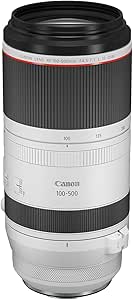
Canon RF100-500mm F4.5-7.1 L IS USM Telephoto Zoom Lens
The Canon RF100-500mm L is the more flexible long-reach choice for RF shooters who need to frame cars from varying distances. Its 100mm wide end is easier to use as a car approaches than the RF200-800mm’s 200mm starting point, while the 500mm long end reaches well beyond the Canon RF 70-200mm F2.8 L. For rally sidelines, Dual Nano USM autofocus, three stabilization modes, and dust- and weather-resistant L-series construction are practical advantages when tracking action in unsettled conditions.
The main compromise is speed: its f/4.5-7.1 variable aperture cannot match the RF 70-200mm f/2.8 when light falls, and it narrows as you zoom in. Up to five stops of optical stabilization helps with camera shake, but it does not freeze a moving car; shutter speed still matters. I’d choose this over the RF200-800mm for a broader framing range and weather-ready build, but not if dim stages are your regular setting.
Pros:- 100-500mm range covers approaching cars and distant action in one lens.
- Dual Nano USM autofocus is designed for fast, quiet focusing.
- Up to five stops of stabilization and three modes support different shooting approaches.
- L-series dust- and weather-resistant construction includes fluorine-coated front and rear elements.
Cons:- The f/4.5-7.1 maximum aperture is slower than the Canon RF 70-200mm F2.8 L.
- Aperture narrows toward 500mm, reducing low-light flexibility at the long end.
- Compatible only with Canon RF-mount mirrorless cameras.
Best for: Canon RF photographers who need substantial reach, flexible framing, and a weather-resistant lens for outdoor stages.
Not ideal for: Shooters who work mainly in dim forest conditions or need the f/2.8 aperture of the Canon RF 70-200mm L.
- Focal length:100-500mm
- Maximum aperture:f/4.5-7.1
- Mount:Canon RF
- Autofocus:Dual Nano USM
- Image stabilization:Optical; up to 5 stops, with Standard, Panning, and During Exposure modes
- Minimum focusing distance:0.9 m (3.0 ft)
- Lens elements:One Super UD and six UD elements
- Construction:L-series dust- and weather-resistant; fluorine-coated front and rear elements
Our verdict“Pick this lens for weather-ready reach and adaptable framing, but choose the RF 70-200mm f/2.8 if low-light shutter speed comes first.”
Canon RF75-300mm f/4-5.6 Telephoto Zoom Lens for EOS R Mirrorless Cameras
For Canon RF shooters who want a straightforward telephoto range without carrying a larger zoom, the RF75-300mm offers useful reach for roadside stages and distant corners. At 300mm, it can isolate a car against a compressed background; its lighter build also helps when walking between spectator spots. Compared with the Canon RF100-400mm F5.6-8 IS USM, it starts wider and has a brighter maximum aperture at the long end, but gives up 100mm of reach and stabilization. That missing stabilization matters when panning at slower shutter speeds or framing between bursts, though fast shutter speeds for rally action can reduce the impact. Its variable f/4-5.6 aperture is still a poor match for dim stages or late-day forest sections, and the lens is not water resistant. I’d choose it for fair-weather events and a light kit, not as an all-weather or low-light specialist.
Pros:- 75-300mm range covers both closer roadside action and distant cars
- Lightweight, portable design is useful for walking between viewing points
- f/4-5.6 maximum aperture is brighter than the RF100-400mm’s f/5.6-8 range
- Long focal lengths can compress backgrounds and separate cars from the scene
Cons:- No image stabilization, so steady framing depends more on technique and shutter speed
- Not water resistant for exposed, wet rally stages
- 300mm maximum reach falls short of the RF100-400mm for distant spectator positions
Best for: Canon EOS R photographers who attend daytime rallies and want a relatively light telephoto zoom for distant cars.
Not ideal for: Photographers working in rain, dim forests, or at slower shutter speeds who need image stabilization and weather protection.
- Focal length:75-300mm
- Maximum aperture:f/4-5.6
- Mount:Canon RF
- Lens type:Telephoto zoom
- Focus:Auto/manual
- Zoom ratio:4x
- Image stabilization:None
- Water resistance:Not water resistant
Our verdict“Choose this for a light Canon RF kit at fair-weather daytime rallies, but pick the RF100-400mm if extra reach and stabilization matter more.”
Canon RF100-400mm F5.6-8 IS USM Lens
The RF100-400mm is the more practical choice when rally viewing areas keep cars far away: its 400mm end frames distant action more tightly than the Canon RF75-300mm, while optical stabilization helps steady the view between shots. Canon lists up to 5.5 stops of correction, or up to 6 stops with compatible EOS R bodies that have IBIS. Its Nano USM autofocus is designed for fast, quiet focusing, and the lens remains compact for a zoom reaching this far. The tradeoff is its f/5.6-8 aperture, which gives up light as you zoom; that can push ISO higher under forest cover or late in the day. Unlike the brighter Tamron SP 70-200mm f/2.8, it is not the pick for dim action or strong subject separation. I’d favor it for daylight distance, not low-light speed.
Pros:- 100-400mm range reaches farther than the Canon RF75-300mm
- Optical stabilization offers up to 5.5 stops, with more available on compatible IBIS bodies
- Nano USM autofocus is designed for fast, quiet operation
- Compact, lightweight design for a long-range telephoto zoom
Cons:- f/5.6-8 maximum aperture limits light, especially at the long end
- Not water resistant, so it offers limited protection in wet rally conditions
- Its 100mm starting point can feel tight when cars pass close by
Best for: Canon EOS R users photographing daytime rallies from distant or restricted spectator areas who want stabilization and 400mm reach.
Not ideal for: Rally photographers who regularly shoot in dim woods or dusk and need a bright aperture for faster shutter speeds and lower ISO.
- Focal length:100-400mm
- Maximum aperture:f/5.6-8
- Mount:Canon RF
- Autofocus motor:Nano USM
- Image stabilization:Optical; up to 5.5 stops, or up to 6 stops with compatible IBIS
- Minimum focusing distance:2.89 ft at 200mm
- Maximum magnification:0.41x at 400mm
- Teleconverter compatibility:RF1.4x and RF2x
Our verdict“Pick this for stabilized long-range daylight coverage on Canon RF, but choose a brighter zoom for forest stages or fading light.”
Tamron 70-300mm F/4.5-6.3 Di III RXD for Sony E-Mount – Black
Sony E-mount shooters who prioritize a small, easy-to-carry kit can make a strong case for the Tamron 70-300mm RXD. Its 19.2-ounce weight and 5.8-inch length suit long walks between stages, while 70mm gives a little more room for closer passes than the Canon RF100-400mm’s 100mm starting point. RXD autofocus is described as fast and quiet, useful when tracking a car through a sequence. The tradeoffs show up as light fades: the lens has no stabilization and its maximum aperture narrows to f/6.3 at the long end. That makes it less forgiving in shaded forest sections than the Tamron SP 70-200mm f/2.8, which sacrifices reach for a much brighter aperture and stabilization. This is a portability-led option for bright conditions, not a low-light action lens.
Pros:- Light 19.2-ounce build and compact 5.8-inch length suit a mobile kit
- 70-300mm range spans close passes and distant action
- RXD autofocus is described as fast and quiet
- BBAR coating is specified for the lens
Cons:- No image stabilization for handheld framing or slower panning speeds
- f/4.5-6.3 aperture limits low-light performance
- 300mm maximum reach is shorter than the Canon RF100-400mm
Best for: Sony E-mount photographers who walk between rally stages and want a compact telephoto for daytime action.
Not ideal for: Photographers shooting in shaded woods or late light who need stabilization, a brighter aperture, or more than 300mm reach.
- Focal length:70-300mm
- Maximum aperture:f/4.5-6.3
- Mount:Sony E
- Weight:19.2 oz
- Lens length:5.8 in
- Zoom ratio:4.29:1
- Focus type:Auto/manual
- Image stabilization:None
- Lens coating:BBAR
Our verdict“Choose this for a compact Sony E-mount kit at bright daytime rallies, but favor a stabilized or faster lens for dim stages.”
Canon RF 24-70mm F2.8 L IS USM Lens
When rally cars pass close to the photographer, the RF 24-70mm f/2.8 L IS USM offers a framing range the telephotos here cannot match. Its wide 24mm end can include the road and spectators, while 70mm suits a tighter view of a nearby car. The constant f/2.8 aperture and up-to-five-stop optical stabilization also make it better suited than the Canon RF100-400mm for dimmer conditions and handheld panning. The limitation is reach: from a safe distance or behind barriers, 70mm will leave distant cars small in the frame. It also cannot replace the Tamron SP 70-200mm f/2.8 for tighter action framing, though it starts wider and has a shorter minimum focus distance. Dust- and weather-resistant construction is a plus around dusty stages, but this remains a close-action and environmental lens, not a long-range rally zoom.
Pros:- 24-70mm range covers environmental views and close passes
- Constant f/2.8 maximum aperture helps in lower light
- Optical stabilization provides up to 5 stops of shake correction
- Dust- and weather-resistant construction with fluorine coating
Cons:- 70mm maximum focal length is too short for distant rally action
- Canon RF mount limits use to compatible Canon mirrorless bodies
- Minimum focusing distance varies from 0.21m to 0.38m by focal length
Best for: Canon RF photographers positioned near the course who want to frame close passes, road context, and dimmer scenes with one fast zoom.
Not ideal for: Spectators restricted to distant viewpoints who need long telephoto reach to fill the frame with cars.
- Focal length:24-70mm
- Maximum aperture:f/2.8
- Mount:Canon RF
- Autofocus:Nano USM
- Image stabilization:Optical; up to 5 stops
- Minimum focusing distance:0.21m wide; 0.38m telephoto
- Diaphragm blades:9
- Construction:Dust- and weather-resistant
Our verdict“Choose this for close course-side action and contextual frames on Canon RF, but pair it with a telephoto if cars are far away.”
Tamron SP 70-200mm F/2.8 Di VC USD Telephoto Zoom Lens for Canon EF Cameras
For Canon EF photographers who need to keep shutter speeds high in shaded stages, the Tamron SP 70-200mm f/2.8 brings a constant f/2.8 aperture across the zoom range. That is a meaningful advantage over the Canon RF100-400mm’s f/5.6-8 maximum aperture when shooting under trees or as daylight fades. Its vibration compensation and USD autofocus add support for handheld work and moving subjects, while 70mm is more accommodating than the Canon RF75-300mm’s 75mm start for close passes. The compromise is reach: 200mm cannot frame distant cars as tightly as either Canon 300mm option, and the 1.3m minimum focus distance is restrictive for nearby details. It is also an EF-mount lens, so it suits Canon EF bodies or compatible adapted setups rather than native RF use. I’d pick it for light-gathering, not maximum distance.
Pros:- Constant f/2.8 aperture supports faster shutter speeds in dimmer conditions
- Vibration compensation assists handheld shooting
- USD autofocus motor is described as quick and quiet
- 70-200mm range suits close and medium-distance action
Cons:- 200mm maximum focal length offers less reach than the Canon RF100-400mm
- Canon EF mount requires an EF body or a compatible adapter for newer mirrorless setups
- 1.3m minimum focus distance limits close-up framing
Best for: Canon EF photographers covering forest stages or late-day rallies who need a bright telephoto zoom and stabilization.
Not ideal for: Photographers using native Canon RF bodies without an adapter, or those who must frame distant cars beyond 200mm.
- Focal length:70-200mm
- Maximum aperture:f/2.8
- Mount:Canon EF
- Lens construction:23 elements in 17 groups
- Minimum focus distance:1.3m (51.2 in)
- Maximum magnification ratio:1:8
- Filter size:77mm
- Length:188.3mm (7.4 in)
Our verdict“Choose this for low-light rally action on Canon EF, but select a longer zoom when distant spectator positions are your priority.”

How We Picked
I ranked these lenses for the situations rally photographers actually face: cars approaching at speed, changing distances, variable light, dust, and the need to shoot from a safe, designated position. The main criteria were focal-length usefulness, maximum aperture, stabilization, autofocus suitability based on the lens class, mount compatibility, and the likely burden of carrying and handling each lens through a long event. A versatile, bright telephoto scores well because it can frame action without forcing the photographer to move closer.
The order favors options with a strong balance of speed, reach, and practical flexibility, while specialist long telephotos rank higher for distant stages and slower or simpler zooms rank lower for demanding action. I also separated recommendations by camera system rather than treating mounts as interchangeable: Canon RF lenses are for RF bodies, Canon EF lenses require an EF-compatible setup or the appropriate adapter, and Sony E lenses fit Sony E-mount cameras. Bundle accessories do not change the optical ranking, and no lens can make an unsafe shooting position acceptable.
| lenses for rally photography | Mount |
|---|---|
| Canon RF 70-200mm F2.8 L IS US | Canon RF |
| Canon RF200-800mm F6.3-9 IS US | Canon RF |
| Canon EF 75-300mm f/4-5.6 III | Canon EF |
| Sigma 70-200mm f/2.8 DG DN OS | Sony E |
| Canon RF100-500mm F4.5-7.1 L I | Canon RF |
| Canon RF75-300mm f/4-5.6 Telep | Canon RF |
| Canon RF100-400mm F5.6-8 IS US | Canon RF |
| Tamron 70-300mm F/4.5-6.3 Di I | Sony E |
| Canon RF 24-70mm F2.8 L IS USM | Canon RF |
| Tamron SP 70-200mm F/2.8 Di VC | Canon EF |
Factors to Consider When Choosing Best Lenses For Rally Photography
Choosing a rally lens is less about finding the longest zoom and more about matching your position, light, and camera system. These broader checks can help avoid buying reach you cannot use or a bright lens that is unnecessarily heavy for your usual stage.
Match focal length to your permitted shooting position
Start by checking how far spectators are kept from the course at the events you attend. A distant, open stage may reward a 300mm-plus lens, while tighter roadside viewpoints can make a 70-200mm range easier to track and frame. Longer focal lengths magnify camera shake and make it harder to keep a rapidly moving car inside the viewfinder. A common mistake is buying maximum reach before checking whether the stage offers a clear, safe line of sight. If you photograph a mix of close corners and distant straights, a versatile zoom can be more useful than a lens chosen for one extreme distance.
Choose aperture for the light you actually shoot in
Rallies can move from bright open roads into wooded sections or overcast conditions, where a slower lens may require higher ISO or a shutter speed that risks motion blur. A constant f/2.8 zoom gives more exposure flexibility across its range, but it is often larger and heavier than a slower telephoto zoom. Stabilization can help reduce blur from your hands, yet it does not freeze a car moving through the frame. Avoid treating stabilization as a substitute for a fast shutter speed. If most of your events are held in strong daylight, a slower lens may be a reasonable way to prioritize reach or lower carrying weight.
Check mount and camera-body compatibility before comparing features
Lens mount determines whether a lens fits your camera directly, and the names in this roundup cover Canon RF, Canon EF, and Sony E systems. An EF lens may work on a Canon RF body with a compatible adapter, but an adapter adds another item to pack and should be confirmed for your exact setup. Do not assume that two lenses with similar focal lengths are interchangeable across camera brands. Check autofocus and stabilization behavior on your camera model, particularly with older or third-party lenses. This simple check can prevent a lens that looks right on paper from becoming an awkward or incompatible purchase.
Balance reach against tracking speed and handling
A long, heavy lens can be tiring over a full day and may make it harder to pan smoothly as a car passes. Before choosing the longest option, think about how long you will carry it, whether you shoot handheld, and whether you can use a monopod where event rules permit. A shorter zoom may let you acquire the car faster and keep more of its surroundings in the frame. New photographers often underestimate how much practice it takes to track action at very long focal lengths. The best working range is the one you can control reliably from your actual position.
Plan for dust, weather, and lens changes
Rally stages can expose equipment to dust, grit, and sudden weather changes, so build lens handling into your decision. Fewer lens swaps mean fewer chances for dust to enter the camera, making a flexible zoom useful when the action moves between distances. A protective filter may guard against some surface hazards, but it does not replace careful cleaning or a weather cover. Avoid changing lenses in a dusty roadside location when you can prepare before reaching the stage. Check the lens and camera maker’s care guidance, and pack a blower and clean cloth rather than wiping grit across glass.
Decide whether a wide zoom belongs in your kit
A 24-70mm lens can make strong environmental images when cars pass close to a permitted viewing point, showing the road, landscape, or crowd alongside the vehicle. It is not a substitute for a telephoto when access rules keep you far from the course. Buying only a wide zoom can leave you unable to fill the frame with action at most spectator locations. Conversely, a telephoto-only kit may miss the sense of place around a stage. Consider your intended final set of photographs, not just the most dramatic close-up you hope to capture.
Frequently Asked Questions
Is a 70-200mm f/2.8 lens enough for rally photography?
It can be enough when you shoot from a relatively close, permitted position and want a lens that handles changing light. Its bright aperture is useful in wooded or overcast sections, and the range can be easier to track with than an extreme telephoto. From a distant spectator area, 200mm may leave cars too small in the frame. In that case, a longer zoom or a second lens may suit your position better. Decide based on the distance to the course rather than assuming one focal range fits every stage.
Should I choose a longer zoom or an f/2.8 telephoto?
Choose a longer zoom if you regularly photograph cars far away in good light and need tight framing without changing your position. An f/2.8 telephoto makes more sense when light is variable, you want faster shutter speeds, or the action is close enough for its range. Long reach does not automatically produce sharper action if the light forces a slow shutter or tracking becomes difficult. Also account for weight, since a long lens can be tiring during a full event. Your typical stage distance and lighting should decide the tradeoff.
Can I use a Canon EF lens on a Canon RF mirrorless camera?
Canon EF lenses can generally be used on Canon RF bodies with a compatible EF-to-RF adapter, but confirm compatibility for your particular camera, lens, and adapter. The adapter adds length and another component to carry, though it lets photographers retain EF equipment when moving to an RF body. Check autofocus and stabilization operation before relying on the setup for fast action. An EF lens will not mount directly to an RF body without an adapter. If you want a simpler native setup, compare RF options that fit your budget and focal-length needs.
Is a slower f/5.6-8 lens a poor choice for rally action?
Not necessarily: a slower lens can work well in bright daylight, especially when reach is more useful than a wide aperture. The limitation becomes more apparent in shade, cloudy weather, or late-day stages, where you may need higher ISO to keep shutter speeds fast. Image stabilization helps with camera movement but cannot stop a moving car from blurring. Think about the light at your usual events and the shutter speeds your camera can support. If you often shoot in dim conditions, a brighter lens is the safer choice.
Do I need both a wide zoom and a telephoto for rally photography?
No, but the two lens types produce different kinds of coverage. A telephoto is the more practical starting point for most spectator positions because it frames cars at a distance. A wide zoom is useful for close passes and images that include the road or setting, but it cannot reach action across a large safety zone. If you can bring only one lens, choose for the distance and access at your most common events. Add a wide option later if environmental shots are a priority and your current telephoto leaves those moments out.
Conclusion
Best overall: I’d choose the Canon RF 70-200mm F2.8 L IS USM for a balanced mix of a bright aperture and practical action range, provided you use a Canon RF body. Best premium reach: the Canon RF200-800mm suits distant stages in good light, while the RF100-500mm offers a more compact long-zoom alternative for RF users. Best value direction: the Canon RF100-400mm is a sensible reach-focused choice for daylight shooters who do not need f/2.8. Best for beginners: the Canon RF75-300mm is a straightforward entry point for compatible RF cameras, though its slower aperture and basic positioning make it less suited to dim action. Best for Sony E: choose the Sigma 70-200mm f/2.8 for low-light flexibility or the Tamron 70-300mm for a lighter, longer-reaching approach. For close environmental frames, the Canon RF 24-70mm f/2.8 has a distinct role; match any pick to your camera mount, stage distance, and usual light before deciding.