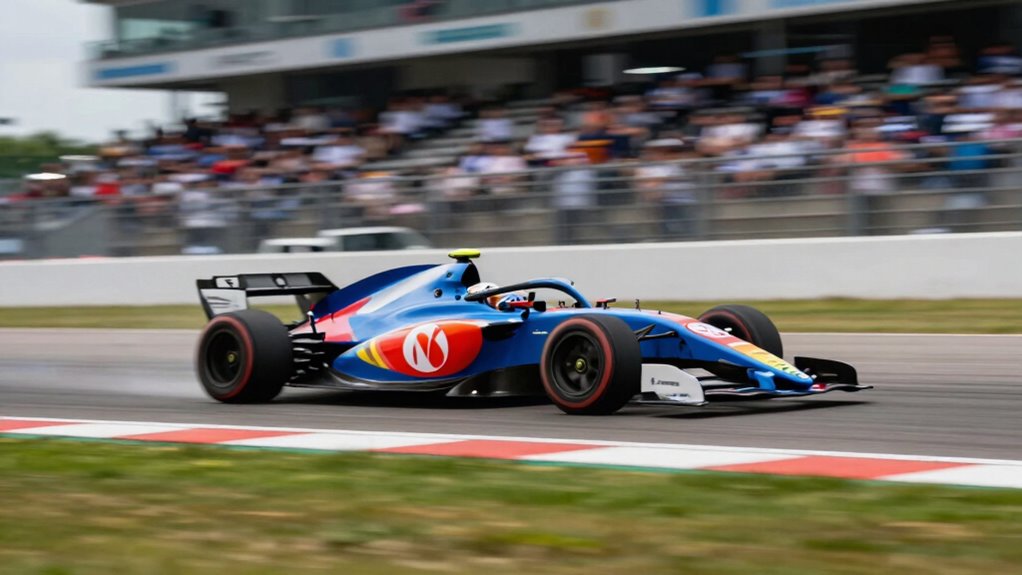
To use foreground blur at race tracks like a smarter creator, get close to the action and include objects like barriers, tires, or debris in the frame. Use a slower shutter speed, typically between 1/30 and 1/125 sec, and pan with the car to keep it sharp while blurring the foreground. Experiment with angles that incorporate foreground elements and adjust settings for dynamic motion effects. Keep exploring these techniques to capture more exciting and immersive racing photos.
Key Takeaways
- Incorporate foreground objects close to the lens, such as barriers or debris, to create layered depth and emphasize motion.
- Use panning techniques with slower shutter speeds to keep the moving car sharp while blurring foreground elements.
- Position your camera at low angles near the track to include foreground elements and enhance the sense of speed.
- Adjust shutter speeds (1/30 to 1/125 sec) to balance motion blur in foregrounds and clarity of the moving subject.
- Experiment with different angles and distances to find the most dynamic foreground blur that adds excitement and depth.
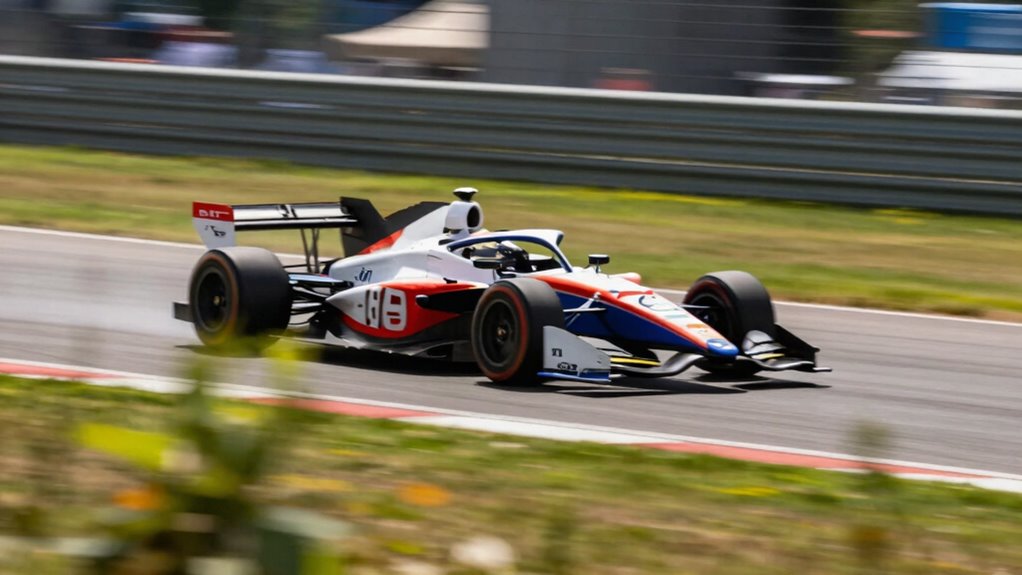
At race tracks, foreground blur often adds a sense of motion and excitement to photographs, capturing the speed and energy of the event. To do this effectively, you need to understand how motion effects and camera angles work together to create dynamic images. Foreground blur isn’t just about adding aesthetic appeal; it’s about directing the viewer’s eye and conveying the thrill of racing.
First, consider your camera angles. Shooting close to the track and positioning your camera low can emphasize the speed and power of the vehicles. A low-angle shot makes the cars appear larger and more imposing, while also allowing you to include elements in the foreground—like barriers, tires, or even spectators—that will be blurred during motion. These foreground elements, intentionally out of focus, serve as visual cues that reinforce the sense of movement. When you choose an angle that places these objects in the foreground, it enhances the feeling that the viewer is right there at the track, immersed in the action.
Shooting low and close emphasizes speed, with foreground elements enhancing the immersive, dynamic feel of racing photographs.
Next, master your motion effects through camera settings. To achieve a pleasing foreground blur, you’ll want to use a slower shutter speed—somewhere between 1/30 and 1/125 of a second, depending on the speed of the cars and your stability. As the cars zoom past, a slower shutter captures their movement while keeping the background and foreground elements blurred, emphasizing the velocity. Panning is also key: follow the moving car with your camera during the exposure. This technique keeps the subject sharp while blurring everything else, creating a striking contrast that highlights motion.
Experiment with different camera angles and shutter speeds to find the balance that best conveys the energy you want to capture. Keep in mind that foreground blur works best when you have objects close to the lens in the foreground, which can be anything from fencing to roadside debris. These objects, when blurred, give a layered sense of depth and motion, making your photos more engaging.
Additionally, understanding the importance of camera angles and how they influence the perception of speed can significantly enhance your photos. In essence, using foreground blur at race tracks is about a combination of strategic camera angles and precise control over motion effects. Position yourself at points where you can incorporate foreground elements, and adjust your camera settings to exaggerate the sense of speed. By doing so, you create images that not only showcase the vehicles but also immerse viewers in the adrenaline-fueled atmosphere of racing.
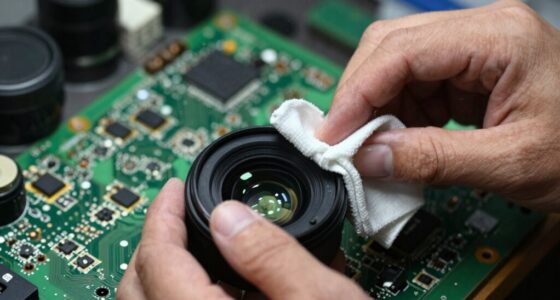
camera lens for racing photography
As an affiliate, we earn on qualifying purchases.
As an affiliate, we earn on qualifying purchases.
Frequently Asked Questions
What Camera Settings Are Best for Foreground Blur at Race Tracks?
To achieve the best foreground blur at race tracks, set your camera with a wide aperture like f/2.8 or lower for a shallow depth of field. Use a longer focal length, such as 70-200mm, to isolate the subject and enhance blur. Keep your camera stable—use a tripod or stabilize by hand—to prevent unwanted shake. These settings and stability help you create striking, professional-looking foreground blur shots.
How Can I Prevent Over-Blurring the Foreground in Fast-Moving Shots?
To prevent over-blurring the foreground in fast-moving shots, you should adjust your shutter speed to balance motion blur and sharpness. Use a faster shutter speed to reduce excessive motion blur, ensuring the foreground remains clear. Incorporate depth separation by keeping your focus point on the subject, which helps differentiate the foreground from the background. Experiment with these settings to find the perfect balance that preserves detail without overdoing the motion blur.
Is Specific Lens Choice Crucial for Achieving Effective Foreground Blur?
Focal length choices and lens compatibility are essential for crafting compelling foreground blur. Longer lenses, like telephoto options, compress distances and enhance blur, making your subject pop. Select a lens compatible with your camera for sharp images. By choosing the right focal length, you control the depth of field, allowing you to skillfully blur the foreground while keeping your fast-moving race elements crisp and engaging.
How Does Lighting Affect Foreground Blur Quality at Race Tracks?
Lighting considerably influences foreground blur quality at race tracks by enhancing depth perception and visual emphasis. Bright, directional light creates strong contrasts, making the foreground pop and blurring the background more effectively. Soft or diffuse lighting reduces contrast, decreasing depth perception and softening the blur. To maximize foreground impact, shoot during times with dynamic lighting, like golden hour, ensuring your subject stands out sharply against a smoothly blurred background.
Can Foreground Blur Be Added in Post-Processing Effectively?
Absolutely, you can add foreground blur effectively in post-processing. By subtly softening the foreground, you enhance depth perception and draw artistic emphasis to your main subject. Use tools like Gaussian blur or lens blur in editing software, carefully masking the foreground to avoid overdoing it. This technique creates a sense of movement and focus, transforming a flat shot into a dynamic, visually mesmerizing piece that highlights the race’s energy.
As an affiliate, we earn on qualifying purchases.
Conclusion
So, next time you’re at a race track, don’t just stand there like a rookie—blur that foreground and pretend you’re a pro. Who needs clear focus when you can have that artsy, “I-just-accidentally-photographed-something-cool” vibe? Remember, the secret isn’t in the speed, but in how convincingly you fake that motion blur. Now go ahead, blow some minds and make your photos look like you’ve got a secret camera crew—because, honestly, who’s really paying attention?

XXZU 75" Camera Tripod,Aluminum Tripod for Camera Phone/Monopod with Remote
- Extended Height: Adjustable up to 75 inches
- Multi-Functional Center Column: Detachable for monopod or selfie stick
- Low-Angle Shooting: Upside-down installation for macro shots
As an affiliate, we earn on qualifying purchases.
As an affiliate, we earn on qualifying purchases.
As an affiliate, we earn on qualifying purchases.