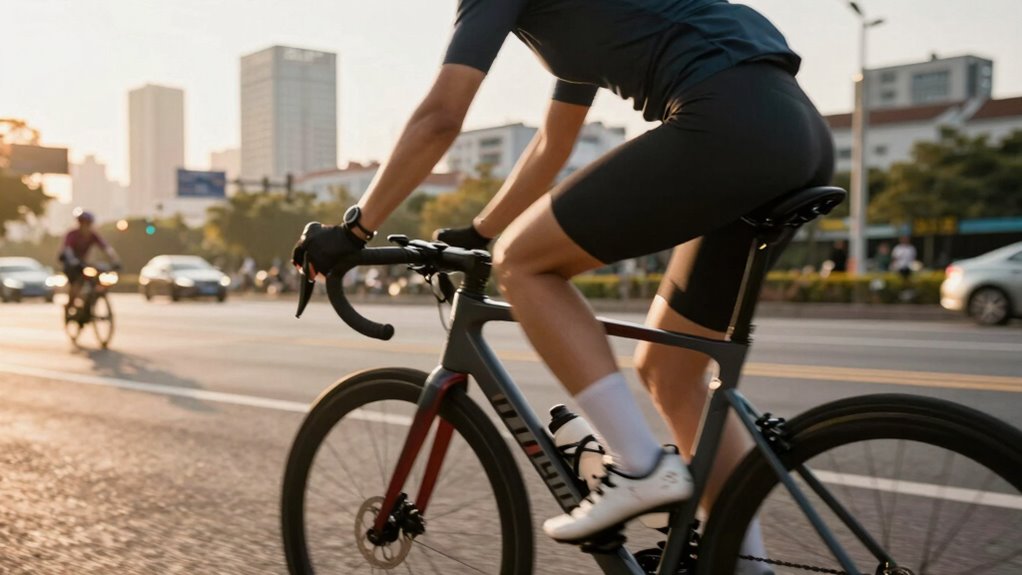

To master zone focus for action photography, you set a specific focus distance where your subject will pass, avoiding autofocus delays. Keep your aperture narrow enough to cover the entire zone with sufficient depth of field, and use a fast shutter speed to freeze motion. Control your focus manually or switch to single-shot mode for precision. By anticipating your subject’s movement and timing your shot, you’ll capture sharp images every time—keep going to discover more tips for perfect shots.
Key Takeaways
- Pre-set focus distance within a zone for quick, accurate shots without relying on autofocus.
- Use appropriate shutter speeds to freeze motion and prevent blur in action scenes.
- Switch to manual or single-shot autofocus to avoid delays caused by autofocus hunting.
- Choose an aperture that provides sufficient depth of field to keep subjects sharp across the zone.
- Anticipate subject movement and press the shutter at the optimal moment for sharp, decisive images.

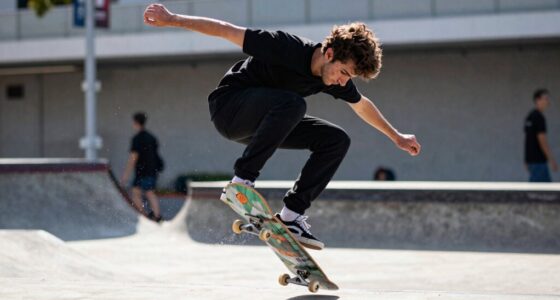
When capturing fast-moving subjects, zone focus is a powerful technique that can help you achieve sharp, well-focused images without relying on autofocus. Instead of hunting for focus with every shot, you pre-set your focus distance within a specific zone, allowing you to react quickly and shoot more fluidly. This approach is especially useful in action photography, where every millisecond counts. To make zone focus work effectively, you need to understand how shutter speed impacts motion blur and sharpness. A faster shutter speed—say, 1/1000th of a second—freezes motion, reducing the chance of blur caused by movement. Conversely, if your shutter speed is too slow, moving subjects will appear blurred, losing the crispness you want in action shots. Finding the right balance between shutter speed and your camera’s autofocus settings is crucial.
While autofocus systems have become highly advanced, they can still lag or hunt for focus when the subject moves unpredictably. Disabling autofocus or switching to manual focus, then setting a zone, can give you more control. When setting your autofocus settings, choose a focus mode that suits your zone focus strategy—often a manual focus or a single-shot AF mode that you control precisely. This way, you don’t rely on the camera’s autofocus to track fast subjects, which might cause delays or missed shots. Instead, you set the focus once to cover the action zone, enabling you to anticipate movements and press the shutter at the right moment. Understanding focus distance and how it relates to depth of field can greatly improve your results, especially in dynamic scenarios. Additionally, knowing how to select the optimal focus zone helps ensure your subject remains sharp across various distances.
To succeed with zone focus, you need to pick a focus distance that corresponds to the area where your subject will be. For example, if you’re photographing a cyclist passing through a specific point, you focus at that distance and set your aperture to create a depth of field that covers the entire zone. This way, as long as your subject remains within that zone, it will be in focus, regardless of minor movements. Remember, a narrower aperture (higher f-number) increases the depth of field, making zone focus more forgiving. Combining an appropriate shutter speed with a well-chosen zone focus distance and your autofocus settings optimized for manual control ensures you capture sharp, decisive moments in action photography.

DJI Osmo Pocket 3, Vlogging Cameras with 1'' CMOS & 4K/120fps Vlog Camera, 3-Axis Stabilization, Fast Focusing, Face/Object Tracking, Digital Vlogging Camera for YouTube
Capture Stunning Footage – This vlogging camera features a 1-inch CMOS sensor and records in 4K resolution at…
As an affiliate, we earn on qualifying purchases.
As an affiliate, we earn on qualifying purchases.
Frequently Asked Questions
How Do I Choose the Right Zone Focus Distance for Fast-Moving Subjects?
To choose the right zone focus distance for fast-moving subjects, start with manual focus and calibrate the distance based on your typical subject range. Use a reference point or pre-measured distance to set your focus zone accurately. Adjust the focus distance as needed, considering your subject’s speed and movement patterns. This approach helps guarantee sharp images, even when you can’t keep constant eye contact through the viewfinder.
What Camera Settings Optimize Zone Focus for Action Shots?
You can optimize zone focus for action shots by setting a narrow depth of field, which keeps your subject sharp while blurring the background. Use continuous autofocus (AF-C or AI Servo) and focus-recompose quickly to maintain focus on fast-moving subjects. Incorporate focusing techniques like pre-focusing at a specific distance, and adjust your aperture to balance depth of field and shutter speed, ensuring crisp results even in unpredictable motion.
Can Zone Focus Be Used Effectively in Low-Light Action Environments?
Yes, zone focus can be effective in low-light action environments. You’ll want to switch to manual focus and pre-set your zone to guarantee quick, precise focusing without relying on autofocus, which can struggle in dim conditions. Compared to autofocus, zone focus offers more control and speed, especially when lighting is poor. This method helps you capture sharp action shots without the delays or failures that autofocus might encounter in low light.
How Does Zone Focus Compare to Autofocus in Action Photography?
You’ll find zone focus offers better focus accuracy in fast-paced action, especially when depth perception is essential. Unlike autofocus, which can hunt or miss in tricky lighting, zone focus provides immediate, reliable sharpness over a set distance. This makes it easier to anticipate action and capture decisive moments without delay. While autofocus excels in varied scenes, zone focus keeps your focus consistent, giving you confidence in high-speed situations.
What Are Common Mistakes to Avoid When Using Zone Focus?
To avoid pitfalls in zone focus, don’t overlook your depth perception; misjudging distances can lead to blurry shots. Be mindful of maintaining focal precision, especially when subjects move unpredictably. Steering clear of over-relying on pre-set zones helps you stay adaptable. Also, avoid rushing, which can compromise focus accuracy. Instead, stay attentive to your environment, and practice fine-tuning your focus zone to keep your action shots sharp and lively.

EF 85mm f1.8 Portrait Lens – MF for Canon EOS Rebel T8i/T7i/T7/T6i/T5/T3i/T3/T2i/XSi/XS/SL3/SL2/T100/90D/80D/70D/50D/5D Mark IV/6D II/7D II/1D X III II-Manual Focus DSLR Cameras Lenses(EF/EF-S Mount)
[Easy-to-Use Warm Tips] – ⚠Fully manual, Non-autofocus(Advantages: precise focus control, creative freedom, high adaptability, stability and durability, and…
As an affiliate, we earn on qualifying purchases.
As an affiliate, we earn on qualifying purchases.
Conclusion
Now that you know the secrets of zone focus, you’re ready to master motion with minimal fuss. Focus, finesse, and flexibility form the foundation of fearless action photography. Embrace the ease of intentionality, and let your lens lead with confidence. By blending boldness with balance, you’ll build a brilliant, blur-free portfolio that captures the chaos with clarity. Remember: patience, practice, and persistence perfect your prowess—so press on and capture those enthralling, courageous clicks!
![QILOVE Global Shutter USB Camera – 800P Monochrome Ultra High Speed 640fps [120/210/420fps Modes] – Manual Focus 5-50mm CS Lens – Compatible with Raspberry Pi, Linux, Mac & Windows](https://m.media-amazon.com/images/I/418o+aEy8lL._SL500_.jpg)
QILOVE Global Shutter USB Camera – 800P Monochrome Ultra High Speed 640fps [120/210/420fps Modes] – Manual Focus 5-50mm CS Lens – Compatible with Raspberry Pi, Linux, Mac & Windows
【Adjustable High Speed 120-640fps Recording】Supports 160×120@640fps/MJPEG format, can clearly record extreme motion such as ballistic trajectories and fluid…
As an affiliate, we earn on qualifying purchases.
As an affiliate, we earn on qualifying purchases.
zone focus photography accessories
As an affiliate, we earn on qualifying purchases.
As an affiliate, we earn on qualifying purchases.