

When choosing an APS-C camera for sports photography, focus on key features that really matter. Look for fast and accurate autofocus systems with multiple points and advanced tracking capabilities. Opt for fast telephoto lenses with wide apertures to capture action in low light. High burst mode speeds are vital for those split-second moments. Finally, balance essential features with your budget to avoid overbuying. You’ll discover more tips that can help simplify your selection process along the way.

Get sports gear delivered free — and shop member deals
- Fast, free delivery on millions of items
- Access to Prime Big Deal Days deals on October 6–7
- Prime Video, Amazon Music and more included
Key Takeaways
- Prioritize cameras with fast and accurate autofocus systems to effectively track moving subjects during sports events.
- Select lenses with wide apertures (f/2.8 or f/4) to enhance low-light performance and achieve desirable background blur.
- Look for models with high burst rates to increase your chances of capturing perfect moments in fast-paced action.
- Ensure the camera has good build quality and ergonomics for comfortable handling in challenging shooting conditions.
- Balance your budget by focusing on essential features rather than high-end technology that may not enhance your specific photography needs.
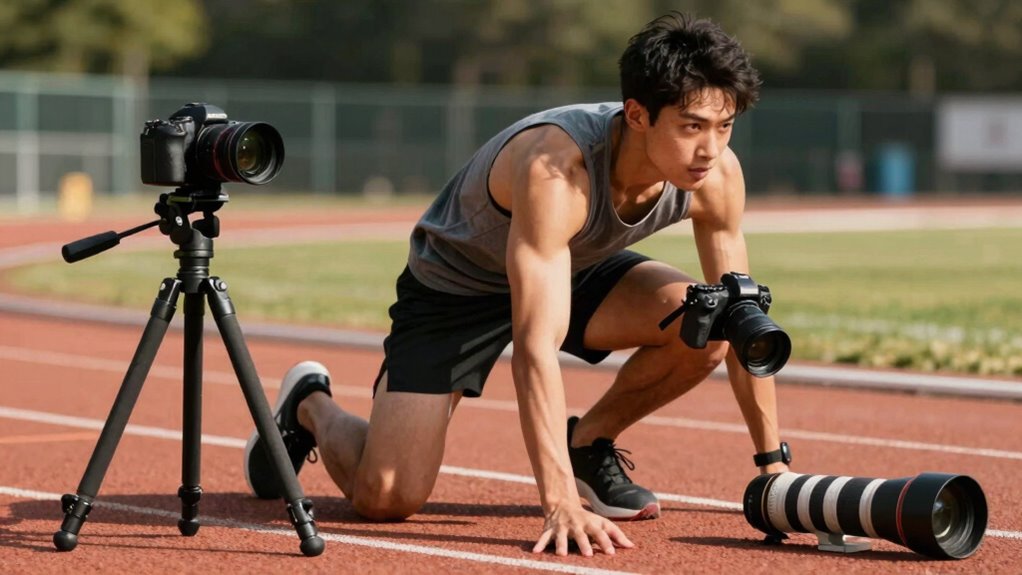
When it comes to capturing the fast-paced action of sports photography, what features should you look for in an APS-C camera? First and foremost, you want to focus on the camera’s autofocus systems. Fast and accurate autofocus is essential for freezing those split-second moments where athletes make a game-changing play. Look for cameras with multiple autofocus points and advanced tracking capabilities. These features will help you keep your subjects sharp, even as they move quickly across the frame.
Fast and accurate autofocus is crucial for capturing split-second moments in sports photography, ensuring your subjects remain sharp in motion.
Next, consider lens selection. Your choice of lens can make a huge difference in how effectively you capture sports action. A fast telephoto lens will allow you to get close to the action without being in the way. Look for lenses with wide apertures, like f/2.8 or f/4, as they’ll let in more light and help you achieve that beautiful background blur while keeping your subject in focus. This is especially important in lower light conditions, like evening games or indoor sports. Additionally, choosing lenses with wide maximum apertures can greatly improve your low-light performance and depth of field control.
You might also want to think about the camera’s burst mode capabilities. A high frames-per-second (fps) rate lets you shoot multiple images in quick succession, increasing your chances of capturing that perfect moment. Some APS-C cameras offer impressive burst speeds, which can be a game-changer when you’re photographing fast-paced sports. Understanding camera specifications can help you make an informed decision based on your specific needs.
Don’t overlook the significance of build quality and ergonomics either. Sports photography often involves shooting in challenging conditions, so you’ll want a camera that feels good in your hands and can withstand the elements. Weather-sealed bodies can be particularly useful if you’re shooting outdoors.
While it’s tempting to go for the latest and greatest model, it’s important to find a balance between features and price. High-end APS-C cameras come packed with advanced technology, but you might not need all those bells and whistles for your specific needs. Focus on what’s essential for your style of photography and don’t feel pressured to buy the most expensive gear.
Additionally, understanding the autofocus systems in detail can help you choose a camera that truly meets your needs, especially since accurate tracking is crucial in sports photography. By prioritizing autofocus systems and lens selection while being mindful of your budget, you can choose an APS-C camera that meets your sports photography needs without breaking the bank.
APS-C sports camera with fast autofocus
As an affiliate, we earn on qualifying purchases.
As an affiliate, we earn on qualifying purchases.
Frequently Asked Questions
What Is the Difference Between APS-C and Full-Frame Cameras?
The main difference between APS-C and full-frame cameras is sensor size. APS-C has a smaller sensor, which results in a lens crop that magnifies your focal length, great for sports photography. However, this can limit depth perception. Full-frame cameras excel in low light, providing better image quality and dynamic range. If you’re shooting fast action, consider how these factors affect your choice, balancing performance with your budget.
Do I Need Expensive Lenses for Sports Photography?
You don’t need expensive lenses for sports photography! In fact, many photographers achieve great results with affordable alternatives. Did you know that about 60% of pro sports shooters use lenses that cost under $1,000? Look for lenses with fast autofocus and good lens compatibility with your APS-C camera. This way, you can capture stunning action shots without breaking the bank, allowing you to focus on your skills instead of your gear.
How Important Is Weather Sealing for Outdoor Sports?
Weather sealing is essential for outdoor sports photography. You want to protect your gear from rain, dust, and humidity, which can damage your camera and lenses. With weather resistance benefits, you can shoot confidently in challenging conditions without worrying about equipment failure. Consider your outdoor gear needs, as well. If you often find yourself shooting in unpredictable weather, investing in a weather-sealed camera can save you headaches down the line.
Can I Use My Smartphone for Sports Photography?
Yes, you can use your smartphone for sports photography, but you’ll face some limitations. Smartphones struggle with capturing motion, especially fast action, due to slower shutter speeds and smaller sensors. While they can take decent shots in good light, you might miss critical moments. If you’re serious about sports photography, consider investing in a dedicated camera for better performance, especially in challenging conditions. Still, smartphones are great for casual shots!
What Is the Best Time of Day for Sports Photography?
The best time for sports photography is during the golden hour, that magical period right after sunrise or just before sunset. The lighting conditions during this time soften shadows and create a warm glow, enhancing the drama of your shots. You’ll capture athletes in their element, illuminated beautifully, making even the most ordinary moments feel extraordinary. So, plan your shoots around these times to elevate your sports photography game effortlessly.
telephoto lens f/2.8 for sports photography
As an affiliate, we earn on qualifying purchases.
As an affiliate, we earn on qualifying purchases.
Conclusion
When choosing an APS-C camera for sports photography, focus on speed, versatility, and value. Look for fast autofocus, a high frame rate, and durable build quality. Prioritize features that enhance your shooting experience, like burst modes and low-light performance. Remember, it’s about capturing the action, not just the gear. By balancing your needs and budget, you’ll find a camera that delivers excitement, precision, and satisfaction, keeping you in the moment and ready for every shot.
As an affiliate, we earn on qualifying purchases.
As an affiliate, we earn on qualifying purchases.
Evergreen bestsellers Picks
bestsellers
As an affiliate, we earn on qualifying purchases.