To photograph motorcycles in motion effortlessly, start by preparing your camera with the right settings—use fast shutter speeds (around 1/1000s) to freeze action or slower speeds to create motion blur. Practice panning by smoothly following the bike’s movement, keeping autofocus on the rider or bike. Keep your lens clean, choose good lighting, and anticipate rider moves for sharp, dynamic shots. Want to master these techniques and capture stunning motorcycle action? Keep exploring for expert tips that make it easier for you.
Key Takeaways
- Use continuous autofocus and burst mode to keep the motorcycle sharp during movement.
- Practice panning smoothly with the motorcycle at a consistent speed for clear, dynamic shots.
- Select a fast shutter speed (around 1/1000s) to freeze motion or slower for intentional motion blur.
- Anticipate rider movements and plan your position to stay aligned with the motorcycle’s path.
- Keep your camera steady and ergonomic to reduce shake and maintain focus during fast-paced shots.

VAZESWIN Aluminum Alloy Motorcycle Camera Mount Kit for GoPro Insta360 DJI, 360° Rotating Heavy-Duty Bike Handlebar Anti-Theft Clamp Mount with Extendable Selfie Stick for Motorcycle Bike ATV UTV
Anti-theft Protection: The motorcycle gopro mount kits come with anti-theft claw clamp base and double socket arm to…
As an affiliate, we earn on qualifying purchases.
As an affiliate, we earn on qualifying purchases.
Prepare Your Camera for Motorcycle Action Shots
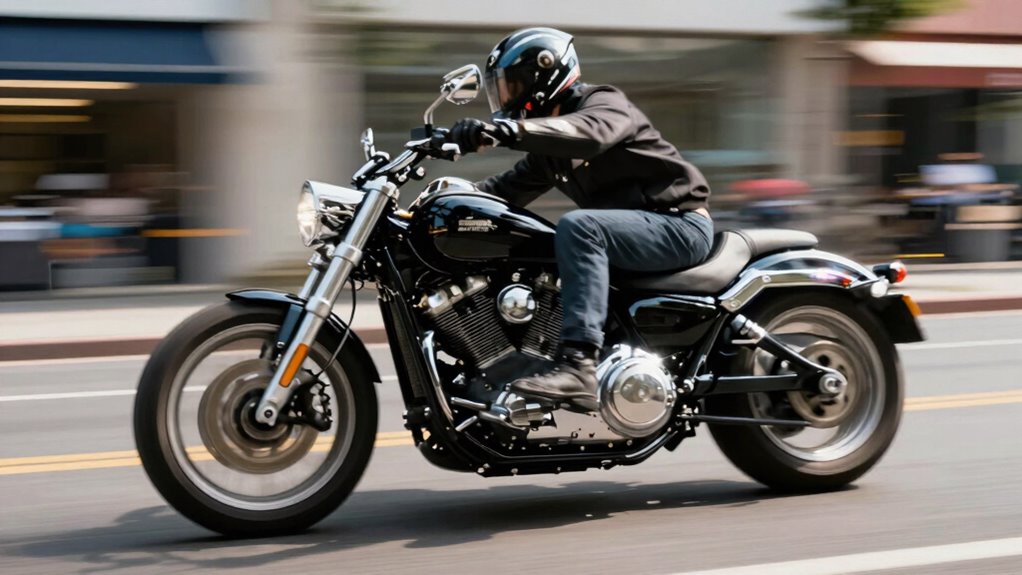
To capture sharp, dynamic motorcycle action shots, you need to set up your camera properly beforehand. First, consider lighting conditions; bright, natural light often provides the best results, but be mindful of harsh shadows or glare. Adjust your camera’s position to maximize light and avoid underexposure. Next, focus on camera ergonomics—make sure your grip feels comfortable and your buttons are easily accessible. Use a sturdy tripod or monopod if needed, especially in challenging light. Keep your camera steady and avoid unnecessary adjustments during the shot. Pre-setting your autofocus mode and ensuring your lens is clean will save you time and frustration. Proper preparation helps you react quickly and capture those fast-moving motorcycle moments with clarity and precision. Additionally, understanding your camera’s manual settings can give you greater control over exposure and motion blur. Familiarity with your equipment’s performance capabilities allows you to adapt quickly to changing conditions and achieve better results. Being aware of shutter speed options enables you to freeze motion or create appealing motion effects as needed. Practicing these techniques and adjusting your settings in advance will also improve your overall photography skills and ensure more successful shots. Incorporating practice sessions into your routine can help you develop a better feel for your camera’s responsiveness and improve your reaction time during fast-paced shots.

Mastering Camera Shutter Speed: Digital Photography Tips and Tricks for Beginners on How to Use Fast and Slow Shutter Speed for Creative Effect
As an affiliate, we earn on qualifying purchases.
As an affiliate, we earn on qualifying purchases.
Camera Settings for Shooting Moving Motorcycles
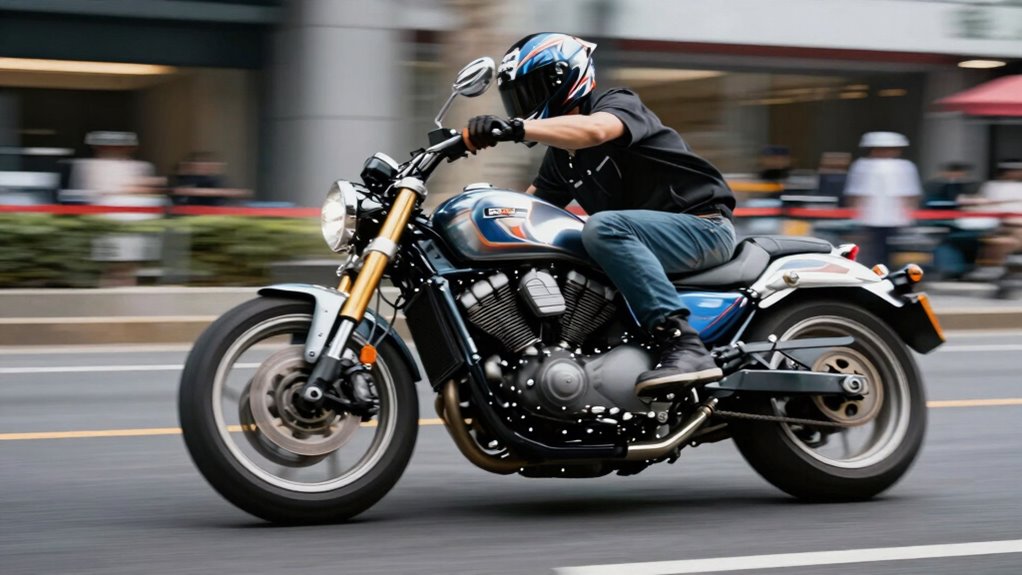
Once your camera is properly set up, adjusting your settings for capturing moving motorcycles guarantees you freeze the action crisply. Use a fast shutter speed—around 1/1000s—to prevent motion blur, especially when bikes are moving at high speeds. Set your aperture wide (f/2.8 to f/5.6) to let in enough light and keep the background dynamic. ISO can be increased if lighting is low but avoid too much noise. To capture the motorcycle’s history and rider safety, focus sharply on the rider or bike. Use continuous autofocus (AF-C) and burst mode for multiple shots. Here’s a quick guide:
| Setting | Recommendation |
|---|---|
| Shutter Speed | 1/1000s or faster |
| Aperture | f/2.8 – f/5.6 |
| ISO | Adjust as needed |
| Focus Mode | Continuous autofocus (AF-C) |
Additionally, understanding how to capture motion effectively can significantly improve your motorcycle photography results.

Altura Photo 62-Inch Camera Monopod – Heavy Duty Stand for Canon, Nikon, & Sony Mirrorless & DSLR Cameras – Steady Photography, Lightweight & Portable – Easy to Carry with Pouch
LIGHTWEIGHT ALUMINUM DESIGN RETRACTABLE MONOPOD: Collapses down to a very compact 16.75” and weighs just .59 LBS. Fits…
As an affiliate, we earn on qualifying purchases.
As an affiliate, we earn on qualifying purchases.
How to Use Shutter Speed to Freeze or Blur Bikes
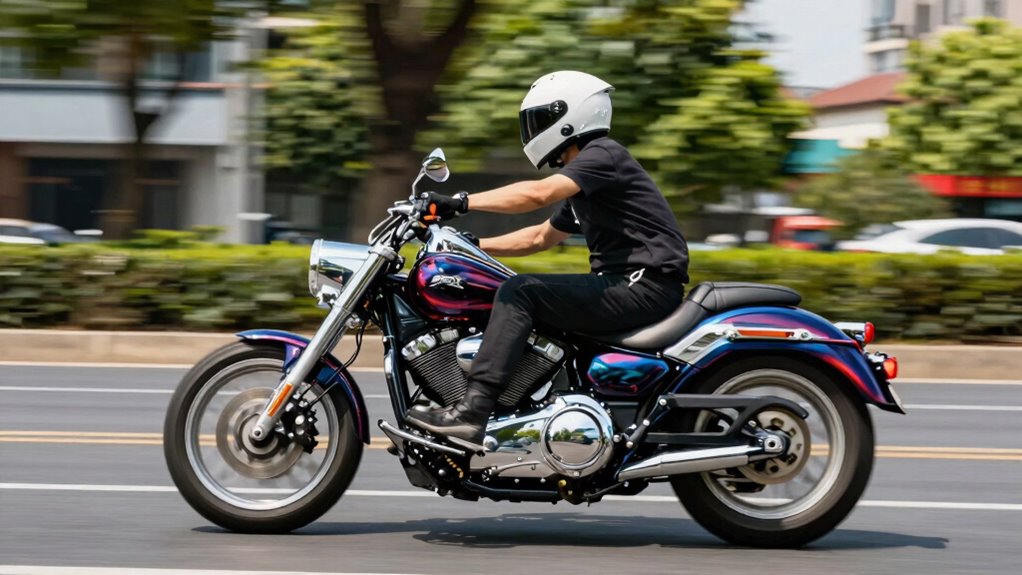
Adjusting your shutter speed allows you to control whether a motorcycle appears sharp or with a sense of motion. A fast shutter speed, like 1/1000 second, freezes the bike in place, while a slower one creates motion blur. Experimenting with different speeds helps you craft dynamic images that emphasize speed or clarity. Understanding how shutter speed controls motion can help you achieve the desired effect in your motorcycle photography. Additionally, knowing how biodiversity and conservation relate to your environment can inspire you to seek out scenic backgrounds that enhance your motorcycle shots. Recognizing how technology advances influence camera capabilities can also enable you to capture more creative and high-quality images.
Adjusting Shutter Speed
Shutter speed is a powerful tool for controlling how motion appears in your motorcycle photos. Adjusting it carefully lets you freeze action or create dynamic blur, enhancing your shots. To capture sharp images of moving bikes, set a quick shutter speed—around 1/1000 sec. Conversely, for motion blur that conveys speed, slow it down to 1/30 sec or less. Remember, ideal shutter speed depends on your subject’s speed and lighting conditions. Always prioritize rider safety and perform regular motorcycle maintenance to ensure safe riding during shoots. Using shutter speed techniques can help you better control motion effects in your images. Proper camera settings are essential for achieving the desired effect, especially when working with varying light and speed conditions. – Use quick shutter speeds for crisp, detailed shots of fast-moving bikes – Lower shutter speeds create motion blur, emphasizing speed – Steady your camera with a tripod or stabilization gear – Adjust ISO and aperture for proper exposure at different shutter speeds – Practice to find the perfect balance between motion and clarity
Creating Motion Effects
Using shutter speed creatively allows you to craft dynamic motorcycle images that capture either the thrill of speed or the clarity of a frozen moment. In bright lighting conditions, a faster shutter speed (like 1/1000s) freezes motion, highlighting details. Conversely, in low light, you might slow your shutter to 1/30s or slower to create intentional motion blur, emphasizing speed. Equipment accessories like ND filters can help manage light, enabling slower speeds without overexposing. To achieve the desired effect, consider your subject’s movement and the scene’s lighting. Adjust your shutter accordingly, experimenting with different speeds to find the perfect balance between sharpness and motion blur. This approach allows you to craft compelling images that convey motion or stillness, depending on your creative intent. Understanding shutter speed and its impact on motion is crucial for mastering motorcycle photography. Additionally, understanding camera settings and how they interact with each other can greatly improve your results. Knowing how to control exposure effectively allows for better creative control over your images.

Lmzour 4K Vlogging Camera with 330° Rotating Lens & Face Tracking, Portable Pocket Digital Camera for YouTube TikTok with WiFi, Includes 16GB Card, Tripod & Carrying Bag,Black
🎥 【4K Digital Camera for Vlogging-Made for Beginners & First-Time Content Creators】Shoot stunning 4K video and capture 75MP…
As an affiliate, we earn on qualifying purchases.
As an affiliate, we earn on qualifying purchases.
Master Panning Techniques to Capture Speed

Mastering panning techniques is essential for capturing the exhilarating sense of speed when photographing motorcycles in motion. To do this effectively, follow these tips:
- Keep your camera steady and move it smoothly in sync with the motorcycle’s speed.
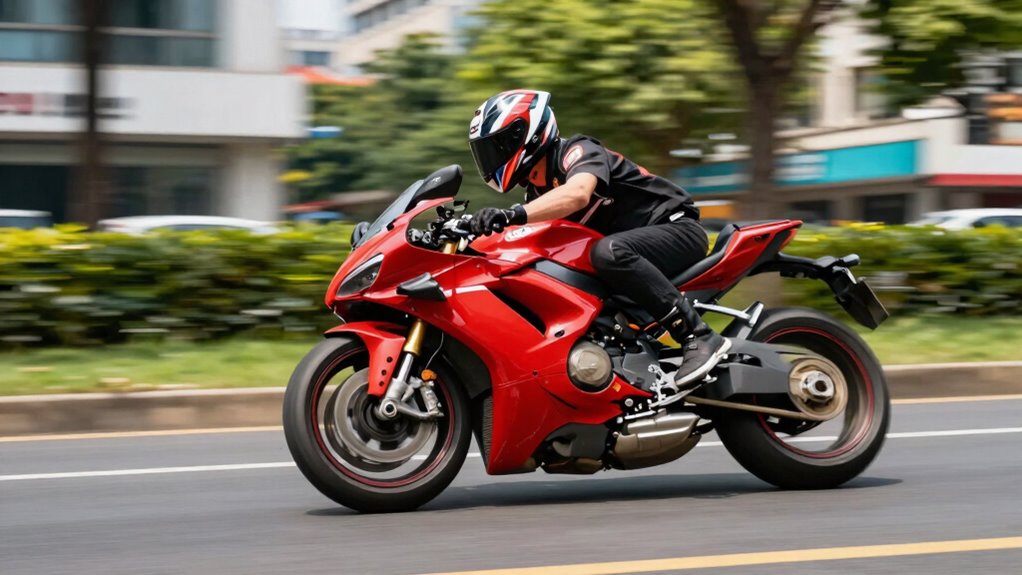
- Use a slower shutter speed, around 1/60 to 1/125 second, to create motion blur.
- Track the motorcycle from a stable posture, aligning your focus with its movement.
- Practice panning with different motorcycle models, including vintage or historical motorcycle models, to understand their unique speeds.
- Regular motorcycle maintenance ensures consistent performance, making it easier to anticipate movement and perfect your panning technique.
- Understanding the performance characteristics of various motorcycle types can help you better predict their movement patterns for more precise shots.
- Developing a good understanding of motorcycle behavior can significantly improve your ability to anticipate motion and capture sharp, dynamic images.
- Studying motorcycle dynamics can also give you insight into how different speeds and handling influence their movement, helping you plan better shots.
- Additionally, observing rider posture and technique can provide clues to the motorcycle’s upcoming movements, enhancing your timing.
- Observing environmental factors, such as road conditions and lighting, can further refine your ability to anticipate and capture motion effectively.
Tips for Anticipating Motorcycle Movement in the Field
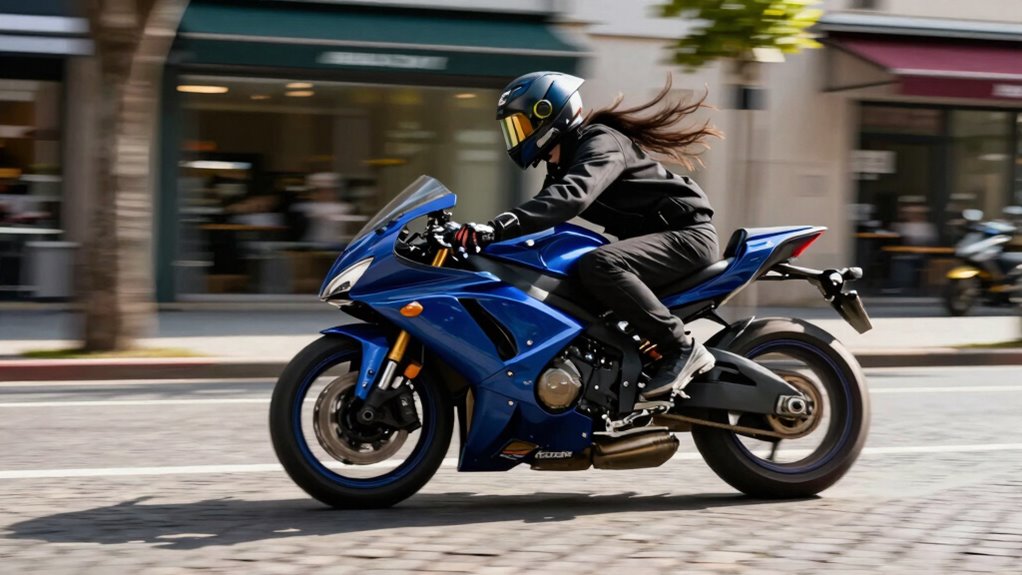
Anticipating motorcycle movement in the field requires keen observation and quick judgment, allowing you to position yourself for the best shot. Study the rider’s pace, direction, and the motorcycle’s historical styles to predict its path. Pay attention to subtle cues like throttle changes or lean angles, which signal upcoming movement. Familiarity with motorcycle maintenance tips, such as checking tire grip and suspension, helps you understand how bikes handle in different conditions. Watch for patterns in the rider’s behavior or the terrain that might influence their route. By staying alert and analyzing these factors, you can preemptively position yourself for sharp, dynamic shots. This proactive approach guarantees you capture the motorcycle in motion with clarity and energy, without fighting your camera.
Choosing the Best Locations and Timing for Dynamic Shots

Choosing the right locations and timing can make all the difference when capturing dynamic motorcycle shots. Look for spots with interesting backgrounds, like urban landscapes that add context and energy. Early mornings or late afternoons provide natural lighting that softens shadows and enhances colors. Timing your shots during golden hour maximizes natural light for vibrant images. Consider these factors:
- Busy city streets for energetic urban landscapes
- Open roads with clear sightlines for speed
- Locations with interesting light reflections
- Areas with contrasting backgrounds to make the motorcycle pop
- Shooting during natural lighting peaks for best brightness
Being aware of lighting conditions can help you achieve sharper, more dramatic photos. Understanding how lighting and environment influence the mood and clarity of your images is essential for capturing compelling motorcycle motion shots. Additionally, being mindful of environmental factors such as weather and surrounding scenery can further enhance your ability to capture stunning images. Recognizing how environmental conditions impact visibility and reflection can also provide creative opportunities for unique shots, especially when considering how natural light interacts with different environments.
Composition Tips to Highlight Speed and Power
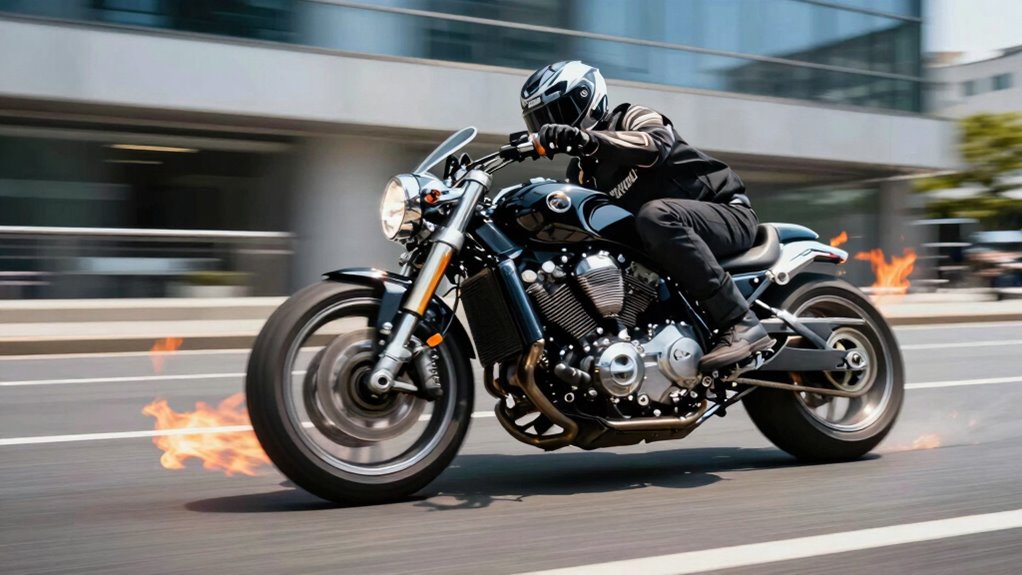
To convey speed and power, focus on capturing dynamic lines that lead the viewer’s eye through the frame. Incorporate foreground elements to add depth and create a sense of motion. These techniques help emphasize the motorcycle’s energy and intensity in your shot. Additionally, understanding the background checks involved in motorcycle photography can help you select safe and suitable locations that enhance your composition.
Emphasize Dynamic Lines
Dynamic lines are essential for capturing the sense of speed and power in motorcycle photography. To emphasize these lines, consider your lighting conditions—shoot during times that create sharp shadows and highlights, enhancing the motorcycle’s shapes. Keep your equipment well-maintained; clean lenses and a stable tripod help you capture crisp, clear lines that convey motion. Use angles that follow the motorcycle’s movement path, accentuating its flow and velocity. Look for road curves or structural elements that lead the eye along the bike’s trajectory. Incorporate a sense of motion by panning smoothly, matching your camera’s movement to the motorcycle. Finally, experiment with different perspectives to uncover the most dynamic line compositions that reveal speed and power effortlessly.
Use Foreground Elements
Incorporating foreground elements into your motorcycle shots can dramatically enhance the sense of speed and power. Think about adding objects like roadside signs, trees, or barriers to create depth and perspective. Pay attention to lighting conditions—dusk or dawn often produce dramatic, well-balanced lighting that highlights the motorcycle’s motion. Use camera accessories like a wide-angle lens to emphasize foreground elements and create a dynamic composition. Position yourself so that these elements frame the motorcycle, guiding the viewer’s eye and accentuating its movement. Experiment with different angles and distances to find the most compelling setup. Well-chosen foregrounds combined with proper lighting and accessories help convey energy, making your photos feel alive and fast.
Focus Techniques for Sharp Moving Motorcycle Photos

Achieving sharp focus on a moving motorcycle requires more than just aiming your camera; it demands precise focus techniques that track the subject effectively. Your goal is to keep the motorcycle crisp while it’s in motion, which hinges on your focus method. Consider lighting conditions, as low light may require different autofocus settings, and lens selection—telephoto lenses with fast autofocus help lock onto fast-moving subjects. To improve focus:
- Use continuous autofocus (AI Servo or AF-C)
- Focus on the motorcycle’s key area, like the rider’s helmet or front wheel
- Pre-focus on a specific point along the anticipated path
- Use a smaller focus point for precision
- Keep a steady hand or tripod to avoid focus shifts
Mastering these techniques ensures your motorcycle photos are sharp and dynamic.
Troubleshooting Common Challenges in Motorcycle Photography
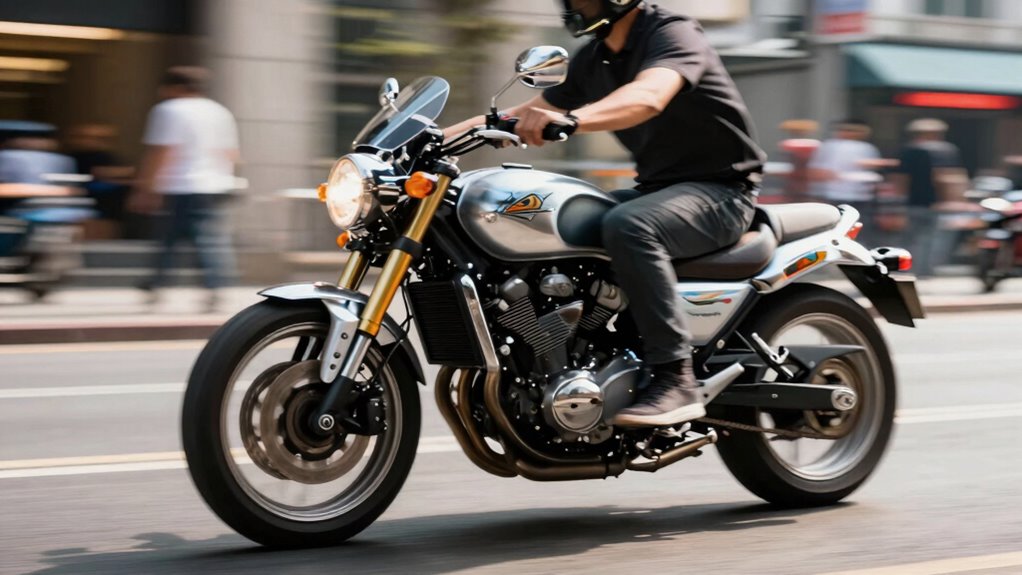
Photographers often face challenges like motion blur, focus inaccuracies, and lighting issues when capturing motorcycles in action. To troubleshoot these problems, start with proper motorcycle maintenance—ensuring the bike is stable and well-maintained helps prevent unexpected movements that complicate shots. Always prioritize rider safety by communicating clearly and maintaining a safe distance. Inconsistent lighting can cause exposure problems, so adjust your camera settings to match the environment, using faster shutter speeds to freeze motion. Focus inaccuracies happen when autofocus struggles with fast-moving subjects; switch to manual focus if needed. Remember, good preparation and awareness of both motorcycle conditions and rider safety are key to overcoming common challenges and capturing sharp, dynamic images.
Post-Processing Tips to Enhance Motion and Clarity
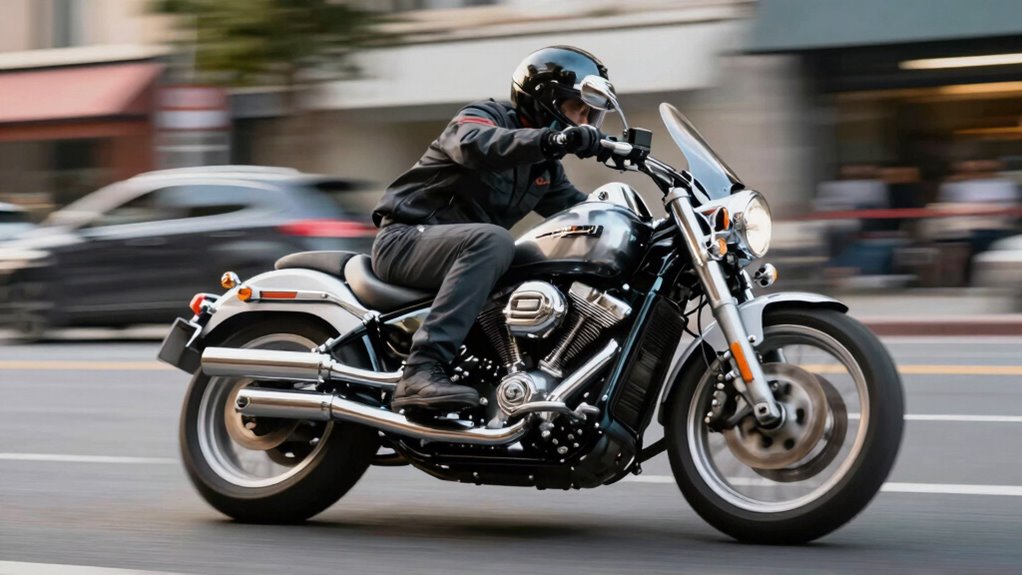
Once you’ve captured your motorcycle shots, the next step is to refine them through post-processing. Focus on enhancing motion and clarity with simple adjustments. Start by fine-tuning lighting angles to emphasize the motorcycle’s speed and movement. Use selective sharpening to make details pop without introducing noise. Adjust color grading to create a dynamic mood—cool tones can suggest motion, while warm tones add energy. Consider applying motion blur selectively to enhance sense of speed. Ultimately, tweak contrast and exposure to improve overall sharpness and clarity.
- Adjust lighting angles and shadows for depth
- Use selective sharpening for detail
- Fine-tune color grading for mood
- Apply motion blur selectively
- Enhance contrast and exposure for clarity
Frequently Asked Questions
What Equipment Accessories Can Improve Motorcycle Motion Photography?
To improve motorcycle motion photography, you should use camera stabilizers to reduce shake and keep your shots sharp while capturing fast-moving bikes. Lens filters, like polarizers, can cut glare and enhance colors for more vivid images. These accessories help you maintain clarity and control, especially when shooting in dynamic environments. Combining stabilizers and filters makes it easier to get crisp, professional-looking motorcycle action shots without fighting your camera.
How Do Weather Conditions Affect Motorcycle Shot Outcomes?
Weather impacts your motorcycle shots greatly, especially through lighting conditions. Bright sunlight can create harsh shadows and overexposed areas, while cloudy weather offers softer, more even lighting, making details pop. Rain or fog can add mood but also reduce visibility and sharpness. You should adapt your camera settings accordingly, using filters or adjusting exposure, to guarantee your motorcycle images turn out clear and dynamic despite changing weather conditions.
What Safety Precautions Should I Take During Motorcycle Photography Sessions?
You should wear protective gear, maintain safe distances, and stay alert during motorcycle photography sessions. Always put on a helmet, gloves, and sturdy clothing to safeguard yourself. Keep a safe distance from moving bikes to avoid accidents, and never compromise your safety for a great shot. Stay aware of your surroundings, communicate clearly with riders, and follow safety guidelines to guarantee a secure and enjoyable photography experience.
Can Drone Photography Be Effective for Capturing Moving Motorcycles?
Yes, drone photography can be highly effective for capturing moving motorcycles. With drone angles, you can achieve unique aerial perspectives that ground-level shots can’t match. Use a drone’s agility to follow the motorcycle smoothly, capturing dynamic motion and speed. Keep your drone steady and plan your shots ahead of time, ensuring safety and ideal angles. This approach offers dramatic, high-impact images that highlight the motorcycle’s movement beautifully.
How Do Different Motorcycle Types Influence Your Shooting Techniques?
Different motorcycle types influence your shooting techniques because their aerodynamics and rider poses vary greatly. For sleek sport bikes, focus on capturing dynamic angles and fast shutter speeds to emphasize speed. For cruisers, highlight relaxed rider poses and broader backgrounds. Understanding each bike’s aerodynamics helps you anticipate movement, so you can adjust your camera settings accordingly, ensuring sharp, compelling shots that showcase the motorcycle’s character.
Conclusion
Now that you’ve uncovered the secrets to capturing motorcycles in motion, you’re ready to turn your camera into a speeding bullet of artistry. With patience and practice, you’ll freeze or blur the thrill of racing bikes, making viewers feel the wind and power racing through your lens. Remember, every shot is a dance between you and the motorcycle—embrace the challenge, and soon your images will roar with life, echoing the pulse of speed itself.