Action camera color profiles are designed to enhance your footage by optimizing colors for different conditions, like underwater scenes or low-light environments. Picking the right profile can make your videos look more vibrant, true-to-life, and save you editing time later. Some profiles boost saturation and contrast to compensate for scene limitations, while others focus on preserving detail in challenging lighting. If you want to discover how to choose the best profile for your adventures, there’s more to explore below.

Get sports gear delivered free with Prime
- Fast, free delivery on millions of items
- Prime Video, Amazon Music and more included
- Member-only deals all year
Key Takeaways
- Action camera color profiles are designed to optimize footage for specific environments like underwater, low light, or bright outdoor scenes.
- Proper profile selection enhances colors, contrast, and overall visual quality, reducing the need for extensive post-processing.
- Underwater profiles preserve vibrant hues and compensate for color loss, resulting in more natural and appealing underwater footage.
- Low light profiles maximize detail and reduce noise, helping footage look clearer in dim conditions.
- Understanding how profiles interact with shooting conditions ensures more accurate, vivid, and professional-looking footage.

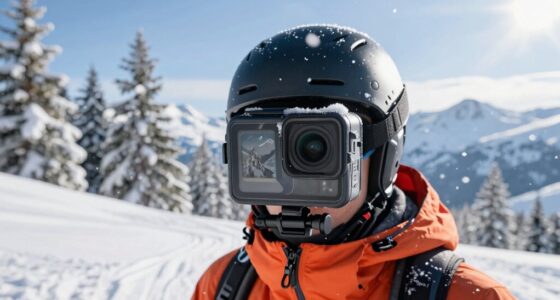
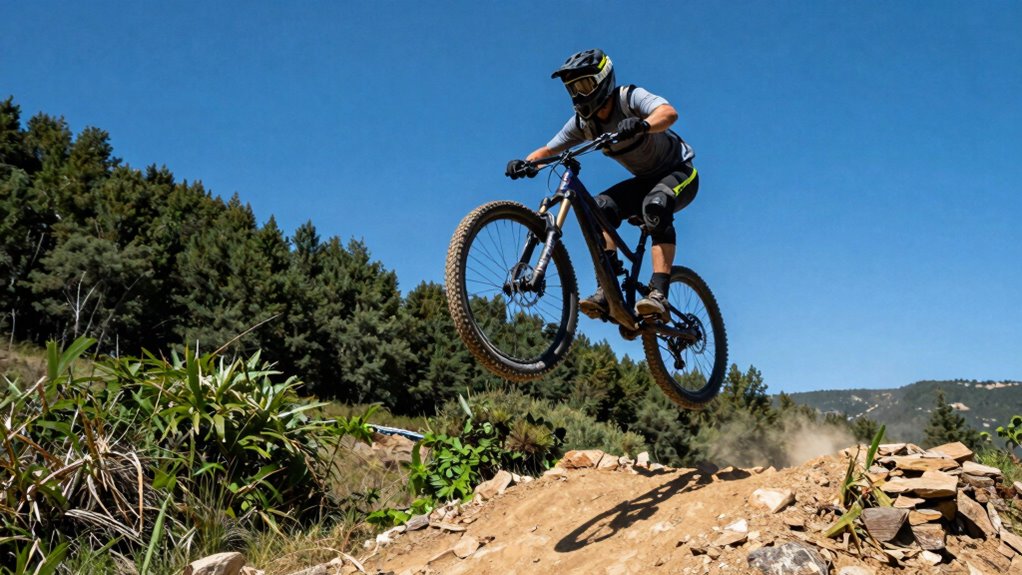
When capturing fast-paced adventures with your action camera, choosing the right color profile can substantially impact the final look of your footage. Whether you’re skiing down a mountain, mountain biking through rugged trails, or exploring underwater, the color profile influences how your footage appears and how much editing you might need later. Different profiles are designed to cater to specific shooting conditions, and understanding these helps you get the most out of every shot.
Choosing the right color profile enhances your footage’s look and reduces editing time across various adventure scenes.
If you’re planning to do underwater filming, you’ll want a color profile that preserves the vibrant blues and natural hues of the aquatic environment. Standard profiles often mute these colors, making your footage look dull or washed out once you’re out of the water. A profile optimized for underwater filming enhances color saturation and contrast, helping your footage pop with life. It’s especially useful if you don’t want to spend hours color grading afterward. Also, many action cameras include underwater-specific profiles that compensate for the loss of color underwater, providing a more accurate representation of your surroundings straight out of the camera.
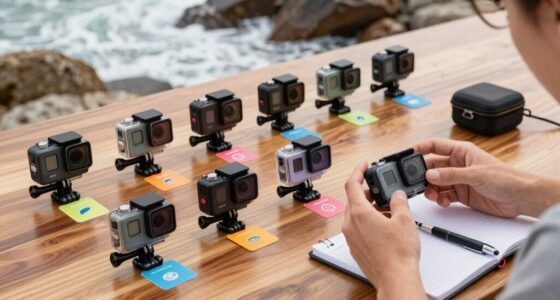
Low light performance is another critical factor when selecting a color profile. Shooting in dim conditions—like dusk, indoors, or shaded areas—can challenge your camera’s ability to produce vibrant, clear footage. Some profiles are designed to maximize detail and reduce noise in low light, often by boosting shadows and midtones without overly saturating the image. These profiles help you retain color accuracy and detail even when lighting isn’t ideal, making your footage look sharp and natural, rather than flat or grainy. Choosing a profile that emphasizes low light performance means you won’t have to rely heavily on post-processing to salvage your shots, saving you time and effort. Additionally, understanding how different color profiles behave in various environments allows you to better plan your shots and results. Recognizing how color science influences your footage can help you make more informed decisions when selecting settings. Moreover, experimenting with different color profile settings in various conditions can give you a better sense of what looks best for your particular style and needs.
Ultimately, the right color profile hinges on your shooting environment and intended look. For underwater adventures, go for profiles that enhance underwater colors and contrast. For low light scenes, pick profiles that balance brightness and color accuracy to minimize noise. By understanding these nuances, you can set your action camera to match your scene perfectly, capturing vivid, true-to-life footage in every situation. This way, you won’t just record your adventures—you’ll create compelling visuals that truly capture the essence of your experience. Recognizing how environmental conditions interact with color settings can further enhance your ability to adapt your camera for optimal results.
action camera color profile settings
As an affiliate, we earn on qualifying purchases.
As an affiliate, we earn on qualifying purchases.
Frequently Asked Questions
How Do Color Profiles Affect Low-Light Footage Quality?
Color profiles can considerably impact your low-light footage quality by affecting dynamic range and noise reduction. When you choose a profile with wider dynamic range, it captures more detail in shadows and highlights, making your footage clearer. Additionally, some profiles enhance noise reduction, reducing graininess in dark scenes. This combination helps you achieve smoother, more detailed low-light footage, ensuring your shots look sharper and more professional even in challenging lighting conditions.
Can Color Profiles Be Customized for Specific Scenes?
Yes, you can customize color profiles for specific scenes using scene-specific adjustments and profile customization techniques. Imagine tweaking a car’s headlights for foggy conditions; similarly, you modify color settings to match your scene’s lighting and mood. By fine-tuning parameters like contrast, saturation, and color temperature, you guarantee your footage looks its best in every shot, giving you full creative control over your camera’s output.
Do Different Brands Use the Same Color Profile Standards?
Different brands don’t always use the same color profile standards, which can impact your footage’s consistency. You’ll notice profile variations across brands, making it tricky to maintain brand consistency if you switch cameras. To get similar results, you might need to tweak settings or use color grading. Knowing these differences helps you plan better, ensuring your footage matches your desired look regardless of the brand.
How Do Color Profiles Impact Editing and Post-Processing?
Color profiles directly impact your editing and post-processing by affecting color accuracy and file compatibility. When you shoot with a specific profile, it guarantees that colors look consistent across devices, making editing more precise. Using the right profile also ensures your files are compatible with editing software, preventing color shifts or data loss. This way, you save time and achieve professional results with accurate, easily adjustable footage.
Are There Any Risks to Using Custom or Third-Party Color Profiles?
Like stepping into uncharted waters, using custom or third-party color profiles can pose risks to color accuracy and profile compatibility. You might encounter mismatched hues or issues syncing with editing software, making your footage harder to work with. Always test profiles first, ensuring they maintain color fidelity and seamlessly integrate with your camera’s ecosystem. Ignoring these risks could turn your vibrant shots into a confusing mosaic rather than a vivid story.
underwater action camera profile
As an affiliate, we earn on qualifying purchases.
As an affiliate, we earn on qualifying purchases.
Conclusion
Now that you understand action camera color profiles, you’re armed with the secret weapon to transform your footage into cinematic masterpieces. Imagine your videos bursting with colors so vivid, they leap off the screen and dance in your viewers’ minds. With these profiles, your footage won’t just tell a story—it’ll scream it from the rooftops, shake the ground, and leave jaws dropping. Get ready to release a visual storm that ruins all other videos forever.
As an affiliate, we earn on qualifying purchases.
best action camera for outdoor filming
As an affiliate, we earn on qualifying purchases.
As an affiliate, we earn on qualifying purchases.
Fall Picks
fall essentials
As an affiliate, we earn on qualifying purchases.