To avoid shaky footage with long lenses without complicating your workflow, use simple stabilizing accessories like tripod collars, monopods, or handheld stabilizers designed for long lenses. Tuck your elbows in, move slowly, and brace against stable surfaces to reduce shake. Opt for a sturdy tripod with a smooth fluid head for steady shots, and leverage in-body stabilization if available. Small adjustments and proper handling go a long way—discover more tips to keep your footage smooth.

Get sports gear delivered free with Prime
- Fast, free delivery on millions of items
- Prime Video, Amazon Music and more included
- Member-only deals all year
Key Takeaways
- Use lightweight stabilization accessories like handheld gimbals or steadicams designed for long lenses.
- Rely on a sturdy tripod with a fluid head for static shots to ensure smooth, stable footage.
- Incorporate body stabilization techniques, such as tucking elbows and leaning against surfaces, to reduce shake.
- Opt for lenses with built-in stabilization or use cameras with in-body stabilization to minimize vibrations.
- Keep setups simple and focus on deliberate, slow movements to maintain stability without complicating workflow.
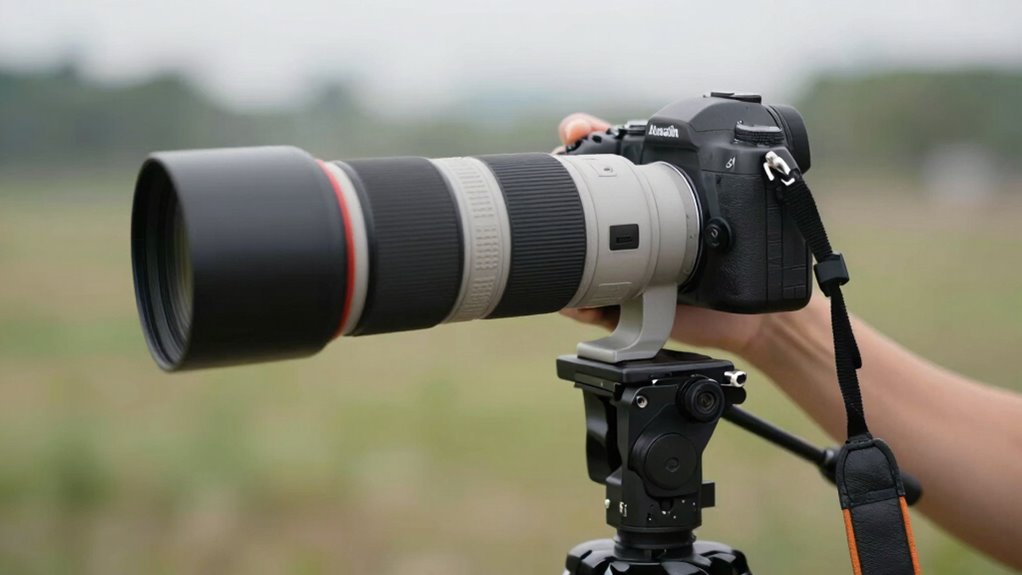
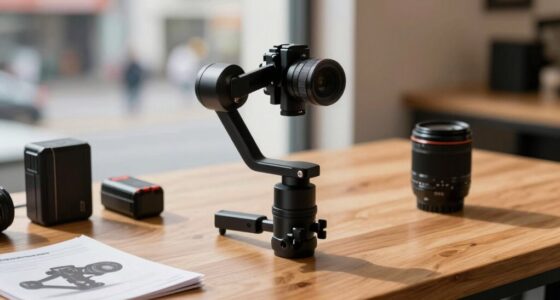
Long lenses can beautifully capture distant subjects, but they also amplify camera shake, making your footage look shaky and unprofessional. To combat this, camera stabilization becomes indispensable. You need to find ways to steady your camera without adding complexity or disrupting your workflow. One of the simplest solutions is to use lens accessories designed for stabilization. These include telephoto-specific tripod collars, gimbals, or steadicams tailored for long lenses. They help distribute the weight more evenly and provide smoother movement, reducing fatigue and jitter during handheld shooting.
Use stabilization accessories like tripod collars, gimbals, or steadicams to smooth long lens footage and reduce fatigue.
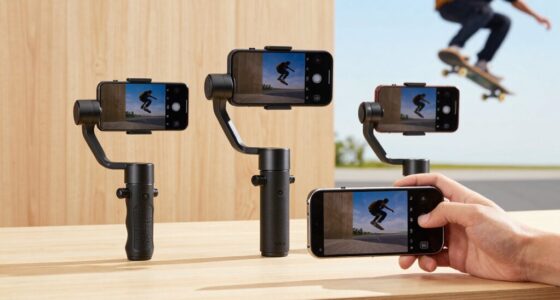
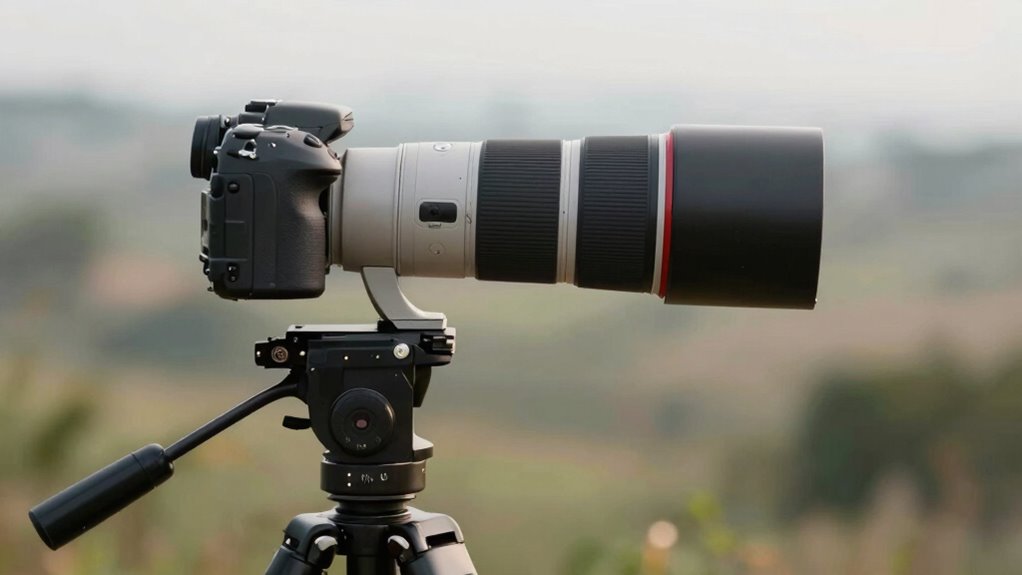
Investing in a good tripod with a sturdy head is one of your best options. A tripod keeps your camera steady, especially when shooting static scenes with long lenses. Look for models with fluid heads that allow smooth pans and tilts, helping you maintain fluid motion without jerks. If you prefer handheld shooting, consider a shoulder rig or a gimbal stabilizer. These accessories are specifically built to counteract the natural shakes that come with holding heavy lenses for extended periods. They stabilize your footage in real time, allowing you to move more freely without sacrificing stability.
Another tip is to pay attention to your shooting technique. Keep your elbows tucked into your body for added stability. Use your body as a tripod by leaning against a stable surface or crouching low. When possible, brace your camera against a sturdy object such as a wall or tree. Even slight adjustments like these can markedly cut down on shake. Also, consider using a lens with built-in stabilization if your camera doesn’t have in-body stabilization, as this can make a noticeable difference in reducing vibrations. Additionally, understanding the importance of camera stabilization can greatly improve your footage quality. Incorporating proper handling techniques can further enhance stability and reduce unwanted movement.
While camera stabilization and lens accessories are vital, don’t forget the importance of good technique. Moving slowly and deliberately, especially with long lenses, helps you maintain control. Combining proper technique with the right gear creates a workflow that’s efficient and produces smooth footage. Avoid rushing into complex setups if your timeline doesn’t allow for it; sometimes, a simple tripod or monopod, paired with thoughtful handling, does the trick.
Ultimately, staying mindful of your setup and employing the right accessories can help you achieve steady, professional-looking footage without complicating your workflow. By integrating camera stabilization tools and refining your technique, you can confidently shoot with long lenses and produce sharp, shake-free videos every time.
tripod with fluid head for long lenses
As an affiliate, we earn on qualifying purchases.
As an affiliate, we earn on qualifying purchases.
Frequently Asked Questions
What Are the Best Camera Settings for Stabilization?
To stabilize your footage, set your camera to a higher shutter speed to reduce motion blur and enable autofocus with face or subject tracking to maintain focus. Make sure your tripod is stable and securely positioned, preventing camera shake. Use lens stabilization features if available, and avoid changing autofocus settings mid-shoot for consistent results. These settings help you achieve steady shots without complicating your workflow.
How Does Lens Weight Affect Camera Shake?
Did you know that heavier lenses can increase camera shake by up to 50%? When your lens weighs more, it’s harder to keep the camera steady, especially without proper support. To combat this, make sure tripod stability and consider using lens counterweights to balance the load. These small adjustments help reduce shake, making your footage smoother without complicating your workflow. Proper support is key for sharp, professional shots.
Can Post-Processing Fix Shaky Footage Effectively?
Post-processing stabilization can fix shaky footage effectively, especially when handheld techniques cause minor shake. It’s useful for smoothing out small jitters, but for more significant shakiness, gimbal techniques are preferable for steady shots. Combining handheld shooting with post-processing stabilization gives you flexibility, but relying solely on software may limit quality. Using a gimbal during filming minimizes shake upfront, reducing the need for extensive stabilization later.
What Accessories Help Stabilize Long Lenses?
Did you know that using a lens collar can improve stability by up to 50%? To stabilize long lenses effectively, consider accessories like a sturdy tripod compatible with your gear. A lens collar offers direct support, reducing strain on your camera mount and minimizing shake. Combining a solid tripod with a lens collar maximizes stability, letting you shoot sharp images even at extreme telephoto lengths without complicating your workflow.
How Does Shooting Technique Influence Stability?
Your shooting technique greatly influences stability. Keep your tripod stable by ensuring its legs are fully extended and on a flat surface. When shooting handheld, use proper techniques like bracing your elbows against your body and maintaining a steady stance. Practice smooth, controlled movements, and avoid sudden jerks. Combining tripod stability with effective handheld techniques minimizes shake, allowing you to capture sharp footage even with long lenses, without complicating your workflow.
camera gimbal stabilizer for telephoto lenses
As an affiliate, we earn on qualifying purchases.
As an affiliate, we earn on qualifying purchases.
Conclusion
To keep your footage steady with long lenses, prioritize proper stabilization techniques like using tripods or gimbals, and practice smooth panning. Remember, nearly 60% of amateur videographers experience shake issues, mainly due to shaky hands or unsteady equipment. By applying these tips, you can improve your footage without complicating your workflow. Consistent practice and investing in good stabilization gear will make a noticeable difference, helping you capture professional-looking videos effortlessly.
As an affiliate, we earn on qualifying purchases.
As an affiliate, we earn on qualifying purchases.
NFL season / tailgating Picks
team gear
As an affiliate, we earn on qualifying purchases.