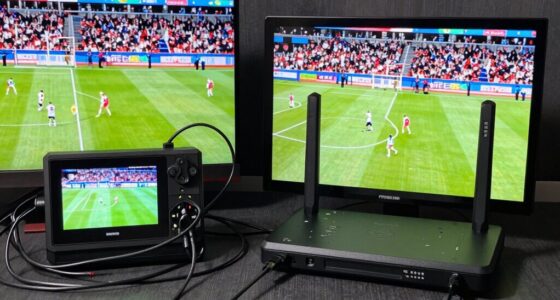
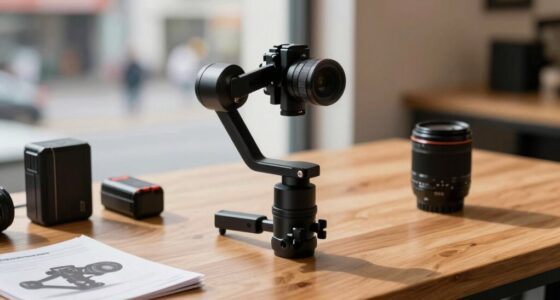
When choosing an on-camera monitor as a hybrid shooter, focus on color accuracy, resolution, and portability. Accurate colors let you see your vision clearly, while high resolution reveals finer details essential for 4K shooting. Portability guarantees you can easily move and set up your gear on the go. Don’t forget battery life and connectivity types that keep your workflow smooth. There’s more to take into account to make the best choice for your shooting needs.

Get sports gear delivered free with Prime
- Fast, free delivery on millions of items
- Prime Video, Amazon Music and more included
- Member-only deals all year
Key Takeaways
- Color Accuracy: Ensures true color representation, enabling effective real-time adjustments and reducing post-production color correction time.
- Resolution Options: Higher resolutions reveal finer details, crucial for 4K shooting and ensuring monitor display matches final output.
- Portability: Lightweight and compact designs allow for easy setup, enhancing flexibility and efficiency during on-the-go shoots.
- Battery Life: Long-lasting battery prevents unexpected shutdowns, ensuring uninterrupted shooting of significant scenes.
- Connectivity Types: Versatile connections like HDMI and SDI facilitate compatibility with various camera gear, simplifying setup and enhancing workflow.

Whether you’re capturing stunning video or snapping high-resolution photos, on-camera monitors can elevate your hybrid shooting experience. These tools enhance your workflow, making it easier to focus on your creative vision. When diving into the world of on-camera monitors, there are several key features that really matter, guaranteeing you make the right choice for your needs.
First off, color accuracy is important. You want to see the colors in your shots as they truly are, without any distortions. High-quality monitors can display a broader color spectrum, helping you make real-time adjustments while shooting. This can save you a lot of time in post-production, where you’d otherwise spend hours correcting color mismatches.
Resolution options also play a significant role. A higher resolution monitor allows you to see finer details, which is especially helpful when you’re shooting in 4K or higher. It ensures that what you see on the monitor matches what you’ll get in your final output. So, when comparing monitors, keep an eye on those specs to confirm they meet your shooting needs.
Portability concerns can’t be ignored either. If you’re frequently moving from one location to another or shooting on the go, you’ll want a lightweight monitor that’s easy to set up and detach. Look for compact designs that don’t sacrifice performance. The last thing you want is a cumbersome setup slowing you down during a shoot.
Battery life is another essential factor. You don’t want to be caught without power in the middle of a significant scene. Many monitors now offer long battery life, but it’s wise to check specifications and read user reviews on real-life performance. This guarantees you won’t face unexpected shutdowns while trying to capture key moments.
Connectivity types are crucial for compatibility with your camera gear. Whether you’re using HDMI, SDI, or other connections, make sure the monitor can easily link up with your devices. This versatility can save you from potential headaches during shoots.
Lastly, it’s smart to engage in price comparisons. Monitors come at various price points, and while it’s tempting to go for the cheapest option, investing a bit more can often yield better quality and features. Take the time to weigh your options, considering how each monitor aligns with your specific shooting needs. Prioritizing these factors will guarantee you choose an on-camera monitor that truly enhances your hybrid shooting experience.
Products Worth Considering

GoPro HERO Compact Waterproof 4K Action Camera

Coleman RoadTrip 285 Portable Propane Grill, 3 Burners, Red

Coleman RoadTrip 225 Portable 2-Burner Propane Grill
As an affiliate, we earn on qualifying purchases.
Frequently Asked Questions
Can I Use an On-Camera Monitor for Live Streaming?
Yes, you can use an on-camera monitor for live streaming. It enhances your production quality greatly. With a higher monitor resolution, you’ll see finer details, making it easier to frame your shots perfectly. Plus, the live streaming benefits include better focus and exposure control, letting you adjust settings on-the-fly. So, by incorporating an on-camera monitor, you’re not just streaming; you’re elevating your content to a professional level.
What Size Monitor Is Best for Portability?
For portability, a 5 to 7-inch monitor is often best. Did you know that 70% of videographers prefer lightweight designs for on-the-go shooting? These smaller, portable monitor features make them easy to carry without sacrificing quality. Consider options that weigh less than a pound for maximum convenience. Plus, look for models with built-in batteries to avoid extra gear. You’ll appreciate the ease they bring to your hybrid shooting setup!
How Do I Power My On-Camera Monitor?
You can power your on-camera monitor using battery options or power adapters. If you prefer portability, rechargeable batteries like NP-F series or V-mount batteries work well. For longer shoots, consider using a power adapter that plugs into a wall outlet. Just make sure your monitor’s input matches the adapter’s output. This way, you’ll stay powered up whether you’re on location or in the studio, ensuring you never miss a shot.
Are There Waterproof Options for Outdoor Shooting?
Yes, there are waterproof options for outdoor shooting! When you’re looking for an on-camera monitor, check for those with waterproof features and outdoor durability. These monitors are designed to withstand rain and moisture, ensuring your gear stays protected during shoots. Brands often highlight their IP ratings, so pay attention to those specs. Investing in a robust, weather-resistant monitor helps you focus on capturing great footage without worrying about the elements!
Can I Connect Multiple Cameras to One Monitor?
Certainly, you can connect multiple cameras to one monitor! Just verify that your cameras have compatible output options. Make the most of monitor resolution, as it’ll enhance your viewing experience. Using a switcher can simplify the process, letting you toggle between feeds seamlessly. So, whether you’re shooting scenes or striking shots, you’ll appreciate the clarity and convenience of a multi-camera setup on one monitor.
Conclusion
In summary, choosing the right on-camera monitor can transform your hybrid shooting experience. Did you know that 70% of filmmakers say their monitor greatly improves focus and composition? By prioritizing features like resolution, brightness, and portability, you can elevate your storytelling and guarantee every shot counts. So, invest wisely, and watch your creative vision come to life with clarity and precision. Happy shooting!