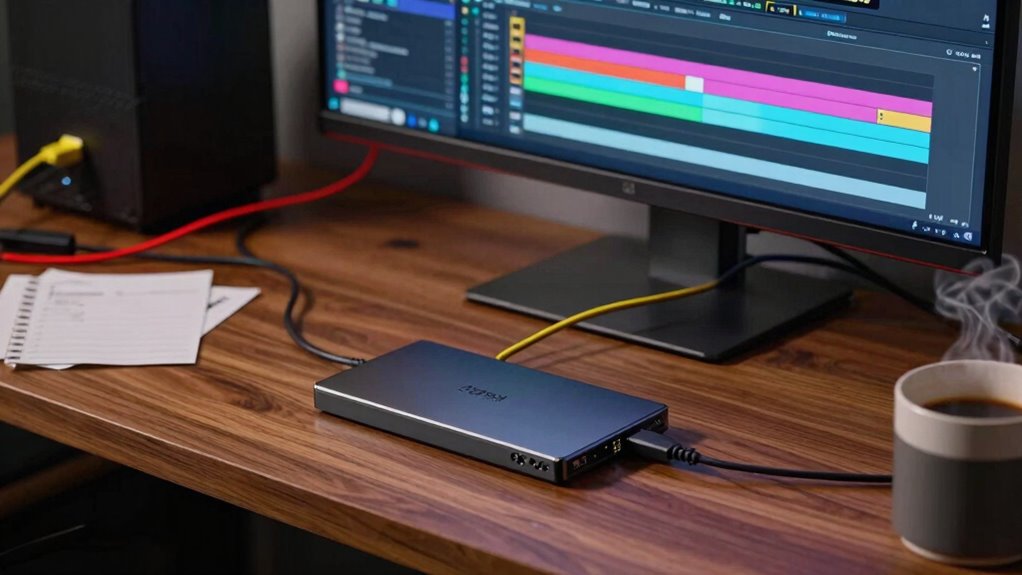

Many buyers miss vital factors when selecting desktop SSDs for video editing. It’s not just about speed; consider the interface type, endurance ratings, and thermal management. NVMe drives outperform SATA, but higher TBW ratings guarantee durability under heavy loads. Plus, effective cooling prevents overheating during intense sessions. Balancing speed and storage capacity is key to maintaining workflow. If you want to optimize your editing setup, there’s more to uncover about these fundamental components.
Key Takeaways
- Many buyers overlook the importance of NVMe over SATA for faster read/write speeds essential for handling high-resolution video footage efficiently.
- Endurance ratings, specifically TBW, are often ignored; higher ratings ensure durability under heavy workloads typical for video editing.
- Thermal management features, such as heat sinks, are crucial yet frequently neglected, preventing performance throttling during intensive editing tasks.
- Storage capacity is essential; insufficient space can disrupt workflows, so consider the number of projects when selecting an SSD.
- Buyers should analyze both speed and reliability, as these factors significantly impact the overall video editing experience.
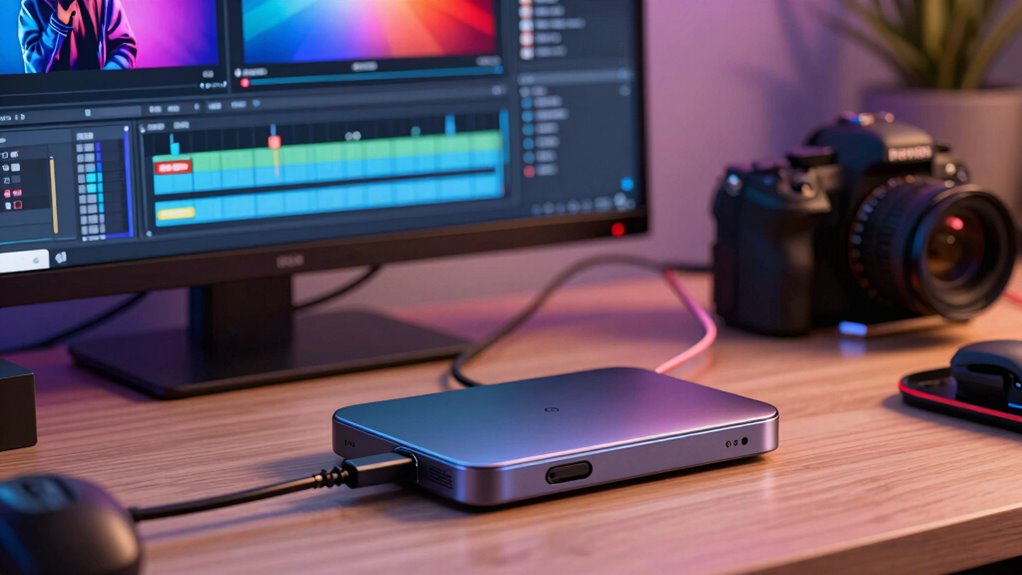
As video creators, you know that speed and reliability are essential for your workflow, especially when handling large files. While many buyers focus primarily on the raw performance of desktop SSDs, they often overlook critical factors that can greatly impact their editing experience. Understanding these nuances can enhance your performance and guarantee your storage capacity meets your needs.
First, let’s talk about the importance of interface types. Not all SSDs are created equal, and the interface can make a huge difference in performance. For instance, NVMe SSDs are typically faster than SATA SSDs, offering higher read and write speeds. If you’re working with 4K or even 8K video footage, choosing the right interface can drastically reduce your loading times and speed up your editing process. So, when you’re shopping, don’t just look at the speed ratings—think about the type of connection your SSD will use.
Understanding SSD interface types is crucial; NVMe drives significantly outperform SATA, especially for 4K and 8K editing tasks.
Next, reflect on endurance ratings. Most buyers tend to ignore how long an SSD will last under heavy use. Video editing involves writing and rewriting large files constantly, which can wear out a drive faster. Look for SSDs with higher TBW (terabytes written) ratings. This figure indicates how much data you can write to the SSD over its lifespan. A higher TBW means you’ve got a drive that can handle your intense workload without failing prematurely. Additionally, choosing an SSD with adequate thermal management features can help sustain its longevity. Proper thermal management is crucial to prevent overheating and ensure consistent performance during extended editing sessions. Furthermore, thermal throttling capabilities can prevent your drive from overheating and losing speed during prolonged use. To maximize your SSD’s lifespan, consider models that offer advanced cooling solutions, especially if your workstation runs in warm environments.
Another aspect to examine is thermal management. SSDs can heat up during intensive tasks, which may throttle their performance. If you’re in the heat of editing a long video, the last thing you want is for your drive to slow down. Some SSDs come equipped with heat sinks or thermal throttling features that help maintain peak performance. Prioritizing thermal management can safeguard your workflow against unexpected slowdowns.
Lastly, don’t underestimate the importance of storage capacity. You might be tempted to go for the cheapest option with the highest speed, but if it doesn’t have enough space for your files, you’ll find yourself in a bind. Think about how many projects you typically handle simultaneously and choose a drive that can accommodate your workflow without constant offloading. Remember, a balanced approach that considers capacity and speed will serve you best in the long run.
As an affiliate, we earn on qualifying purchases.
Frequently Asked Questions
How Do SSDS Impact Video Editing Software Performance?
SSDs greatly boost video editing software performance by offering SSD speed benefits that enhance data transfer rates. When you use an SSD, your editing workflow optimization improves, allowing for quicker loading times and smoother playback. You’ll notice less lag during rendering, which means you can focus on creativity rather than waiting. Overall, investing in a quality SSD helps streamline your projects and elevate your overall editing experience.
Are There Specific Brands Recommended for Video Creators?
When you’re racing against deadlines, you need reliable tools. For video creators, brands like Samsung, Western Digital, and Essential stand out. They consistently deliver high performance benchmarks that can really boost your editing workflow. While brand comparisons often highlight differences in speed and durability, it’s vital to choose one that fits your needs. Trustworthy options guarantee your creative process runs smoothly, letting you focus on what you do best—creating stunning videos.
Can SSDS Be Used for Gaming as Well?
Absolutely, SSDs can be used for gaming! They offer significant advantages, like faster load times and improved gaming performance. With an SSD, you’ll notice reduced lag and quicker access to game files, enhancing your overall experience. Plus, many modern games benefit from the speed SSDs provide, allowing for smoother gameplay. If you’re serious about gaming, investing in a good SSD is definitely worth it to elevate your setup.
What’s the Difference Between SATA and NVME SSDS?
When you’re deciding between SATA and NVMe SSDs, have you considered how speed impacts your performance? SATA speeds typically max out around 600 MB/s, which is decent but can feel limiting. On the other hand, NVMe advantages lie in their ability to deliver speeds over 3,000 MB/s, making them considerably faster for tasks like video editing or gaming. Choosing the right one can elevate your overall computing experience.
How Do I Properly Maintain My SSD?
To properly maintain your SSD, keep your firmware updated and avoid filling it to capacity. Regularly back up your data to enhance data recovery chances in case of failure. Use TRIM commands to help manage unused data blocks, extending your SSD lifespan. Additionally, avoid heavy write cycles, as they can wear out your drive faster. By following these tips, you’ll guarantee your SSD runs smoothly and lasts longer.
As an affiliate, we earn on qualifying purchases.
Conclusion
When choosing a desktop SSD, don’t overlook the importance of read/write speeds and endurance, especially for video editing. For instance, a video creator working on a feature-length film found that their SSD’s low write speed caused frustrating delays during renders. By investing in a high-performance SSD, they greatly improved their workflow, saving hours in editing time. Prioritizing speed and reliability can make all the difference in delivering your projects on time and with top quality.
As an affiliate, we earn on qualifying purchases.
As an affiliate, we earn on qualifying purchases.