
The real story behind the best gain staging habits is that it’s all about maintaining a clean, balanced audio signal from the start. You need to set your levels carefully, starting low and increasing gradually while monitoring peaks. Consistency and regular adjustments are key to avoiding distortion and noise. Mastering this yields professional results and saves time. Stick with these habits, and you’ll discover how to create clearer, more polished recordings that truly stand out.
Key Takeaways
- Consistent gain staging prevents distortion and noise, ensuring professional-quality recordings for creators.
- Proper adjustment and monitoring of levels are vital throughout the recording process.
- Starting with low gain and gradually increasing helps avoid clipping and maintains clarity.
- Regularly revisiting and fine-tuning gain levels enhances overall sound consistency.
- Developing good gain staging habits saves time in post-production and improves final audio quality.

Gain staging is a essential step in achieving professional-quality audio, yet many creators overlook its importance. It’s the foundation of good sound, making sure your recordings sound clear, balanced, and free of distortion. When you focus on proper gain staging, you’re actively enhancing your audio, which makes the entire production process smoother and results in a polished final product. The key to effective gain staging starts with understanding audio optimization—making sure each piece of equipment is set correctly to prevent peaks and noise from sneaking into your recordings.
Proper gain staging is the foundation of clear, balanced, and professional-quality audio recordings.
Your equipment setup plays a key role in this process. Every microphone, interface, and mixer has its own best gain levels. By adjusting these levels during setup, you prevent your signal from being too weak or too strong. If your gain is set too high, you risk clipping—where the audio peaks distort, losing clarity and adding unwanted noise. Conversely, if the gain is too low, you’ll struggle to capture the full richness of your sound, forcing you to compensate with excessive post-processing, which can degrade quality. Proper gain levels are essential for a clean audio signal throughout the entire chain.
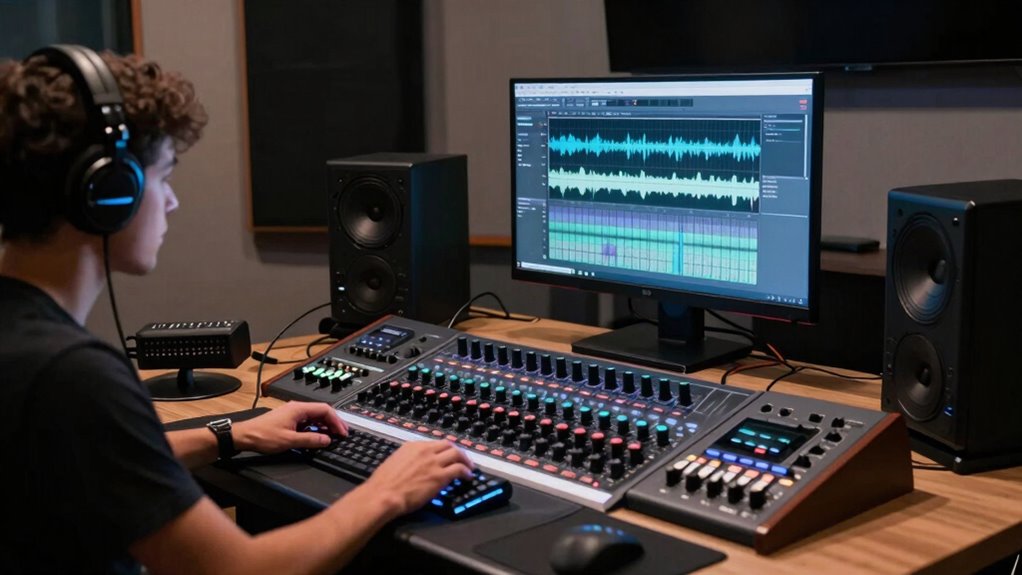
To get this right, start by setting your gain at a low level during initial setup. Speak or sing into your microphone as you normally would, then slowly increase the gain until your audio peaks just below clipping. This ensures your signal is strong enough without risking distortion. Regularly monitor your levels using meters or visual indicators on your recording equipment. This constant vigilance is part of good audio optimization, helping you catch issues early before they become problematic. Additionally, understanding gain staging and its role in the entire audio chain can significantly improve your workflow and results. Developing a consistent setup process ensures your levels remain reliable across different recording sessions.
It’s also important to remember that gain staging isn’t a one-time task. As your setup evolves or your environment changes, you should revisit and adjust your levels accordingly. Consistency in your equipment setup and gain staging habits leads to more predictable results, saving you time in post-production and reducing frustration. Proper gain staging also helps maintain a clean signal path, minimizing noise and interference, which is especially critical when recording multiple sources or working in less-than-ideal environments.
Ultimately, mastering the art of gain staging requires attention, practice, and a keen ear. When you prioritize audio optimization and take the time to correctly set up your equipment, you set yourself up for success. It’s a simple yet powerful habit that elevates your recordings from amateur to professional, giving your content the clarity and quality your audience deserves.
As an affiliate, we earn on qualifying purchases.
Frequently Asked Questions
How Does Gain Staging Affect Overall Audio Quality?
Gain staging directly affects your audio quality by optimizing dynamic range and ensuring signal clarity. When you set proper gain levels, your recordings avoid distortion and noise, maintaining a clean, balanced sound. Proper gain staging allows every element in your mix to breathe without clipping or losing detail. This process helps your final output sound professional, vibrant, and clear, making your music or content more engaging and enjoyable for your audience.
What Common Mistakes Do Creators Make With Gain Staging?
Ever heard the saying, “Too much of a good thing”? When gain staging, you often make the mistake of neglecting proper audio calibration, leading to inconsistent signals. You might push levels too high or settle for low, causing distortion or noise. To keep your audio quality sharp, focus on maintaining signal consistency. Avoid rushing and always double-check your levels; this simple step prevents common mistakes and guarantees professional-sounding content.
Is Gain Staging Different for Music Versus Podcasts?
Yes, gain staging differs for music versus podcasts because your recording techniques and goals vary. For music, you aim for rich, dynamic sound, so you carefully manage levels to preserve vocal clarity and avoid distortion. With podcasts, clarity and consistent volume are key, so you set gain to guarantee speech is clear without clipping. Adjust your gain staging accordingly, focusing on vocal clarity for both, but tailoring your approach to each medium’s unique requirements.
When Should I Adjust Gain Staging During a Project?
Think of gain staging as a dance—you adjust as your performance flows. You should tweak gain when microphone placement or room acoustics change, or if you notice distortion or unexpected noise. During a project, listen closely and make small adjustments, especially after recording different sections or adding new equipment. Staying attentive guarantees your levels stay balanced, capturing clear sound no matter how your setup or environment shifts.
What Tools Are Best for Effective Gain Staging?
For effective gain staging, you should use a combination of your equipment setup and understanding signal flow. Start with high-quality, transparent preamps and digital meters to monitor levels. Use tools like audio interface gain knobs, mixing consoles, and DAW metering plugins to adjust gain gradually, ensuring clean signals without clipping. Keep an eye on your signal flow to prevent distortion, and always aim for consistent levels throughout your recording chain.
As an affiliate, we earn on qualifying purchases.
Conclusion
Now, picture your audio chain as a clear mountain stream, each step flowing seamlessly into the next. By mastering your gain staging habits, you’re ensuring your sound stays crisp and vibrant, avoiding the murky waters of distortion. When you keep your levels balanced, your creations shine like sunlight on pristine water—vivid, true, and enthralling. Embrace these habits, and watch your soundscape transform into a smooth, professional masterpiece that captures every listener’s attention.
audio interface with gain control
As an affiliate, we earn on qualifying purchases.
As an affiliate, we earn on qualifying purchases.
professional audio level monitor
As an affiliate, we earn on qualifying purchases.
As an affiliate, we earn on qualifying purchases.