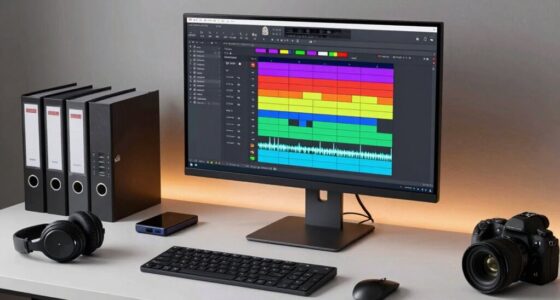
To keep lighting consistent across a series when speed matters, set up and calibrate your lights with quick, portable tools like color meters or spectrometers before shooting. Use preset modes and stick to the same equipment to minimize adjustments. Label controls and organize your gear for rapid access. Follow a streamlined workflow checklist, and verify setups with quick calibration checks on location. Want to master balancing speed with perfect consistency? Keep going for more tips.

Get sports gear delivered free with Prime
- Fast, free delivery on millions of items
- Prime Video, Amazon Music and more included
- Member-only deals all year
Key Takeaways
- Use preset modes and consistent equipment to quickly replicate lighting setups across shoots.
- Prepare and organize all calibration tools beforehand for rapid on-site verification.
- Develop and follow a standardized workflow checklist to streamline calibration and matching procedures.
- Label all controls and cables clearly to facilitate quick adjustments and recall.
- Regularly verify calibration with portable meters to maintain consistency without lengthy adjustments.
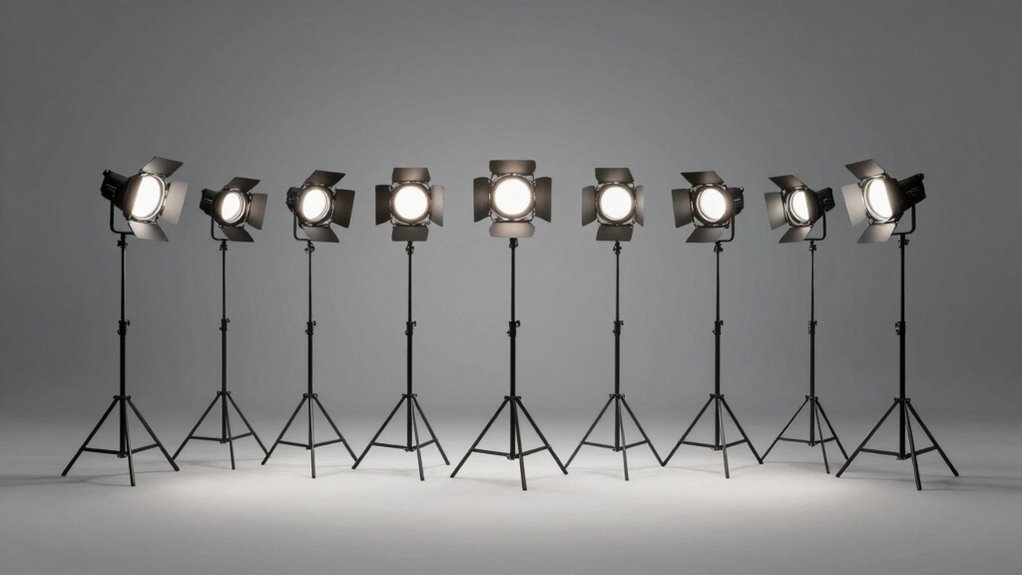
When working on a series of shots where speed is essential, maintaining consistent lighting can seem like a formidable challenge. The key to overcoming this is ensuring your lighting setup remains uniform throughout, which requires careful attention to color matching and equipment calibration. Before you start shooting, take the time to calibrate your equipment thoroughly. This means adjusting your lights, monitors, and any dimming controls to ensure they produce consistent output. Calibration helps prevent variations in brightness or color temperature that can occur from equipment drift or different power sources, saving you time in post-production and reducing reshoots.
Consistent lighting relies on thorough calibration to prevent variations and save time during post-production.
Color matching is equally critical. You want each shot to seamlessly blend with the next, which calls for meticulous control over your light’s color temperature. Use a reliable color meter or a spectrometer to measure the Kelvin temperature of your lights. Once you’ve established a baseline, keep notes on your readings so you can quickly replicate the same settings across multiple setups. When you’re in a hurry, it’s tempting to rely on visual judgment alone, but this can lead to discrepancies in hue and tone. Instead, trust your tools to guide your adjustments, ensuring each shot maintains the same color profile. Additionally, always verify your calibration regularly, especially if your setup involves fluctuating power sources or multiple locations, to maintain lighting consistency. Incorporating standardized procedures into your workflow can further streamline the process and help prevent inconsistencies. Developing a clear workflow routine for calibration and checks can make a significant difference in maintaining uniformity.
To speed up the process further, organize your equipment beforehand. Set up your lights in advance and label all cables and controls clearly. This will allow you to quickly recall your calibration settings without wasting time fiddling with controls during a shoot. Using consistent equipment, such as the same brand and model of lights, also helps because it reduces variability. When possible, use fixtures with built-in calibration features or preset modes that you can save and reuse. Employing precise tools for calibration, such as color charts or portable meters, can significantly improve your workflow efficiency.
Additionally, consider creating a standard operating procedure for your lighting. Develop a checklist that includes steps for equipment calibration, color matching, and setup. Stick to this checklist rigorously each time you shoot. This discipline ensures you don’t overlook key details, especially when time is limited. If your setup involves multiple locations, bring portable calibration tools, like a color chart or a portable light meter, to quickly verify your lighting conditions on-site.
In the end, consistency across a series hinges on your diligence with calibration and color matching. By establishing reliable routines and leveraging precise tools, you’ll be able to maintain uniform lighting even when speed is the top priority. This approach minimizes surprises in post-production and ensures your series looks polished and professional without wasting precious time.
portable color meter for lighting calibration
As an affiliate, we earn on qualifying purchases.
As an affiliate, we earn on qualifying purchases.
Frequently Asked Questions
What Equipment Ensures Rapid Lighting Adjustments?
You should invest in versatile lighting gear like dimmable LEDs, which allow quick adjustments. Use portable, motorized lighting fixtures for rapid changes on set. Master adjustment techniques such as pre-setting light levels and using wireless remote controls to tweak brightness instantly. These tools and methods help you keep lighting consistent efficiently, especially when speed matters. With the right gear and techniques, you can adapt swiftly without sacrificing quality or consistency.
How Do You Manage Lighting During Quick Scene Changes?
Imagine you’re holding a flash of lightning in a bottle—quick scene changes demand swift adjustments. You manage lighting by pre-selecting lighting gels and light modifiers, so swapping them out is fast and smooth. Use quick-release clamps and magnetic accessories to speed up changes. Keep your setup organized, and rehearse shifts. This approach guarantees consistent lighting, even during rapid scene shifts, maintaining the visual flow without missing a beat.
Are There Specific Lighting Protocols for High-Speed Shoots?
Yes, for high-speed shoots, you should implement specific lighting protocols. Focus on ambient control to prevent unwanted light fluctuations, ensuring consistent exposure. Use pre-set lighting setups and quick-access controls to save time during scene changes. Efficient power management is essential; equip your gear with reliable power supplies and backup options to avoid interruptions. These practices help maintain lighting consistency, even when speed and rapid adjustments are necessary.
How to Troubleshoot Inconsistent Lighting in Fast-Paced Filming?
To troubleshoot inconsistent lighting during fast-paced filming, first check your lighting techniques to guarantee proper setup and positioning. Then, verify your equipment calibration, including light intensity and color temperature, to maintain consistency. Use consistent light sources and consider pre-programmed lighting presets for quick adjustments. Regularly monitor and adjust on set to catch any discrepancies early, ensuring your lighting remains uniform despite the rapid pace.
What Are the Best Practices for Maintaining Color Accuracy at Speed?
To maintain color accuracy at speed, you should prioritize consistent color calibration and use light diffusion techniques. For example, a fast-paced commercial shoot might use pre-calibrated monitors and color profiles to guarantee footage matches perfectly, even with quick setup changes. Additionally, diffusing light sources helps reduce color shifts caused by reflections or uneven lighting. These practices keep your footage looking uniform, saving time and ensuring high-quality results.
lighting preset mode controller for photography
As an affiliate, we earn on qualifying purchases.
As an affiliate, we earn on qualifying purchases.
Conclusion
By mastering quick adjustments and staying organized, you’re the steady hand guiding your lighting through a storm. Think of each shot as a chapter in a story, with your lights as the ink that keeps the narrative flowing seamlessly. When speed is of the essence, your confidence becomes the lighthouse, shining unwaveringly through chaos. Keep your tools sharp, your mind focused, and your lighting will dance in perfect harmony—no matter how fast the scene moves.
spectrometer for color temperature measurement
As an affiliate, we earn on qualifying purchases.
As an affiliate, we earn on qualifying purchases.
lighting equipment calibration tools
As an affiliate, we earn on qualifying purchases.
As an affiliate, we earn on qualifying purchases.
Columbus Day / Indigenous Peoples' Day Picks
long weekend sales
As an affiliate, we earn on qualifying purchases.