
To keep your drone batteries in top shape, always use the proper charger and avoid overcharging or letting them fully drain. Store them in a cool, dry place at around 50% charge, and check their levels regularly, especially for long-term storage. Protect batteries from extreme heat or cold, handle them carefully, and inspect for damage or corrosion often. Maintaining these practices guarantees safety, performance, and longevity—continue exploring to master every aspect of drone battery care.

Get sports gear delivered free with Prime
- Fast, free delivery on millions of items
- Prime Video, Amazon Music and more included
- Member-only deals all year
Key Takeaways
- Store batteries at around 50% charge in a cool, dry environment to prevent capacity loss.
- Use manufacturer-recommended chargers and avoid overcharging or fully draining batteries.
- Keep batteries away from heat sources and handle them carefully to prevent physical damage.
- Regularly check and recharge stored batteries to maintain optimal charge levels.
- Understand battery chemistry and safety risks to ensure proper handling and extend lifespan.

Have you ever wondered how to maintain your drone batteries in top shape for longer flights? Proper storage and care are crucial for maximizing your battery lifespan and ensuring your drone performs reliably each time you take it out. One of the most important aspects is understanding the right charging protocols. Overcharging or discharging your batteries improperly can markedly reduce their capacity over time. To prevent this, always use the charger supplied by the manufacturer or one that meets the specified voltage and current requirements. Charging at a moderate rate, typically around 1C (where the current equals the battery’s capacity), helps preserve the battery’s health. Avoid leaving batteries connected to chargers once they are fully charged, as this can lead to overcharging and diminish their lifespan. Similarly, never let your batteries completely drain before recharging; shallow discharges are gentler on the cells and extend overall longevity.
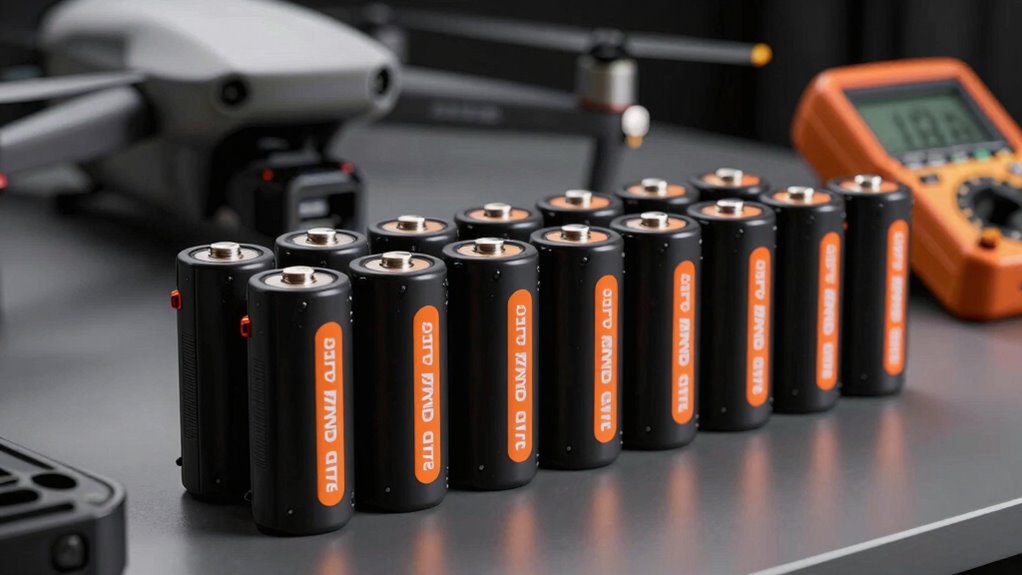
In addition to following proper charging protocols, storage plays an essential role in maintaining your drone batteries. When not in use, store your batteries in a cool, dry place, ideally at around 50% charge. Storing batteries fully charged or completely depleted can lead to capacity loss and potential damage. If you plan to keep batteries unused for a longer period, check their charge level periodically and recharge to the recommended storage voltage as needed. Keeping batteries in a temperature-controlled environment can also help prevent chemical degradation and ensure their longevity. Avoid storing batteries in hot environments, such as inside a vehicle parked in the sun, as heat accelerates chemical degradation within the cells. Cold storage is also not ideal; if you need to store batteries in a cooler environment, let them warm to room temperature before use to prevent condensation and potential corrosion. Proper handling and battery chemistry can help you choose the best storage and care practices for your specific type of drone battery. Understanding the chemical processes involved can also help prevent thermal runaway, which is a critical safety concern with lithium-based batteries. Additionally, being aware of the proper handling techniques can minimize physical damage that might compromise the battery’s safety and performance.
Handling your batteries carefully during installation and removal minimizes physical damage that could compromise their performance. Always use the correct connectors and avoid forcing batteries into slots. Keep your batteries clean and free of dirt, dust, or corrosion, which can interfere with electrical connections and cause uneven charging or discharging. Regularly inspecting your batteries for swelling, leaks, or other signs of wear helps you catch issues early before they become serious safety hazards. Proper storage and diligent care not only extend your drone battery’s lifespan but also ensure safer flights and better overall performance. When you follow these simple, consistent practices, you’ll get more reliable power from each charge and enjoy longer-lasting, safer drone flights.
As an affiliate, we earn on qualifying purchases.
Frequently Asked Questions
How Long Do Drone Batteries Typically Last Before Needing Replacement?
Drone batteries typically last around 300 to 500 charge cycles before their capacity diminishes considerably, often needing replacement. To extend lifespan, you should focus on proper battery charging and effective power management. Avoid overcharging or deep discharging, and store batteries in a cool, dry place. Regularly monitor battery health, and replace them when you notice reduced flight time or inconsistent power output to guarantee your drone performs at its best.
What Are the Signs of a Failing Drone Battery?
You’ll notice your drone battery shows reduced flight time, struggles to hold a charge, or the drone powers off unexpectedly—signs of a failing battery. To prevent this, perform regular battery calibration and follow charging best practices, like avoiding overcharging or deep discharges. If these signs persist despite proper care, it’s time to replace the battery to guarantee safe and ideal drone performance.
Can Drone Batteries Be Stored in Any Type of Container?
Did you know improper storage can reduce a drone battery’s lifespan by up to 50%? You shouldn’t store batteries in just any container; focus on battery safety and proper storage solutions. Use fireproof, non-conductive containers designed for lithium batteries to prevent hazards. Avoid metal or plastic containers that aren’t ventilated or insulated. Proper storage guarantees safety, maintains battery health, and prolongs performance, keeping your drone ready for flight whenever you are.
How Do Temperature Fluctuations Affect Drone Battery Performance?
Temperature fluctuations greatly impact drone battery performance, as they disrupt thermal stability. When temperatures rise or fall abruptly, batteries can experience reduced capacity and shorter lifespan. To maintain ideal performance, you should prioritize effective temperature management, keeping batteries within recommended temperature ranges. Proper storage in insulated containers and avoiding extreme heat or cold helps guarantee your drone batteries stay reliable and safe, ultimately extending their overall lifespan.
Are There Eco-Friendly Disposal Options for Old Drone Batteries?
Yes, there are eco-friendly disposal options for old drone batteries. You should look for local eco recycling programs that specialize in battery disposal, ensuring harmful chemicals don’t pollute the environment. Avoid throwing batteries in regular trash, as they can leak toxins. Instead, take advantage of certified battery disposal centers or take-back programs offered by manufacturers. Proper battery disposal helps protect the environment and promotes sustainable drone use.
As an affiliate, we earn on qualifying purchases.
Conclusion
Remember, a well-cared-for drone battery is your best friend in the skies. Proper storage and regular maintenance can extend its life and keep you flying smoothly. Don’t forget, “A stitch in time saves nine”—address small issues early to prevent bigger problems down the line. Take care of your batteries, and they’ll reward you with reliable performance. Stay vigilant, stay safe, and enjoy every flight with confidence.
As an affiliate, we earn on qualifying purchases.
battery maintenance tools for drones
As an affiliate, we earn on qualifying purchases.
As an affiliate, we earn on qualifying purchases.
NFL season / tailgating Picks
team gear
As an affiliate, we earn on qualifying purchases.