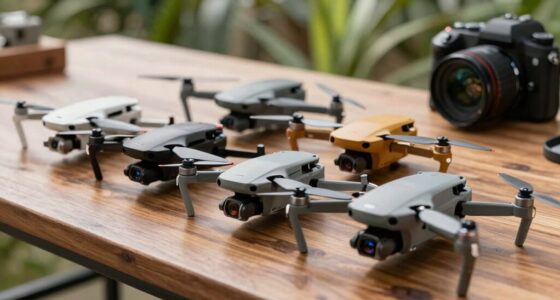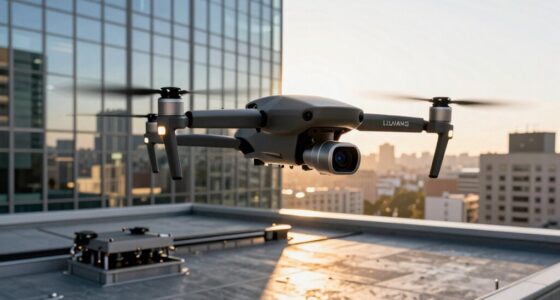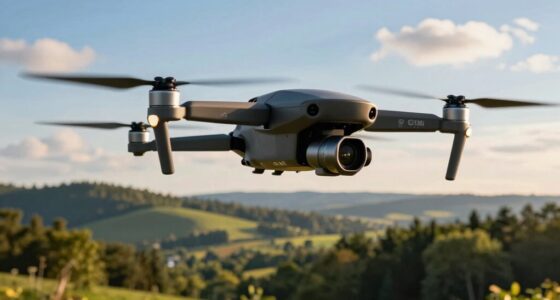
Many new drone creators overlook essential habits like regular maintenance, proper planning, and understanding regulations. You might think quick flights save time, but ignoring checklists and weather can cause crashes or poor footage. Focusing only on camera skills without mastering angles or stabilization limits your results. If you keep neglecting safety guidelines and pre-flight prep, setbacks will follow. Keep going to uncover the key tips that can help you avoid these common pitfalls.
Key Takeaways
- Many overlook the importance of regular maintenance, leading to crashes and equipment failure.
- New creators often focus on technical skills but neglect composition, lighting, and stabilization techniques.
- There’s a common failure to understand and follow local regulations, risking legal issues and safety hazards.
- Inadequate pre-flight planning causes unnecessary delays, missed shots, and safety risks.
- Repeating habits like skipping safety checks and location scouting hampers progress and safety.

Starting out in drone creation can feel overwhelming, especially when you’re enthusiastic to see your project take flight. It’s natural to focus on capturing stunning aerial shots or experimenting with new flight paths, but often, new creators overlook the subtle, yet crucial, mistakes that keep repeating. One common oversight is neglecting proper drone maintenance routines. Many beginners fly their drones without regularly checking the propellers, motors, or firmware updates, believing a quick flight is all it takes. This habit leads to avoidable crashes or malfunctions that could have been prevented with simple upkeep. Developing a consistent maintenance routine isn’t just about prolonging your drone’s lifespan; it’s also about ensuring safety and reliable performance during every flight.
Regular drone maintenance is key to safety, performance, and preventing avoidable crashes during every flight.
Another mistake new creators tend to overlook is the importance of mastering aerial photography tips. Instead of focusing solely on the drone’s technical capabilities, they jump into capturing footage without understanding composition, lighting, or angles. This often results in underwhelming footage that doesn’t showcase the drone’s potential. Taking time to learn basic aerial photography tips helps you frame shots better, avoid shaky footage, and make the most of natural light. You might find that experimenting with different altitudes or camera angles can dramatically improve your results. Developing an eye for aesthetic composition turns a simple drone shot into a captivating image. Additionally, understanding drone regulations is essential to avoid legal issues and ensure responsible flying, which many beginners overlook in their excitement. Being aware of safe flying practices can also significantly reduce the risk of accidents and enhance your overall experience. Recognizing the importance of proper pre-flight planning can help prevent many common issues and set a strong foundation for successful flights.
Many new drone creators also underestimate the significance of understanding local regulations. Flying without knowing the rules can lead to legal trouble or safety hazards. It’s tempting to ignore these guidelines in the excitement of flying, but repeating this mistake can cause serious setbacks. Always research your area’s drone laws, fly within permitted zones, and respect privacy boundaries. Doing so not only keeps you compliant but also helps you build a responsible flying routine, which is essential for long-term success.
Finally, a common mistake is failing to plan flights thoroughly. Instead of scouting locations, checking weather conditions, or setting clear objectives, beginners often just take off impulsively. This approach wastes time and increases the risk of accidents. Developing a pre-flight checklist and mentally visualizing your shots improves your efficiency and safety. Over time, you’ll realize that thoughtful preparation leads to better footage, fewer mishaps, and a more enjoyable flying experience. Recognizing these often-overlooked details can save you from repeating the same mistakes and accelerate your growth as a drone creator.

Drone Cleaning Kit for DJI, Holy Stone, Scoot, FPV Drone, Drone Accessories
- Comprehensive Cleaning Solution: Cleans dirt and camera lenses thoroughly
- Versatile Cleaning Tools: Includes microfiber cloths, brushes, swabs
- Safe and Gentle Formula: Protects drone surfaces without residue
As an affiliate, we earn on qualifying purchases.
As an affiliate, we earn on qualifying purchases.
Frequently Asked Questions
How Can I Prevent My Drone From Crashing Unexpectedly?
To prevent your drone from crashing unexpectedly, always monitor its flight path correction and be prepared for emergency landings. Keep an eye on your drone’s surroundings and avoid obstacles, adjusting your flight path as needed. Practice emergency landing procedures regularly so you’re ready if something goes wrong. Using sensors and GPS features can help maintain stability, reducing the risk of crashes and ensuring safer, more controlled flights.
What Are the Best Beginner Drones for Learning?
Like a gentle breeze guiding a paper airplane, the best beginner drones for learning are easy to control and budget-friendly. Look for models with stable flight, intuitive controls, and safety features to promote drone safety. For beginner tips, practice in open areas, start slow, and avoid distractions. Drones like the DJI Mini SE or Holy Stone HS210 are perfect choices, helping you build confidence without the risk of crashing.
How Often Should I Calibrate My Drone’s Sensors?
You should calibrate your drone’s sensors before every flight or at least once a week to guarantee sensor accuracy. Regular calibration helps maintain peak performance and prevents flight issues caused by drifting sensors. Pay attention to calibration frequency, especially if you notice unstable flight or inconsistent sensor readings. Consistently calibrating keeps your drone flying smoothly, reduces mistakes, and extends its lifespan. Don’t skip this essential step for better control and safety.
What Legal Restrictions Should New Drone Pilots Know?
Picture your drone soaring above cityscapes, but before flying, you must understand legal restrictions. You need to follow legal compliance, like respecting no-fly zones and altitude limits. Be mindful of privacy concerns—avoid capturing private property without permission. Ignoring these rules risks fines or confiscation. Stay informed about local regulations, register your drone if required, and always fly responsibly to keep your skies open and enjoyable.
How Do I Troubleshoot Connectivity Issues During Flight?
When facing connectivity issues mid-flight, first check for signal interference from obstacles or other devices. Move to an open area if needed. Also, troubleshoot your battery—ensure it’s fully charged and properly connected, as low power can cause signal drops. Reset your drone’s connection by restarting both the drone and controller. Keeping these steps in mind helps maintain a stable connection and prevents repeated errors during your flights.
aerial photography drone stabilizer
As an affiliate, we earn on qualifying purchases.
As an affiliate, we earn on qualifying purchases.
Conclusion
Remember, learning from mistakes is the best way to grow. Don’t get stuck in a cycle of repeating the same errors—each one is a stepping stone to mastery. If you keep ignoring the signs, you might be digging your own grave. Stay humble, keep learning, and adjust your approach. Success in drone creation isn’t about never falling; it’s about always getting back up and trying again smarter than before.

Drone Daily Inspection Checklist: Pre-Flight, Post-Flight & Safety Inspection Record for Commercial and Professional Pilots.
As an affiliate, we earn on qualifying purchases.
As an affiliate, we earn on qualifying purchases.

DRONE FAA PART 107 LICENSE STUDY GUIDE: Pass Your Commercial Drone Pilot Test with Practice Questions and Working Expert Strategies.
As an affiliate, we earn on qualifying purchases.
As an affiliate, we earn on qualifying purchases.