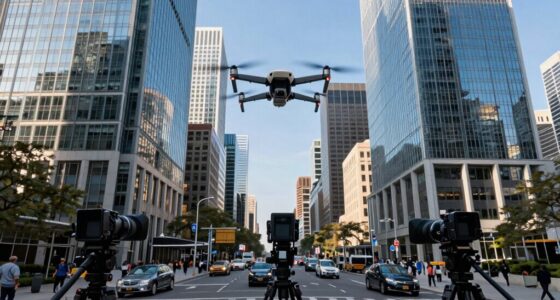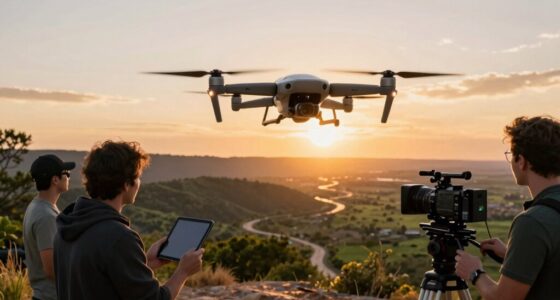

To keep horizon lines clean from the air without wasting time, you should plan your flight path for smooth, level shots and check your stabilization tools beforehand. Use a gimbal or stabilized camera to minimize vibrations, and mount your gear securely on the drone. Practice gentle, deliberate movements and monitor the horizon constantly. Good weather conditions and calm winds also make a big difference. Following these tips can save you time and help you capture straight horizons efficiently. Keep exploring for more expert insights.

Get sports gear delivered free with Prime
- Fast, free delivery on millions of items
- Prime Video, Amazon Music and more included
- Member-only deals all year
Key Takeaways
- Use gimbals or stabilization equipment for smooth, steady footage during flight.
- Plan flight paths for level, straight shots to minimize in-flight adjustments.
- Check weather conditions beforehand and avoid windy or turbulent days.
- Monitor the horizon constantly and make small, controlled adjustments during flight.
- Aim for proper in-camera stabilization and alignment to reduce post-processing corrections.
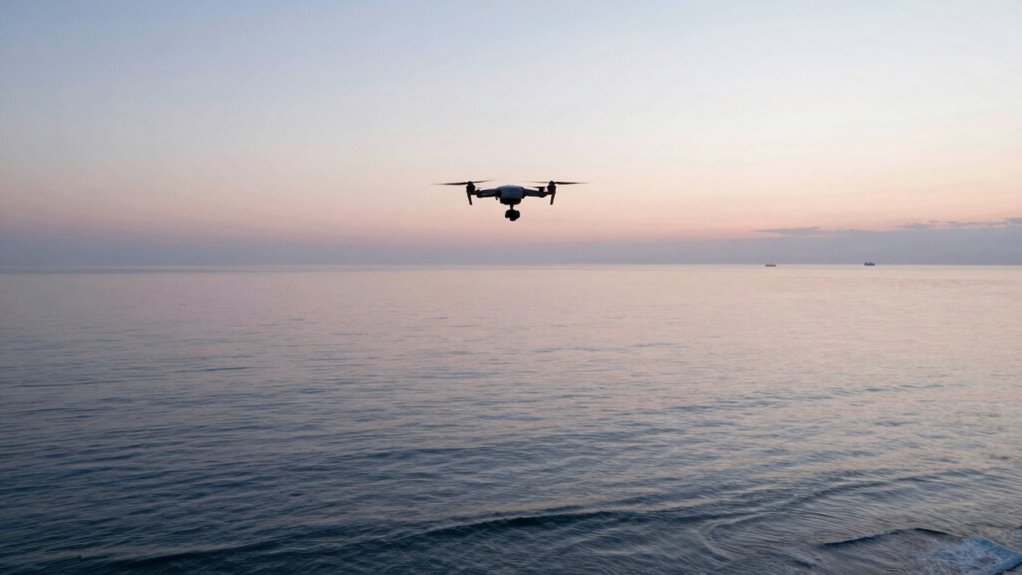
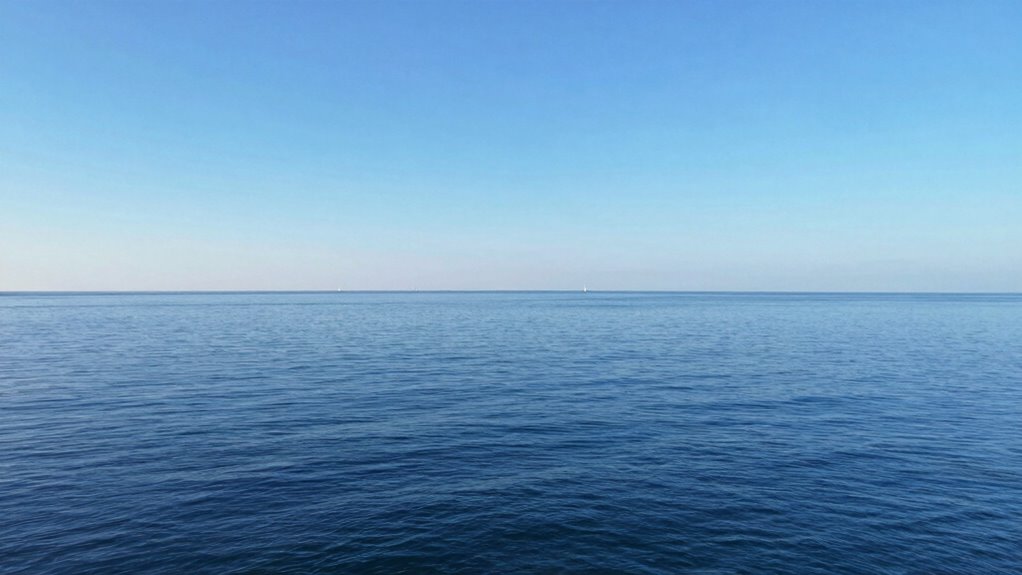
Flying high gives you a unique perspective on landscapes, but keeping horizon lines crisp and clean in aerial photographs can be challenging. To do this efficiently, you need to pay attention to camera stabilization, which is essential for sharp, steady shots. When you’re in the air, even the slightest shake can distort the horizon, making it appear crooked or blurry. Using a gimbal or a camera with built-in stabilization helps counteract these movements. Steady your hands or mount your camera securely to your drone or aircraft, guaranteeing minimal vibrations are transferred to the lens. Practice smooth, deliberate movements when adjusting your camera angle, and avoid rapid shifts that can cause misalignment.
Stabilize your camera with gimbals and steady movements to ensure crisp, level aerial horizon lines.
Weather considerations play a significant role in maintaining clean horizon lines. Wind, for example, can cause the drone or aircraft to sway, creating a slanted or uneven horizon. Before you fly, check the weather forecast thoroughly. Strong gusts or turbulent conditions often lead to shaky footage and crooked lines. If the weather isn’t ideal, consider postponing your shoot or selecting a time of day when conditions are calmer, such as early morning or late afternoon. Overcast skies can diffuse light evenly, reducing harsh shadows that might interfere with your framing. Clear, sunny days usually provide the best visibility, but watch out for wind that can introduce instability. Additionally, understanding weather conditions can help you plan the best time for a stable flight and crisp horizon lines. Being aware of aircraft stability and how it affects your shot can also help you make real-time adjustments to improve your footage.
You should also plan your flight path carefully, aiming for smooth, level shots that minimize the need for adjustments mid-air. Use pre-flight checks to confirm your equipment is functioning properly and your stabilization tools are calibrated. During the shoot, keep an eye on your horizon line constantly, making small, controlled adjustments to your camera or drone’s positioning. Many drones now come equipped with horizon level indicators or on-screen guides that help you maintain a straight line throughout the flight. Incorporating flight planning techniques can further reduce the likelihood of crooked horizons and save you editing time later. Properly understanding cloud cover and its effects can also help you optimize your shooting conditions for clearer horizon lines.
Finally, post-processing can help fine-tune your images, but it’s best to get it right in-camera. Prioritize camera stabilization during your flight, and choose weather conditions wisely. Proper planning can make a significant difference in capturing straight, clean horizon lines. With practice, these steps become second nature, enabling you to capture stunning aerial shots with perfect horizon lines without wasting time correcting them later. The key is preparation, patience, and attention to detail—making sure your aerial landscapes are as crisp and engaging as possible.
As an affiliate, we earn on qualifying purchases.
Frequently Asked Questions
What Camera Settings Best Capture Clean Horizon Lines From the Air?
To capture clean horizon lines from the air, set your camera to a narrow aperture like f/8 or f/11 to guarantee a good depth of field, keeping both foreground and background sharp. Use a focal length around 24-50mm to avoid distortion and maintain straight lines. Keep the camera steady, focus on the horizon, and shoot in RAW for maximum editing flexibility. These settings help you achieve crisp, straight horizon lines effortlessly.
How Does Weather Affect Horizon Line Clarity During Aerial Photography?
Weather considerably impacts horizon line clarity, with studies showing that clear days provide up to 90% sharper lines. Cloud cover can obscure or blur horizons, while atmospheric distortion caused by heatwaves or humidity distorts the line’s straightness. To get the best shot, aim for days with minimal cloud cover and stable atmospheric conditions, reducing distortion and ensuring your horizon lines stay crisp and clean in your aerial photos.
Can Drone Altitude Influence Horizon Line Sharpness and Cleanliness?
Yes, drone altitude can influence horizon line sharpness and cleanliness. When you adjust altitude, guarantee drone stability, as instability causes blurriness and uneven lines. Higher altitudes often improve horizon clarity by reducing distortions, but too high can decrease detail. Use altitude adjustment carefully, maintaining smooth drone stability, to keep your horizon lines crisp and clean. Properly balancing altitude and stability results in clearer, more professional-looking images.
Are There Specific Times of Day Ideal for Capturing Clear Horizon Lines?
Think of capturing horizon lines like catching the perfect wave; timing is everything. Early mornings during sunrise shadows offer the best conditions, as the soft light minimizes glare, and cloud cover effects create a natural frame, enhancing clarity. These times reduce atmospheric disturbances, helping you achieve crisp, clean horizon lines. Avoid midday when harsh sunlight causes reflections, making it harder to keep your horizon line sharp and clean from the air.
How Can I Prevent Lens Flare From Affecting Horizon Line Visibility?
You can prevent lens flare from affecting horizon line visibility by using a lens with a good lens coating, which reduces unwanted reflections. Additionally, pay attention to sun positioning—try to keep the sun behind you or at an angle that minimizes direct light hitting the lens. Using a lens hood also helps block stray light, ensuring a clearer horizon line and reducing flare interference in your shots.
drone camera stabilization equipment
As an affiliate, we earn on qualifying purchases.
As an affiliate, we earn on qualifying purchases.
Conclusion
With a steady hand and a keen eye, you can paint the sky’s horizon with clarity, like a painter guiding their brush across a flawless canvas. Keep your drone or camera steady, plan your shots, and embrace patience—your horizon will shine like a beacon of precision. Remember, every perfect line you capture is a proof of your skill, turning fleeting moments into timeless masterpieces that dance across the sky like whispers of the wind.
As an affiliate, we earn on qualifying purchases.
camera stabilization for aerial photography
As an affiliate, we earn on qualifying purchases.
As an affiliate, we earn on qualifying purchases.
NFL season / tailgating Picks
team gear
As an affiliate, we earn on qualifying purchases.