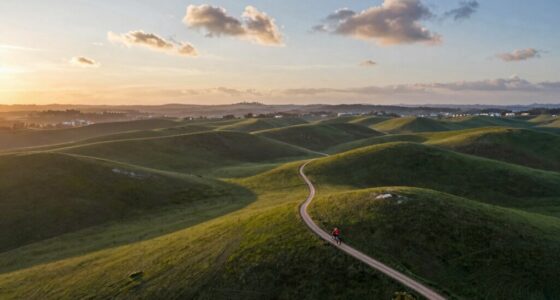
Deciding when aerial footage truly adds value can be more challenging than it looks because it’s easy to overuse or include shots that don’t serve your story. You need to assess your project goals, budget, and whether drone shots provide unique perspectives or emotional impact. Weather, safety, legal rules, and shot quality all matter too. If you keep these factors in mind, you’ll better understand when drone footage enhances your project—and when it’s better to wait or skip it altogether.
Key Takeaways
- Aerial footage adds value when it provides unique perspectives that ground shots cannot achieve, enhancing storytelling depth and visual impact.
- It becomes less effective if it lacks a clear narrative purpose or distracts from the main story.
- Proper planning, including legal compliance and weather assessment, ensures drone shots are safe and high-quality, increasing their value.
- Overusing drone footage or neglecting composition and stabilization diminishes its contribution and can undermine the project’s professionalism.
- When constrained by practical limitations like battery life or obstacles, drone shots may not deliver the intended visual or narrative benefits.

4K Drone with Camera for Beginners 84 min Flight Time 3 Batteries 2650 ft Control Range, WiFi Quadcopter Brushless Motor, Auto Hover, Follow Me
- Extended Control Range: Up to 2,650 feet control distance
- Long Flight Time: Up to 84 minutes with 3 batteries
- Powerful Brushless Motors: Strong wind resistance and quieter operation
As an affiliate, we earn on qualifying purchases.
As an affiliate, we earn on qualifying purchases.
Is Drone Footage Right for Your Project?

Determining if drone footage is right for your project depends on your specific goals and budget. First, consider drone regulations in your area, as they can affect where and how you fly your drone. Staying compliant ensures smooth filming and avoids penalties. Next, assess the drone’s battery life—shorter battery durations mean limited flight time, which could hinder capturing the shots you need. If your project requires extensive coverage or long shoots, you might need multiple batteries or a drone with longer endurance. Also, think about the complexity of the shots and whether drone footage truly enhances your story. If your goals align with the capabilities of your drone and you can navigate regulations, then drone footage could be a valuable addition. Additionally, understanding aerial footage benefits can help you decide if the investment will truly elevate your project.

Vivitar – 360 Skyview GPS Video Drone, Camera & Stabilized Aerial Footage (Orange/Black)
- 360-Degree Camera: Panoramic video and photo capture
- GPS Stabilization: Stable positioning and precise navigation
- HD Video Recording: High-definition footage and images
As an affiliate, we earn on qualifying purchases.
As an affiliate, we earn on qualifying purchases.
When Does Aerial Footage Truly Enhance Your Story?
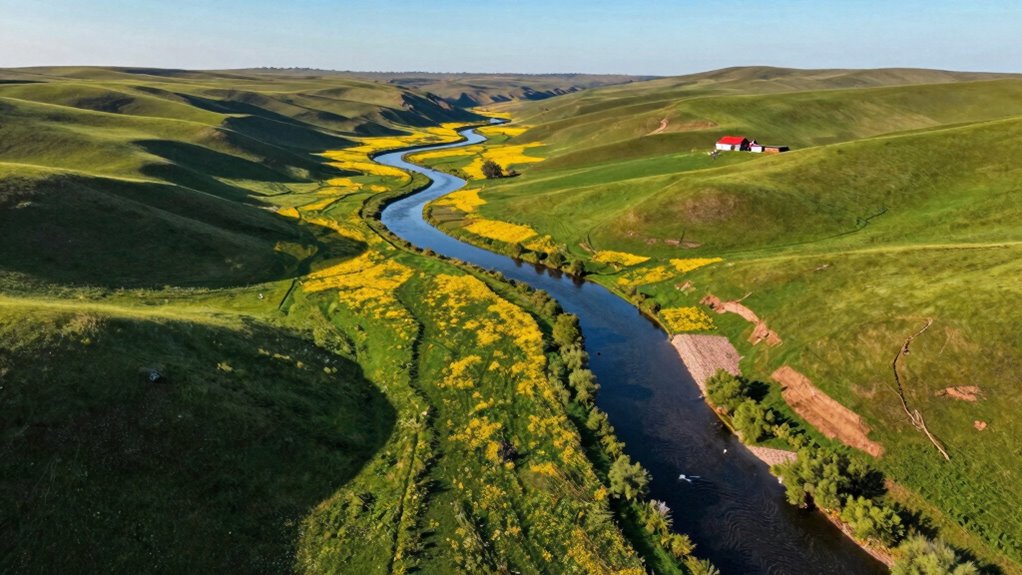
You’ll find aerial footage truly enhances your story when it provides clear visual context that ground shots can’t capture. It adds narrative depth by highlighting scale, scope, or unique perspectives that deepen viewers’ understanding. When used thoughtfully, aerial shots can turn an ordinary scene into a compelling visual experience. Additionally, understanding gadget features and the capabilities of your equipment can help you determine the best moments to incorporate aerial footage effectively.
Visual Context Enhancement
Aerial footage truly enhances your story when it provides a broader perspective that ground-level shots can’t capture, revealing the scale and context of a scene. This is especially true when you use color grading to emphasize mood and visual storytelling to guide viewers’ emotions.
- Use aerial shots to establish the setting, giving viewers a sense of place and environment.
- Incorporate dynamic camera movements and strategic color grading to highlight key elements and create visual interest.
- Guarantee aerial footage complements your narrative, rather than distracts, by focusing on scenes that deepen understanding or evoke emotion.
When used thoughtfully, aerial footage adds clarity and impact, making your story more immersive and visually compelling.
Narrative Depth Addition
When aerial footage truly adds narrative depth, it does so by revealing layers of meaning that ground-level shots can’t convey. It enhances storytelling techniques by providing a broader perspective, creating emotional resonance through scale and context. You should use aerial shots when they deepen viewers’ understanding of relationships, setting, or atmosphere. For example, a sweeping shot of a cityscape can symbolize ambition, while a quiet landscape might evoke solitude.
| Aerial Footage Benefits | When It Adds Narrative Depth |
|---|---|
| Showcases scale and environment | Reveals emotional resonance connected to setting |
| Highlights relationships or contrast | Adds layers to storytelling techniques by emphasizing context |
| Builds atmosphere and mood | Creates a visceral experience that ground shots can’t match |
| Enhances visual storytelling | When it aligns with story themes, it elevates viewer engagement |

Ruko F11PRO 2 Drone with 6K Camera for Adults, 3-Axis Gimbal Stabilizer, 4K/30fps Video, 2 Batteries for 70-Min Flight Time, Auto Return & Beginner-Friendly, Ideal Tech Gift
- Ideal Gift for All Occasions: Perfect for Father's Day, birthdays, holidays
- Stable 4K/30fps Video & 6K Photos: 3-Axis Gimbal stabilizer for smooth footage
- User-Friendly for Beginners: One-Key Takeoff/Landing and Beginner Mode
As an affiliate, we earn on qualifying purchases.
As an affiliate, we earn on qualifying purchases.
Key Factors That Make Drone Shots Worth the Cost
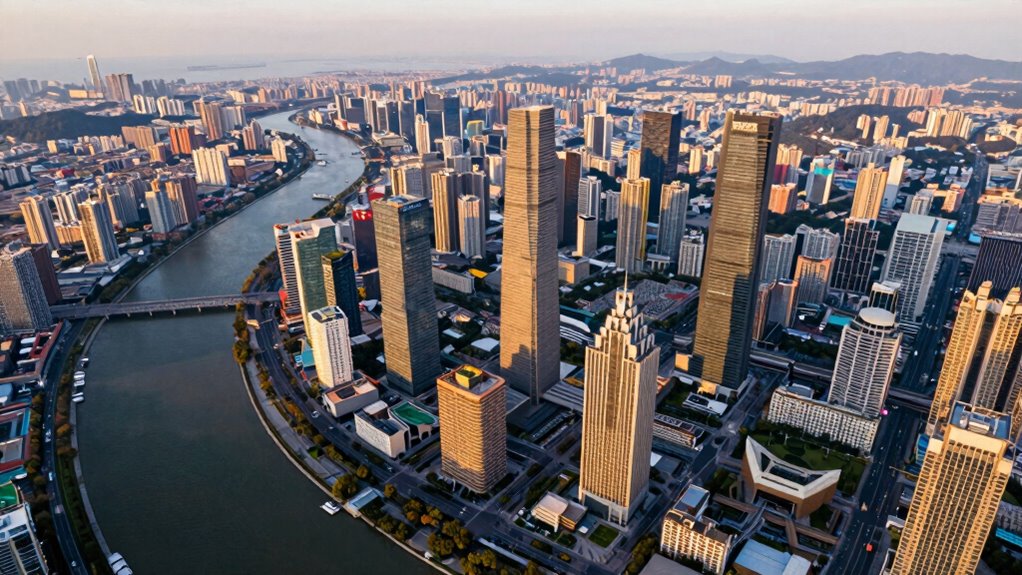
The value of drone shots depends heavily on their ability to enhance your project’s storytelling or visual impact. To guarantee your investment pays off, focus on key factors like drone legality and weather considerations.
- Drone legality: Make sure you’re compliant with local regulations to avoid fines or confiscation, which can waste time and money.
- Weather considerations: Shooting in good weather ensures stable footage and reduces risks of damage or poor quality.
- Unique perspectives: Capturing distinctive angles or settings that can’t be achieved otherwise boosts the shot’s value and justifies the cost.
Balancing these factors helps you create compelling, legal, and high-quality aerial footage that truly adds value to your project.

Police Drone & Pilot Detection Kit– Handheld Drone Detection & Tracking Tool | Real-Time Alerts for Law Enforcement, Event Security & Emergency Response | Portable Airspace Awareness Device
- Real-Time Drone Detection: Detects drones via remote ID signals instantly
- Portable & Compact Design: Handheld, lightweight, attaches to gear
- Immediate Threat Alerts: Provides live drone presence notifications
As an affiliate, we earn on qualifying purchases.
As an affiliate, we earn on qualifying purchases.
Common Mistakes That Diminish Drone Footage Impact

Poor camera stability can make your footage look shaky and unprofessional, distracting viewers from the message. Ignoring composition rules results in shots that feel cluttered or unbalanced, reducing their visual impact. Addressing these common mistakes helps guarantee your drone footage truly enhances your project. Additionally, using automated grammar tools can help identify and correct passive voice, ensuring your descriptions and commentary remain clear and engaging.
Poor Camera Stability
Unsteady camera movements can quickly undermine the impact of drone footage, making it feel amateurish and distracting viewers from the subject. Camera shake is a common issue that reduces professionalism. To fix this, you need to focus on stabilization techniques. A well-maintained gimbal and proper calibration are essential for capturing crisp, clear footage. 1. Make certain the drone’s gimbal is properly calibrated to keep footage steady during flight. 2. Use smooth, controlled movements instead of rapid or jerky ones. 3. Apply post-production stabilization tools if necessary, but prioritize in-flight stability. Additionally, understanding automation can help in developing more advanced stabilization systems that minimize human error. Incorporating biodiversity-focused technology can also enhance the effectiveness of stabilization systems by reducing environmental interference during filming. Implementing advanced sensors can further improve stability by actively compensating for wind and other external factors.
Ignoring Composition Rules
Even with steady footage, neglecting composition rules can still reduce the impact of your drone shots. Ignoring basic principles like the rule of thirds or leading lines leads to creative pitfalls and framing challenges. Without thoughtful framing, scenes can feel unbalanced or confusing, diminishing their visual power. To avoid this, consider how your subject relates to the frame: effective composition techniques are essential for making your footage stand out. Properly applying composition rules helps in communicating your intended story more clearly and compellingly. Incorporating visual storytelling principles ensures your footage resonates more effectively with viewers.
What Do You Need to Know Before Filming Drone Shots?

Before you start filming drone shots, understanding the legal and safety requirements involved is essential. You need to be aware of local regulations, licensing, and restrictions on drone use.
- Check legal requirements: Know where and when you can fly, and obtain all necessary permits.
- Consider weather conditions: Wind, rain, and fog can impact safety and footage quality. Always monitor weather forecasts before takeoff.
- Plan your flight: Identify safe takeoff and landing zones, and avoid crowded or restricted areas.
Balancing Creativity and Practicality in Drone Filming

While creative vision can push your drone shots to stand out, practicality guarantees they are safe and achievable. To balance this, you must navigate creative constraints that limit your options without stifling innovation. Technical challenges, like battery life, wind, and obstacle avoidance, demand careful planning and skill. By understanding these limits, you can craft shots that are visually compelling yet feasible within your equipment’s capabilities. Prioritize safety and legal requirements, while still exploring unique angles or movements. Flexibility is key; adapt your ideas to real-world conditions. When you respect practical constraints, your creativity flourishes within safe boundaries, resulting in impressive footage that is both stunning and reliable. Recognizing technical limitations helps you make informed decisions that enhance both safety and quality.
When and How to Decide to Use Drone Footage Wisely
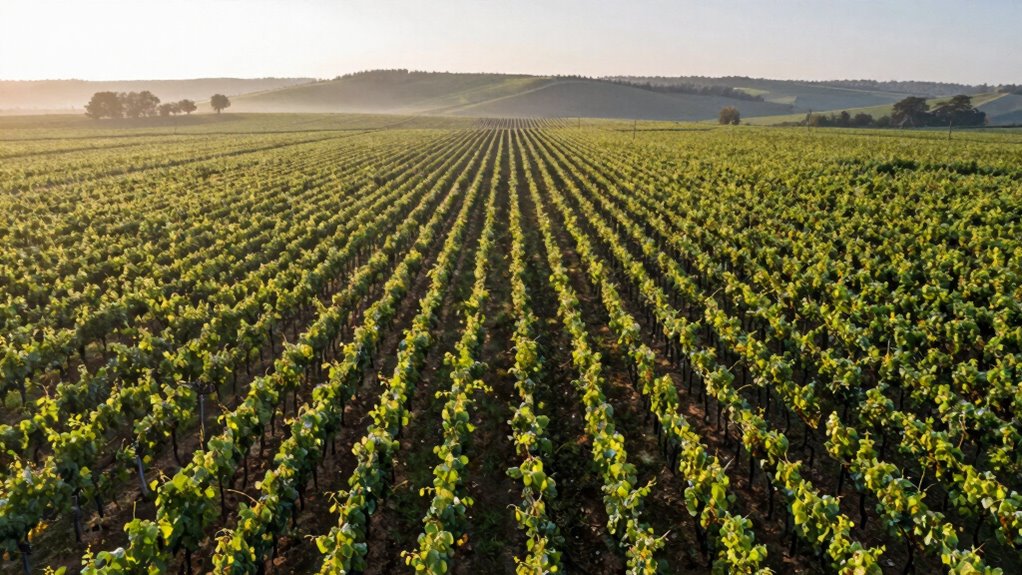
Deciding when to incorporate drone footage into your project requires careful consideration of its added value. Aerial perspective can reveal details unseen from the ground, making scenes more immersive. Use drone shots for impactful skyline framing that highlights cityscapes or landscapes. To decide wisely:
- Identify moments where aerial perspective enhances storytelling or visual appeal.
- Use skyline framing to emphasize scale, grandeur, or context within your scene.
- Avoid overusing drone footage; guarantee each shot serves a clear purpose and adds value.
Frequently Asked Questions
How Do Weather Conditions Affect Aerial Footage Quality?
Weather conditions greatly impact aerial footage quality. Weather challenges like rain, fog, or strong winds can cause blurry images, shaky footage, or even damage your equipment. You need resilient gear designed to withstand these elements. Clear skies and calm weather usually yield the best results, while adverse weather can compromise your footage and equipment. Always check the forecast beforehand to guarantee ideal shooting conditions and protect your gear from weather-related damage.
What Are Legal Considerations Before Capturing Drone Footage?
Before capturing drone footage, you need to understand drone regulations and address privacy concerns. You must check local laws, obtain necessary permits, and respect no-fly zones, privacy boundaries, and restricted areas. Ignoring these legal considerations risks fines, confiscation, or legal action. Always plan ahead, stay informed about evolving rules, and prioritize respecting others’ privacy to guarantee your aerial filming stays lawful, safe, and respectful.
How Does Budget Influence Drone Footage Choices?
Your budget constraints considerably influence your drone footage choices. With limited funds, you might opt for lower-quality equipment, which can impact image clarity and stability. Conversely, a bigger budget lets you invest in advanced drones with better cameras and stabilization features, resulting in higher-quality footage. Understanding how equipment quality aligns with your project scope helps you make smarter decisions, ensuring your aerial shots meet your expectations without overspending.
Can Drone Footage Replace Traditional Camera Shots Effectively?
You can’t rely entirely on drone footage to replace traditional shots, but it complements them well. Creative framing and smooth color grading make aerial shots stand out, adding depth and perspective. While drones excel at capturing sweeping landscapes or dynamic angles, they lack the intimacy and detail of close-up shots. When used strategically alongside traditional camera work, drone footage enhances storytelling without fully replacing classic shots.
What Editing Techniques Best Enhance Aerial Footage Impact?
To enhance aerial footage impact, you should focus on color grading to boost vibrancy and mood, making your shots pop. Combine this with motion stabilization to guarantee smooth, professional-looking footage, especially during dynamic shots. These techniques draw viewers in and emphasize key elements, adding depth and polish. Always review your footage carefully, adjusting color tones and stabilization settings to achieve a seamless, engaging visual experience.
Conclusion
Choosing to include drone footage is like adding a cherry on top—it can elevate your project or fall flat if not done right. By understanding when aerial shots truly add value and avoiding common pitfalls, you guarantee your story soars, not stalls. Remember, it’s not just about capturing stunning views but knowing when those views make your message shine brighter. When used wisely, drone footage becomes the perfect wind beneath your creative wings.