
If you’re choosing between carbon fiber and aluminum tripods, you’ll find that carbon fiber offers a lightweight, durable, and vibration-absorbing option, perfect for stabilizing shots in demanding environments. It helps reduce fatigue during extended shoots and performs well in windy or uneven conditions. Aluminum tripods, on the other hand, are heavier, making them more stable and often more budget-friendly. To discover which suits your style and needs best, keep exploring the key differences and benefits.

Get sports gear delivered free with Prime
- Fast, free delivery on millions of items
- Prime Video, Amazon Music and more included
- Member-only deals all year
Key Takeaways
- Carbon fiber tripods are lighter, making them ideal for portable, dynamic shooting environments, while aluminum tripods are heavier and more stable for stationary use.
- Carbon fiber offers superior vibration absorption and stability in windy conditions, enhancing image sharpness.
- Aluminum tripods are generally more affordable, durable, and better suited for tough environments and heavy camera setups.
- Advances in carbon fiber technology improve its durability and long-term performance, narrowing the gap with aluminum.
- The choice depends on whether portability and vibration control (carbon fiber) or budget and ruggedness (aluminum) are prioritized.

When choosing a tripod for your photography or videography needs, the material can substantially influence performance and portability. Carbon fiber and aluminum are the two main options, each with distinct advantages and limitations. Your decision hinges on factors like camera stability, weight distribution, and how much weight you’re willing to carry around.
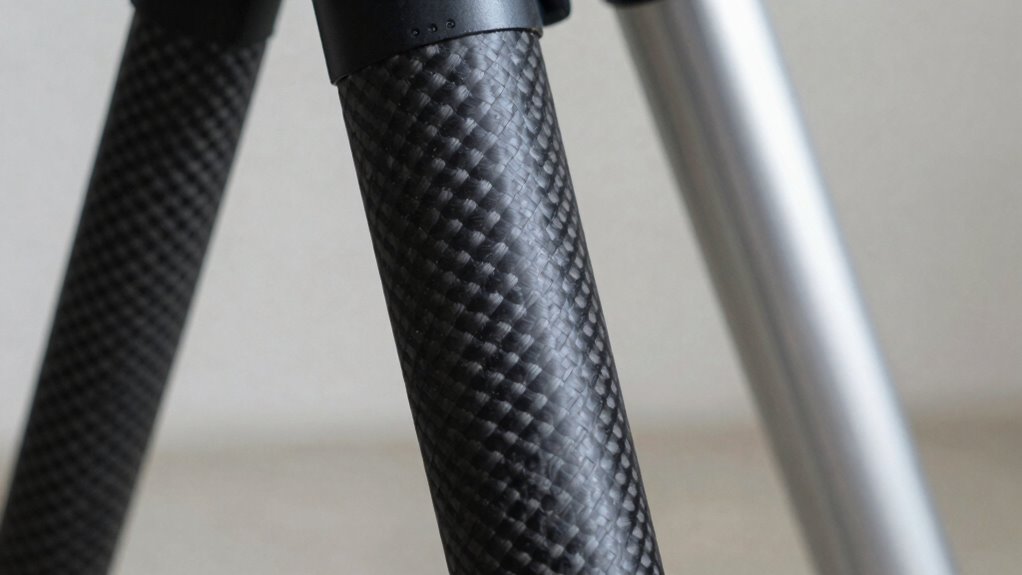
Carbon fiber tripods are renowned for being lightweight yet incredibly strong. This means you can set up your camera with confidence, knowing the tripod offers excellent camera stability—especially in windy conditions or when shooting with longer lenses. The material’s stiffness guarantees minimal vibrations, so your shots stay sharp and clear. Because carbon fiber is lighter, it’s easier to carry on long hikes or extended shoots, making it ideal if portability is a priority. The even weight distribution across the tripod also helps reduce fatigue, allowing you to focus more on capturing the perfect shot rather than handling heavy gear. Additionally, the stiffness of carbon fiber helps maintain stability even in challenging conditions, making it a preferred choice among professional photographers. This lightweight design also contributes to faster setup times, which can be crucial in dynamic shooting environments. Moreover, advances in material technology have continued to improve the durability and performance of carbon fiber tripods over time. In addition, the shock absorption properties of carbon fiber can help protect sensitive camera equipment from vibrations and minor impacts. For those seeking a combination of strength and lightness, carbon fiber is often considered the superior choice.
Carbon fiber tripods are lightweight, strong, and offer excellent stability with minimal vibrations, perfect for portability and sharp shots.
Aluminum tripods, on the other hand, tend to be heavier but often come at a lower price point. Although they add some weight, they provide substantial stability, especially when you need a sturdy base. Aluminum’s durability makes these tripods a reliable choice for tough environments or frequent use. While they may not be as lightweight as carbon fiber, their weight can actually contribute to better camera stability in certain situations—particularly when shooting stationary scenes where minimizing vibrations is critical. However, because of their weight, you might find them less practical for extended hikes or travel-heavy shoots.
In terms of weight distribution, carbon fiber tripods generally excel due to their lighter build, making them easier to maneuver and adjust in different positions. This flexibility can be a game-changer when you’re trying to get stable shots in dynamic environments. Aluminum tripods, being heavier, tend to stay put once positioned, which can be beneficial in windy conditions or when using heavy camera setups. However, their weight can cause fatigue over long periods, potentially impacting your camera stability if you’re not careful with your positioning and handling.
Ultimately, your choice depends on how you prioritize portability versus stability. If you need a lightweight, portable option that doesn’t compromise on camera stability, carbon fiber is the way to go. But if you prefer a durable, budget-friendly tripod that offers solid stability and can withstand rougher conditions, aluminum might be better suited. Knowing how each material affects weight distribution and stability will help you select the perfect tripod for your shooting style.
As an affiliate, we earn on qualifying purchases.
Frequently Asked Questions
How Do Temperature Changes Affect Carbon Fiber and Aluminum Tripods?
Temperature changes affect carbon fiber and aluminum tripods differently because of thermal expansion and heat resistance. You’ll notice that carbon fiber has lower thermal expansion, meaning it doesn’t expand or contract much with temperature shifts, maintaining stability. Aluminum, however, expands more, which can affect your shots. Carbon fiber’s superior heat resistance helps it stay stable in extreme temperatures, making it a better choice for outdoor photography where temperature fluctuations are common.
Are Carbon Fiber Tripods More Environmentally Friendly Than Aluminum Ones?
You might think carbon fiber tripods are more eco-friendly because they last longer, but their manufacturing process is energy-intensive, impacting the environment. While carbon fiber offers better material longevity, aluminum tripods are cheaper and easier to recycle, making them more sustainable overall. Cost comparison favors aluminum, but if durability and reduced replacement need matter most, carbon fiber could be a greener choice in the long run.
Can Aluminum Tripods Be Upgraded With Carbon Fiber Components?
Yes, you can upgrade your aluminum tripod with carbon fiber components to reduce its weight and improve material durability. Swapping out parts like the center column or legs with carbon fiber options makes your tripod lighter without sacrificing strength. This upgrade enhances stability and portability, ideal for travel or long shoots. Keep in mind, though, that full replacement might be costly, so consider which components benefit most from the upgrade.
How Do Vibration Absorption Qualities Compare in Real-World Conditions?
In real-world conditions, carbon fiber tripods excel at vibration absorption compared to aluminum, thanks to their material durability and inherent damping qualities. Their lightweight design reduces hand shake and setup vibrations, making your shots steadier. Aluminum tripods, while sturdy, don’t absorb vibrations as effectively and are heavier, which can lead to more instability over time. Overall, if vibration control is your priority, carbon fiber offers significant advantages.
What Maintenance Do Carbon Fiber and Aluminum Tripods Require?
Imagine your tripod as a trusted companion—ready for adventures, needing care. Carbon fiber tripods demand minimal maintenance; just wipe with a damp cloth, as their material durability resists corrosion and scratches. Aluminum tripods, heavier but sturdy, require occasional tightening of joints and cleaning to prevent rust. Both need regular checks, but your choice influences how much effort you’ll invest in keeping them in top shape for years to come.
As an affiliate, we earn on qualifying purchases.
Conclusion
Ultimately, choosing between carbon fiber and aluminum tripods is like selecting the right brush for a masterpiece—each offers its own unique strengths. Carbon fiber, with its lightweight resilience, lets you chase the perfect shot without fatigue, while aluminum provides durability and affordability. Think of it as a dance between weight and strength; your decision should mirror your creative rhythm and adventure style. Whichever you pick, trust that both can elevate your photography to new heights.
As an affiliate, we earn on qualifying purchases.
As an affiliate, we earn on qualifying purchases.
Fall Picks
fall essentials
As an affiliate, we earn on qualifying purchases.