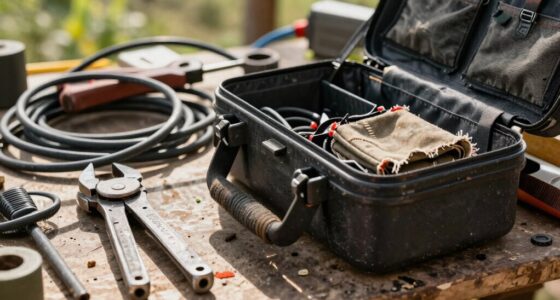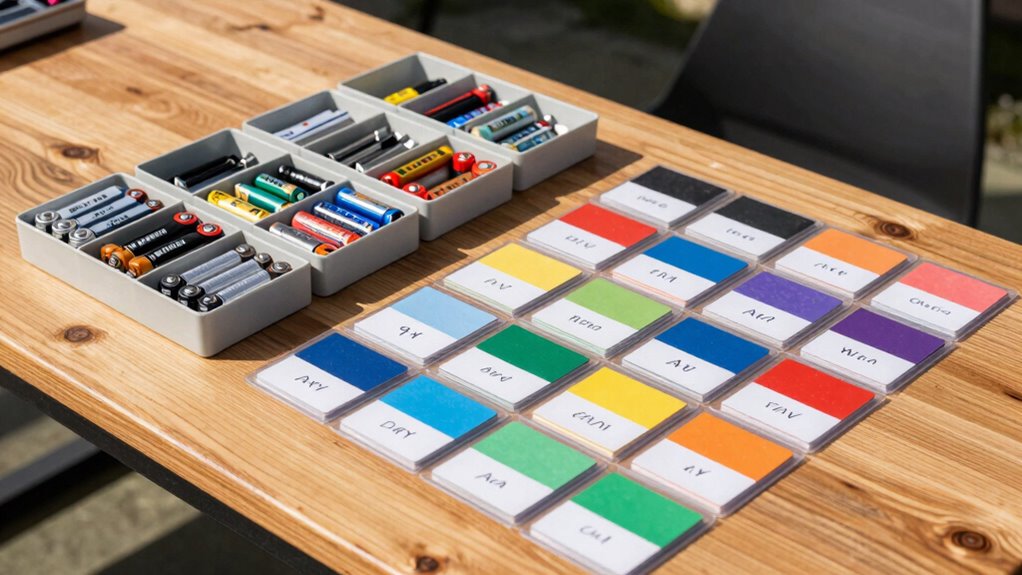

To organize batteries and cards efficiently in the field, start by labeling or color-coding each to easily identify their purpose, charge level, or type. Keep batteries in a dedicated, cool spot and store memory cards in protective, labeled cases or sleeves, separated by used and unused. Use a well-structured gear log or checklist, and allocate specific items for each shoot day to avoid confusion. Mastering these tips will help you save time and stay prepared—continue to explore more ways to streamline your workflow.

Get sports gear delivered free with Prime
- Fast, free delivery on millions of items
- Prime Video, Amazon Music and more included
- Member-only deals all year
Key Takeaways
- Use labeled, color-coded compartments or sleeves for quick identification of batteries and memory cards.
- Develop a consistent system, such as organizing by project or usage status, to streamline access.
- Pre-sort batteries and cards into designated slots before each outing to minimize searching time.
- Maintain a gear log or checklist to track available batteries and cards easily.
- Store batteries in a cool, dedicated space and cards in protective cases for quick, safe access.

When you’re out in the field, keeping batteries and cards organized can make all the difference in guaranteeing your equipment stays functional and your workflow remains smooth. Proper organization begins with understanding the importance of battery maintenance. Regularly check your batteries for signs of wear or corrosion, and replace any that are weak or damaged before heading out. Carry a small, dedicated toolkit with battery contacts cleaner and corrosion remover to keep your batteries in top condition. Label your batteries clearly—using color-coded markers or labels—so you can quickly identify which ones are fully charged, partially used, or need replacing. This prevents unnecessary downtime and guarantees you’re always ready to shoot or record.
Equally essential are your card storage solutions. Invest in sturdy, well-padded storage cases designed specifically for memory cards. These cases keep your cards protected from dust, moisture, and accidental damage. Organize your cards by capacity, type, or project, and always store used cards separately from fresh ones. Keep spare cards in easily accessible compartments, so you’re not rummaging through your gear when you need to swap out a full card. Using labeled compartments or color-coded sleeves can help you quickly identify the right card without wasting time hunting through your kit. Regularly reviewing your batteries and memory cards ensures you avoid running out of essential equipment during critical moments. Implementing a systematic organization method can save valuable time and reduce stress during busy shoots. Additionally, maintaining a log or inventory of your gear can help track usage and ensure you’re prepared for every shoot.
When it comes to managing both batteries and cards efficiently, develop a system that’s simple to follow. For example, create a checklist or a quick-reference guide that shows which batteries and cards are allocated for each shoot or day. This way, you avoid confusion and guarantee you’re not accidentally overwriting valuable footage or running out of power at critical moments. Always keep your batteries charged and store them in a dedicated, cool place to prolong their lifespan. Similarly, keep your cards in a dry, protected environment, and avoid exposing them to extreme temperatures or magnetic fields. Incorporating proper storage techniques into your routine further minimizes the risk of damage and extends the longevity of your equipment. Additionally, utilizing protective accessories like cases and sleeves can help prevent physical damage and environmental harm to your gear.
As an affiliate, we earn on qualifying purchases.
Frequently Asked Questions
What Types of Containers Are Best for Battery Storage?
The best containers for battery storage are those with dedicated battery compartments or compartments designed for quick access. Look for storage solutions like plastic cases, ruggedized boxes, or foam-lined containers that prevent movement and protect against damage. These solutions keep batteries organized, easily accessible, and safe from spills or short circuits. By selecting the right storage options, you’ll save time and guarantee your batteries stay in top condition during fieldwork.
How Do I Prevent Batteries From Leaking or Corroding?
To prevent batteries from leaking or corroding, you need proper battery maintenance and corrosion prevention techniques. Regularly check for signs of damage or corrosion and clean terminals with a mixture of baking soda and water. Store batteries in a cool, dry place, and make certain terminals are covered with electrical tape if not in use. Using sealed, high-quality containers also helps protect against leaks, keeping your gear safe and ready for action.
What Is the Ideal Temperature for Storing Batteries Outdoors?
You should store batteries outdoors at a temperature between 50°F and 70°F (10°C to 21°C) to maximize battery longevity. This range minimizes temperature sensitivity, preventing rapid capacity loss or leakage. Avoid extreme heat, which accelerates chemical reactions, and cold, which can reduce performance. Keeping batteries within this ideal temperature range helps guarantee they work reliably when you need them most, without risking damage or reduced lifespan.
How Can I Quickly Identify Different Types of Batteries?
Did you know that most batteries have a label with essential info? To quickly identify different types, look at battery labeling—pay attention to size, voltage, and chemistry. Keep a system for storage rotation, so older batteries are used first. This way, you avoid confusion and wasted time in the field. Proper labeling and rotation make it easier to select the right battery fast and keep your equipment running smoothly.
Are There Eco-Friendly Options for Organizing Batteries and Cards?
Yes, you can choose eco-friendly options like recyclable storage containers and biodegradable organizers for batteries and cards. These solutions help reduce waste and minimize environmental impact while keeping your gear well-organized. Recyclable storage options are durable and reusable, making them ideal for field use. Biodegradable containers break down naturally over time, offering a sustainable way to manage your batteries and cards without harming the environment.
battery organizer for camera gear
As an affiliate, we earn on qualifying purchases.
As an affiliate, we earn on qualifying purchases.
Conclusion
By organizing your batteries and cards efficiently, you’ll save precious time and avoid chaos in the field. Imagine a rugged toolbox, meticulously arranged, ready at a moment’s notice—every item in its place. Now picture rummaging through a disorganized mess, wasting valuable minutes. Clear, strategic organization transforms chaos into calm, turning a frantic scramble into a smooth, confident operation. With a little planning, you’ll be prepared for anything, no matter how unpredictable the terrain.
As an affiliate, we earn on qualifying purchases.
professional camera battery charger
As an affiliate, we earn on qualifying purchases.
As an affiliate, we earn on qualifying purchases.
Halloween Picks
halloween
As an affiliate, we earn on qualifying purchases.