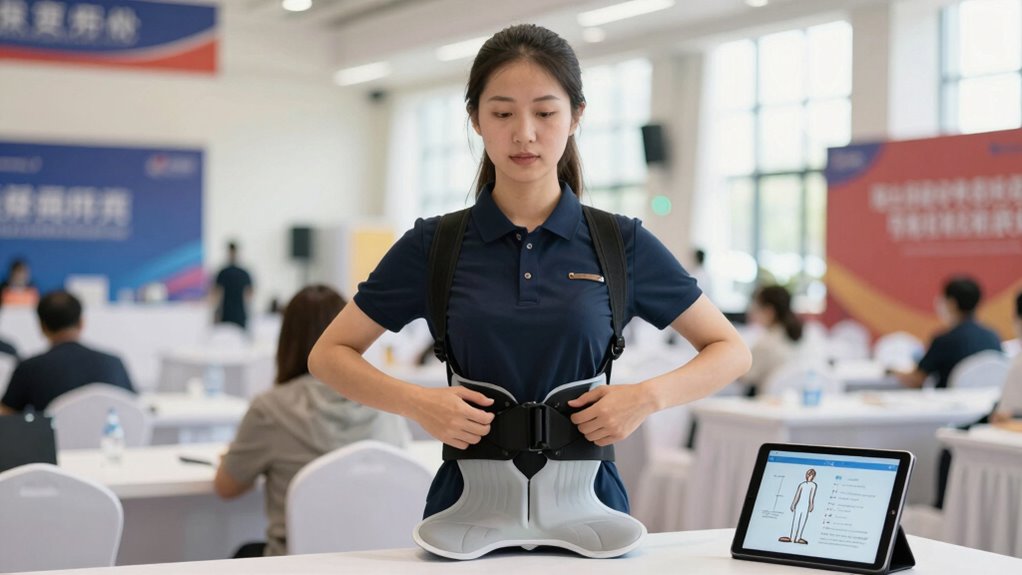

To protect your back during long event days, focus on maintaining an ergonomic posture, like supporting your back and keeping shoulders relaxed. Incorporate quick stretches every 30-60 minutes to loosen muscles, and wear supportive footwear to stay aligned. Engage your core and avoid high heels, plus take short movement breaks to prevent stiffness. Staying mindful of these simple habits will improve comfort without disrupting your workflow; more helpful tips are just ahead.

Get sports gear delivered free — and shop member deals
- Fast, free delivery on millions of items
- Access to Prime Big Deal Days deals on October 6–7
- Prime Video, Amazon Music and more included
Key Takeaways
- Take regular short breaks to stand, stretch, and change positions without disrupting your workflow.
- Maintain ergonomic posture by adjusting your seating and monitor height for comfort and support.
- Incorporate quick stretches like shoulder rolls and neck tilts during transitions to relieve tension.
- Wear supportive footwear and engage your core to stabilize your spine without slowing productivity.
- Stay hydrated and move around periodically to prevent stiffness and muscle fatigue throughout the event.

Long event days can take a serious toll on your back if you’re not careful, but with the right precautions, you can stay comfortable and prevent pain. One of the most effective ways to do this is by maintaining an ergonomic posture throughout the day. When you’re sitting or standing for extended periods, make sure your back is well-supported, your shoulders are relaxed, and your feet are flat on the floor. If you’re at a desk or booth, adjust your chair height so your knees are roughly level with your hips, and keep your monitor at eye level to avoid leaning forward or craning your neck. This alignment helps reduce strain on your spine and muscles, minimizing fatigue and discomfort.
Maintain ergonomic posture by supporting your back, relaxing shoulders, and keeping feet flat to prevent discomfort during long hours.
In addition to maintaining ergonomic posture, integrating stretching routines into your daily schedule can make a significant difference. Periodic stretches loosen up tight muscles, improve circulation, and prevent stiffness that often accompanies long hours of standing or sitting. Simple stretches like shoulder rolls, neck tilts, and back twists performed every 30 to 60 minutes can counteract postural fatigue. If you’re able, incorporate gentle spinal stretches or lumbar twists to relieve tension in your lower back. These quick exercises don’t take much time but offer considerable relief, especially when done consistently. Maintaining awareness of ergonomic principles can further optimize your comfort and prevent long-term issues. Additionally, understanding muscle engagement techniques can help you better support your back throughout the day. Remember that proper postural awareness is an ongoing practice that can significantly reduce discomfort over time. Incorporating movement breaks into your routine can also help prevent stiffness and promote better back health during long hours.
You should also pay attention to your footwear. Supportive shoes with cushioned soles help maintain proper alignment and reduce the impact on your back during long hours of standing or walking. Avoid high heels or unsupportive footwear, which can shift your posture into unfavorable positions and cause pain over time. Keep your core engaged by gently drawing your belly button inward, which stabilizes your spine and reduces pressure on your lower back. This small adjustment can make a big difference in how your back feels at the end of a long day.
Hydration plays an essential role as well. Drinking plenty of water helps keep your muscles and discs hydrated, maintaining their flexibility and reducing the risk of strain. Combine this with a balanced diet rich in nutrients that support muscle and bone health. Throughout the day, take short breaks when possible. Even a few moments of walking or standing can break up prolonged static positions and give your back a much-needed rest. Incorporating proper ergonomic setup into your routine can further enhance your overall comfort and prevent fatigue. Being mindful of your posture and movement habits can also contribute to long-term back health.
ergonomic office chair with lumbar support
As an affiliate, we earn on qualifying purchases.
As an affiliate, we earn on qualifying purchases.
Frequently Asked Questions
Can Specific Clothing Help Prevent Back Pain During Long Events?
Yes, specific clothing can help prevent back pain during long events. Opt for supportive wear made from moisture-wicking, breathable clothing materials that provide good compression and support to your back. Wearing supportive garments, like back braces or waistbands, can help stabilize your spine and reduce strain. These clothing choices improve comfort, promote proper posture, and minimize back discomfort, allowing you to stay focused and active throughout extended event days.
How Often Should I Take Breaks to Protect My Back?
You should take breaks every 30 to 60 minutes to protect your back, especially during long event days. During these breaks, do posture adjustments and stretch to relieve tension. Use ergonomic accessories like supportive chairs or footrests to maintain proper alignment. Short, frequent breaks prevent strain buildup and improve circulation, helping you stay comfortable and focused without disrupting your workflow. Remember, consistent movement is key to back health.
Are There Any Recommended Exercises for Back Relief on Event Days?
You should incorporate core strengthening and stretching routines into your day to relieve back tension. Try gentle back stretches, such as spinal twists or hamstring stretches, to loosen tight muscles. Engage in core exercises like planks or pelvic tilts during breaks to support your back. These routines help maintain flexibility and strength, reducing discomfort and preventing strain, even on busy event days. Consistency is key for lasting relief.
What Are Common Back Injury Signs to Watch for During Events?
During events, watch for signs of back strain like persistent pain, numbness, tingling, or weakness in your back or legs. If you notice these symptoms, it’s a sign to prioritize posture awareness and take breaks. Ignoring back pain can lead to more serious injuries, so addressing discomfort early helps prevent further damage. Stay alert to your body’s signals, and don’t push through severe pain.
Does Hydration Affect Back Health During Prolonged Standing or Sitting?
Hydration plays a vital role in back health during long periods of standing or sitting. Staying well-hydrated helps prevent muscle stiffness and reduces the risk of back pain. It also maintains healthy discs and tissues, preventing strain. Prioritize hydration significance by drinking water regularly throughout your shift. Proper hydration supports back pain prevention, keeps your muscles flexible, and helps you stay comfortable and focused during extended event days.
As an affiliate, we earn on qualifying purchases.
Conclusion
Remember, taking small steps to protect your back can make a big difference over long event days. Stay mindful of your posture, keep moving, and listen to your body’s signals. Don’t push through pain—your health is worth more than a quick fix. By implementing these habits, you’ll avoid throwing in the towel early. After all, it’s better to be safe than sorry, especially when it comes to your back’s well-being.
portable stretch band for office stretches
As an affiliate, we earn on qualifying purchases.
As an affiliate, we earn on qualifying purchases.
adjustable monitor stand for ergonomic setup
As an affiliate, we earn on qualifying purchases.
As an affiliate, we earn on qualifying purchases.
NFL season / tailgating Picks
team gear
As an affiliate, we earn on qualifying purchases.