Choosing the right tripod head depends on your shooting style and gear. Pan-and-tilt heads give simple control for steady shots, ideal for landscape or macro work. Ball heads are versatile and quick for fast framing, perfect for varied scenes. Fluid heads offer smooth motion for video, essential for filmmakers. Understanding these options helps you find the best fit for sharper images and easier adjustments. Keep exploring to discover how each type can elevate your creative shots.
Key Takeaways
- Understand the differences between pan-and-tilt, ball, and fluid heads to choose the right type for your shooting style.
- Consider your equipment weight and desired movement control when selecting a tripod head.
- Pan-and-tilt heads are ideal for steady, straightforward compositions, while ball heads offer quick adjustments.
- Fluid heads are essential for smooth, professional video panning and tilting.
- Matching the tripod head to your specific creative needs enhances shot stability and overall image quality.
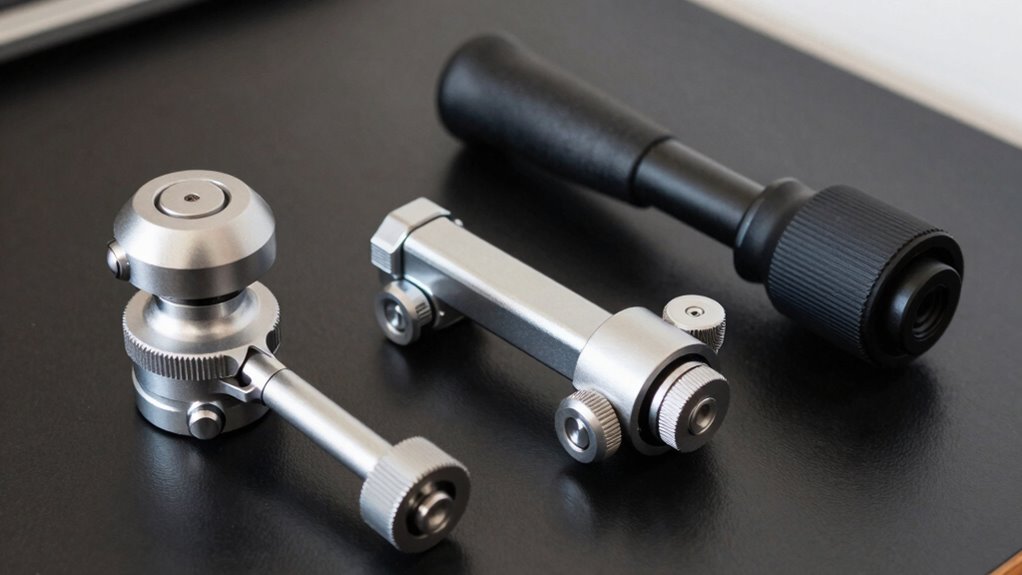
Have you ever wondered why different tripod heads exist and how they impact your photography? The answer lies in their ability to provide precise camera stabilization and how well they work with your equipment. Each tripod head type is designed to serve specific needs, whether you’re capturing sweeping landscapes, fast-moving sports, or detailed macro shots. The right choice can make a big difference in the quality of your images and the ease of your shooting experience.
Pan-and-tilt heads are among the most straightforward options, offering simple, manual control over movement along two axes: horizontal and vertical. They’re great if you prefer direct, tactile adjustments and often come with a handle for smooth panning. Their lightweight design makes them compatible with many camera setups, but they’re best suited for situations where you don’t need complex positioning or rapid changes. If your work involves straightforward compositions and steady shots, pan-and-tilt heads provide reliable camera stabilization without added complexity. Additionally, adjustment control plays a crucial role in how effectively you can compose your shots. A well-designed head ensures consistent and accurate adjustments, especially in challenging shooting conditions.
Pan-and-tilt heads offer simple, manual control and reliable stabilization for steady, straightforward shots.
Ball heads, on the other hand, give you a versatile, compact solution that allows for quick, one-handed adjustments. Their design involves a spherical joint that lets you easily alter the camera’s position in any direction. This flexibility is ideal for dynamic shooting scenarios where you need to reframe fast or switch angles on the fly. Because ball heads come in various sizes and weight capacities, they’re highly compatible with different camera equipment, from lightweight mirrorless setups to heavier DSLR rigs. Their ability to lock the ball in place ensures solid camera stabilization once you’ve achieved the desired position, making them a favorite among photographers who value speed and adaptability. Additionally, camera stabilization is essential for capturing sharp images, especially in challenging conditions. Choosing the right ball head can greatly enhance your shooting efficiency and image quality.
Fluid heads are tailored for videographers and filmmakers, providing smooth, controlled movements along various axes. They are engineered to facilitate seamless panning and tilting, essential for capturing cinematic shots. The fluid mechanism dampens abrupt movements, giving you precise camera stabilization during dynamic footage. These heads are compatible with a range of professional gear, often supporting larger cameras and accessories. Their sophisticated design demands a compatible tripod system capable of handling the additional weight and providing stability, but the payoff is smooth, professional-quality footage. Proper maintenance and understanding of their fluid damping system are key to maximizing their performance and longevity.
In essence, selecting the right tripod head depends on your specific needs and equipment compatibility. Whether you prioritize quick adjustments, precise control, or fluid motion, understanding the distinctions helps you make smarter choices. The correct tripod head enhances your camera stabilization, improves shot accuracy, and ultimately elevates your creative work.
As an affiliate, we earn on qualifying purchases.
Frequently Asked Questions
Which Tripod Head Is Best for Astrophotography?
For astrophotography, a ball head with precise control offers the best stability, allowing you to make smooth, accurate adjustments. It provides the necessary astrophotography stability to track celestial objects accurately. Alternatively, a geared head can also be ideal, especially for telescope mounting options, because it offers fine-tuned movements essential for long exposure shots. Both options guarantee steady positioning, helping you capture clear, sharp images of the night sky.
Can I Use a Ball Head for Video Recording?
Yes, you can use a ball head for video recording, but it’s not always ideal. Imagine you’re filming a nature scene; a ball head offers quick camera adjustments, but may compromise tripod stability during smooth panning. For better camera mounting options and steady shots, consider a fluid head instead. Still, if stability isn’t critical and flexibility is your priority, a ball head can work well for casual or dynamic video work.
How Do I Maintain and Clean My Tripod Head?
To maintain your tripod head, regularly check for dust and debris, and clean it with a soft, damp cloth. Keep your tripod stability high by tightening all screws and joints. Apply a small amount of head lubrication to moving parts to guarantee smooth operation. Avoid over-lubricating, as excess can attract dirt. Proper maintenance keeps your tripod head functioning smoothly and prolongs its lifespan.
Are Quick-Release Plates Compatible Across Brands?
Quick-release plates aren’t always compatible across brands because of differing brand compatibility and quick release standards. You need to check if your tripod head and plate follow the same standards, like Arca-Swiss or proprietary systems. Some brands offer adapters to bridge compatibility gaps. Always verify compatibility before purchasing new plates or tripods to make sure they fit securely and work smoothly with your gear, saving you time and frustration.
What Weight Capacity Should I Consider for Heavy Gear?
For heavy gear, aim for a tripod head with at least a 20-30 kg (44-66 lbs) weight capacity. This guarantees tripod stability and proper weight distribution, preventing wobbling or tipping. If you’re using very heavy equipment, consider even higher capacities. Always check the manufacturer’s specifications, and choose a head that comfortably exceeds your gear’s weight to maintain stability and safety during shoots.
As an affiliate, we earn on qualifying purchases.
Conclusion
Now that you understand the different tripod head types, you’re equipped to choose the perfect one for your creative journey. Imagine your camera effortlessly gliding across landscapes, capturing moments with stability and precision. Whether you’re framing a sweeping sunset or a tiny detail, your tripod becomes an extension of your vision. With the right head, every shot feels smoother, sharper, and more intentional. Get ready to bring your ideas into focus and elevate your craft to new heights.
ball head tripod for mirrorless cameras
As an affiliate, we earn on qualifying purchases.
As an affiliate, we earn on qualifying purchases.
As an affiliate, we earn on qualifying purchases.