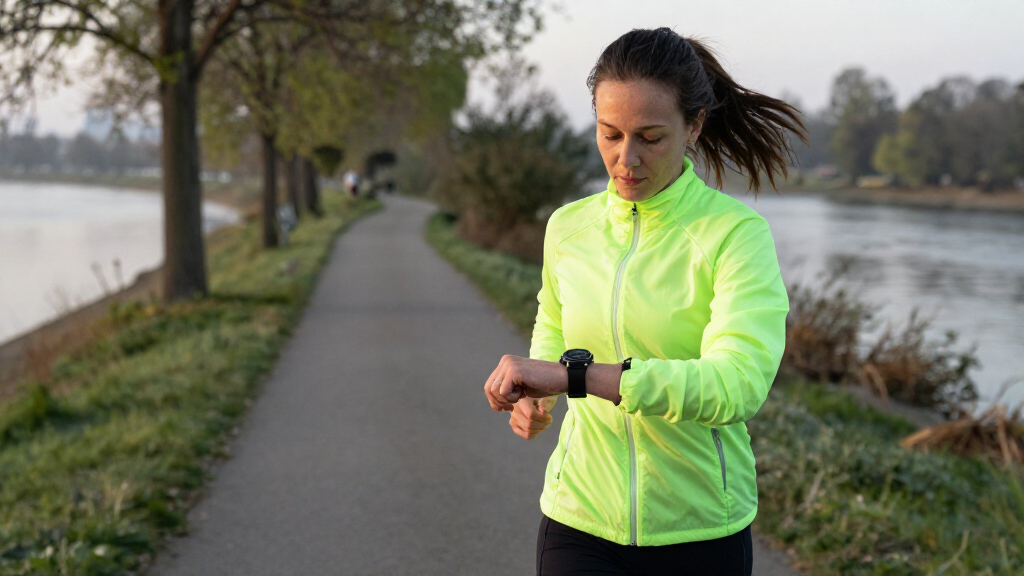

Set up your sports and fitness smartwatch so it can record workouts, display useful health data, and sync activity to your phone. This guide is for first-time smartwatch owners and people switching to a new device. Allow 30-60 minutes for setup, then take a short test walk or workout to check that tracking and syncing work.

Get sports gear delivered free with Prime
- Fast, free delivery on millions of items
- Prime Video, Amazon Music and more included
- Member-only deals all year

Apple Watch SE 3 GPS + Cellular 40mm Smartwatch
- ✔ Connectivity: GPS + Cellular
- ✔ Case size: 40mm
- ✔ Manufacturer: Apple

Smart Watch for Women – 1.85" HD Screen Fitness Tracker
- ✔ Display: 1.85-inch HD LCD, 320 × 385, 500 nits
- ✔ Battery life: 7–10 days; 350 mAh
- ✔ Sports modes: 110+

T7 Smartwatch 1.83" HD Touchscreen Bluetooth Calling Waterproof Multi-Sport Tracker – Jet Black
- ✔ Display: 1.83-inch HD touchscreen
- ✔ GPS: None
- ✔ Water resistance: IP67; not recommended for swimming or hot showers
Difficulty: Beginner | Time: 30-60 minutes, plus one short test workout
What You’ll Need
Tools & Materials:
- Sports or fitness smartwatch with its charging cable
- Compatible smartphone
- Watch manufacturer’s companion app
- Wi-Fi or mobile data for app installation and syncing
Knowledge:
- Basic smartphone use
- Access to your phone’s Bluetooth settings
- Your usual units for distance, weight, and temperature
Charge the watch before setup. Check the manufacturer’s compatibility page if you are unsure whether your phone supports the watch. Have your account login details ready. Health readings are estimates and do not replace medical advice or a diagnostic device.
Apple Watch SE 3 GPS + Cellular 40mm Smartwatch
The Apple Watch SE 3 earns the top spot because it is the only model in this group that combines built-in GPS with cellular connectivity. For a run, walk, or workout away from your phone, that means it can support location tracking and connected features more independently than the other two picks. The supplied description also lists comprehensive fitness metrics, Workout Buddy support, and health features such as temperature sensing, cycle monitoring, and sleep apnea alerts.Compared with the 1.85-inch fitness tracker, Apple offers cellular use and onboard GPS, while the other watch advertises more than 110 sports modes and a substantially longer battery window. Its fall and severe car crash detection also give it a safety angle that the two budget-style alternatives do not list. That makes the SE 3 the most rounded choice for an iPhone owner who mixes training with everyday use, although the details provided do not establish medical accuracy or replace professional care.The compromise is routine charging: despite fast charging, the stated all-day battery requires a daily charge. This is a much shorter interval than the up-to-10-day claims for the T7 and the 1.85-inch tracker. The 40mm case may suit buyers who prefer a smaller watch, but anyone prioritizing long stretches between charges should look to those alternatives and accept their GPS limitations.
Pros:
- Built-in GPS and cellular connectivity support workouts and calls away from an iPhone.
- Fitness features include real-time metrics and Workout Buddy support.
- Lists temperature sensing, cycle monitoring, and sleep apnea alerts.
- Fall and severe car crash detection add safety functions beyond those listed for the other picks.
Cons:
- All-day battery life means charging every day, even with fast charging.
- Siri AI is described as English-limited and may have usage limits.
Best for: iPhone owners who want built-in GPS, cellular connectivity, safety features, and a broad mix of fitness and everyday smartwatch functions.
Not ideal for: Buyers who want multi-day battery life, Android-first compatibility, or a watch primarily for swimming and extended outdoor training without frequent charging.
Bottom line: We recommend the SE 3 for iPhone users who value independent GPS, cellular access, and broader fitness and safety features more than long battery life.
“We recommend the SE 3 for iPhone users who value independent GPS, cellular access, and broader fitness and safety features more than long battery life.”
Smart Watch for Women – 1.85" HD Screen Fitness Tracker
For buyers who want a large display, a long gap between charges, and a wide menu of activities, this 1.85-inch fitness tracker makes the strongest alternative to Apple. It lists 110+ sports modes, heart-rate, sleep, stress, and menstrual-cycle monitoring, plus Bluetooth calling. The stated seven-to-ten-day battery life is its clearest advantage over the SE 3, which needs daily charging.Its main fitness limitation is location tracking. GPS works through a connected smartphone, so the watch is less convenient than Apple’s built-in GPS when you want to leave your phone behind. It also does not support message replies, which matters less during a workout than when using it as an all-day smartwatch. Compared with the T7, this model lists more sports modes and an IP68 rating, though the given water-resistance description says up to 10 mm and does not establish suitability for swimming.The big screen and interchangeable silicone and woven bands may appeal to people who want health summaries and notifications to be easy to read throughout the day. We would choose it over the T7 for its greater listed sports coverage and longer stated battery window, but skip it if independent route tracking is essential. Its broad mode count is a feature-list advantage; the provided details do not tell us how those modes differ in metrics or coaching.
Pros:
- Lists more than 110 sports modes for varied activity tracking.
- Stated battery life is seven to ten days.
- Bluetooth calling works through the built-in microphone and speaker.
- Tracks heart rate, sleep, stress, and menstrual cycle.
Cons:
- GPS depends on a connected smartphone rather than being built into the watch.
- Message replies are not supported.
- The supplied water-resistance details do not clearly establish swimming suitability.
Best for: Active users who want many listed workout modes, a large readable screen, Bluetooth calls, and a longer stated battery life, and who usually carry a phone.
Not ideal for: Runners and cyclists who need GPS tracking without a phone, people who require message replies from the watch, or swimmers seeking clearly specified swim support.
Bottom line: We would choose this model for workout variety and longer battery life, provided phone-dependent GPS fits the way we train.
“We would choose this model for workout variety and longer battery life, provided phone-dependent GPS fits the way we train.”
T7 Smartwatch 1.83" HD Touchscreen Bluetooth Calling Waterproof Multi-Sport Tracker – Jet Black
The T7 is the straightforward pick for people who want activity and wellness tracking alongside wrist calls and notifications. It lists heart-rate, SpO₂, stress, sleep, and menstrual-cycle metrics, and its 1.83-inch touchscreen supports more than 100 watch faces. With up to ten days of stated battery life, it also asks for less frequent charging than the Apple option.As a sports watch, however, it has the clearest ceiling in this lineup: there is no GPS. Outdoor routes therefore cannot be tracked independently by the watch, unlike the Apple SE 3. The 1.85-inch tracker at least uses a connected phone for GPS, so that model is the better fit if mapped outdoor activity matters and you carry your phone. T7’s listed IP67 protection is described as suitable for sweat, rain, and handwashing, but the product information specifically says it is not recommended for swimming or hot showers.Bluetooth calling and a customizable display make the T7 convenient for everyday wear, but its custom Android OS may limit compatibility with some apps. Compared with the 1.85-inch tracker, it has a slightly smaller screen and fewer stated sports modes, while the listed battery life is similarly long. We see it as a basic companion for general activity rather than a serious choice for route-based training or water sports.
Pros:
- Includes Bluetooth calling through its built-in microphone and speaker.
- Tracks heart rate, SpO₂, stress, sleep, and menstrual cycle.
- Up to ten days of stated battery life with fast charging.
- Works with iOS and Android smartphones.
Cons:
- No GPS capability for recording outdoor routes independently.
- IP67 protection is not recommended for swimming or hot showers.
- Custom Android OS may limit compatibility with some apps.
Best for: Buyers seeking a simple Android- and iOS-compatible activity watch with wrist calling, common wellness metrics, and infrequent charging.
Not ideal for: Outdoor athletes who need route maps or built-in GPS, swimmers, or users who depend on a broad selection of third-party apps.
Bottom line: We recommend the T7 for everyday activity and calls, but its lack of GPS makes it the least suitable option here for route-focused sports.
“We recommend the T7 for everyday activity and calls, but its lack of GPS makes it the least suitable option here for route-focused sports.”
As an Amazon Associate we earn from qualifying purchases.
Before You Start
Set up the watch and phone near each other, with Bluetooth turned on and the phone connected to the internet. Install the official companion app from your phone’s app store; avoid similarly named third-party apps. If the watch is secondhand, ask the previous owner to remove it from their account first. Do not factory-reset a watch until you have checked whether it contains data you need.
Step-by-Step Instructions
Step 1: Charge and power on the watch
Connect the watch to its charger and let it charge until the screen shows enough battery for setup. Press and hold its power or action button until the display turns on. Follow any language or region prompts on the watch.
Tip: Button names and startup screens vary by model. Use the printed quick-start guide if the watch does not respond.
Check: The watch shows its setup screen or watch face and has enough charge to continue.
Step 2: Install the companion app
Open your phone’s app store, search for the watch manufacturer’s official app, and install it. Open the app and sign in or create an account when prompted. Allow only the phone permissions the app requests for features you plan to use, such as Bluetooth for pairing and notifications for alerts.
Tip: Some watches also need a separate app for maps, music, or contactless payments. Start with the official companion app and add other apps only when needed.
Check: The companion app opens and displays a prompt to add or pair a device.
Step 3: Pair the watch with your phone
In the companion app, choose the option to add a device. Select your watch model and follow the pairing instructions. Confirm that the code on the phone matches the code on the watch before accepting. Keep the devices close together until the app reports that pairing is complete.
Tip: Pair from the companion app unless the manufacturer’s instructions say otherwise. Pairing directly from the phone’s Bluetooth menu can leave the watch only partly connected.
Check: The app identifies your watch and shows it as connected or paired.
Step 4: Update the watch software
Keep the watch on its charger and follow the app’s prompt to check for software updates. Start an available update and leave the phone and watch near each other until it finishes. Do not restart or unpair the devices while an update is installing.
Tip: Updates can take several minutes and may restart the watch. If you have limited time, wait until you can leave both devices undisturbed.
Check: The update screen disappears, the watch restarts if needed, and the app shows that the watch is current or ready.
Step 5: Enter your profile and preferences
In the app or on the watch, enter your age, height, weight, and other requested profile details. Select your preferred units for distance, pace, weight, and temperature. Set the correct time zone and choose a display style you can read during exercise.
Tip: Profile details can affect estimates such as calorie burn and heart-rate zones. Use accurate information, and change it later if it becomes outdated.
Check: The profile and unit settings appear in the app, and the watch displays the correct local time.
Step 6: Set health and activity tracking
Open the health or tracking settings and turn on the features you want, such as heart rate, sleep, steps, or activity reminders. Review each feature’s description and permissions before enabling it. Set realistic activity goals that fit your current routine; you can adjust them later.
Tip: Continuous heart-rate or sleep tracking can use more battery. Start with the features you will use, then check battery life before enabling additional tracking.
Check: The selected tracking features appear as enabled in the app or watch settings.
Step 7: Fit the watch and configure workout screens
Wear the watch snugly above your wrist bone so the sensor rests against your skin without pinching. In the activity or workout settings, choose an activity you do often and review the data fields shown during exercise, such as time, distance, pace, and heart rate. Add or reorder fields if your model allows it.
Tip: A loose fit can cause gaps or erratic wrist-based heart-rate readings. For activities where wrist readings are unreliable, check whether your watch supports a compatible chest strap.
Check: The watch stays in place during normal arm movement, and you can read the workout fields you need.
Step 8: Choose GPS, notifications, and syncing options
Review the GPS setting for outdoor activities and select the option recommended for your watch, such as automatic or full satellite tracking. In the companion app, choose which phone notifications should appear on the watch. Confirm that automatic syncing is enabled if you want workouts to transfer without a manual sync.
Tip: Allow location access when the app or watch needs it to record GPS routes. Turn off notifications you do not want during training to reduce interruptions.
Check: Your preferred GPS, alert, and syncing settings are visible in the relevant menus.
Step 9: Record and sync a short test workout
Go outdoors for a short walk or use a simple indoor activity. Open that activity on the watch, wait for a GPS lock if the activity uses GPS, then start recording. Exercise for five to ten minutes and save the session. Open the companion app and wait for the activity to appear; use its sync or refresh control if needed.
Tip: GPS lock time depends on location, weather, and the watch. Start in an open area and wait for the watch’s ready indicator before beginning a route.
Check: The saved workout appears in the app with a start time, duration, and the expected activity type. GPS activities should show a route or distance when those features are supported.
Common Mistakes to Avoid
- Pairing the watch only through the phone’s Bluetooth settings. — Start pairing from the manufacturer’s companion app and follow its prompts so app features and syncing are linked.
- Wearing the watch too loosely during a workout. — Position it just above the wrist bone and tighten it enough to keep the sensor against your skin without restricting circulation.
- Starting an outdoor workout before GPS is ready. — Wait for the watch to show its GPS-ready indicator in an open area before starting the recording.
- Turning on every tracking feature and notification at once. — Enable the features you plan to use first, then add others after checking battery life and alert behavior.
Troubleshooting
Problem: The phone cannot find the watch during pairing.
Solution: Move the devices close together, check that Bluetooth is on, and confirm the watch is in pairing mode. Close and reopen the companion app. If the watch was paired with another phone, remove its old pairing first; follow the manufacturer’s reset instructions only if needed.
Problem: The watch pairs but the app does not sync workouts.
Solution: Open the companion app with the phone online, check that the watch is listed as connected, and use the app’s sync or refresh option. Check Bluetooth and background app permissions. Restart both devices if syncing still does not resume.
Problem: GPS takes too long to lock or records a short route.
Solution: Move to an open area away from tall buildings or heavy tree cover and wait for the ready indicator. Confirm that location access and GPS tracking are enabled. Check the watch maker’s guidance for updating satellite data or software.
Problem: Heart-rate readings seem erratic.
Solution: Adjust the watch so the sensor touches skin above the wrist bone, clean the sensor, and warm up before comparing readings. Tattoos, cold skin, movement, and some workouts can affect wrist sensors. Use a compatible chest strap if your activity needs steadier readings.
What Success Looks Like
Your watch is paired with the official app, shows the correct time and profile settings, and has the tracking features you selected enabled. A saved test workout appears in the app with the expected activity type and duration. For an outdoor GPS session, the route or distance is present when supported by your model and settings.
Next Steps
Wear the watch during your normal routine for several days and review whether the goals, alerts, and workout screens are useful. Check battery life after enabling tracking features, and adjust settings if the watch needs charging too often. Keep the watch software and companion app updated. Clean and dry the watch after workouts, follow the manufacturer’s water-resistance guidance, and review health data as estimates rather than diagnoses.
Frequently Asked Questions
Can I use a sports smartwatch without a phone?
Most watches can record workouts on their own, but setup, detailed history, software updates, and some features require the companion app. Check your model’s specifications for phone-free GPS, music, and cellular support.
Do I need to wear the watch tightly?
It should stay in place with the sensor touching your skin, but it should not pinch or restrict circulation. A slightly snug fit during exercise can improve wrist-based readings.
Why does my watch’s calorie estimate differ from another device?
Devices use different sensors and calculation methods, and calorie figures are estimates. Enter accurate profile details and compare trends from the same device rather than treating a single reading as exact.
Will GPS work indoors?
GPS signals usually do not work reliably indoors. Choose an indoor activity mode for a treadmill or gym session; distance may depend on motion sensors or equipment data.