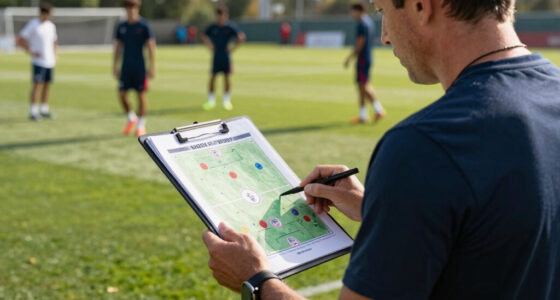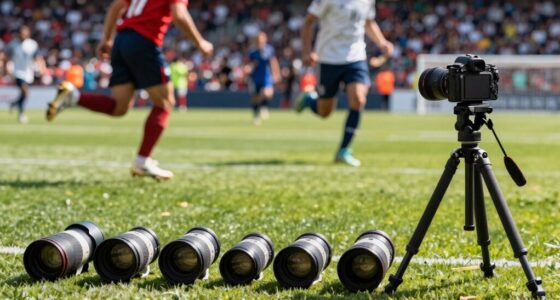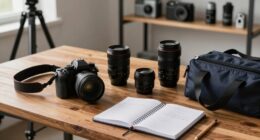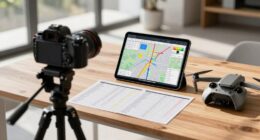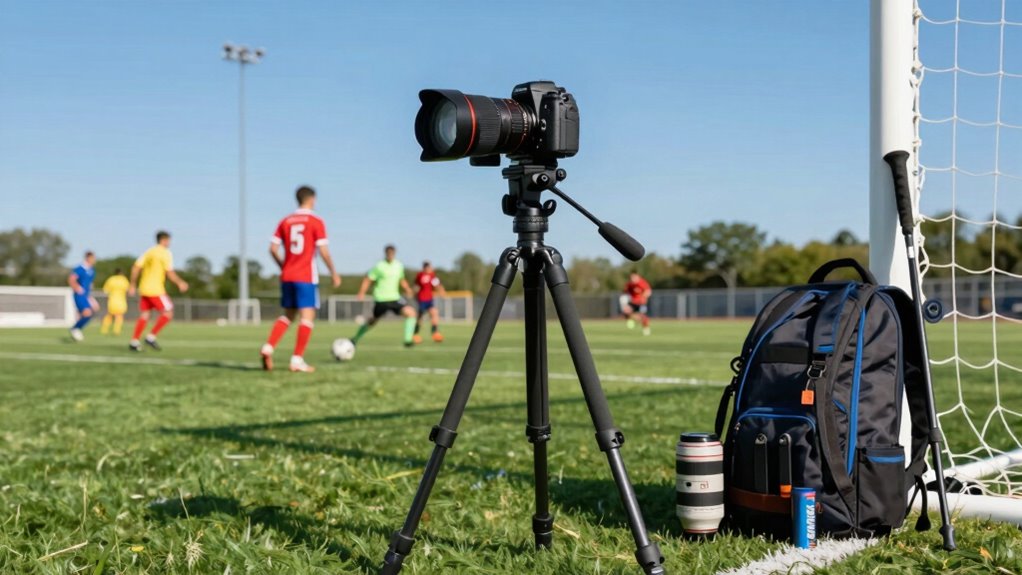

To build the right setup for soccer photography, start by selecting a fast telephoto lens in the 70-200mm range for versatile shots. Prioritize natural light, using flashes for indoor or low-light matches. Organize your gear in a reliable bag and make certain you have a tripod handy. Familiarize yourself with camera settings for peak results and clean your equipment regularly. Position yourself at field level and experiment with angles for dynamic shots. There’s even more to learn about enhancing your soccer photography skills!
Key Takeaways
- Select a fast telephoto lens (70-200mm) for versatile shooting, capturing both wide and detailed action shots effectively.
- Utilize natural light for outdoor matches and external flashes for indoor or low-light conditions to enhance image quality.
- Organize gear in a reliable bag, including a portable tripod, to ensure quick access and reduce stress during matches.
- Experiment with shooting angles, from field level to higher vantage points, to create dynamic compositions using the rule of thirds.
- Regularly clean and maintain your camera and lens to prevent dust and smudges, ensuring optimal performance during critical moments.
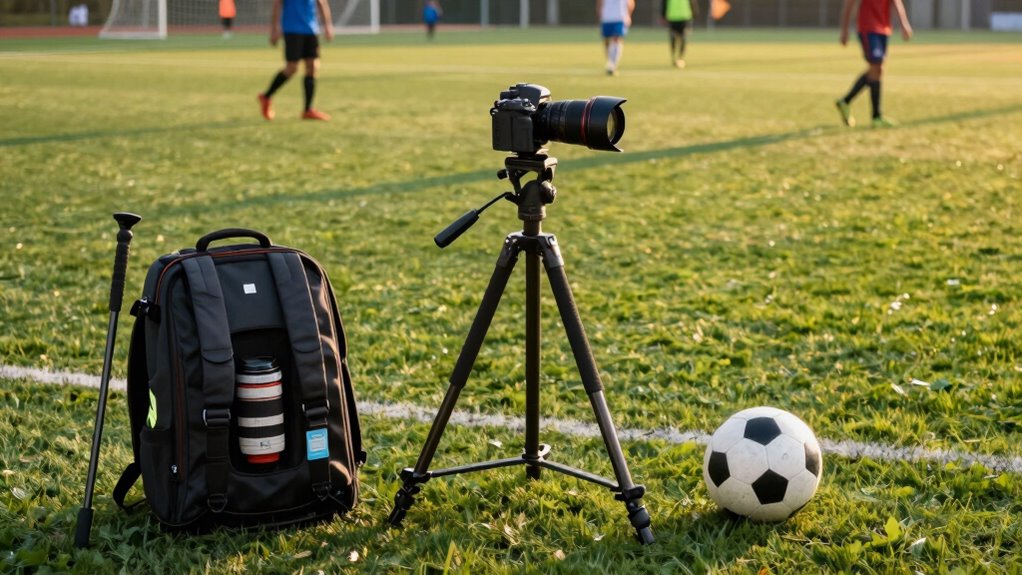
When you’re ready to capture the excitement of a soccer match, having the right photography setup is vital. Start by considering your lens selection. A fast telephoto lens, ideally between 70-200mm, is perfect for getting close-up shots of the action without being on the field. This range allows you to capture both wide shots of the play and detailed action captures of players as they vie for the ball. Confirm your lens has a wide aperture; this will help you perform well in varying lighting conditions, especially during evening matches.
Selecting a fast telephoto lens between 70-200mm is essential for capturing dynamic soccer action effectively.
Speaking of lighting, mastering various lighting techniques can elevate your game. Natural light is your best friend, but if you’re shooting at dusk or indoors, consider using external flashes or reflectors to illuminate your subjects. Adjusting your camera settings effectively is fundamental too. Use a fast shutter speed—at least 1/1000th of a second—to freeze the action and avoid motion blur. Set your camera in continuous shooting mode to capture a series of frames, increasing your chances of getting that perfect shot.
Gear organization can’t be overlooked. Before heading to the match, verify your equipment is well-organized. Keep your camera, lenses, and accessories in a reliable bag, and consider packing a small, portable tripod for stability. Having everything you need at your fingertips will save you time and stress during the game, allowing you to focus solely on the action. Additionally, proper gear maintenance can extend the lifespan of your equipment and ensure optimal performance during critical moments. Regularly checking and cleaning your camera gear is essential for peak performance, especially when capturing fast-paced sports photography. Staying informed about camera settings and how they influence your images can also help you make quick adjustments during the game.
Shooting angles play a significant role in your compositions. Try to position yourself at field level for dynamic shots, or find a higher vantage point for broader perspectives. Experiment with different angles to add depth to your images. Remember, composition tips like the rule of thirds can help you create visually appealing shots. Frame your subjects in ways that guide the viewer’s eye to the action. It’s also beneficial to familiarize yourself with the proper camera techniques used by professional sports photographers to maximize your results.
Additionally, understanding your camera’s settings and how they influence your images can drastically improve your results. Regularly clean your lenses and camera body to guarantee peak performance. Dust and smudges can ruin great shots, so check your gear before each match. By staying organized and maintaining your equipment, you’ll be ready to focus on capturing those electrifying moments on the field. With the right setup and techniques, you’ll not only document the game but also tell a compelling story through your images.

Canon EF 70-200mm f/4 L IS USM Lens for Canon Digital SLR Cameras (Renewed)
- Zoom Range: 70-200mm telephoto zoom
- Maximum Aperture: f/4 for versatile shooting
- Optical Elements: Fluorite UD for high resolution and contrast
As an affiliate, we earn on qualifying purchases.
As an affiliate, we earn on qualifying purchases.
Frequently Asked Questions
What Is the Best Time of Day for Soccer Photography?
The best time for soccer photography is during the golden hour, which occurs shortly after sunrise and just before sunset. The soft, warm light enhances the colors and adds depth to your shots. Keep an eye on the weather conditions, too; clear skies will give you that ideal lighting. Overcast days can create diffused light, which can also be great, but you’ll miss the vibrant hues that golden hour provides.
How Can I Improve My Action Shot Skills?
To elevate your action shot skills, think of it as dancing with the players. Use burst mode to capture every twist and turn, and master framing techniques to highlight dynamic player angles. Panning shots can create a sense of motion, while focus tracking keeps your subjects sharp. Hone your anticipation skills to predict plays, and tackle lighting challenges with careful composition tips. With practice, you’ll capture the beautiful game in all its glory!
What Settings Should I Use for Low-Light Conditions?
In low-light conditions, you’ll want to increase your ISO settings to capture more light. Set a fast shutter speed to freeze the action, around 1/500s or faster. Use a wide aperture for better exposure and to create a shallow depth of field. Adjust exposure compensation if needed to avoid overexposure, and set your white balance to match the lighting. Finally, enable noise reduction to minimize grain in your images.
How Do I Choose the Right Camera Lens?
Choosing the right camera lens can feel challenging, but it’s essential. First, decide on a focal length that suits your shooting style—prime lenses offer sharper images, while zooms provide versatility. Consider lens aperture for low-light performance. Check compatibility with your camera, and look for stabilization features to reduce blur. Weather sealing’s important if you shoot outdoors, and fast autofocus speed helps capture those quick soccer moments. Don’t forget lens filters for added effects!
What Are Common Mistakes to Avoid in Soccer Photography?
In soccer photography, avoid common mistakes like poor framing techniques and neglecting equipment essentials. Don’t just focus on the ball; include players and the field to create dynamic shots. Make certain your camera settings match the lighting conditions to prevent blurry images. Always check your gear before the game; missing equipment can ruin your chances. Finally, anticipate the action—being in the right place at the right time can make all the difference.

VIJIM LM20 Mini Flash Speedlite for Canon/Fuji/Sony/Nikon/Panasonic Olympus Pentax, Digital Camera Speedlight, L044GBB1
- Compatible with major camera brands: Canon, Sony, Nikon, Panasonic, Olympus, Pentax
- Color temperature: 5600K
- Mini size design: Compact and portable
As an affiliate, we earn on qualifying purchases.
As an affiliate, we earn on qualifying purchases.
Conclusion
To sum up, setting up for soccer photography isn’t just about having the right gear; it’s about understanding the game and anticipating action. By combining quality equipment with strategic positioning and a keen eye for the unfolding drama, you’ll capture those electrifying moments that tell a story. While some might argue that luck plays a role, it’s really preparation and knowledge that lead to consistently stunning shots. So, get out there and make your mark!

Neewer® Flexible Partition Camera Padded Bag Insert Protection Handbag for SLR DSLR Mirrorless Cameras and Lenses,Flash Light,Radio Trigger,Battery and Charger,Cables and Other Camera Accessories
- Separates camera and accessories: Keeps gear organized and protected
- Protects against scratches and collisions: Safeguards your photo equipment
- Wide compatibility with cameras: Fits DSLR, mirrorless, GoPro, and more
As an affiliate, we earn on qualifying purchases.
As an affiliate, we earn on qualifying purchases.

Amazon Basics 50-inch Lightweight Portable Camera Tripod Stand with Quick-Release Plate, Adjustable Height, Aluminum, for Travel Photography, Champagne
- Includes Storage Bag: Zippered storage for portability
- Adjustable Height: 16.1 to 50 inches with lever-lock legs
- Lightweight Aluminum: Weighs only 1.23 lbs for easy carrying
As an affiliate, we earn on qualifying purchases.
As an affiliate, we earn on qualifying purchases.