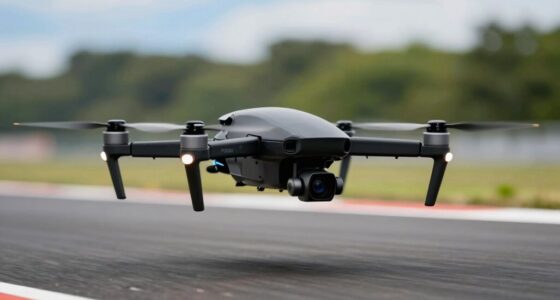

To capture repeatable drone shots with waypoint style planning, you need to focus on precise calibration of your drone’s sensors and consistent environmental conditions, such as lighting. Use specialized software to meticulously plot routes, altitudes, and angles, then double-check everything before each flight. This approach minimizes deviations and guarantees high accuracy. By mastering these steps, you’ll improve your shot consistency and efficiency—if you continue exploring, you’ll uncover even more tips to elevate your drone filming skills.

Get sports gear delivered free — and shop member deals
- Fast, free delivery on millions of items
- Access to Prime Big Deal Days deals on October 6–7
- Prime Video, Amazon Music and more included
Key Takeaways
- Use specialized flight planning software to precisely plot routes, altitudes, and angles for consistent shot replication.
- Ensure drone sensors are properly calibrated before each flight to maintain accurate navigation and stability.
- Control environmental variables like lighting and weather to achieve uniform scene conditions across shoots.
- Preview and analyze flight paths in software to identify and fix potential issues prior to actual deployment.
- Maintain a detailed record of settings, calibration procedures, and environmental conditions for future repeatability.

Creating consistent and repeatable shots can be challenging, but waypoint style planning offers a practical solution. When you rely on waypoints, you set precise coordinates for your drone, allowing you to revisit the same path with remarkable accuracy. This method is especially useful when capturing complex scenes or creating content that requires multiple takes. To make this work smoothly, you need to start with proper drone calibration. Calibrating your drone ensures accurate sensor readings and stable flight, which is essential for maintaining the exact positioning needed in waypoint planning. When your drone’s sensors are calibrated correctly, it can follow pre-set routes with greater precision, reducing the risk of drift or unexpected movements that could compromise your shot’s consistency. Regular calibration is also crucial for maintaining sensor accuracy, ensuring your drone’s navigation remains reliable over time.
Proper drone calibration ensures precise, stable flights for consistent, repeatable shots in waypoint planning.
Lighting consistency plays a key role in achieving professional-looking, repeatable footage. Even the slightest change in lighting can alter the scene’s mood and appearance. When planning your shots with waypoints, aim to shoot during times of stable lighting—early morning or late afternoon often provides softer, more uniform light. If you’re shooting in a controlled environment, consider using consistent artificial lighting setups. By controlling lighting conditions, you guarantee that each pass of your drone captures the scene with the same tonal qualities, making your footage seamless when edited together. Additionally, understanding how lighting conditions influence your shot can help you make better decisions during planning and setup. Being aware of environmental factors can further enhance your ability to maintain consistency across shots. Incorporating knowledge of weather patterns can also help in choosing the best days for shooting, minimizing disruptions. Recognizing seasonal variations can also aid in planning optimal shooting times and conditions.
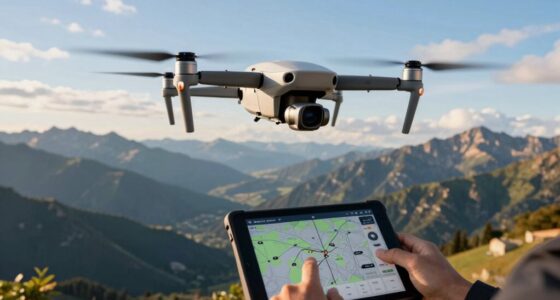
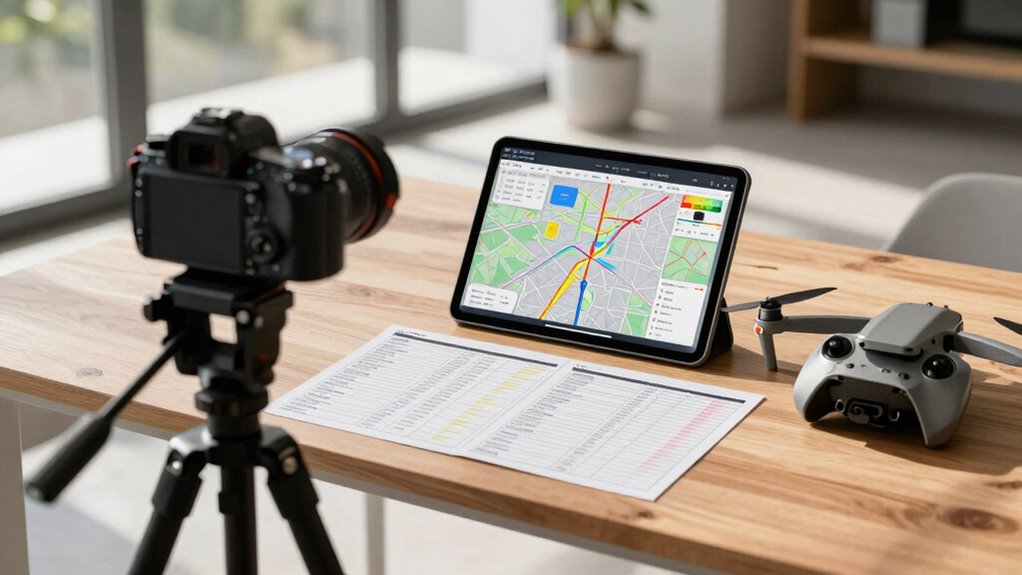
Another key aspect of waypoint planning is the creation of detailed flight paths. Using specialized software or apps, you can plot exact routes, altitudes, and camera angles. This precision allows you to set repeatable parameters, so every shot matches the previous one. When you combine this with regular drone calibration, you minimize deviations caused by hardware inaccuracies. Additionally, double-check your drone’s calibration before each shoot to keep sensors aligned and flight stability high. Adjust lighting conditions if needed, and then execute your planned route. If your software supports it, you can even preview the flight path to catch any potential issues before taking off.
In essence, the combination of meticulous drone calibration, consistent lighting, and precise waypoint planning ensures your shots are repeatable and professional. It’s about setting up your gear correctly, controlling environmental variables, and leveraging technology to replicate your scene flawlessly. With practice, you’ll find that these steps notably reduce the time spent on reshoots, giving you confidence that each take will match the last. This approach not only improves your efficiency but also elevates the quality of your footage, making your project stand out with perfectly aligned, repeatable shots.
drone waypoint flight planning software
As an affiliate, we earn on qualifying purchases.
As an affiliate, we earn on qualifying purchases.
Frequently Asked Questions
How Do I Choose the Right Waypoints for Complex Shots?
To choose the right waypoints for complex shots, start by analyzing your desired camera angles and shot sequencing. Identify key moments that need precise placement and movement. Break down the scene into manageable segments, selecting waypoints that facilitate smooth passageways and maintain visual continuity. Focus on positions that support your story’s flow, ensuring each waypoint aligns with your overall shot plan while allowing flexibility for adjustments during filming.
Can Waypoint Planning Adapt to Changing Lighting Conditions?
Yes, waypoint planning can adapt to changing lighting conditions. As weather variability or lighting adjustments occur, you can modify your waypoints or timing to maintain consistency. By monitoring real-time changes and adjusting your plan on the fly, you guarantee your shots stay on target. This flexibility allows you to navigate unpredictable environments confidently, turning potential setbacks into opportunities for creative control and perfect, repeatable shots even amidst shifting light.
What Software Tools Are Best for Waypoint Style Planning?
You should consider software like DroneDeploy, Pix4D, or UgCS for waypoint style planning. These tools offer robust features that help you optimize flight safety and battery management while planning precise routes. They allow you to set waypoints accurately, monitor battery life in real-time, and adapt to changing conditions. Using these programs guarantees your drone flights are not only efficient but also safe, reducing risks during complex or repeated missions.
How Do I Troubleshoot if My Drone Deviates From the Waypoint Path?
A stitch in time saves nine—so start troubleshooting early. First, check your drone’s battery management; low or uneven power can cause deviations. Next, look for signal interference from obstacles or other electronic devices, which can disrupt your GPS connection. Make certain your drone’s firmware is updated and recalibrate sensors if needed. By addressing these issues proactively, you keep your drone on course and avoid unexpected deviations.
Is Waypoint Planning Effective for Indoor Versus Outdoor Environments?
Waypoint planning is effective both indoors and outdoors, but you need to adapt your approach. Indoors, consider lighting conditions and obstacles like furniture or walls, which can interfere with GPS signals and drone stability. Outdoors, be mindful of obstacles such as trees or buildings that could block the drone’s path. Adjust your waypoints accordingly, ensuring the drone can navigate safely in each environment, improving accuracy and safety.
As an affiliate, we earn on qualifying purchases.
Conclusion
As you master waypoint style planning, you’ll find each shot falling perfectly into place, almost like following a familiar trail through a dense forest. The more you practice, the clearer the path becomes, guiding your camera with confidence. It’s a coincidence of skill and precision—your planned waypoints aligning seamlessly with the scene’s natural rhythm. Before long, repeatable shots become second nature, turning complex shots into simple, predictable steps that elevate your filmmaking effortlessly.
professional drone lighting setup
As an affiliate, we earn on qualifying purchases.
As an affiliate, we earn on qualifying purchases.
As an affiliate, we earn on qualifying purchases.
Fall Picks
fall essentials
As an affiliate, we earn on qualifying purchases.