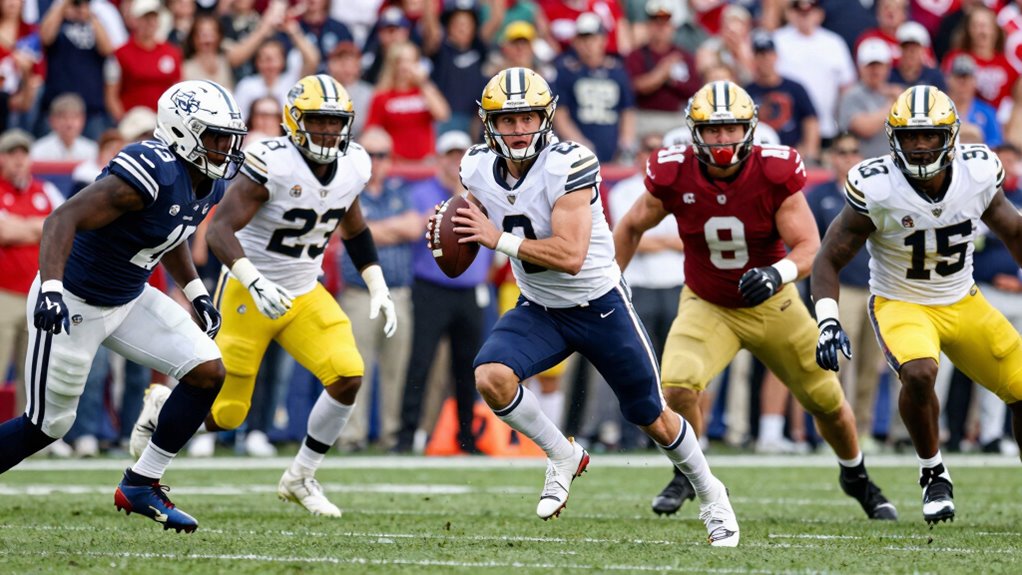

To photograph football games without battling your camera, start by using a fast shutter speed of at least 1/1000 second to freeze motion and a telephoto lens between 70-200mm for distance. Keep autofocus responsive and track players anticipate their movements. Adjust settings quickly for changing light, using manual mode or auto with adjustments. Stay prepared and practice rapid panning for smooth shots. If you want to learn more tips to make your shots sharper and more dynamic, keep exploring these strategies.
Key Takeaways
- Use continuous autofocus and predictive tracking to keep moving players and the ball in focus smoothly.
- Pre-set camera settings for quick adjustments to changing lighting conditions during the game.
- Anticipate key moments by observing player body language and game flow to capture decisive shots.
- Stabilize your camera with gimbals or monopods to reduce shake and improve image sharpness.
- Maintain clear communication with other photographers and respect boundaries to avoid conflicts.

Canon EF 70-200mm f/4 L IS USM Lens for Canon Digital SLR Cameras (Renewed)
- Zoom Range: 70-200mm telephoto zoom
- Maximum Aperture: f/4 for versatile shooting
- Optical Elements: Fluorite UD for high resolution and contrast
As an affiliate, we earn on qualifying purchases.
As an affiliate, we earn on qualifying purchases.
How to Set Up Your Camera for Football Action
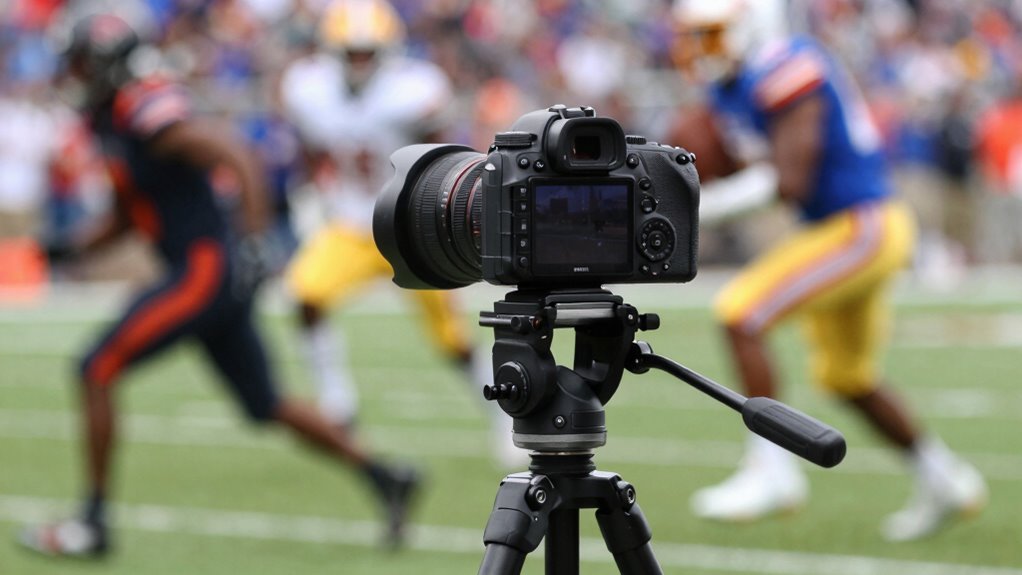
Setting up your camera correctly is essential for capturing fast-paced football action. First, focus on camera stabilization to keep your shots sharp, especially when tracking quick movements. Use a monopod or gimbal if possible, or activate in-camera stabilization features. Next, choose the right lens focal length; a telephoto lens between 70-200mm allows you to zoom in on players from a distance without losing detail. Keep your shutter speed high—at least 1/1000 second—to freeze motion effectively. Adjust your aperture to balance brightness and depth of field, and set your ISO appropriately for changing lighting conditions. By stabilizing your camera and selecting the correct focal length, you’ll ensure crisp, clear images that capture the intensity of football action. Additionally, understanding how to properly configure your camera settings can make a significant difference in capturing the best moments on the field. Remember, camera settings play a crucial role in adapting to varying light and movement conditions, helping you avoid blurry or underexposed shots. Taking the time to familiarize yourself with camera stabilization techniques can also greatly enhance your overall shot quality. Developing a good understanding of photography principles can further improve your ability to capture dynamic sports moments.

Camera Shutter Button, Delicate Soft Shutter Release Button (3 Pack)
- Compatibility: Fits Leica, Fuji, Olympus, Nikon, Canon, and more
- Design: Pure copper, knurled, concave surface
- Aesthetic Appeal: Stylish and elegant camera decoration
As an affiliate, we earn on qualifying purchases.
As an affiliate, we earn on qualifying purchases.
Choosing the Best Equipment and Lenses for Football Photography
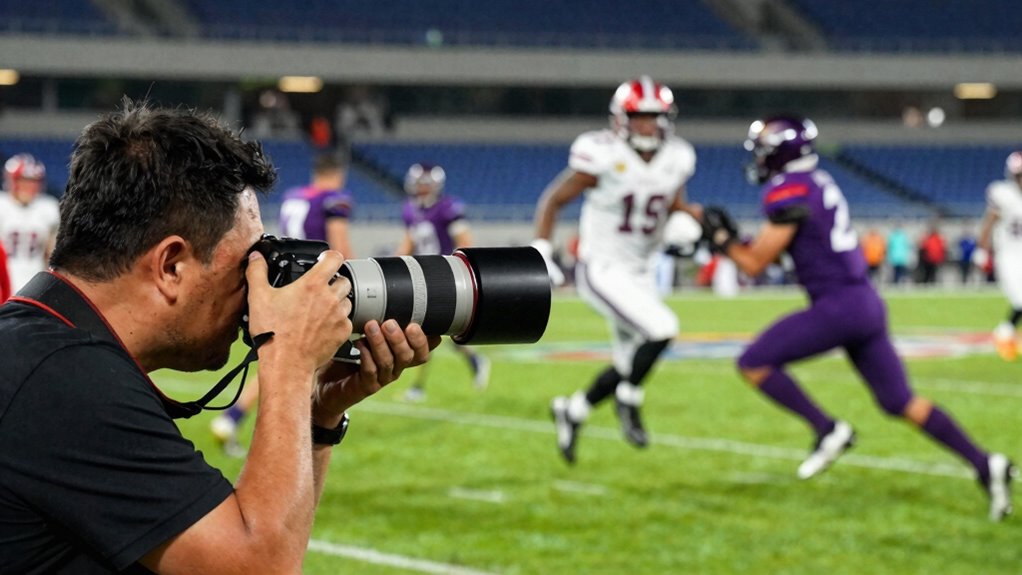
Choosing the right equipment and lenses can make all the difference in capturing dynamic football moments. Look for cameras with good ergonomics to guarantee comfortable handling during long shoots, reducing fatigue and improving stability. A fast, responsive autofocus system is essential for tracking fast-moving players and the ball. For lenses, a telephoto zoom like a 70-200mm f/2.8 offers versatility and sharp images in varying distances. Consider a wider aperture to let in more light and achieve better background blur. When editing, use post processing tips such as sharpening and contrast adjustments to enhance action shots. Investing in quality equipment tailored for sports photography helps you stay focused on the game rather than fighting your gear, resulting in sharper, more compelling photos. Additionally, selecting sports-specific equipment can further optimize your ability to capture the intensity of football games. Using appropriate camera settings tailored for fast action can also significantly improve your results. To maximize your shots, understanding the importance of lighting conditions and adjusting your camera settings accordingly can make a noticeable difference in image quality. Moreover, familiarity with the rules of football can help anticipate key moments and improve your timing for capturing decisive shots. Properly understanding player movements can also give you an edge in predicting where the action will unfold.

Gimbal Stabilizer for Sport Camera, 3-axis Handheld Stabilizer for GoPro Hero 12/11/10/9/8, w/Built-in 19cm Extension Rod for Action Camera Video Recording, AOCHUAN Smart G1
- Enhanced 3-axis Stabilization: Provides smooth, stable footage with 360° roll rotation
- Built-in 19cm Extension Rod: Adjusts for various angles and perspectives
- OLED Display: Shows connection status and mode easily
As an affiliate, we earn on qualifying purchases.
As an affiliate, we earn on qualifying purchases.
Techniques for Tracking Fast Players and the Ball
To effectively track fast players and the ball, you need to anticipate their movements and stay focused on the action. Player anticipation helps you predict where athletes will go, allowing you to capture dynamic moments. Maintaining ball focus is vital, especially during rapid plays, so your camera stays locked on the ball’s position. Use continuous autofocus modes and keep your shutter speed high to freeze motion. To sharpen your skills, consider this table:
| Technique | Purpose | Tip |
|---|---|---|
| Predictive Tracking | Follow fast players | Watch player body language |
| Centering the Subject | Keep action in frame | Use gridlines for alignment |
| Rapid Panning | Track ball movement | Practice smooth camera motion |
Mastering these methods will help you stay sharp during intense game moments.

Altura Photo 62-Inch Camera Monopod, Heavy Duty Pole & Camera Stand
- Compact and Lightweight: Collapses to 16.75 inches, weighs 0.59 lbs
- Universal Mount Compatibility: Fits DSLR, mirrorless, video cameras up to 5 lbs
- Includes Screw Adapter: Comes with 3/8 inch screw adapter
As an affiliate, we earn on qualifying purchases.
As an affiliate, we earn on qualifying purchases.
Managing Lighting and Exposure in Football Games

Managing lighting and exposure during football games can be challenging because the lighting conditions often change rapidly, especially in outdoor venues with varying weather and time of day. To maintain proper lighting balance, you need to stay alert and adjust your camera settings quickly. Use your camera’s exposure adjustment features to compensate for shadows or bright sunlight, making sure players aren’t overexposed or lost in darkness. Keep an eye on the histogram to gauge exposure accuracy, and don’t hesitate to tweak ISO, shutter speed, or aperture on the fly. Shooting in manual mode can give you better control, but if you prefer auto, set your camera’s exposure compensation for quick adjustments. Staying adaptive ensures sharp, well-lit images regardless of changing lighting conditions. Incorporating smart technology such as weather-resistant camera gear can also help you adapt to unpredictable outdoor environments.
Common Mistakes to Avoid When Shooting Football Matches

One common mistake photographers make during football matches is not anticipating the action, which leads to missed moments or blurry shots. To improve, stay alert and read the game, predicting where the ball or key players will be. Ignoring spectator etiquette can also cause distractions, so avoid blocking views or disturbing fans while capturing shots. Poor camera maintenance, like dirty lenses or malfunctioning gear, hampers image quality, so regularly clean and check your equipment. Rushing settings adjustments during critical moments often results in missed opportunities; prepare your camera beforehand. Additionally, understanding interior design principles can help you set up your camera and accessories for optimal shots in various lighting conditions. Finally, don’t forget to stay respectful and patient with other photographers, maintaining good etiquette. Avoid rushing or overcrowding, which can disturb the game and others around you. Proper preparation helps you capture better, more memorable football images.
Frequently Asked Questions
How Can I Improve My Photos in Low-Light Stadiums?
To improve your photos in low-light stadiums, start with the right lens choices like a fast aperture lens, such as f/2.8, to let in more light. Use camera accessories like a monopod for stability and higher ISO settings to brighten images without losing quality. Keep your shutter speed high to freeze motion, and shoot in RAW for better editing. These tips help you capture sharp, vibrant football photos despite challenging lighting conditions.
What Settings Should I Use for High-Speed Action Shots?
Ever wondered how to freeze fast-moving action? Set your camera to a fast shutter speed, around 1/1000 second or higher, to capture sharp images. Use continuous autofocus and burst mode for multiple shots. Consider camera accessories like a monopod for stability and lens with a wide aperture for better light. Apply shooting techniques such as panning to follow players smoothly. These settings and tools help you nail high-speed action shots effortlessly.
How Do I Avoid Blurring When Capturing Rapid Movements?
To avoid blurring when capturing rapid movements, you should prioritize camera stabilization and use a fast shutter speed. Keep your camera steady—use a monopod or stabilize against a solid surface if possible. Set your shutter speed to at least 1/1000 second to freeze motion effectively. This combination guarantees sharp images of quick plays, reducing motion blur and capturing those split-second moments clearly.
What’s the Best Way to Photograph Night Football Games?
Night football games can be challenging, but lighting techniques and equipment upgrades make a big difference. Use fast lenses with wide apertures to gather more light, and increase your ISO settings carefully to avoid noise. Consider upgrading to a camera with better low-light performance. Position yourself near field lighting, and experiment with shutter speeds to capture sharp action. These tips help you get clear, exciting shots even in low-light conditions.
How Can I Prevent Missing Key Moments During Fast Plays?
To prevent missing key moments during fast plays, you should focus on camera stabilization and lens selection. Use a monopod or gimbal to keep your camera steady, reducing motion blur. Choose a telephoto lens with a fast autofocus to quickly capture dynamic action. Anticipate plays by watching players’ movements, and keep your camera ready in continuous shooting mode. This combination guarantees you don’t miss vital plays and get sharp, well-timed shots.
Conclusion
Mastering football photography means staying prepared and adaptable. Did you know that using the right settings can increase your shot success rate by over 40%? By setting up your camera correctly, choosing the right lenses, and practicing tracking techniques, you’ll capture those thrilling moments without frustration. Keep experimenting with lighting and avoid common pitfalls, and you’ll turn your shots into stunning highlights. With patience and practice, you’ll be scoring unforgettable images every game!