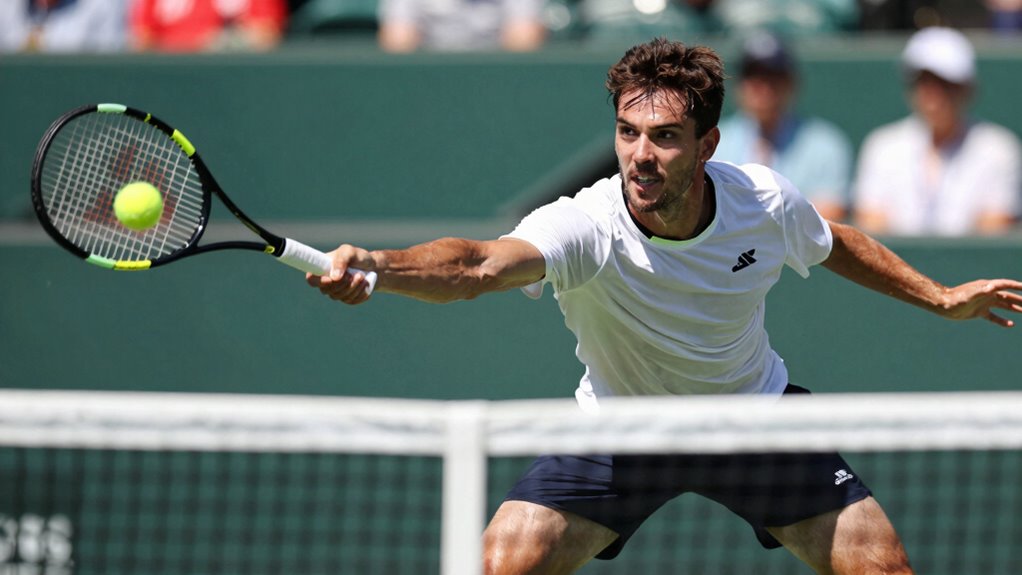

To capture sharp, impactful tennis shots, you need to anticipate key moments by watching player movements and court angles. Use a camera with fast autofocus, high burst rate, and lenses with wide apertures to freeze quick actions. Adjust settings like shutter speed, ISO, and focus on the fly, staying close to the action for clearer shots. Avoid common mistakes like poor positioning or slow updates—continue exploring how to refine your technique for better results.
Key Takeaways
- Anticipate key moments by studying player movements, court angles, and match rhythm to stay ahead of the action.
- Use fast autofocus, high burst rate, and wide-aperture telephoto lenses to freeze rapid tennis shots sharply.
- Adjust shutter speed (~1/2000s), ISO, and focus on-the-fly to adapt to changing lighting and fast-moving players.
- Position yourself close to the court’s edge near likely action zones to improve framing and capture emotion.
- Continuously review and tweak camera settings to avoid blurry shots, distracting backgrounds, and missed impactful moments.

Canon EF 75-300mm f/4-5.6 III Telephoto Zoom Lens for Canon SLR Cameras, 6473A003 (Renewed)
- Mount Type: EF Mount
- Aperture Range: f/4-5.6
- Autofocus Motor: DC Autofocus
As an affiliate, we earn on qualifying purchases.
As an affiliate, we earn on qualifying purchases.
Identify Key Moments in Tennis to Capture

To capture the most dynamic moments in tennis, you need to anticipate the key plays and actions that define the game. Watch for signs of player emotions, like intense focus or frustration, which often signal a pivotal moment. Pay attention to court angles, especially during serve returns or volleys, as these reveal the players’ movements and reactions. The best shots happen quickly, so recognizing these cues helps you prepare for the perfect shot. Focus on moments when players are about to hit or react—these are when emotions are raw and court angles highlight the action’s intensity. By honing in on these cues, you’ll be ready to capture powerful, authentic images that tell the story of the match. Additionally, understanding shot timing and how it aligns with player reactions can significantly improve your chances of capturing the perfect shot. Developing a sense of match rhythm can also aid in predicting when key moments will occur, allowing for better timing in your photography. Being familiar with player behavior patterns can further enhance your ability to anticipate those crucial moments, especially when combined with an awareness of movement cues that signal impending action. Recognizing match flow can help you stay alert to the natural progression of the game, so you don’t miss those fleeting moments of intensity.

True 5K 64MP Digital Camera for Photography, Autofocus 18X Zoom, 3'' 180° Flip Screen, Comes with 64GB TF Card & 2 Batteries, Compact Travel Vlogging Camera for YouTube Beginners (Silve)
- High-Resolution Photos and Videos: 64MP photos and 5K videos for clarity
- Powerful 18X Digital Zoom: Capture distant scenes with ease
- Multi-Scene Modes: Switch between macro, slow-motion, filters
As an affiliate, we earn on qualifying purchases.
As an affiliate, we earn on qualifying purchases.
Choose the Right Camera Gear for Fast Action
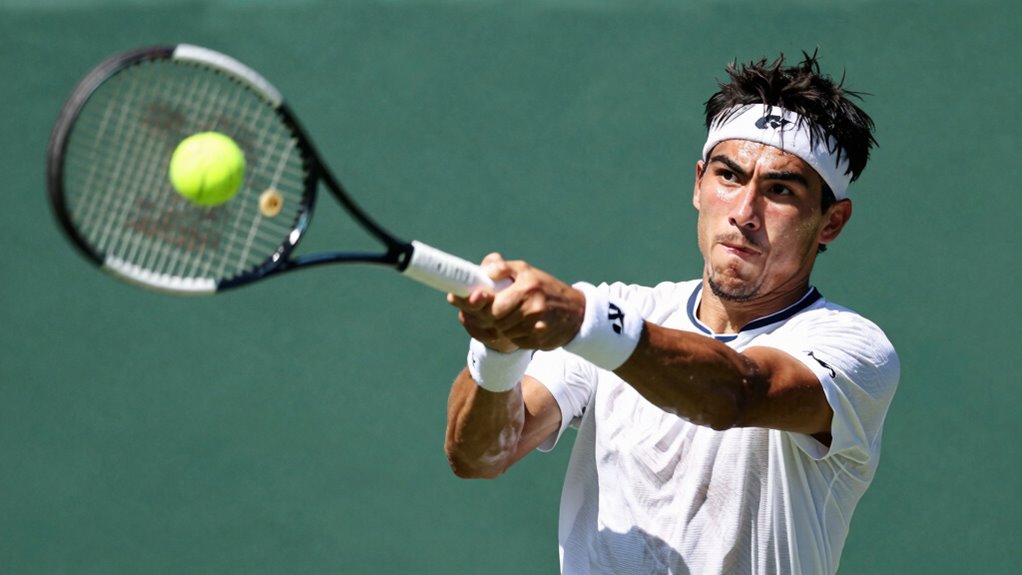
To capture fast-moving tennis action, you need gear that keeps up, starting with a camera with a fast autofocus system. A telephoto lens with a wide aperture helps you get close-up shots without losing detail, while a high burst rate guarantees you don’t miss key moments. Choosing the right combination of these features will make your shots sharp and dynamic.
Fast Autofocus System
Choosing a camera with a fast autofocus system is vital when photographing tennis action, as it allows you to capture quick movements sharply and accurately. To maximize performance, make sure your camera offers reliable autofocus calibration and focus tracking. This helps maintain sharpness as players move unpredictably across the court. Consider these key features:
- Advanced autofocus algorithms for rapid subject detection
- Focus tracking that locks onto moving players seamlessly
- Customizable autofocus settings for precise calibration
A well-calibrated autofocus system ensures your camera responds swiftly, reducing missed shots. Focus tracking keeps your subject in focus even during sudden direction changes. Prioritize these features to catch every essential moment with clarity and confidence.
Telephoto Lens Selection
Selecting the right telephoto lens is essential for capturing fast-paced tennis action with clarity and detail. Choose a lens with a wide aperture, like f/2.8 or f/4, to guarantee sharp images even in lower light. Your grip techniques matter—hold the lens firmly with both hands, supporting the weight with your non-dominant hand to reduce camera shake. Keep lens maintenance in mind; regularly clean your lens and check for dust or smudges that could affect image quality. A well-maintained lens minimizes distractions and helps you focus on the shot. Using the correct grip and caring for your gear ensures you stay steady and ready to capture those split-second moments without missing critical action.
High Burst Rate
Ever wonder how photographers freeze lightning-fast tennis shots without missing a single moment? The key is having a high burst rate on your camera. This allows you to take rapid shots in quick succession, capturing every vital detail. To maximize your chances:
- Use a camera with a high frame rate—ideally 10 fps or more.
- Keep your equipment well-maintained to guarantee consistent performance during intense action.
- Practice technique consistency, such as steady holding and proper focusing, to avoid missed shots.
A reliable burst rate combined with regular equipment checks helps you stay ready for unpredictable movements. Mastering these elements ensures you don’t miss those game-changing moments and produces sharper, more dynamic images.

Canon EOS Rebel T7 DSLR Camera Double Zoom Lens Kit with EF-S 18-55mm and EF 75-300mm Lenses, 24.1 Megapixel CMOS (APS-C) Sensor, Full HD Videos, Wi-Fi, Beginner Photographers, Digital Camera, Black
- Sensor Resolution: 24.1 Megapixel CMOS (APS-C)
- Connectivity: Built-in Wi-Fi and NFC
- Autofocus System: 9-Point AF with Eye Detection
As an affiliate, we earn on qualifying purchases.
As an affiliate, we earn on qualifying purchases.
Set Your Camera: Shutter Speed, Focus, and ISO
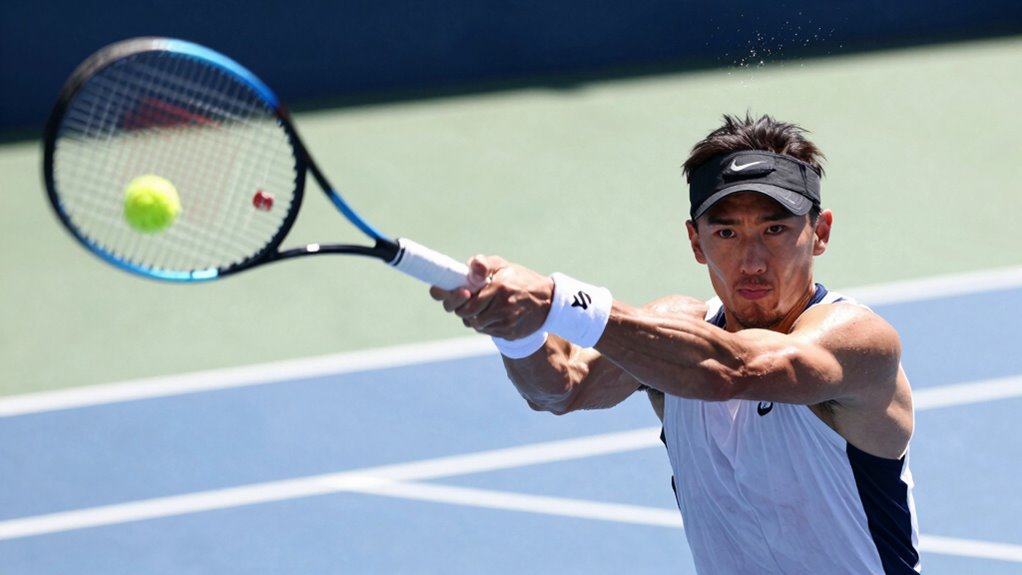
To effectively capture fast-paced tennis action, you need to set your camera correctly by adjusting the shutter speed, focus, and ISO. Lighting conditions greatly influence these settings; in bright sunlight, use a fast shutter speed (around 1/2000s) to freeze motion without overexposing. In lower light, increase ISO carefully to avoid graininess, while maintaining a shutter speed that still captures sharp images. Focus should be set to continuous or AI Servo mode, enabling your camera to track moving players smoothly. Use composition techniques like framing the shot to include the net or court lines for context. Properly balancing shutter speed, focus, and ISO guarantees you capture crisp, well-exposed images that showcase the intensity of tennis action without unnecessary blur or noise.

MIAO LAB 28X HD Telephoto Lens for iPhone/Samsung/Android | High Power Telephoto Camera Lens, Universal Smartphone Compatibility
- High Power 28x Telephoto Lens: Enhances distant photo capturing
- Advanced Optical Design: Provides wide view and true color
- Stable Long-Distance Shots: Ensures clear, steady images
As an affiliate, we earn on qualifying purchases.
As an affiliate, we earn on qualifying purchases.
How to Focus Quickly on Moving Tennis Players?
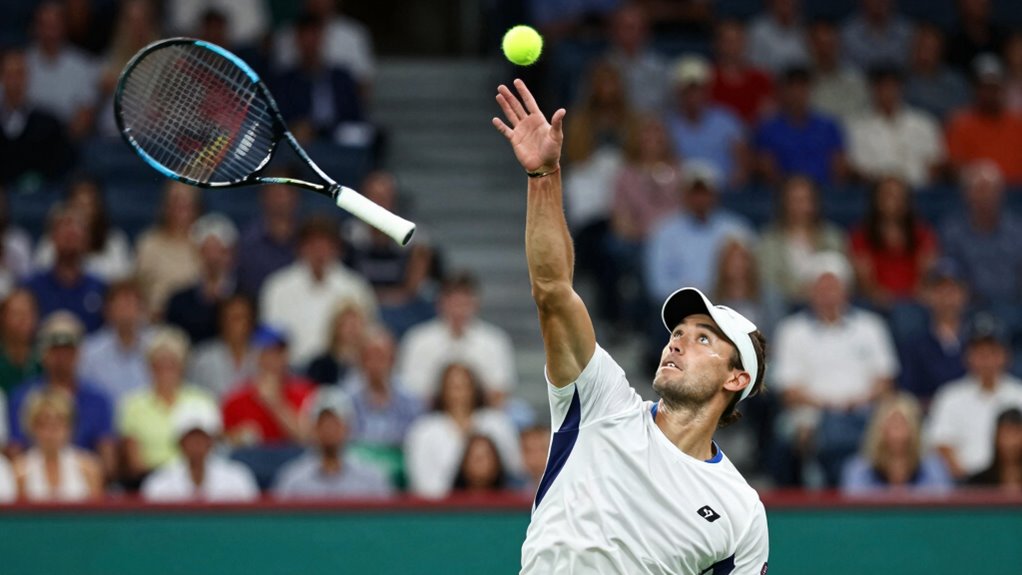
When capturing fast-moving tennis players, quick focus is essential to keep your shots sharp and in the moment. To do this effectively, consider these key points:
- Use continuous autofocus (AI Servo/AF-C) to track players as they move across court angles.
- Prioritize player positioning—anticipate where they’ll be based on court angles, so you can pre-focus or adjust focus points accordingly.
- Select the right focus points—use a single, central point for precise focus or expand to multiple points for broader coverage, especially when players change direction suddenly.
- Utilize focus tracking techniques to maintain sharpness even when players unexpectedly change direction or speed. Incorporating advanced autofocus systems can significantly improve your ability to keep moving subjects in focus.
Anticipate Plays to Capture Dynamic Shots

Anticipating plays is essential for capturing dynamic tennis shots that truly convey the intensity of the game. To do this effectively, focus on player positioning and court angles. Watch how players move and react, predicting where they’ll hit next based on their stance and shot patterns. Position yourself where the action is likely to unfold, considering court angles that give you a clear view of their shots. For example, stay near the baseline for powerful rallies or close to the net during volleys. By reading the game and understanding players’ tendencies, you can pre-empt key moments, ensuring you’re ready to snap shots that showcase the speed and power of tennis. Utilizing knowledge of outdoor activities can also help you understand how different environments influence player movement and shot selection. This proactive approach results in more engaging, dynamic images. Being aware of the environmental conditions can help you adapt your settings and anticipate disruptions or changes in play. Additionally, observing player behavior can enhance your ability to predict their next move more accurately. Recognizing patterns in court surface can also provide insight into how players adapt their tactics, allowing you to anticipate shots better. Furthermore, understanding spectator influence can give you an edge in predicting moments when players might alter their play due to crowd reactions or pressure.
Adjust Camera Settings During a Match on the Fly
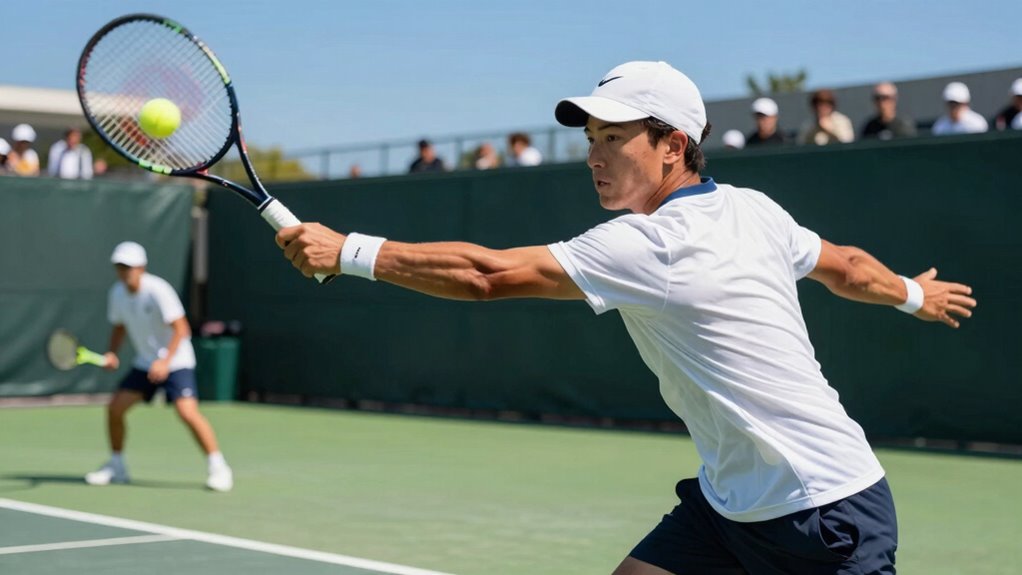
During a match, quick adjustments to your camera settings can make the difference between a good shot and a great one. To stay sharp, focus on these key tweaks:
Quickly adjust your camera settings during a match to capture sharp, impactful shots.
- Adjust ISO and shutter speed to match lighting conditions, ensuring your shots are bright and crisp.
- Refine aperture settings for depth of field, especially when players are moving in and out of focus.
- Use camera stabilization techniques or equipment to prevent blur during fast action, and tweak your settings for lighting adjustments as the match progresses. Regularly monitor lighting conditions to adapt your settings accordingly.
- Keep an eye on smart home technology reviews and guides for tips on how to optimize your camera gear and setup for sports photography. Staying informed about camera technology can help you make better equipment choices for capturing fast-paced action. Additionally, understanding lens selection can improve your ability to frame shots effectively during dynamic play.
Common Mistakes to Avoid for Sharp, Exciting Tennis Photos

Even experienced photographers can make mistakes that ruin a shot, so being aware of common pitfalls that can compromise the sharpness and excitement of your tennis photos is essential. One key mistake is poor court positioning, which can result in missed action or distracting backgrounds. Stay close to the court’s edge to capture dynamic moments and avoid shooting from too far back. Another mistake is neglecting player expressions; capturing their emotions adds drama and engagement. Focusing solely on the ball can lead to dull shots, so anticipate player movements and aim to capture their reactions at pivotal moments. Additionally, using slow shutter speeds or incorrect focus can blur images. Always check your settings and practice quick autofocus to freeze fast-paced action and guarantee your tennis photos are sharp and compelling. Incorporating visual storytelling techniques can help convey the excitement of the match beyond just the moment.
Frequently Asked Questions
What Are the Best Angles to Shoot Tennis From?
You should shoot tennis from angles like the baseline and sidelines to capture intense moments. Use a camera tripod for stability during fast action, and choose a telephoto lens for close, detailed shots. Experiment with different perspectives, including low or high angles, to add variety. Adjust your lens selection based on distance, and keep your tripod steady to avoid blurry images when capturing those rapid, powerful shots.
How Do Weather Conditions Affect Tennis Photography?
Weather conditions are like unpredictable guests at a party, so you need to adapt quickly. Bright sunlight can cause harsh shadows, while rain or fog reduces clarity, making your shots blurry. Use weather adaptations like lens hoods or filters, and protect your equipment with rain covers or waterproof gear. Stay flexible, and adjust your camera settings accordingly to capture sharp, vibrant images despite the weather’s mood swings.
What’s the Ideal Focal Length for Capturing Tennis Action?
The ideal focal length for capturing tennis action is between 200mm and 400mm. Lens choices like telephoto lenses let you zoom in on fast-paced plays without losing clarity. Use camera settings that prioritize fast shutter speeds, around 1/1000 sec, to freeze motion. Adjust aperture to around f/4 or f/5.6 for sharp focus and background blur, helping your subject stand out during intense rallies.
How Can I Shoot Tennis Photos at Night or in Low Light?
You can shoot tennis photos at night by adjusting your aperture settings and ISO. Use a wide aperture to let in more light and keep your shutter speed fast enough for action. Increase your ISO to boost sensitivity, but be cautious of noise. Don’t worry about grainy images—modern cameras handle high ISO well. With these settings, you’ll capture sharp, dynamic shots even in low-light conditions.
How Do I Capture Emotional Moments Without Disturbing Players?
To capture emotional moments without disturbing players, focus on observing subtle player interactions and expressions. Use a telephoto lens to maintain distance, avoiding interference. Anticipate key moments like reactions after a point or intense rallies, and shoot quickly to preserve genuine emotion. Your goal is emotional storytelling—highlighting raw feelings—without intruding. Stay discreet, respect their focus, and you’ll document powerful, unobtrusive images that reveal authentic player reactions.
Conclusion
By mastering these tips, you’ll consistently capture stunning tennis action shots. Imagine you’re at a match, anticipating that perfect serve, and your camera clicks just as the ball hits the racket—freezing that exhilarating moment. Practice and quick adjustments are key. With experience, you’ll avoid common mistakes and turn every rally into a compelling photo story. Keep honing your skills, and soon you’ll be capturing the energy and emotion of tennis like a pro.