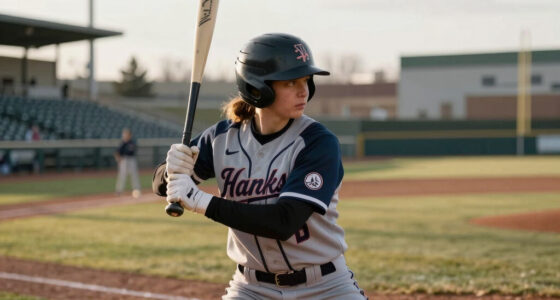
To shoot scoreboards and context shots like a smarter creator, focus on timing and lighting—shoot during early morning or late afternoon for soft, flattering light. Use your camera settings to control exposure, ISO, and shutter speed, and try different angles and vantage points to find the best composition. Incorporate foreground elements or crowd shots to tell a fuller story. Keep experimenting with framing and lighting, and you’ll uncover even more ways to elevate your sports photography skills.
Key Takeaways
- Use natural light during early morning or late afternoon for soft, flattering illumination of scoreboards and scenes.
- Frame to keep the scoreboard prominent, applying the rule of thirds and including foreground elements for depth.
- Elevate your vantage point to avoid obstructions and capture clear, detailed scoreboard shots.
- Capture multiple shots with varied angles, lighting, and context to tell a compelling story of the event.
- Adjust camera settings like aperture, ISO, and shutter speed to optimize sharpness and manage challenging lighting conditions.
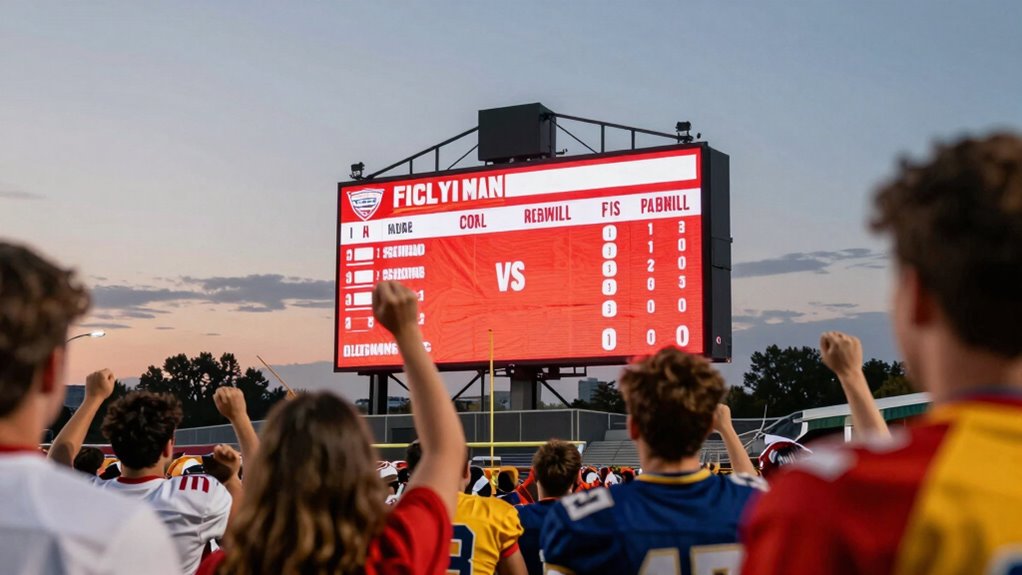
Capturing clear and compelling scoreboard and context shots is essential for storytelling in sports and event photography. Your goal is to convey the excitement, atmosphere, and significance of the event, and the right lighting techniques and framing strategies make all the difference. First, pay attention to lighting. Natural light is ideal, so shoot during times when the light is soft—early morning or late afternoon. If you’re working indoors or under stadium lights, use your camera’s settings to control exposure, avoiding blown-out highlights or underexposed shadows. A wider aperture can help isolate the scoreboard or key elements in the background, while adjusting ISO and shutter speed ensures sharpness and clarity. Sometimes, you might need to use fill flash or reflectors to brighten shadowed areas without overpowering the scene, especially if the scoreboard is backlit or in contrasting lighting conditions. Additionally, understanding how lighting conditions impact image quality can help you make better decisions on the spot. Recognizing how different lighting conditions influence your shot allows you to adapt your approach quickly for optimal results.
Effective scoreboard shots rely on natural light, strategic settings, and creative framing to capture the event’s excitement.
Framing strategies are equally crucial. When shooting scoreboards, position yourself to minimize distractions and keep the scoreboard as prominent as possible. Use the rule of thirds to place the scoreboard off-center, adding visual interest and allowing space for surrounding context that tells a fuller story. Incorporate foreground elements like players, fans, or game action to create depth and perspective, making the shot more dynamic. For context shots, broaden your framing to include elements like the crowd, stadium architecture, or environmental features that set the scene. This provides viewers with a sense of place, atmosphere, and emotion that plain scoreboard shots can’t deliver alone. Understanding how lighting conditions influence your shot can also help you select the best moments and angles for capturing the energy of the event.
Consider your vantage point carefully. Elevate your position if possible to capture the scoreboard clearly without obstructions, or get close to emphasize details if the scene permits. Move around to find angles that highlight the scoreboard while incorporating the surrounding environment, helping your audience understand the scale and energy of the event. Always be mindful of lighting conditions when changing angles—what looks good from one perspective might be less effective from another if shadows or glare become problematic. Adjust your settings accordingly.
Finally, don’t rely on one shot alone. Capture multiple frames with different compositions, lighting adjustments, and angles. This variety increases your chances of getting that perfect shot that combines sharpness, context, and storytelling power. By mastering lighting techniques and framing strategies, you’ll elevate your scoreboard and context shots from mere documentation to compelling visual stories that resonate with viewers.

Canon EF 75-300mm f/4-5.6 III Telephoto Zoom Lens (Black)
- Focal Length & Aperture: 75-300mm f/4-5.6
- Lens Construction: 13 elements in 9 groups
- Diagonal Angle of View: 32° 11' – 8° 15'
As an affiliate, we earn on qualifying purchases.
As an affiliate, we earn on qualifying purchases.
Frequently Asked Questions
What Equipment Is Best for Shooting Scoreboards in Low Light?
To shoot scoreboards in low light, you need good lighting equipment like portable LED panels or diffused lights to brighten the scene without glare. Use your camera settings to maximize exposure—set a wide aperture, reduce shutter speed, and increase ISO carefully to prevent noise. This combination guarantees clear, sharp shots even in dim conditions, making your scoreboard shots look professional and eye-catching.
How Do You Stabilize Shots in Shaky Environments?
Your shots can shake like an earthquake in shaky environments, but you’re not powerless. Use camera stabilization tools like gimbals or steadicams to keep your footage smooth. If you don’t have those, stabilize your camera on a sturdy surface or use a tripod with a fluid head. Also, shoot with a wider lens to minimize the appearance of shake. These tricks will keep your shots steady and professional.
What Angles Make Scoreboards Look More Dynamic?
You should use creative framing and perspective variation to make scoreboards look more dynamic. Try shooting from low angles to emphasize height or from high angles for a sweeping view. Incorporate close-ups for detail or wide shots to show context. Moving around the scoreboard creates a sense of motion and energy, making the shot more engaging. Experiment with different angles to find unique, mesmerizing perspectives that draw viewers in.
How to Edit Scoreboards for Clarity and Impact?
Think of editing your scoreboard like sharpening a lighthouse beam—bright, clear, and guiding your viewers. To boost visibility and text clarity, increase contrast, adjust brightness, and sharpen the image. Use color correction tools to make important numbers pop and guarantee fonts are crisp and legible. Keep it simple and focused, so viewers instantly grasp the info without distraction. Your edits should illuminate the scoreboard’s message, making it impossible to miss.
How Do You Capture Authentic Reactions During Context Shots?
You capture authentic reactions by staying alert for spontaneous moments that reveal genuine expressions. Keep your camera rolling, so you don’t miss those real, unscripted emotions. Engage with your subjects naturally, encouraging them to forget about the camera. Focus on their faces and body language, and shoot from different angles to highlight their reactions. This approach guarantees you record true, compelling moments that add depth and authenticity to your context shots.

JOILCAN Tripod Camera Tripods, 74" Tripod for Camera Phone Video Recording, Heavy Duty Cameras Tripod Stand, Professional Travel DSLR Tripods Compatible with Canon iPhone, Max Load 15 LB
- Adjustable Height Range: From 19" to 74" in seconds
- Compact & Lightweight Design: Only 18" folded, 3.15 lbs weight
- Enhanced Stability & Durability: Non-slip rubber feet, thick tubes, stability hook
As an affiliate, we earn on qualifying purchases.
As an affiliate, we earn on qualifying purchases.
Conclusion
Mastering scoreboard and context shots elevates your content and keeps viewers engaged. Remember, a well-shot scoreboard isn’t just about numbers—it’s about telling a story. Did you know that videos with clear, compelling visuals increase viewer retention by up to 80%? So, focus on sharp angles and meaningful backgrounds. By honing these skills, you’ll create content that not only looks professional but also resonates deeply with your audience, making every shot count.

NEEWER 22 Inch/60 Centimeter Light Reflector Light Diffuser 5 in 1 Collapsible Multi Disc with Bag – Translucent, Silver, Gold, White, and Black for Studio Photography Lighting and Outdoor Lighting
- Versatile Lighting Control: Use standalone or attach to surfaces
- Indoor and Outdoor Use: Suitable for studio and outdoor photography
- Compact and Portable: Folds to nearly one-third size for easy transport
As an affiliate, we earn on qualifying purchases.
As an affiliate, we earn on qualifying purchases.

As an affiliate, we earn on qualifying purchases.