
When choosing a portable monitor for laptop editing, you should prioritize screen resolution and color accuracy. A Full HD (1920×1080) display works well, but 4K (3840×2160) is ideal for detailed work. Look for monitors with wide color gamut coverage to guarantee your edits reflect true colors. Portability matters too—aim for lightweight designs that don’t compromise on quality. Finally, check for convenient connectivity options like USB-C. Discovering the right features can elevate your editing experience even further.

Get sports gear delivered free with Prime
- Fast, free delivery on millions of items
- Prime Video, Amazon Music and more included
- Member-only deals all year
Key Takeaways
- Screen Resolution: Opt for at least Full HD for general editing; 4K is ideal for high-resolution tasks to ensure sharp images.
- Color Accuracy: Choose monitors with wide color gamut coverage and factory calibration to guarantee colors match your final output.
- Portability: Look for lightweight, slim designs that maintain screen quality for a comfortable editing experience on the go.
- Connectivity: Ensure the monitor has essential ports, particularly USB-C, to streamline connections and reduce cable clutter.
- Overall Editing Experience: Prioritize high-resolution and color-accurate displays to enhance workflow and reduce editing errors.

When you’re on the go and need to edit on your laptop, a portable monitor can make all the difference. It expands your workspace and enhances your editing experience, but not all portable monitors are created equal. To get the most out of your editing sessions, you need to focus on a few key factors: screen resolution and color accuracy.
Screen resolution is vital. You want a monitor that delivers a crisp image, making it easy to see every detail of your work. A Full HD (1920×1080) resolution is often sufficient for general editing tasks, but if you’re working with high-resolution images or video, consider stepping up to a 4K (3840×2160) display. The higher pixel count means sharper images, which helps you spot any flaws or make more precise edits. You’ll find that the extra detail improves your workflow, especially when you’re dealing with intricate graphics. Additionally, resolution quality directly impacts the clarity and precision of your editing work.
A high-quality display also ensures that your work remains consistent across different viewing environments, which is essential for professional-grade editing.
Next up is color accuracy, which can’t be overlooked. If you’re doing any kind of visual work, you need a monitor that displays colors faithfully. Look for monitors that cover a wide color gamut, like sRGB or Adobe RGB. This guarantees that what you see on your monitor closely matches the final output. If your portable monitor lacks color accuracy, your edits might look fantastic on your screen but turn out dull or off when viewed elsewhere. A good rule of thumb is to check for reviews that mention factory calibration or specific color accuracy ratings. This can save you a lot of headaches down the line. Additionally, color gamut coverage plays a crucial role in ensuring your monitor can display a broad spectrum of colors, which is essential for high-quality editing.
Furthermore, factory calibration can ensure your monitor maintains consistent color performance over time, which is critical for professional editing.
Considering these color accuracy factors will help you choose a monitor that truly meets your editing needs.
Portability is another essential factor, but it often boils down to how well the monitor balances size and weight. You don’t want something that’s cumbersome to carry around, yet you also need a screen that provides a comfortable viewing experience. Many portable monitors are lightweight and slim, making them easy to slip into your bag, but make sure you’re not sacrificing screen quality for portability.
Finally, connectivity matters. Make sure your portable monitor has the right ports for your laptop; USB-C is becoming increasingly popular and convenient. This way, you can avoid the hassle of juggling multiple cables and adaptors while you’re on the move.
In short, when choosing a portable monitor for laptop editing, prioritize screen resolution and color accuracy. These elements will greatly enhance your editing capabilities, making your work more efficient and enjoyable.
Products Worth Considering

Garmin Approach R10 Portable Golf Launch Monitor

Coleman RoadTrip 225 Portable Tabletop Gas Grill

Coleman Triton Portable 2-Burner Propane Camping Stove
As an affiliate, we earn on qualifying purchases.
Frequently Asked Questions
Are Portable Monitors Compatible With All Laptop Brands?
Yes, portable monitors are generally compatible with most laptop brands, but you should check specific display resolution and connectivity options. Most monitors connect via USB-C, HDMI, or DisplayPort, so verify your laptop has the right ports. Also, consider the display resolution to match your editing needs—higher resolutions provide better clarity. By confirming these details, you can enjoy a seamless experience while editing on the go, regardless of your laptop brand.
How Do I Power a Portable Monitor on the Go?
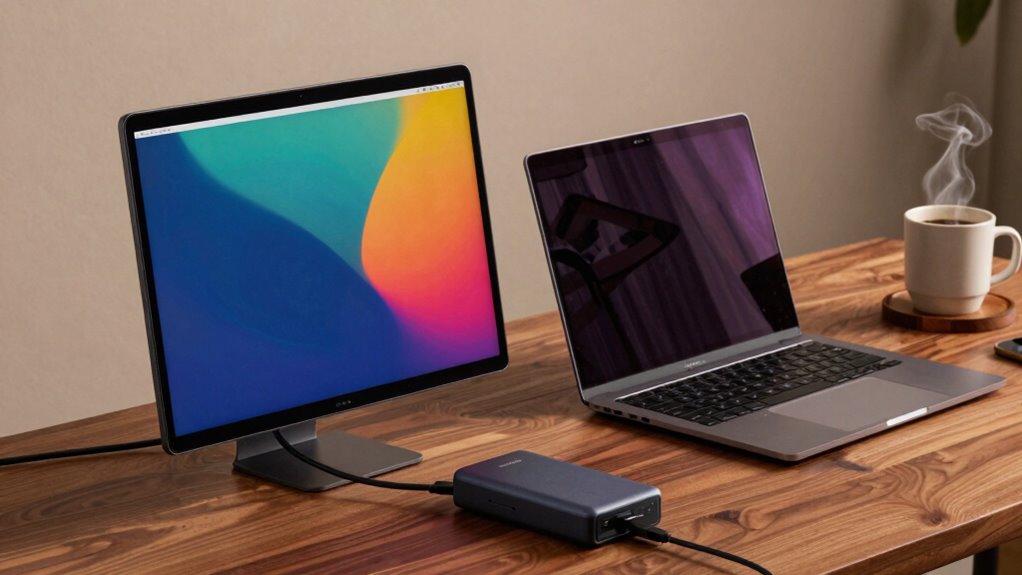
When you’re on the go, powering a portable monitor can feel like a juggling act. You’ve got a few battery options to keep things running smoothly. Many portable monitors use USB-C connections, drawing power from your laptop or an external battery pack. Alternatively, some come with their own rechargeable batteries, giving you flexibility. Just make sure to check the power sources available to you for a seamless experience.
What Is the Average Lifespan of a Portable Monitor?
The average lifespan of a portable monitor is around 3 to 5 years, depending on factors like screen durability and display technology. If you choose a monitor with quality materials and advanced tech, you might enjoy a longer lifespan. Regular care, like avoiding extreme temperatures and physical damage, can also help. Keep these factors in mind to guarantee your portable monitor serves you well throughout its life.
Can Portable Monitors Be Used for Gaming?
Absolutely, portable monitors can be used for gaming, but there’s a catch. If you’re looking for impressive gaming performance, you’ll want to guarantee the monitor has a high refresh rate and low response time. The resolution matters too; you’ll need a portable resolution that complements your gaming setup. Don’t settle for less, or you might miss out on those stunning graphics and smooth gameplay that make gaming truly immersive. Choose wisely!
Do Portable Monitors Come With Built-In Speakers?
Not all portable monitors come with built-in speakers. If sound performance is important to you, check the specifications before buying. While some models offer decent audio quality, most won’t match external speakers or headphones. If you plan to do more than just basic tasks, you might want to invest in additional audio equipment for a better experience. So, consider your needs carefully when choosing a portable monitor for your setup.
Conclusion
In the world of laptop editing, a portable monitor can dramatically enhance your workflow. Consider a graphic designer who often travels for client meetings. By using a portable monitor, they can easily showcase high-resolution designs and make real-time adjustments, ensuring their work stands out. Ultimately, investing in a quality portable monitor tailored to your needs can make all the difference, whether you’re editing videos, designing graphics, or simply multitasking on the go.