
Finding the best archive drives for long term footage storage involves balancing capacity, durability, and cost. The Western Digital 16TB WD Red Pro NAS stands out for its reliability in continuous use, making it ideal for archival needs. For portable yet fast options, the SanDisk Extreme PRO Portable SSD 4TB offers high transfer speeds and durability. The main tradeoffs in this category often revolve around choosing between cost-effective HDDs with larger capacities and more rugged, faster SSDs that come at a premium. Continue reading for a detailed breakdown of these options and what suits different long-term storage needs.
Key Takeaways
- High-capacity HDDs like the WD Red Pro and Seagate 22TB offer the best value for storing large footage libraries over years.
- SSD options, such as the SanDisk Extreme PRO, provide faster access and better resistance to environmental factors, but at a higher price per terabyte.
- Ruggedized drives like SanDisk ArmorATD and LaCie Rugged excel in durability, suitable for field use or environments with variable conditions.
- Capacity alone isn’t enough; consider drive longevity, firmware stability, and resistance to environmental hazards for long-term archives.
- Pricing varies significantly; balancing initial cost versus lifespan and reliability helps avoid costly data loss later.




More Details on Our Top Picks
Western Digital 16TB WD Red Pro NAS Internal Hard Drive HDD – 7200 RPM, SATA 6 Gb/s, CMR, 512 MB Cache
This WD Red Pro is the ideal choice for those seeking a reliable, high-capacity archive drive specifically optimized for NAS environments. Its 16TB capacity and 7200 RPM speed make it suited for storing extensive footage libraries, especially in multi-user or RAID setups. Compared to the SanDisk Extreme PRO, which offers faster transfer speeds but less overall capacity, this drive prioritizes durability and workload ratings, making it better for continuous long-term storage. The 550TB/year workload rating indicates excellent durability, but actual usable capacity may be slightly less due to formatting. It’s less portable and flexible than external SSD options like the Samsung T7, but excels in dedicated storage scenarios where reliability and capacity are paramount.
Pros:- High 16TB capacity ideal for extensive footage libraries
- Designed for 24/7 multi-user NAS environments
- Workload rating of 550TB/year ensures durability over time
Cons:- Actual user capacity may be less due to formatting overhead
- Performance depends on NAS system configuration
Best for: Large media archives in NAS or RAID environments requiring long-term, durable storage
Not ideal for: Individuals needing portable, high-speed transfers for on-the-go editing or small backups
- Capacity:16TB
- RPM:7200 RPM
- Interface:SATA 6 Gb/s
- Cache Size:512 MB
- Workload Rate:550TB/yr
- Technology:CMR (Conventional Magnetic Recording)
- Operating Temperature:40°C typical
Bottom line: This drive is best suited for long-term, multi-user NAS storage where capacity and durability outweigh portability.
Samsung T7 Portable SSD 2TB External Solid State Drive, Gray (MU-PC2T0T/AM)
The Samsung T7 offers impressive read/write speeds up to 1,050/1,000 MB/s, making it a top pick for fast, on-the-go footage transfers. Its compact, shock-resistant aluminum design ensures durability during frequent transport, surpassing traditional HDDs like the YOTUO External Drive, which offers only 1TB of storage and slower USB 3.0 speeds. While more expensive per gigabyte, the T7’s speed and portability make it ideal for editors and videographers who need quick access to footage in the field. However, the absence of built-in encryption and the need to buy a separate cable could be downsides for security-conscious users or those seeking all-in-one solutions.
Pros:- Ultra-fast transfer speeds up to 1,050 MB/s
- Compact, shock-resistant aluminum body
- Broad device compatibility, including mobile and gaming consoles
Cons:- Higher cost compared to traditional external HDDs
- No built-in encryption or password protection
Best for: Videographers and editors needing fast, portable storage for editing workflows in the field
Not ideal for: Long-term archival storage where cost per terabyte and physical size matter less than durability and capacity
- Capacity:2TB
- Speed (Read/Write):up to 1,050/1,000 MB/s
- Interface:USB 3.2 Gen 2
- Shock Resistance:Up to 6 feet
- Material:Aluminum unibody
- Compatibility:PC, Mac, Android, gaming consoles
Bottom line: This SSD is perfect for professionals requiring quick, portable access to footage but less ideal for static long-term archives.
Crucial X9 4TB Portable SSD, Up to 1050MB/s, USB 3.2 USB-C, External Solid State Drive – Black
The Crucial X9 combines high-speed data transfer up to 1050MB/s with rugged durability features like IP55 water/dust resistance and a drop-resistant design up to 2 meters. Unlike the Samsung T7, which is lighter and more portable, the X9 offers a larger 4TB capacity, making it suitable for those who need more storage in a portable form factor. Its compatibility with a broad array of devices and included software like Acronis True Image make it a flexible choice for backups and media management. However, it lacks built-in encryption, and the slightly larger size could be a drawback for users prioritizing ultra-compact devices.
Pros:- Fast transfer speeds up to 1050MB/s
- Robust IP55 weather/dust resistance and drop protection
- Includes backup and photo management software
Cons:- No integrated encryption for sensitive data
- Slightly larger and heavier than ultra-compact SSDs
Best for: Content creators and mobile editors needing a high-capacity, durable portable SSD for on-the-move workflows
Not ideal for: Those seeking a small, lightweight drive with minimal bulk for quick, short-term transfers
- Capacity:4TB
- Speed:Up to 1050MB/s
- Interface:USB 3.2
- Durability:IP55 water/dust resistance
- Drop Resistance:Up to 2 meters
- Compatibility:Windows, Mac, Android, gaming consoles
Bottom line: This drive offers a balanced mix of speed, durability, and capacity for mobile editing and backup needs, but isn’t the smallest option available.
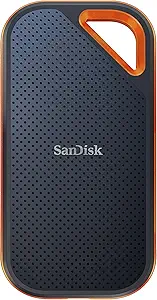
SanDisk 4TB Extreme PRO Portable SSD – Up to 2000MB/s Read/Write Speeds, USB-C & USB 3.2 Gen 2×2, IP65 Water/Dust Resistance – Black (SDSSDE81-4T00-G25)
The SanDisk Extreme PRO stands out for its blazing-fast transfer speeds up to 2000MB/s, making it ideal for large video files and frequent backups. Its IP65 rating offers excellent water and dust resistance, and the rugged aluminum chassis ensures durability during field use, surpassing many competitors like the Crucial X9 in raw speed. While it commands a higher price point, its performance and robustness justify the investment for those prioritizing rapid transfers and ruggedness over sheer capacity. The 5-year warranty provides added peace of mind for long-term storage.
Pros:- Outstanding transfer speeds up to 2000MB/s
- Rugged, heat-dissipating aluminum chassis
- IP65 water/dust resistance with 3-meter drop protection
Cons:- Higher price per terabyte compared to HDDs
- Potential heat during extended high-speed use
Best for: Professional videographers and editors needing ultra-fast, durable storage for ongoing projects and long-term archives
Not ideal for: Budget-conscious buyers or those needing massive capacities over speed and durability
- Capacity:4TB
- Read/Write Speeds:Up to 2000MB/s
- Interfaces:USB-C, USB 3.2 Gen 2×2
- Durability Rating:IP65 Water/Dust Resistance
- Drop Protection:Up to 3 meters
- Warranty:5-year limited
Bottom line: This SSD is best for high-speed, durable storage where quick access and field resilience are priorities, not budget or capacity alone.
YOTUO Portable External Hard Drive (1TB, Black)
The YOTUO 1TB external HDD offers a practical, cost-effective option for basic footage storage, with 7200 RPM spinning speed and USB 3.0 connectivity. Its silicone sleeve provides additional shock protection, making it more resilient than basic plastic enclosures like the standard external drives. When compared to larger-capacity SSDs like the Samsung T7 or Crucial X9, it falls short in speed and capacity but provides a simple, low-cost solution for those just starting to archive footage. Its 30-day return policy and limited warranty make it less appealing for critical long-term storage, but for casual users or temporary archives, it can serve as a secondary backup device.
Pros:- Affordable price point for entry-level storage
- Shock-resistant silicone sleeve enhances durability
- Compatible with multiple platforms including consoles
Cons:- Limited to 1TB capacity, insufficient for large archives
- Plastic enclosure may lack long-term durability
Best for: Budget-conscious users with moderate storage needs who want basic durability and decent transfer speeds
Not ideal for: Professionals requiring high-speed transfers or long-term archival reliability for large footage libraries
- Digital Storage Capacity:1TB
- Interface:USB 3.0 / USB Type C
- Rotational Speed:7200 RPM
- Data Transfer Rate:5 Gbps
- Form Factor:2.5-inch
- Warranty Policy:30-day Amazon return
Bottom line: This drive suits users needing a low-cost, basic storage solution, but is not recommended for critical long-term footage archives.
Seagate Expansion 22TB External Hard Drive HDD – USB 3.0, with Rescue Data Recovery Services (STKP22000400)
This Seagate Expansion drive stands out for its enormous 22TB capacity, making it ideal for archiving large amounts of footage without frequent upgrades. Its simple plug-and-play setup, compatible with both Windows and Mac, offers a seamless experience, especially compared to smaller drives like the WD 5TB My Passport Ultra, which may require more frequent management. The inclusion of Rescue Data Recovery Services adds peace of mind for long-term storage, but the drive’s lack of encryption or rugged features means it’s best kept in a controlled environment. Its USB 3.0 interface ensures fast transfers, yet it doesn’t support the newer USB-C standard, unlike the SanDisk ArmorATD, which might be a consideration for future-proofing. Overall, this drive balances capacity and ease of use but sacrifices some ruggedness and advanced security features.
Pros:- Massive 22TB storage capacity suitable for extensive archives
- Simple plug-and-play setup compatible with Windows and Mac
- Includes Rescue Data Recovery Services for added peace of mind
Cons:- Lacks rugged features for outdoor or harsh environments
- Does not support USB-C, limiting future compatibility options
Best for: Professionals needing substantial, reliable long-term footage storage with straightforward setup and recovery support.
Not ideal for: Field operators or outdoor crews who require ruggedized drives resistant to environmental stresses or shocks.
- Capacity:22TB
- Interface:USB 3.0
- Compatibility:Windows and Mac (reformatting required)
- Warranty:Limited, with Rescue Data Recovery
- Transfer Speed:Fast with USB 3.0
- Form Factor:Desktop
Bottom line: This drive is best suited for users prioritizing high capacity and recovery services over ruggedness or encryption.
WD 5TB My Passport Ultra, Blue, Portable External Hard Drive, backup software with defense against ransomware, and password protection, USB-C and USB 3.1 – WDBFTM0050BBL-WESN
The WD My Passport Ultra offers a sleek, portable design with 5TB of storage, making it suitable for users who need to move footage between locations. Unlike the Seagate, which emphasizes capacity, this drive focuses on security features, including password protection and ransomware protection, which are essential for safeguarding footage over long periods. Its USB-C and USB 3.1 interfaces support faster transfers than older USB 3.0 drives like the Seagate Expansion, but it’s limited in overall capacity compared to the 20TB WD Elements or the 22TB Seagate. This makes it better suited for smaller archives or on-the-go storage, not large-scale backups. The drive’s encryption and backup software are added benefits, yet the smaller capacity and higher price per TB could be downsides for extensive archives.
Pros:- Secure with password protection and ransomware defense
- Portable, lightweight design for easy transport
- Fast data transfer via USB-C and USB 3.1
Cons:- Limited to 5TB, less suitable for very large archives
- Higher cost per terabyte compared to larger drives
Best for: Content creators or archivists who prioritize data security and portability over sheer volume.
Not ideal for: Large-scale storage needs or long-term, unattended archiving where capacity and ruggedness matter more than security features.
- Capacity:5TB
- Interface:USB-C / USB 3.1
- Security:Password and ransomware protection
- Form Factor:Portable
- Warranty:3 years
- Transfer Speed:Fast via USB-C
Bottom line: Ideal for security-focused users with moderate storage needs who require portability and fast transfers.
Western Digital 10TB WD Red Plus NAS Internal Hard Drive HDD – 7200 RPM, SATA 6 GB/s, CMR, 512 MB Cache
This WD Red Plus drive is engineered for NAS systems, offering 10TB of reliable storage with a 7200 RPM speed, making it a solid choice for long-term footage archiving in business settings. Compared to external drives like the WD Elements, this internal HDD supports RAID configurations and continuous operation, ideal for multi-user environments. Its SATA interface and NASware firmware optimize it for 24/7 use, but it’s not suitable for portable applications, especially compared to rugged external options like the SanDisk ArmorATD. The higher rotational speed enhances data access times, yet the 3.5-inch form factor demands a dedicated NAS enclosure, increasing setup complexity and cost. It’s a strong choice for dedicated, always-on storage arrays but less so for mobile or rugged needs.
Pros:- High-capacity 10TB for extensive footage archives
- Optimized for NAS with 24/7 operation and RAID support
- Supports multi-bay NAS configurations
Cons:- Requires a desktop NAS enclosure, not portable
- Higher power consumption and less rugged than external drives
Best for: Small to medium-sized businesses utilizing NAS for long-term footage storage and sharing.
Not ideal for: Individuals needing portable storage or outdoor use, as it’s designed for internal NAS systems.
- Capacity:10TB
- Interface:SATA 6 Gb/s
- Rotational Speed:7200 RPM
- Cache:512 MB
- Workload Rate:Up to 180 TB/yr
- Form Factor:3.5-inch
Bottom line: Best suited for business environments with dedicated NAS systems needing reliable, continuous storage.
WD 20TB Elements Desktop External Hard Drive (USB 3.0, Plug-and-Play)
The WD 20TB Elements offers an enormous amount of storage for long-term footage archives, with the simplicity of USB 3.0 plug-and-play for Windows. Compared to the Seagate Expansion, which also offers large capacity, the WD drive’s straightforward setup and reliable performance make it a popular choice. However, it lacks advanced security features like encryption or built-in backup software, which are available on drives like the WD My Passport Ultra. Its desktop form factor provides stable, stationary storage, but it requires reformatting for Mac users, unlike the rugged SanDisk ArmorATD that offers more durability. For users prioritizing capacity and ease of access without the need for extra security, this drive fills the bill well.
Pros:- Massive 20TB capacity for extensive footage storage
- USB 3.0 interface supports fast data transfers
- Simple plug-and-play for Windows users
Cons:- No built-in encryption or backup software
- Reformatting needed for Mac compatibility
Best for: Archivists or editors who need large, accessible storage on a stable desktop setup for Windows environments.
Not ideal for: Users needing portable or rugged drives, or those requiring built-in security features.
- Capacity:20TB
- Interface:USB 3.0
- Compatibility:Windows (reformat for Mac)
- Form Factor:Desktop
- Transfer Speed:Fast with USB 3.0
- Warranty:Not specified
Bottom line: Best for users who need large, reliable desktop storage with straightforward access and no frills.
SanDisk Professional 5TB G-DRIVE ArmorATD Rugged External Hard Drive (USB-C, USB 3.2)
The SanDisk ArmorATD’s rugged design makes it stand out for fieldwork and outdoor storage, offering durability with an anodized aluminum enclosure. Compared to the WD 5TB My Passport Ultra, which emphasizes security and portability, the ArmorATD focuses on environmental resilience, making it ideal for long-term footage storage in variable conditions. Its USB-C and USB 3.2 interfaces deliver decent transfer speeds, though the 5400 RPM rotational speed might result in slower data access compared to higher-RPM drives like the WD Red Plus. It’s also reformatting-reliant for Windows, similar to other external drives, and lacks built-in backup software, but its durability outweighs these drawbacks for outdoor or harsh environment use. This drive makes the most sense for users who need a rugged, portable archive option.
Pros:- Durable aluminum enclosure resistant to shocks, dust, and water
- Cross-platform compatibility (macOS and Windows)
- USB-C and USB 3.2 support for fast transfer speeds
Cons:- 5400 RPM may be slower than higher-RPM drives
- Requires reformatting for Windows, no built-in backup software
Best for: Field operators or outdoor production teams requiring durable, portable long-term storage.
Not ideal for: Indoor-only users or those seeking maximum speed, as the RPM is relatively modest.
- Capacity:5TB
- Interface:USB-C / USB 3.2
- Data Transfer Rate:135 Mbps
- Enclosure Material:Aluminum
- Rotational Speed:5400 RPM
- Warranty:3 years
Bottom line: This drive is a prime choice for outdoor or rugged environments where durability is more important than raw speed.
SanDisk Professional 12TB G-Drive Project – External HDD, Thunderbolt 3, USB (10Gbps), 7200RPM Ultrastar Hard Drive, Up to 250MB/s Read
This drive stands out for combining substantial 12TB capacity with enterprise-grade reliability, making it an ideal choice for long-term footage storage. Its 7200RPM Ultrastar hard drive inside ensures durability over years of use, particularly when compared with the more portable but less robust LaCie Rugged. The inclusion of Thunderbolt 3 and USB 3.1 compatibility offers versatile high-speed transfers, though the drive’s size and weight make it less suitable for frequent field use. The optional PRO-BLADE SSD Mag slot adds performance flexibility, but at an extra cost. Overall, this model is best suited for professionals needing dependable, high-capacity archival storage that remains stationary. It trades off portability for long-term peace of mind, backed by a five-year warranty.
Pros:- High capacity of 12TB for extensive footage archives
- Enterprise-grade Ultrastar HDD ensures durability and reliability
- Fast transfer speeds up to 250MB/s with Thunderbolt 3 and USB 3.1
Cons:- Heavy and bulky, less suitable for frequent movement
- Higher price point compared to consumer-grade drives
- No built-in SSD, so performance for editing is limited
Best for: Video editors and media professionals requiring a large, reliable archive for long-term footage storage in a stationary setup.
Not ideal for: Field operators or on-the-go creators who need lightweight, portable drives for frequent transport and quick access.
- Digital Storage Capacity:12 TB
- Hard Disk Interface:Thunderbolt, USB
- Rotational Speed:7200 RPM
- Read Speed:250 MB/s
- Form Factor:3.5-inch
- Warranty:5 years
Bottom line: This drive is best for professionals seeking a dependable, high-capacity archive that stays in one location over years.
LaCie 5TB Rugged USB-C Portable Hard Drive
The LaCie Rugged 5TB excels in durability, making it a prime choice for footage stored in environments with potential physical hazards. Its resistance to drops up to 1.2 meters, rain, and bumps outperforms typical portable drives like the Maxone 500GB, which lacks rugged features. While its 5TB capacity is smaller, its portability and rugged build make it ideal for on-set or location work. The USB-C support ensures fast connectivity with modern Macs and Windows devices, though it does not include a USB-C power supply, relying solely on bus power. The drive’s ruggedness means it sacrifices some weight and size but guarantees peace of mind in challenging conditions. Best suited for on-location footage and field operators.
Pros:- Rugged design with drop, water, and shock resistance
- Supports USB-C for fast data transfer
- Compact and lightweight for easy transport
Cons:- Limited to 5TB capacity, less suitable for extensive archives
- Higher cost per GB due to rugged features
- No included power adapter, relies on bus power
Best for: Filmmakers and videographers who need a tough, portable drive for field recording and immediate transport.
Not ideal for: Users needing large, high-capacity storage for stationary long-term archiving, as its capacity is limited to 5TB.
- Digital Storage Capacity:5 TB
- Hard Disk Interface:USB-C
- Drop Resistance:Up to 1.2 meters
- Water Resistance:IP65
- Form Factor:Portable
- Warranty:Not specified
Bottom line: Best for fieldwork and environments where physical durability outweighs capacity needs.
SANDISK 1TB Extreme Portable SSD – Up to 1050MB/s, USB-C, USB 3.2 Gen 2, IP65 Water and Dust Resistance
This 1TB SSD offers blistering speeds up to 1050MB/s, making it suitable for immediate footage review and quick backups, contrasting with larger but slower HDD options like the SanDisk G-Drive. Its small, lightweight design combined with IP65 water and dust resistance makes it ideal for on-the-fly storage during shoots, though its capacity is limited for long-term archive purposes. The included password protection and rugged build enhance security and durability, but the smaller capacity may require additional drives for extensive footage. This model is perfect for users who need fast, portable access to footage in challenging environments but not as their primary long-term storage solution.
Pros:- Fast NVMe performance with up to 1050MB/s speeds
- Compact, lightweight, and rugged IP65-rated design
- Hardware encryption for content security
Cons:- Limited capacity makes it unsuitable for extensive archives
- Higher cost per GB compared to HDDs
- No built-in backup features
Best for: Cinematographers and field editors needing fast, portable storage with rugged protection for dynamic shooting conditions.
Not ideal for: Long-term footage storage where large capacity and stationary reliability are priorities, as it is limited to 1TB.
- Digital Storage Capacity:1 TB
- Read Speed:1050 MB/s
- Water and Dust Resistance:IP65
- Form Factor:External SSD
- Connectivity:USB-C
- Warranty:Not specified
Bottom line: Ideal for quick, durable access to footage in field conditions, but not for long-term archival storage.
Maxone 500GB Ultra Slim External Hard Drive (Charcoal Grey)
The Maxone 500GB drive offers a highly portable and slim profile, making it a good secondary storage option for small projects or quick transfers. Its aluminum body adds durability, but it falls short for long-term footage storage due to its limited 500GB capacity compared to larger drives like the SanDisk G-Drive or LaCie Rugged. Its USB 3.0 interface provides decent speeds for short-term use, though it lacks the ruggedness or high capacity needed for extended archives. This drive is best suited for users with minimal footage, or those who need an easy-to-carry backup for immediate projects.
Pros:- Ultra-slim and lightweight for portability
- Durable aluminum casing
- Plug-and-play with no software needed
Cons:- Limited to 500GB capacity, insufficient for large projects
- No USB-C port included, limiting compatibility with newer devices
- Only compatible with Windows, restricting cross-platform use
Best for: Independent filmmakers or hobbyists with small footage libraries needing portable, budget-friendly storage.
Not ideal for: Professionals with large, long-term footage archives requiring substantial capacity and rugged durability.
- Capacity:500GB
- Interface:USB 3.0
- Material:Aluminum
- Form Factor:Ultra Slim
- Compatibility:Windows
- Warranty:3 years
Bottom line: Best for small-scale, portable storage needs where budget and size are the main concerns.
ADATA HD710 Pro 2 TB External Hard Drive
The ADATA HD710 Pro offers a compelling combination of 2TB capacity and rugged features, surpassing many standard drives like the SanDisk Extreme in durability. Its military-grade shock resistance (MIL-STD-810G 516.6), IP68 waterproof, and dustproof ratings make it ideal for footage stored in harsh environments. Although it is heavier and more expensive than typical portable drives, its cross-platform compatibility with Mac, PC, and Linux makes it versatile for various workflows. The triple-layered construction provides peace of mind during outdoor shoots or in extreme conditions, albeit at the expense of added weight and size. This drive is best for users who need reliable, large-capacity storage for challenging environments, not casual or stationary use.
Pros:- Militarized shock resistance and waterproof/dustproof ratings
- Large 2TB capacity suitable for long-term archives
- Cross-platform compatibility with Mac, Windows, and Linux
- Triple-layered rugged construction
Cons:- Heavier and bulkier than consumer drives
- Higher price compared to standard portable drives
- Less sleek, more conspicuous for discreet storage
Best for: Outdoor videographers and field crews needing durable, large-capacity storage for extreme conditions.
Not ideal for: Indoor or stationary users who do not require rugged features, as it is bulkier and pricier than standard drives.
- Capacity:2 TB
- Waterproof Rating:IP68
- Shock Resistance:MIL-STD-810G 516.6
- Interface:USB 3.1
- Material:Triple-layered rugged
- Compatibility:Mac, PC, Linux
Bottom line: This drive is ideal for demanding outdoor environments needing durable, high-capacity storage that withstands extreme conditions.

How We Picked
The products in this roundup were evaluated based on a combination of capacity, durability, transfer speeds, build quality, and proven long-term reliability. Drives intended for archival use must not only hold large volumes of footage but also resist environmental factors and data degradation over time. We prioritized drives with proven track records, reputable manufacturers, and features that enhance data safety, such as encryption and rugged designs. The ranking reflects a balance between cost-effectiveness and premium features, ensuring options for different user needs and budgets.Factors to Consider When Choosing Best Archive Drives For Long Term Footage Storage
Choosing the best archive drive for long-term footage storage requires understanding several key factors. Capacity is fundamental, but so are durability, environmental resistance, and transfer speeds. The right decision depends on whether the drive will be stored in a controlled environment or used in the field. Additionally, consider the drive’s longevity and warranty, which are signs of manufacturer confidence and product durability. Balancing cost with these features can prevent costly data loss or drive failure years down the line.Capacity and Scalability
Long-term footage storage needs can quickly outgrow initial capacity, so selecting a drive with ample space is essential. Drives like 16TB or larger HDDs provide cost-effective solutions for large libraries, but they may lack portability. Consider future growth; choosing a drive with a higher capacity than current needs can prevent frequent upgrades. However, larger drives might come with increased risk of failure for a single point of storage, so redundancy or multiple drives might be necessary for critical archives.
Durability and Environmental Resistance
Archival drives often sit in storage for years, making durability a key factor. Rugged drives like SanDisk ArmorATD or LaCie Rugged are designed to withstand drops, dust, and water, making them suitable for field or off-site storage. For drives kept in stable environments, standard HDDs with good build quality can suffice. Always check for features like shock resistance, IP ratings, and thermal stability, especially if the drive may be exposed to varying conditions.
Performance and Transfer Speeds
While transfer speed might seem less critical for long-term storage, faster drives can save time during initial data transfer or periodic backups. SSDs like Crucial X9 or SanDisk Extreme PRO deliver high speeds, reducing wait times and improving workflow. HDDs, on the other hand, are slower but typically offer higher capacities at lower prices. Consider your workflow; if frequent access or large data transfers are expected, investing in faster SSDs could be worthwhile.
Long-Term Reliability and Manufacturer Support
Data longevity depends heavily on drive quality and manufacturer reputation. Drives with CMR (Conventional Magnetic Recording) technology tend to last longer and have more stable data retention than SMR variants. Reputable brands like Western Digital and Seagate provide warranties and support that reassure users about long-term viability. Evaluating user reviews and historical performance data can reveal potential failure patterns or firmware issues that could jeopardize footage years later.
Cost and Value
Pricing varies widely, with large-capacity HDDs often offering the best per-terabyte value, while SSDs carry a premium for speed and durability. For long-term archives, cost-effective HDDs like the WD Red Pro or Seagate Expansion are appealing, but they may require more careful handling. Investing in drives with longer warranties or rugged features can reduce future replacement costs. Always weigh initial expenditure against potential data recovery or replacement costs in case of failure.
Frequently Asked Questions
Are SSDs suitable for long-term footage storage?
SSDs can be suitable for long-term storage if they are stored properly and used within their specified lifespan. They offer faster access speeds and resistance to physical shocks, which can be beneficial for field use or quick retrieval. However, SSDs generally have a shorter data retention period without power compared to HDDs—often around 1-3 years—unless they are monitored and maintained. For truly archival purposes over many years, combining SSDs with regular data checks or using them for active projects and migrating to HDDs for long-term storage might be the best approach.
Is capacity more important than durability for long-term footage storage?
While large capacity is essential for storing extensive footage libraries, durability should not be overlooked. A drive that fails prematurely can lead to catastrophic data loss, making durability and environmental resistance critical for archival drives. Opting for a slightly smaller but more robust drive can provide peace of mind, especially if the footage is irreplaceable. Ideally, a multi-layered approach—using high-capacity drives stored in protected environments—can balance both needs effectively.
How often should I check or update my archived footage?
Periodic checks are recommended, ideally every 1-2 years, to verify data integrity and ensure drives are functioning properly. This process involves copying data to new storage if signs of degradation appear or if the drive shows signs of failure. Regularly updating firmware and maintaining proper environmental conditions—cool, dry, and stable—also help prolong drive lifespan. Long-term storage isn’t passive; proactive maintenance can prevent unexpected data loss.
Should I invest in a RAID setup for long-term footage storage?
RAID configurations can add redundancy, protecting against individual drive failures, which is valuable for critical footage. However, RAID is not a substitute for regular backups, as it doesn’t protect against data corruption, theft, or physical disasters. For long-term archives, combining RAID with off-site backups or cloud storage provides a more comprehensive approach. Keep in mind that RAID setups are more complex and may require ongoing maintenance and monitoring.
What’s better for long-term storage: internal or external drives?
Both have their merits; internal drives often offer better longevity and cooling, while external drives provide portability and ease of access. For long-term, stationary storage, internal drives like NAS HDDs are typically more reliable and cost-effective. External drives, especially ruggedized models, are suitable for field use or off-site storage but may be more vulnerable to physical damage. Choosing the right type depends on your specific storage environment and whether mobility or stability is more important.
Conclusion
For most users, the Western Digital 16TB WD Red Pro NAS offers a reliable, high-capacity solution suited for long-term, stable storage. Those prioritizing speed and environmental resilience might lean toward the SanDisk Extreme PRO Portable SSD 4TB, ideal for quick access and field use. Budget-conscious buyers should consider large-capacity HDDs like the Seagate 22TB External Hard Drive, which deliver value over time. For beginners or less frequent archiving, rugged portable drives such as LaCie Rugged provide durability without complexity. Ultimately, matching your storage environment, footage volume, and budget will ensure your footage remains safe for years to come.