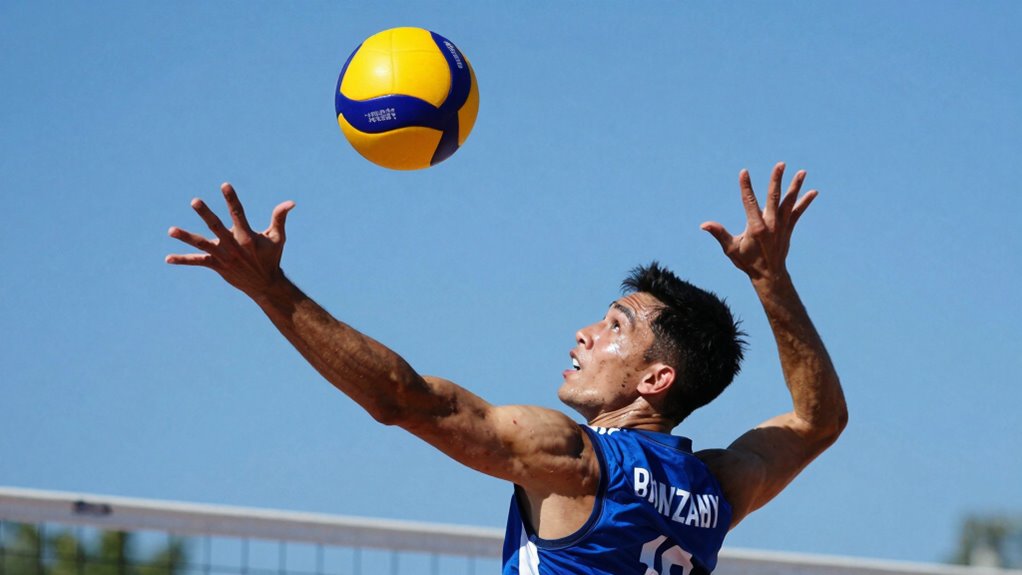

To capture great volleyball shots, focus on understanding game flow and anticipating key moments like spikes or blocks. Position yourself strategically around the court, and use a fast lens with a wide aperture to stay sharp in indoor lighting. Keep an eye on players’ body language for cues, and stay patient and alert for fleeting action. By practicing these techniques, you’ll improve your shots and discover even more tips to elevate your volleyball photography skills.

Get sports gear delivered free with Prime
- Fast, free delivery on millions of items
- Prime Video, Amazon Music and more included
- Member-only deals all year
Key Takeaways
- Anticipate plays by monitoring player body language and court flow for better timing and positioning.
- Use fast lenses (f/2.8 or lower) and high burst mode for sharp, dynamic shots indoors.
- Position strategically, behind the action or at angles, to capture diverse and compelling perspectives.
- Adjust camera settings quickly based on court lighting to ensure clear, well-exposed images.
- Practice patience and study game rhythm to anticipate key moments and improve shot accuracy.
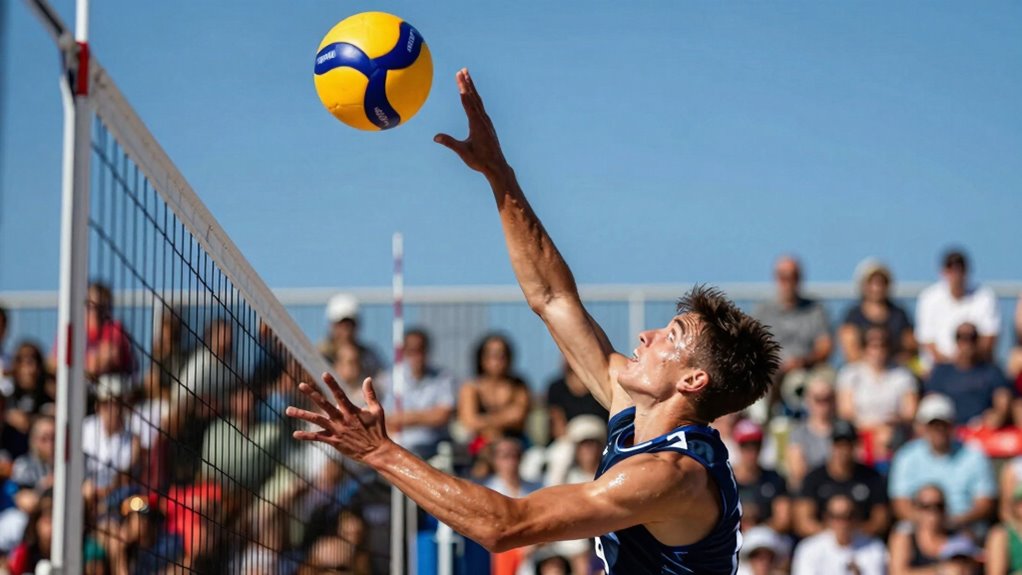
Capturing dynamic volleyball moments requires more than just a good camera; it demands technique and anticipation. The game moves fast, and to freeze those split-second actions, you need to understand where players are likely to be and how they move. Player positioning plays an essential role in your ability to get the shot. Position yourself strategically around the court—ideally behind the action or at a slight angle—so you can anticipate the hitter’s approach and the setter’s setup. Watch the players’ body language and the flow of the game to predict where the ball will go. This foresight allows you to be ready for the spike, block, or dig, giving you the edge in capturing those high-energy moments. Your equipment selection also makes a big difference. Use a fast lens with a wide aperture—something like f/2.8 or lower—that lets in plenty of light and helps you shoot sharply even in indoor settings where lighting can be tricky. A camera with a high burst rate or continuous shooting mode is essential so you can take multiple shots in quick succession. This increases your chances of snagging that perfect spike or block at just the right moment. Consider using a telephoto zoom lens, such as a 70-200mm, to get close-up shots from a reasonable distance, especially if you’re shooting from the sidelines. A sturdy, lightweight tripod or monopod can help stabilize your shots during long sessions, but be ready to switch to handheld if the game gets intense and fast-paced. Additionally, understanding the game’s rhythm and how players typically move can help you better anticipate plays and improve your timing. Developing a familiarity with the game’s pace enables you to react more quickly to unfolding plays. To further enhance your shots, study the players’ positioning and movements during different plays, which can provide valuable clues for capturing decisive moments. In terms of player positioning, don’t just stand in one spot—move around to find the best angles. Position yourself near the net for close-up action during spikes and blocks, and move to the sides for more dynamic angles that showcase the entire court. Pay attention to the court’s lighting and adjust your settings accordingly. Sometimes you might need to bump up your ISO or close your aperture slightly if the gym’s lighting is dim. Pre-focus on key areas of the court where action is predictable, so you’re ready when the play unfolds. Remember that lighting conditions can vary greatly between venues, so being adaptable with your camera settings is crucial. Incorporating practice and patience into your approach will help you refine your skills and better capture those fleeting moments. Ultimately, the right combination of player positioning and equipment selection will help you capture those unforgettable volleyball moments. Be patient, stay alert, and keep practicing your timing and settings. The more you understand the game’s rhythm and equip yourself properly, the better your shots will become. With each game, you’ll learn to anticipate plays more accurately and improve your ability to freeze the game’s most electrifying action.
fast aperture telephoto lens for sports photography
As an affiliate, we earn on qualifying purchases.
As an affiliate, we earn on qualifying purchases.
Frequently Asked Questions
What Camera Settings Are Best for Fast-Moving Volleyball Action?
For fast-moving volleyball action, you should set your camera to a fast shutter speed, around 1/1000 second, to freeze motion. Use aperture control to select a wide aperture (like f/2.8 or f/4) for a good depth of field. Adjust ISO settings higher, such as 800 or 1600, especially in indoor gyms, to guarantee proper exposure. These settings help capture sharp, well-lit images of rapid volleyball plays.
How Do I Capture Emotion and Expression During Matches?
Think of capturing emotion like catching a fleeting star—quick but precious. You focus sharply on the player’s eyes, the window to their soul, to tell their story. Use a fast shutter to freeze intense moments, and anticipate key plays. Keep your camera ready to catch raw expressions and player focus, turning each shot into an emotional storytelling masterpiece that resonates with viewers and brings their passion to life.
What Lenses Are Ideal for Volleyball Photography?
You should use a fast telephoto lens, like a 70-200mm f/2.8, to capture volleyball action sharply. Consider lighting conditions; a lens with wide apertures helps in low-light settings. Keep your equipment well-maintained and clean to avoid missed shots. This lens allows you to focus quickly on fast-moving players and get close-up shots of intense moments, ensuring you make the most of varying lighting and match conditions.
How Can I Avoid Motion Blur in Fast Plays?
To avoid motion blur during fast plays, you should use lighting techniques like increasing your shutter speed to at least 1/1000 sec, ensuring sharp images. Additionally, equip yourself with equipment accessories such as a monopod for stability and fast lenses with wide apertures to let in more light. These strategies help freeze quick movements, giving you crisp, clear volleyball action shots even in challenging lighting conditions.
What Are the Best Angles for Dynamic Volleyball Shots?
For dynamic volleyball shots, you’ll want to explore angles that capture the energy of the game. Shooting from the sidelines offers a great view of the action, while low angles from the sand courts can emphasize player focus and movement. Try positioning yourself near the net or slightly behind the court to catch those explosive plays. Play with perspective to showcase the intensity and athleticism that make volleyball so exciting.
As an affiliate, we earn on qualifying purchases.
Conclusion
Mastering volleyball photography is like catching lightning in a bottle—you need patience, practice, and a keen eye. Keep experimenting with your settings, anticipate the action, and stay ready to freeze those explosive moments. Remember, every shot is a step closer to capturing the perfect spike or save. With dedication, you’ll turn your camera into a magnet for mesmerizing volleyball images. So go out there and let your passion illuminate every frame you click!
As an affiliate, we earn on qualifying purchases.
indoor volleyball photography camera settings
As an affiliate, we earn on qualifying purchases.
As an affiliate, we earn on qualifying purchases.
NFL season / tailgating Picks
team gear
As an affiliate, we earn on qualifying purchases.