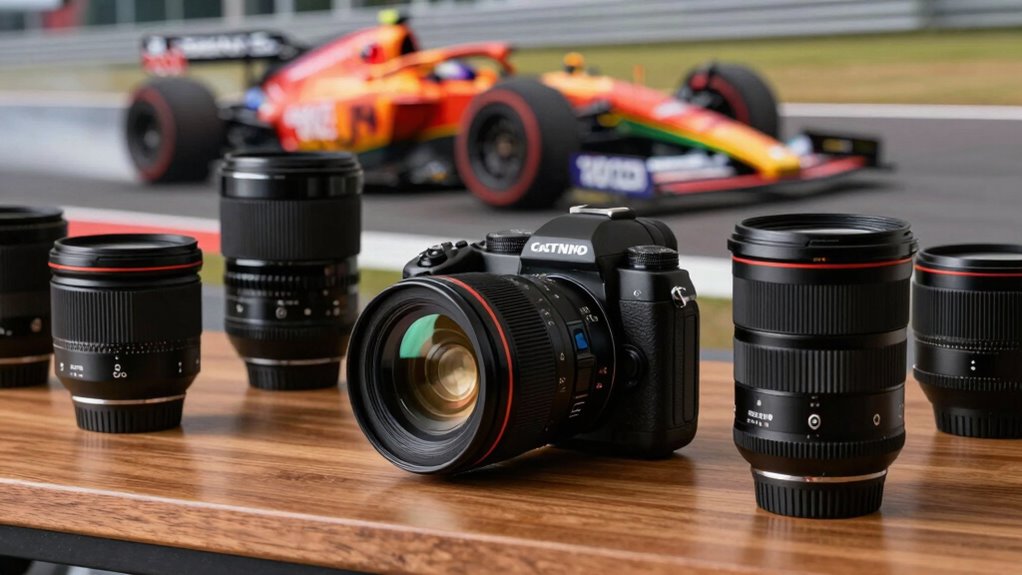

When comparing lenses for motorsport photography, focus on telephoto options for intimacy with the action and zoom lenses for flexibility. Look for wide apertures to capture details in low light and fast shutter speeds for freezing motion. Stabilization features are essential for crisp images of fast-moving subjects. Weigh these factors to find the right balance for your needs. Keep exploring, and you’ll discover tips to elevate your motorsport photography even further.
Key Takeaways
- Prioritize telephoto lenses for isolating fast-moving subjects and enhancing image intensity in motorsport photography.
- Consider zoom lenses for their adaptability, allowing quick focal length adjustments in dynamic racing environments.
- Choose lenses with wider apertures to improve low-light performance and achieve beautiful bokeh effects.
- Look for built-in stabilization features to minimize blur and ensure sharp images while tracking high-speed vehicles.
- Balance telephoto advantages, zoom flexibility, and aperture size for optimal results in capturing thrilling motorsport moments.

When you’re capturing the thrill of motorsport, choosing the right lens can make all the difference. You want to guarantee your shots convey the speed, excitement, and energy of the event. In this fast-paced environment, understanding the telephoto advantages can elevate your photography markedly. A telephoto lens allows you to get up close to the action without physically being there, isolating your subject and creating stunning images that highlight the intensity of the race.
But don’t overlook the zoom versatility that a good lens can offer. With a zoom lens, you can quickly adjust your focal length, adapting to the unpredictable nature of motorsport. Vehicles can zip by at high speeds, and having the ability to zoom in or out gives you the flexibility to capture different angles and perspectives. Whether you’re shooting from the grandstand or the pit lane, this adaptability can be vital in making sure you don’t miss that perfect moment.
Aperture importance is another key factor you need to take into account when selecting a lens. A wider aperture lets in more light, which is particularly beneficial during evening races or in overcast conditions. This can help you achieve a fast shutter speed, effectively freezing the action in your images. A lens that offers a low f-stop number will also allow for that beautiful bokeh effect, making your subjects stand out against a blurred background. This adds depth and drama, bringing your photos to life. Additionally, lenses with wider apertures often have better low-light performance, which can be crucial in challenging lighting conditions.
Stabilization benefits shouldn’t be underestimated either. Many modern lenses come with built-in stabilization features, which can be invaluable when you’re trying to shoot handheld. The vibrations and movements of your own body can lead to blurry images, especially at slower shutter speeds. With stabilization, you can increase your chances of getting sharp, clear shots, even when you’re tracking fast-moving vehicles. Additionally, understanding lens stabilization technology can help you choose the best equipment for your needs. Incorporating advanced stabilization technology can further improve your ability to capture crisp images in dynamic environments. Furthermore, choosing a lens with optical stabilization can significantly enhance image quality in challenging conditions.
Ultimately, comparing lenses for motorsport photography requires you to weigh these factors carefully. Look for a telephoto lens with good zoom versatility, a wide aperture, and excellent stabilization. By focusing on these aspects, you’ll be better prepared to capture the exhilarating moments that define motorsport. It’s all about finding the right balance to enhance your photography and guarantee those high-speed moments are immortalized in stunning detail. Remember that the right lens can transform your images from good to extraordinary, so take your time, do your research, and let your passion for motorsport drive your lens selection.

MIAO LAB 28X HD Telephoto Lens for iPhone/Samsung/Android | High Power Telephoto Camera Lens, Universal Smartphone Compatibility
Upgraded 28x Telephoto Lens for Smartphones: Overcome your phone's distance limitations with high-resolution 28x telephoto lens, delivering crisp…
As an affiliate, we earn on qualifying purchases.
As an affiliate, we earn on qualifying purchases.
Frequently Asked Questions
What Focal Length Is Best for Capturing Fast-Moving Cars?
For capturing fast-moving cars, a focal length between 70mm and 200mm is your best bet. This range lets you zoom in on the action while maintaining a good distance, which is essential for safety and stability. When making your lens choice, consider a fast aperture to freeze motion and achieve sharp images. Ultimately, the right focal length helps you capture the thrill of motorsport in stunning detail, so choose wisely!
Are Prime Lenses Better Than Zoom Lenses for Motorsport?
If you’re at a motorsport event like the Monaco Grand Prix, you might find that prime lenses offer sharper images and better low-light performance, giving you an edge in capturing those fast cars. However, zoom lenses provide flexibility, allowing you to quickly adjust your framing without moving. While prime lens advantages are undeniable, the zoom lens flexibility can be invaluable in dynamic situations. Ultimately, it depends on your style and shooting conditions.
How Important Is Lens Stabilization for Motorsport Photography?
Lens stabilization is essential for motorsport photography. It helps you capture sharp images, especially when you’re tracking fast-moving subjects. If you’re using a lens type that lacks stabilization, you might struggle with motion blur, even with fast autofocus speeds. A stabilized lens allows you to shoot at slower shutter speeds without sacrificing image clarity, making it easier to get those dynamic shots you’re aiming for. Prioritize stabilization for the best results!
What Weather Conditions Affect Lens Performance in Motorsport?
Weather conditions like rain, fog, and extreme heat can markedly affect your lens performance in motorsport. Moisture can degrade image quality and interfere with lens coatings, while fog reduces visibility and can slow autofocus speed. Additionally, high temperatures may impact lens durability, causing components to expand or contract. For the best results, consider these elements when choosing your gear, ensuring it can withstand various conditions on the track.
Can I Use a Smartphone for Motorsport Photography Effectively?
Yes, you can use a smartphone for motorsport photography effectively, but it has its limitations. While smartphones can capture decent images, they often struggle with fast-moving subjects and low light conditions, impacting image quality. Additionally, the smaller lens size limits zoom capabilities. To improve your shots, use burst mode, steady your hand, and explore editing apps to enhance the final images. Just remember, a dedicated camera will generally outperform a smartphone in this setting.

NEEWER Macro Lens Compatible with DJI Osmo Nano/Action 5 Pro/Action 4, 2X Magnification, 2 Elements in 1 Group, 3-4cm Focal Distance, Close Up Photography Accessories, Not Waterproof, LS-68
【For Nano/Action 5 Pro/Action 4】 Compatible with DJI Osmo Nano, Action 5 Pro, and Action 4. Also works…
As an affiliate, we earn on qualifying purchases.
As an affiliate, we earn on qualifying purchases.
Conclusion
Choosing the right lens for motorsport photography is like picking the perfect tool from a toolbox; each one has its own strengths and weaknesses. With the right lens, you’ll capture the adrenaline and speed with stunning clarity. Remember to take into account factors like focal length, aperture, and stabilization to elevate your shots. So gear up, trust your instincts, and let your creativity race ahead—your perfect shot is just a click away!

Xenvo Pro Lens Kit for iPhone and Android, Macro and Wide Angle Lens with LED Light and Travel Case Black
✔ COMPATIBLE WITH ALL SMARTPHONES, TABLETS, and LAPTOPS including ALL iPhone models, Samsung Galaxy and Note, Google Pixel,…
As an affiliate, we earn on qualifying purchases.
As an affiliate, we earn on qualifying purchases.

Canon RF70-200mm F2.8 L is USM Lens, Mirrorless Telephoto Zoom Lens, Compatible with EOS R Series APS-C and Full-Frame Cameras, Image Stabilization, Landscape and Sports Photography, White
High image quality and bright f/2.8 aperture telephoto zoom RF L lens.
As an affiliate, we earn on qualifying purchases.
As an affiliate, we earn on qualifying purchases.