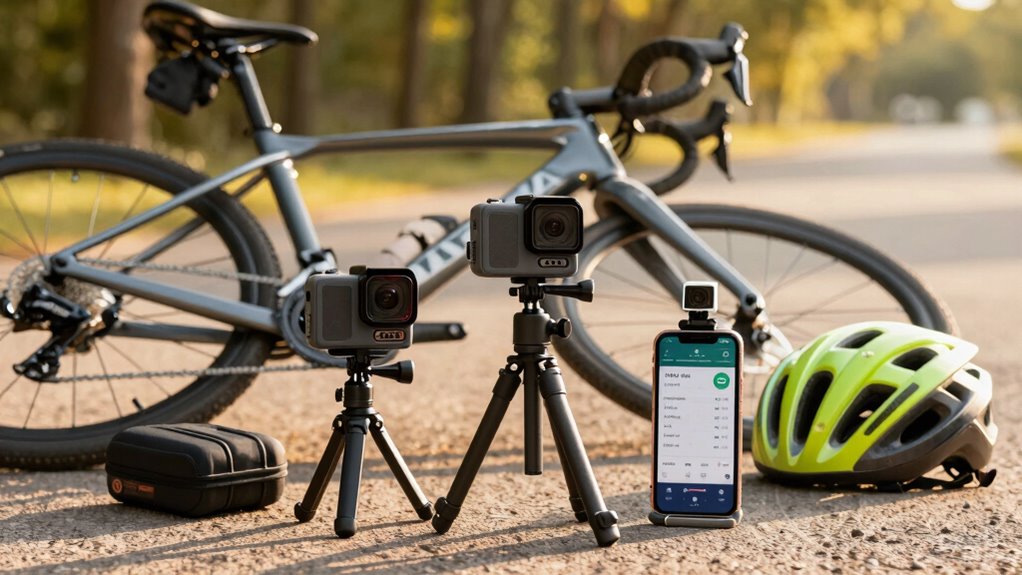

Before you buy a bike camera setup, you should consider the type of camera that fits your needs. Action cameras are great for their compactness and durability, while mirrorless or DSLR options provide higher video quality. Make certain you have secure mounting options to prevent wobbling, and aim for a minimum resolution of 1080p. Check battery life and user feedback on durability too. There’s more to explore about features that can make your footage truly shine.

Get sports gear delivered free with Prime
- Fast, free delivery on millions of items
- Prime Video, Amazon Music and more included
- Member-only deals all year
Key Takeaways
- Assess the camera type based on your needs: choose action cameras for durability or mirrorless/DSLR for higher quality cinematic shots.
- Ensure mounting options are secure and versatile to capture various angles without wobbling or falling.
- Opt for at least 1080p resolution, with 4K support and stabilization features for smooth footage on rough terrain.
- Consider battery life, looking for robust batteries and options for external power or charging while recording.
- Read user feedback focusing on performance, durability, and budget to find the best value for your requirements.

Whether you’re capturing stunning landscapes or documenting your latest ride, having the right bike camera setup can make all the difference. Before you engage in a purchase, it’s essential to know what to check to guarantee you’re making a wise investment. Start with the camera types available. Action cameras are popular for their compact size and durability, while mirrorless or DSLR cameras offer higher video quality but can be bulkier. Depending on your needs, you’ll want to weigh the pros and cons of each type.
Next, consider the mounting options. You’ll want a camera that can securely attach to your bike without wobbling or falling off during your ride. Look for versatile mounts that allow you to position the camera in various angles, giving you the flexibility to capture both wide shots and close-ups. A good mounting solution can enhance your footage considerably. Additionally, ensure the mounting system is compatible with your camera’s weight and size to prevent any issues during extended use.
Video quality is another essential factor. Check the camera’s resolution and frame rates. You’ll want at least 1080p for decent quality, but if you’re aiming for cinematic shots, consider a model that supports 4K. Along with resolution, pay attention to stabilization features. You’ll appreciate a camera that minimizes shakiness, especially when you’re biking on rough terrain.
Battery life can’t be overlooked either. If you’re planning long rides or multi-day trips, verify that the camera has a robust battery that lasts through your adventures. Some cameras offer replaceable batteries, which can be a game-changer if you’re out for an extended period. Also, look into whether the camera supports external power sources or charging while in use to extend your recording time.
After you’ve narrowed down your choices, look into user reviews. Real-world feedback from other cycling creators can provide insights that specs alone can’t. Pay attention to comments about video quality, durability, and ease of use.
Additionally, understanding the different camera types available helps you choose the best fit for your cycling content. Knowing the latest features in camera technology can also help you make a more informed decision.
Lastly, budget considerations are key. While it’s tempting to go for the latest model, consider what features you need most. There are plenty of affordable options that still offer excellent video quality and decent stabilization features. Don’t forget that you may also need editing software to polish your videos after filming. Some cameras come bundled with basic editing tools, which can be a bonus.
With these factors in mind, you can confidently choose a bike camera setup that meets your needs and enhances your cycling content.
bike action camera with 4K video
As an affiliate, we earn on qualifying purchases.
As an affiliate, we earn on qualifying purchases.
Frequently Asked Questions
What Is the Ideal Resolution for Bike Camera Footage?
The ideal resolution for bike camera footage is 1080p, as it balances quality and file size well. Aim for a frame rate of at least 60fps to capture smooth motion during your rides. If you’re often cycling in low light, consider a camera with great low light performance; this guarantees your footage remains clear and vibrant, even when the sun sets. Prioritizing these features will elevate your cycling videos considerably.
How Do I Mount a Camera Securely on My Bike?
To mount a camera securely on your bike, consider that 70% of cyclists report improved footage with stable mounts. Look into various mounting options like handlebar or helmet mounts to guarantee camera stability. Use robust straps or clamps for added security, and always test the setup before your ride. By securing a solid mount, you’ll capture smoother, clearer footage, enhancing your cycling adventures and sharing experiences with others.
Can I Use My Phone as a Bike Camera?
Yes, you can use your phone as a bike camera! For great smartphone stability, invest in a reliable mount to keep it secure while you ride. Most smartphones offer decent lens options, so you can capture wide-angle shots or close-ups. Just make sure your phone’s battery is charged, and consider using a camera app that enhances video quality. With the right setup, you’ll get stunning footage of your cycling adventures!
What Accessories Enhance Bike Camera Performance?
To enhance your bike camera performance, consider lens filters for clearer images and vibrant colors, especially in varying light. On the flip side, stabilization techniques prevent shaky footage, ensuring smooth rides are captured beautifully. Think about a gimbal or a high-quality mount that absorbs bumps. You’ll notice the difference in your videos, making your cycling adventures look professional and engaging. With these accessories, your footage can truly shine!
How Do I Edit Video Footage From My Bike Camera?
To edit video footage from your bike camera, start by importing the clips into your editing software. Use features like footage stabilization to smooth out any shaky shots. Trim unwanted sections and adjust the brightness or contrast to enhance visual appeal. You can also add music or voiceovers for a personal touch. Finally, export your video in the desired format, and you’re ready to share your adventures!
mountable cycling camera with stabilization
As an affiliate, we earn on qualifying purchases.
As an affiliate, we earn on qualifying purchases.
Conclusion
Before you plunge into your bike camera setup, remember: the right choice can transform your cycling adventures into enchanting stories. Will you capture the thrill of the ride, the beauty of the landscape, or the camaraderie of friends? Each element you consider—resolution, stability, and mounting options—could be the difference between a good video and a great one. So, are you ready to gear up and discover what’s waiting just around the bend? The journey awaits!
As an affiliate, we earn on qualifying purchases.
long battery life action camera for cycling
As an affiliate, we earn on qualifying purchases.
As an affiliate, we earn on qualifying purchases.
NFL season / tailgating Picks
team gear
As an affiliate, we earn on qualifying purchases.