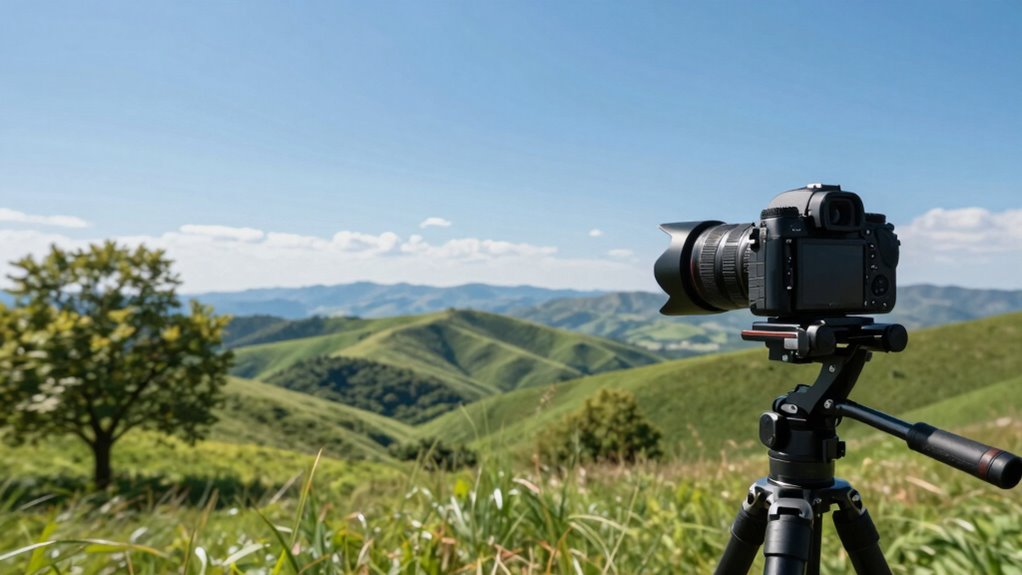

To keep horizons straight during pans without complicating your workflow, use a tripod or stabilizer set up level with bubble or electronic levels before shooting. During movement, move slowly and smoothly, maintaining your reference lines or grid overlays on your camera or viewfinder to stay aligned. Practice controlled, slow pans, and double-check levelness regularly. If needed, post-process corrections can straighten horizons, but focusing on setup and technique first will give you steady results from the start. Keep exploring for more tips.

Get sports gear delivered free — and shop member deals
- Fast, free delivery on millions of items
- Access to Prime Big Deal Days deals on October 6–7
- Prime Video, Amazon Music and more included
Key Takeaways
- Use camera grid overlays and electronic level indicators to maintain horizon alignment during filming.
- Practice controlled, slow pans by moving your whole body rather than just your arms.
- Set up the camera on a perfectly leveled tripod before starting each shot.
- Monitor the horizon in real-time with the viewfinder or screen to correct as needed.
- Apply minor post-processing corrections to straighten horizons without re-shooting.
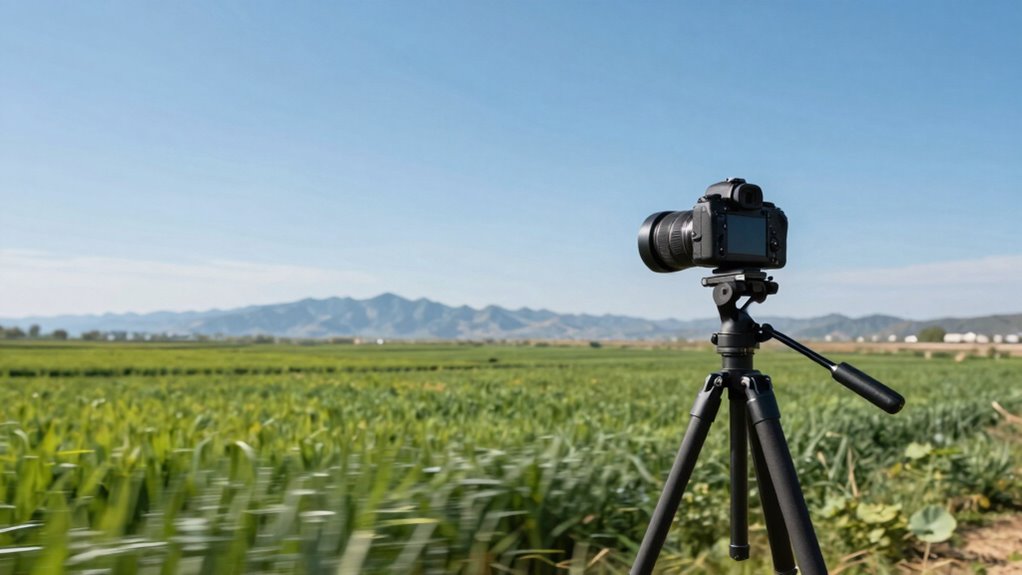
Ever struggled with crooked horizons when panning your camera? It’s a common frustration, especially when you’re trying to capture smooth, professional-looking videos. Luckily, there are ways to keep your horizons straight without complicating your workflow or sacrificing quality. First, focus on camera stabilization. Using a gimbal or stabilizer helps keep your camera level during movement, reducing the chances of tilt or skew. These devices are designed to counteract unwanted shakes and make your pans smoother, so your horizons stay aligned without extra effort. If you don’t have access to stabilization gear, practice your handholding technique. Keep your elbows close to your body, and move your whole body rather than just your arms. This steadies your shot and minimizes unintended tilt. Taking a moment to plan your movement and practicing slow, controlled pans also makes a difference. The steadiness of your movement directly influences horizon accuracy. Additionally, understanding camera leveling techniques can significantly improve your results, especially when working with manual settings or non-stabilized gear. Using visual guides like grid overlays can further assist in maintaining a straight horizon during filming. Incorporating camera setup best practices can help set a solid foundation for stable footage from the start. Also, paying attention to camera positioning can prevent unnecessary tilt and improve overall shot stability. Paying attention to camera parameters, such as exposure and focus, can also help maintain consistency throughout your shot, reducing the need for corrections later. Despite your best efforts, some crookedness might still slip through, especially in dynamic shooting conditions. That’s where post processing techniques come in handy. Many editing programs offer tools to correct horizon tilt after recording. You can rotate or skew the footage slightly to straighten out crooked lines, often with just a few clicks. This method is quick and effective, particularly when perfect stabilization during filming isn’t feasible. However, relying solely on post processing can sometimes crop or distort your footage, so it’s better used as a supplementary step rather than the primary solution. To minimize the need for corrections, pay attention to your camera’s viewfinder or screen during filming. Use grid overlays if available—they help you visually align the horizon. Also, take a moment to set your camera level before starting a shot. Some cameras have built-in electronic level indicators that make this easier. When panning, aim to maintain a consistent level by watching your reference lines rather than rushing through the movement. If you’re working with a tripod, ensure it’s perfectly level beforehand, and use the camera’s bubble or electronic level to double-check.
As an affiliate, we earn on qualifying purchases.
Frequently Asked Questions
Can Using a Gimbal Help With Horizon Stability During Panning?
Yes, using a gimbal helps with horizon stability during panning by providing gimbal stabilization, which minimizes unwanted camera movement. It keeps your shot steady, even during smooth pans, making horizon lines more accurate. Combine this with good handheld techniques, like steady grip and slow movements, to improve results. This approach guarantees your footage stays level without complicating your workflow, making your panning smoother and more professional-looking.
What Are the Best Camera Settings for Smooth Panoramic Shots?
A stitch in time saves nine, so set your camera for smooth panoramic shots by choosing a low ISO to reduce noise, and a narrow aperture for sharpness. Use a camera sensor with good dynamic range, and enable image stabilization if available. Set a moderate shutter speed to avoid motion blur, and shoot in manual mode for consistent exposure. These settings help keep your footage steady and your horizons straight.
How Does Lens Distortion Affect Horizon Alignment in Panoramas?
Lens distortion, like lens curvature and perspective distortion, can skew your horizon in panoramas. This distortion makes straight lines appear curved or tilted, challenging your horizon alignment. To minimize this, use lenses with minimal distortion or correct the distortion in post-processing. When shooting, keep the camera level and avoid wide-angle lenses if possible, as they tend to exaggerate distortion and complicate horizon straightening.
Is Post-Processing Necessary to Correct Horizon Tilt in Panoramic Images?
Post-processing isn’t always necessary for horizon tilt in panoramic images if you use image stabilization and proper camera techniques during shooting. However, if your horizon isn’t level, horizon correction in editing software can refine your panorama for a professional look. These adjustments smoothly straighten the horizon without compromising image quality, making post-processing a helpful step when minor tilt persists despite your efforts during capture.
Are There Specific Tripod Techniques to Maintain Horizon Level During Panning?
To keep the horizon level during panning, guarantee your tripod is stable and properly calibrated. Use a tripod with a fluid head that allows smooth, controlled movements, and double-check the level bubble before starting your shot. Keep your camera aligned with the horizon and move the tripod smoothly along the axis, avoiding sudden jerks. Regularly verify horizon calibration during the shot to maintain accuracy without disrupting your workflow.
As an affiliate, we earn on qualifying purchases.
Conclusion
Keeping horizons straight during pans is like steering a steady ship through choppy waters—balance and awareness are your best tools. With a few simple techniques, you can glide smoothly across your shot without rocking the boat of your workflow. Remember, consistency is your anchor, and patience your compass. By practicing these tips, you’ll navigate your footage with confidence, creating seamless panoramas that flow as effortlessly as a calm breeze shaping the horizon.
As an affiliate, we earn on qualifying purchases.
As an affiliate, we earn on qualifying purchases.
NFL season / tailgating Picks
team gear
As an affiliate, we earn on qualifying purchases.