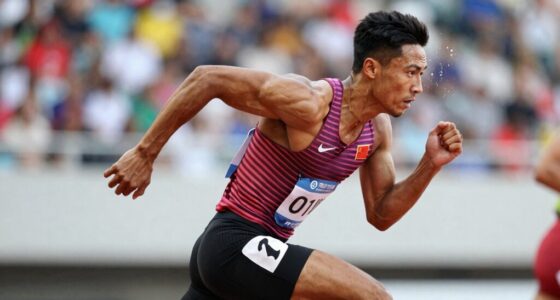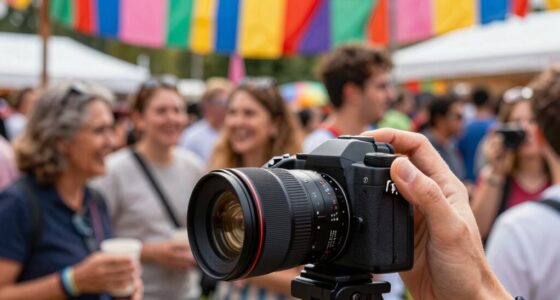

Panning photography matters for beginners because it helps you capture dynamic images full of energy and movement, making your photos stand out. By mastering this technique, you can tell better stories and add drama to everyday scenes. It teaches you essential skills like timing, focus, and camera control, which improve your overall photography. Keep exploring, and you’ll discover how to release creativity with every shot and grow as a visual storyteller.
Key Takeaways
- Panning photography reveals motion and energy, making images more dynamic and engaging for beginners exploring creative expression.
- It enhances technical skills in shutter speed, focus, and camera stabilization, building foundational photography expertise.
- Mastering panning helps beginners anticipate motion, improving timing, composition, and overall control over their shots.
- The technique emphasizes storytelling by capturing the sense of speed and movement in everyday life and urban scenes.
- Practicing panning boosts confidence in experimenting with camera settings and composition, fostering artistic growth and technical mastery.

Neewer Camera Panoramic Panning Base with Style Plate, 3/8-inch Screw Aluminum Alloy Panorama Ball Tripod Head with Bubble Level for Tripod Monopod DSLR Cameras, Load Capacity 22 LBS
- Maximum Load Capacity: Up to 22 lbs (10 kg)
- Compatibility: Supports tripods, cameras, GoPros, smartphones
- Material: Made of durable aluminum alloy
As an affiliate, we earn on qualifying purchases.
As an affiliate, we earn on qualifying purchases.
What Is Panning Photography and Why Beginners Should Care
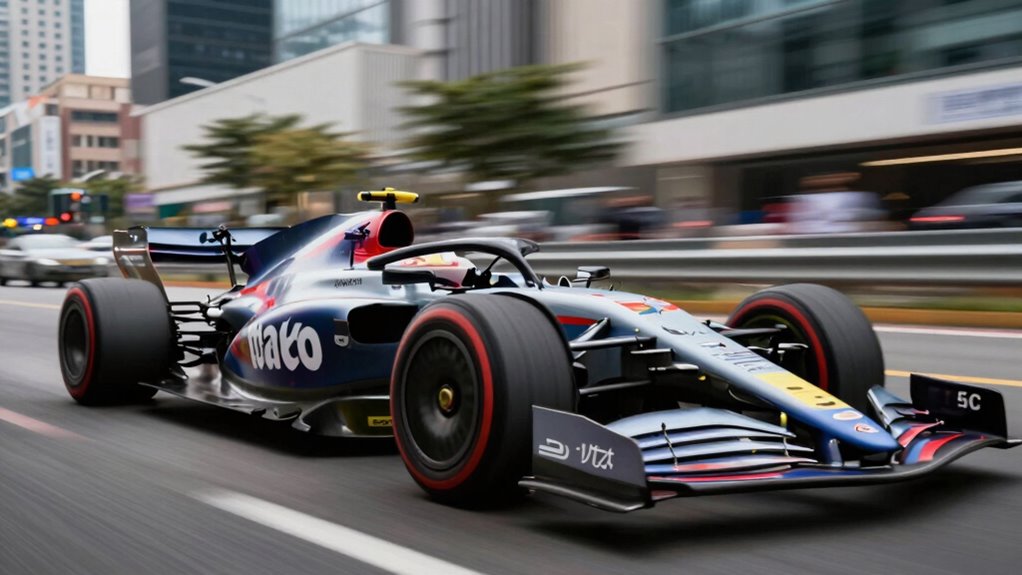
Panning photography is a technique where you move your camera horizontally to follow a moving subject, resulting in a sharp subject against a blurred background. Historically, this method emerged with the rise of sports and action photography, allowing photographers to capture dynamic moments effectively. Its cultural significance extends to capturing everyday life and movement, highlighting the energy of urban environments or sports events. As a beginner, understanding panning helps you record motion with clarity and drama, making your photos more engaging. This technique connects you to a rich photographic tradition of documenting motion, emphasizing the importance of timing and skill. By mastering panning, you tap into a visual storytelling tool that has evolved over decades, giving your images a sense of life and immediacy. Additionally, practicing panning can enhance your awareness of motion in your environment, fostering a deeper appreciation for dynamic scenes that relate to biodiversity and conservation. Developing this skill can also improve your overall photographic awareness, helping you anticipate and capture fleeting moments more effectively. Furthermore, understanding the principles behind panning can deepen your appreciation for motion and energy in various photographic genres. Recognizing the significance of visual storytelling through motion can inspire more creative and impactful compositions. A solid grasp of these techniques also aligns with understanding the history of photography, enriching your overall knowledge of the art form.

ABLEBRO Action Video Camera, Shotgun Cam WiFi APP Share 1080P HD Recording for Shooting/Fishing/Clay Pigeons/Bow Hunting Helmet Cam Sport Camera for Riding Skiing Climbing
- Compatible with most guns: Fits guns with barrels under 35mm
- WiFi & App control: One-click sharing via smartphone app
- Lightweight and portable: Only 6 oz with easy installation
As an affiliate, we earn on qualifying purchases.
As an affiliate, we earn on qualifying purchases.
How Panning Captures Motion and Adds Drama to Your Shots
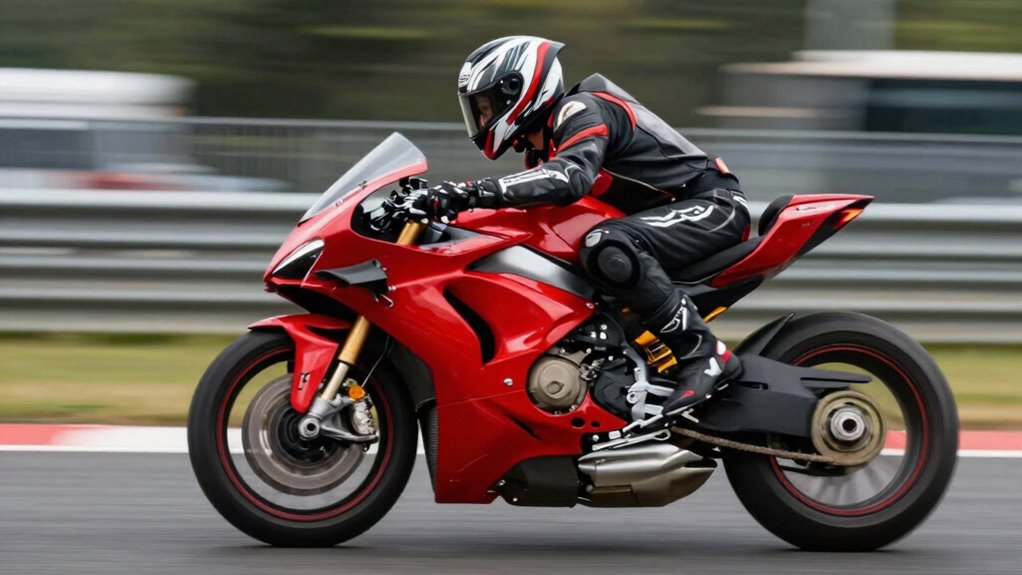
Panning makes your photos feel faster and more alive by emphasizing the motion of your subject. It creates a dynamic blur that adds drama and draws viewers’ attention. When you master this technique, your shots will vividly highlight moving subjects and evoke a sense of speed.
Enhances Sense of Speed
When you track a moving subject with your camera, you can create a dynamic sense of speed that immediately grabs the viewer’s attention. Panning captures motion in a way that emphasizes movement, making your photos feel alive. Historically, techniques like long exposures and intentional camera movement have been used to convey velocity and energy. Incorporating color symbolism, such as vibrant reds or fiery oranges, further enhances this feeling, adding emotional intensity to your shot. To deepen this effect, consider:
- Using contrasting colors to emphasize motion
- Aligning the subject’s direction with the frame
- Adjusting shutter speed for sharper or more blurred backgrounds
- Capturing the subject at the peak of its movement
- Experimenting with different panning angles for variety
- Understanding regional culture can inspire you to incorporate local elements that enhance your storytelling and connect viewers more deeply to your images.
These elements work together to amplify the sense of speed and excitement in your photos.
Creates Dynamic Blur Effect
By intentionally moving your camera to follow a moving subject, you can create a striking blur that adds a sense of drama and energy to your photos. This dynamic blur effect emphasizes motion, making your images more engaging. To succeed, consider the color contrast between your subject and background, which helps the subject stand out despite the motion blur. Maintaining good composition balance ensures your shot remains visually pleasing even with the movement. Panning with the subject keeps it sharp while blurring the background, heightening the sense of speed. Use the table below to understand key aspects of creating a compelling dynamic blur:
| Aspect | Tip | Effect |
|---|---|---|
| Color Contrast | Choose contrasting colors | Highlights subject |
| Composition Balance | Keep subject off-center | Adds visual interest |
| Shutter Speed | Use slower shutter for blur | Intensifies motion |
| Camera Movement | Follow the subject smoothly | Creates fluidity |
| Focus Point | Focus on moving subject | Keeps it sharp in motion |
Emphasizes Moving Subjects
Capturing moving subjects with panning brings a dynamic energy to your photos that static shots simply can’t match. It highlights motion, making urban landscapes alive and vibrant or adding a sense of speed to still life compositions. By following a moving subject with your camera, you create a sense of immediacy and excitement. Panning is especially effective with fast-moving objects like cars, cyclists, or runners, emphasizing their speed. This technique also helps isolate subjects from busy backgrounds, drawing viewers’ attention. To enhance your panning shots, consider:
- Timing your shot precisely with the subject’s movement
- Using a slower shutter speed to create motion blur
- Keeping your focus sharp on the moving subject
- Practicing steady camera movement
- Experimenting with different speeds for varied effects

8K Digital Cameras for Photography, 2026 Autofocus 88MP WiFi Professional Photography Camera with Dual-Lens for YouTube, 16X Digital Zoom, TF Card, Lens Hood, Touch Screen,2 Batteries & Charging Stand
- 8K Video and 88MP Sensor: Capture stunning high-resolution images and videos
- Fast Autofocus System: Lock focus in seconds for sharp shots
- Dual-Lens Design: Flexible angles for selfies and vlogging
As an affiliate, we earn on qualifying purchases.
As an affiliate, we earn on qualifying purchases.
Essential Gear and Camera Settings for Panning

To get sharp panning shots, you need to optimize your camera settings, especially shutter speed and autofocus. Having the right gear, like a sturdy tripod or monopod, can also make a big difference in capturing smooth motion. Once you’ve got your gear sorted, fine-tuning your camera settings will help you master the technique.
Camera Settings Optimization
Optimizing your camera settings is crucial for successful panning photography, as it helps you freeze motion and create that dynamic sense of movement. To achieve sharp, well-executed shots, start with a slower shutter speed—typically between 1/30 to 1/125 seconds—depending on your subject’s speed. Use continuous autofocus (AF-C) to track motion smoothly. Adjust ISO to maintain proper exposure without introducing noise, and set a narrow aperture for increased depth of field. Consider lighting techniques to guarantee enough light for ideal shutter speed. For post processing tips, shoot in RAW to retain details and easily enhance motion blur or sharpness later.
- Use a tripod or stabilizer
- Enable image stabilization if available
- Keep ISO low for clarity
- Practice consistent panning speed
- Experiment with different shutter speeds
Essential Panning Gear
Having the right gear is essential for successful panning photography, as it helps you stabilize your camera and execute smooth, consistent movements. A sturdy tripod with a fluid head is ideal for urban landscapes, allowing you to track moving vehicles or bustling city scenes without shake. A monopod can offer added mobility when capturing portrait compositions in dynamic environments. Consider a camera with a fast autofocus system and a lens with image stabilization to keep your subject sharp during motion. A remote shutter release minimizes vibrations, ensuring clarity. For urban landscapes, wide-angle lenses let you capture expansive scenes, while portrait compositions benefit from telephoto lenses that isolate motion. Investing in stable, versatile gear makes your panning shots more precise and visually striking. Additionally, understanding industry gear reviews can guide you toward the most reliable equipment for your needs. Being familiar with camera settings like shutter speed and ISO can also significantly improve your results. Knowing how to adjust your camera settings appropriately is crucial for capturing clear, well-exposed panning shots.
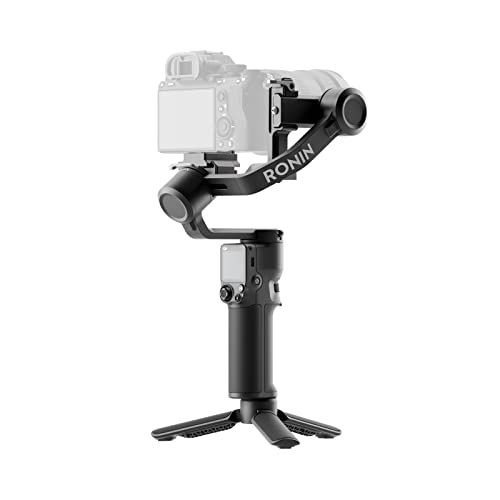
DJI RS 3 Mini, Camera Gimbal Stabilizer, Canon/Sony/Nikon/Fujifilm
- Lightweight and Portable: 795g for easy travel and extended use
- Wide Compatibility: Supports cameras up to 2kg (4.4 lbs) with various lenses
- Bluetooth Shutter Control: Remotely control photo and video recording
As an affiliate, we earn on qualifying purchases.
As an affiliate, we earn on qualifying purchases.
How to Anticipate Motion and Improve Your Panning Technique
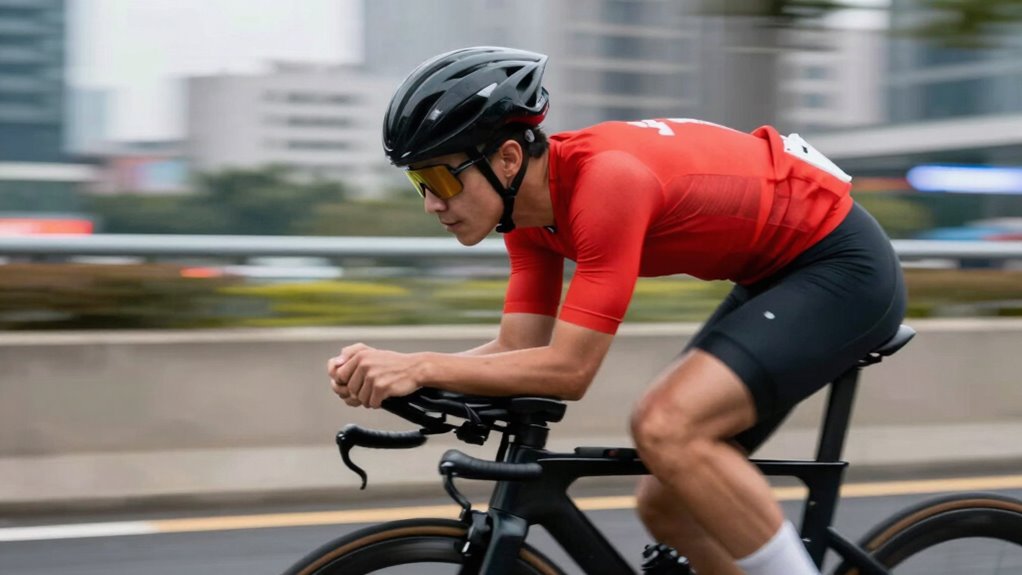
Understanding how your subject moves is key to mastering panning photography. To anticipate motion, observe the speed and direction of your subject. Focus on areas with high color contrast to help your camera lock onto the subject more easily. Use lighting techniques like side or backlighting to add depth and help distinguish the subject from the background. Practice tracking the movement smoothly, maintaining the same speed as your subject. Consider these tips:
Master panning by observing your subject’s movement, focusing on contrast, lighting, and smooth tracking techniques.
- Scout the scene beforehand to predict movement patterns
- Keep a steady, fluid camera motion during tracking
- Adjust shutter speed based on subject speed
- Use continuous autofocus to stay sharp
- Pay attention to background elements to enhance motion blur
- Incorporate smart strategies for IRA rollovers and gold investments to diversify your financial planning skills.
- Additionally, understanding financial number formatting can help you better interpret and analyze your photographic expenses and equipment costs.
- Familiarizing yourself with sensor technology can also improve your ability to capture sharp images and better anticipate motion.
Timing Tips: When to Press the Shutter for Best Results

Timing your shutter press is essential for capturing sharp, dynamic panning shots. To achieve this, you need to anticipate the movement and press the shutter just before the subject reaches the perfect position. This moment often aligns with color theory principles—using contrasting colors to highlight the subject—and maintaining composition balance to keep the shot engaging. Understanding how to apply design thinking can help you refine your timing and composition skills for more compelling images.
Common Panning Mistakes Beginners Make and How to Fix Them

Many beginners struggle with panning because they often press the shutter too early or too late, resulting in images that are either too sharp or overly blurred. Common mistakes include inconsistent motion tracking, poor focus, and neglecting background composition. To fix these issues:
- Practice smooth, steady motion, aligning with the subject’s movement
- Use color theory to highlight the subject and reduce distractions
- Focus on composition techniques that lead the viewer’s eye along the motion path
- Keep your camera steady before and during the shot for better control
- Experiment with shutter speed to find the perfect balance between motion blur and sharpness
Easy Tools and Settings to Help You Master Panning
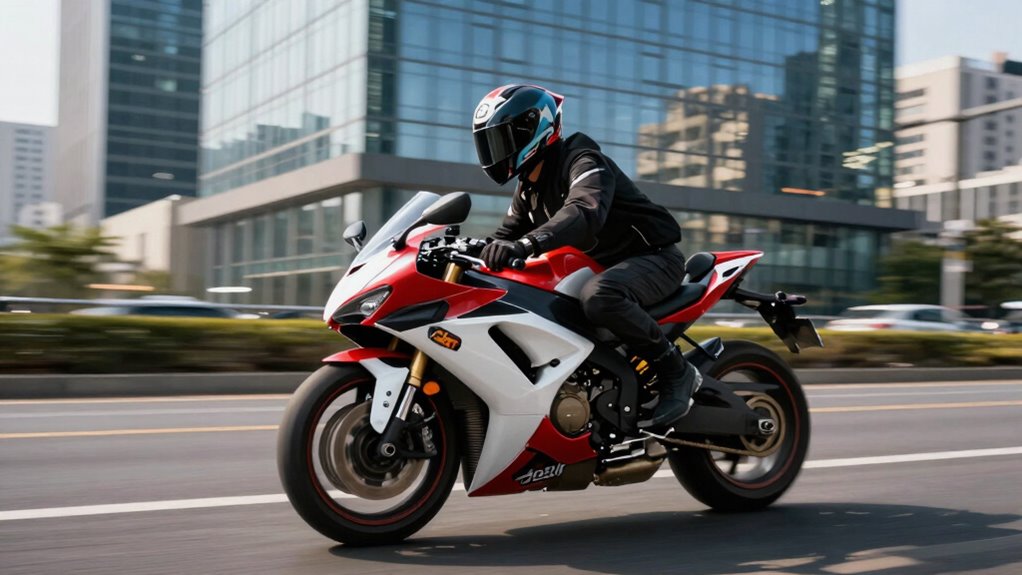
Mastering panning becomes much easier when you leverage the right tools and camera settings. Understanding the historical context helps you appreciate how pioneers used manual focus and shutter speed creatively, inspiring modern techniques. To simplify your process, start with a camera set to shutter priority mode, around 1/30 to 1/60 sec, and use a tripod for stability. Recognizing the historical evolution of photography can deepen your understanding and appreciation of these techniques. Additionally, familiarizing yourself with early photographic methods can give you insight into the innovative approaches that shaped current practices. Appreciating the technological advancements over time can also enhance your ability to adapt and experiment with different settings. Exploring creative techniques used by early photographers can further inspire your panning practice and help you develop a unique style, especially when you understand how manual focus played a crucial role in capturing motion creatively.
Practice Exercises to Boost Your Panning Skills
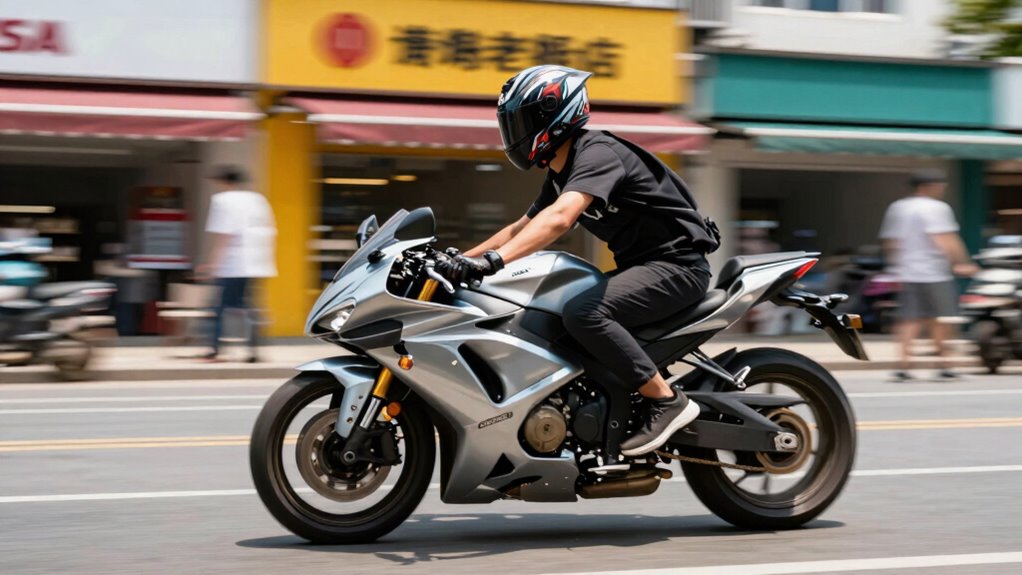
Practicing panning regularly is the best way to develop your skills and understand how different settings affect your results. To improve, try these exercises:
- Capture moving objects against contrasting backgrounds to practice color theory, creating vibrant, eye-catching images.
- Focus on composition techniques like leading lines or rule of thirds to direct viewer attention during panning shots.
- Vary shutter speeds to see how motion blur enhances or softens your subject’s movement.
- Use different focal lengths to understand how zoom impacts panning precision.
- Experiment with lighting conditions to learn how color temperature influences mood and clarity.
Repeatedly practicing these exercises helps you grasp how camera settings, color theory, and composition techniques work together, making your panning shots sharper and more dynamic.
Unleashing Creativity: Tell Better Stories With Panning Photography

Panning photography offers a dynamic way to tell compelling stories through motion and energy. To release your creativity, focus on how color theory influences mood and perception, using vibrant or contrasting colors to draw attention or evoke emotion. Composition techniques like the rule of thirds and leading lines help guide the viewer’s eye, emphasizing the moving subject against a blurred background. Experiment with shutter speed to capture the right sense of motion, enhancing storytelling. Consider how foreground and background elements interact, creating depth and context. By thoughtfully combining color choices and composition strategies, you craft images that don’t just show motion—they tell stories that engage and resonate with your audience. Additionally, understanding digital marketing principles can help you effectively share and promote your panning photography to reach a broader audience. Recognizing the importance of visual storytelling can elevate your work and make your images more impactful, especially when you incorporate outdoor lighting techniques to enhance natural scenes.
Frequently Asked Questions
What Are the Best Subjects for Panning Photography?
You should choose subjects that create a sense of motion blur, like moving cars, cyclists, or running animals, to make your panning photography pop. These subjects help you achieve a dynamic composition, emphasizing speed and action. By tracking the subject smoothly with your camera, you capture sharp focus on it while blurring the background, enhancing the overall sense of movement and making your photos more lively and engaging.
How Do Lighting Conditions Affect Panning Shots?
Did you know that 60% of successful panning shots rely on ideal lighting? Lighting conditions greatly influence your panning results. When light comes from the side, it enhances motion blur, emphasizing movement. Bright, well-lit scenes make it easier to freeze or blur motion intentionally. Low light, however, challenges your camera’s settings, often requiring slower shutter speeds. Pay attention to light direction to create dynamic panning images that truly stand out.
Can Panning Be Effective With Smartphones?
Yes, panning can be effective with smartphones, but you face some limitations. Smartphone cameras often lack advanced controls, making it trickier to capture perfect motion blur. However, you can improve results by using dedicated panning apps or editing tools afterward. These apps help stabilize your shot and add motion effects, enhancing your images. Practice steady movements and experiment with different settings to get the best results despite your smartphone’s limitations.
What’s the Ideal Shutter Speed for Different Moving Subjects?
The ideal shutter speed varies based on the moving subject. For fast-moving subjects like sports cars or athletes, you should use faster shutter settings around 1/1000 to 1/2000 seconds to freeze motion. For slower subjects like walking people or animals, 1/250 to 1/500 seconds works well. Adjust your shutter speed to control motion blur, ensuring the photo captures the movement beautifully without losing detail.
How Do You Edit Panning Photos for Maximum Impact?
Imagine your photo bursting with energy, like a blur of motion and vibrant colors. To maximize impact, boost the contrast slightly and sharpen details where needed. Use selective color enhancement to make your subject pop against the dynamic motion blur background. Adjust the overall exposure to highlight the movement, and consider adding a subtle vignette for focus. These edits emphasize motion blur and vivid hues, transforming your panning shot into a mesmerizing visual story.
Conclusion
Mastering panning photography might seem tricky at first, but it’s worth the effort. With patience and practice, you’ll start capturing dynamic shots that truly stand out. It’s a skill that can turn your photos from ordinary to extraordinary, helping you tell compelling stories through motion. Don’t be afraid to experiment and learn from your mistakes—you’ll get the hang of it in no time. Remember, Rome wasn’t built in a day, so keep at it!