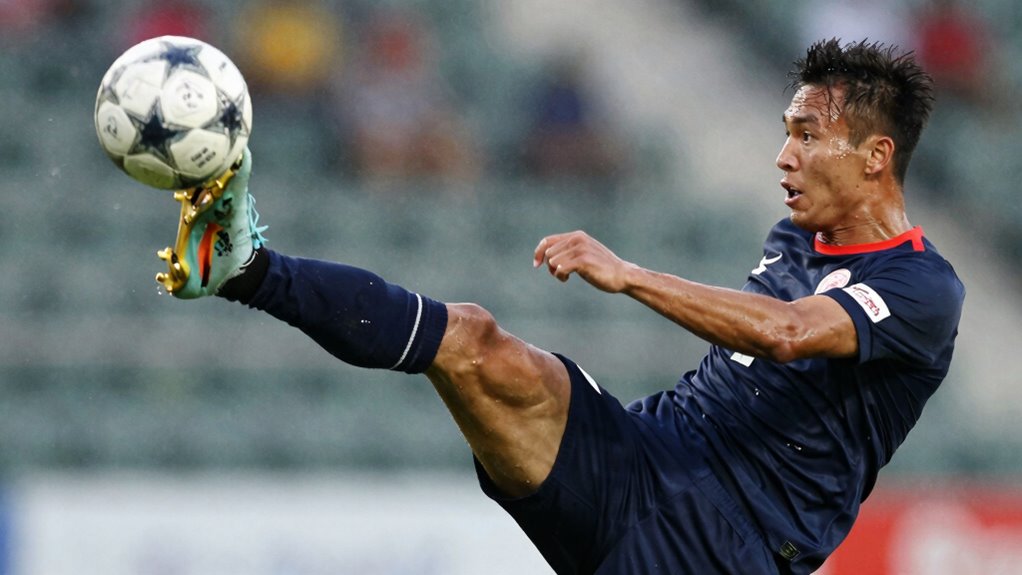

Pre focusing is a technique that helps you capture predictable movements with precision by locking focus on a specific point where your subject will pass. You decide the focus area, pre-focus on it, and wait for your subject to arrive before shooting. This reduces delays caused by autofocus lag and guarantees sharp images. Using the right aperture and focus mode makes this even more effective. Stick around to discover how mastering pre focusing can transform your photography skills.

Get sports gear delivered free — and shop member deals
- Fast, free delivery on millions of items
- Access to Prime Big Deal Days deals on October 6–7
- Prime Video, Amazon Music and more included
Key Takeaways
- Pre focusing involves setting the focus on a specific point where the subject is expected to pass.
- It reduces autofocus lag, ensuring sharp photos of predictable moving subjects.
- Proper depth of field selection keeps the subject in focus despite slight movements.
- Locking focus on a fixed point allows proactive timing instead of reactive autofocus.
- This technique is ideal for capturing high-speed, predictable movements like sports or wildlife.
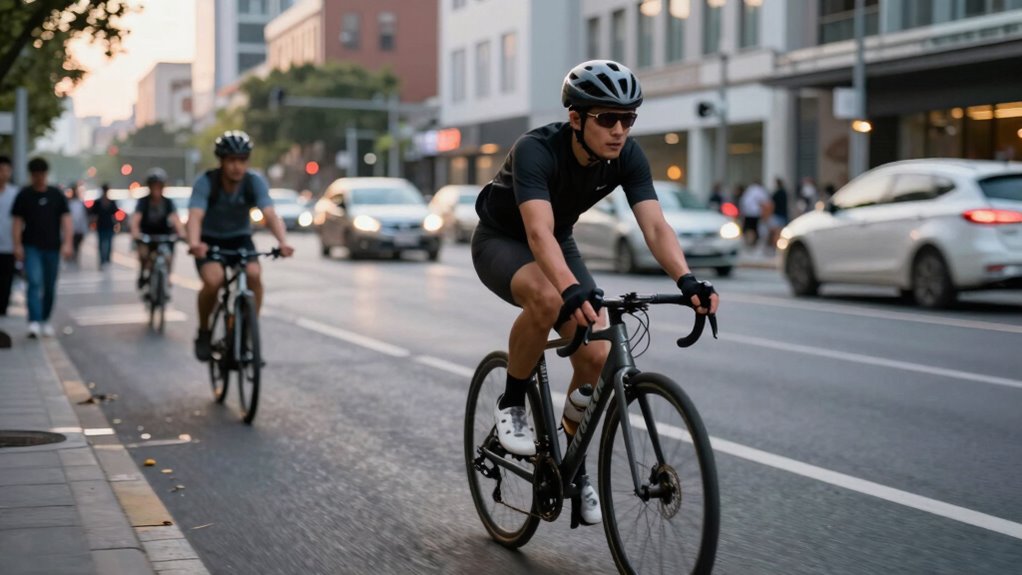
Anticipating movement before it happens is a vital skill in photography, especially when capturing fast or unpredictable subjects. One of the most effective techniques to do this is pre focusing, which allows you to prepare your camera for the moment you want to freeze. To succeed, you need to understand how depth of field and autofocus modes work together. Depth of field determines how much of the scene appears sharp, and by choosing the right aperture, you can keep your subject in focus even if it slightly moves within that zone. Narrower apertures increase depth of field, giving you a larger “focus zone” to work with. This way, even if your subject shifts slightly, it remains sharp, reducing the need to refocus constantly.
Pre focusing combines depth of field and autofocus modes to anticipate and capture fast-moving subjects with precision.
Autofocus modes play a crucial role in pre focusing. Many cameras offer different modes, such as Single AF (AF-S), Continuous AF (AF-C), or AI Servo, depending on the brand. For predictable movement, like a cyclist on a track or a runner on a straight path, you can use AF-S or single-shot autofocus to lock focus on a specific point ahead of time. Once locked, your camera maintains that focus until you take the shot, provided the subject stays within the depth of field zone. Alternatively, for slightly unpredictable movement, AI Servo or Continuous AF can be useful, as they track moving subjects in real time. But when pre focusing, it’s often best to lock focus on a known point and rely on your chosen aperture to keep the subject sharp. Understanding autofocus modes and how they work with focus points can greatly improve your chances of getting that perfect shot.
The key to successful pre focusing lies in choosing the right distance and focus point beforehand. You decide where the subject will be, focus precisely there, and then wait for the action to occur. When the subject reaches your pre-focused zone, you press the shutter button, capturing the moment sharply. This technique reduces the risk of missed shots caused by slow autofocus or incorrect focus placement. It’s especially useful in high-speed sports, wildlife photography, or any scenario where the subject’s movement is predictable but fast. Developing a consistent focusing strategy and understanding how to manipulate depth of field and autofocus modes can greatly enhance your ability to anticipate movement and capture sharp images. Properly using focus points and their placement is essential for aligning your pre-focus point with the subject’s path. When done correctly, it allows you to anticipate movement with confidence, making your shots sharp and timely. It’s a skill that transforms your approach from reactive to proactive, helping you capture those fleeting moments with precision and clarity.
As an affiliate, we earn on qualifying purchases.
Frequently Asked Questions
How Does Pre Focusing Differ From Continuous Autofocus?
Pre focusing is like setting your sights on a target, locking focus manually before the shot, perfect for predictable movements. Continuous autofocus, on the other hand, keeps adjusting in real-time, ideal for unpredictable action. You switch between autofocus modes depending on the scene. Manual focusing gives you control, while continuous autofocus uses sensors to track movement, ensuring sharp images even when subjects dart around.
What Camera Settings Are Ideal for Pre Focusing?
To pre-focus effectively, set a narrow depth of field by choosing a smaller aperture like f/8 or higher, ensuring sharpness at your focus distance. Manually dial in the focus to your predicted movement point, keeping the focus distance consistent. Use single-point autofocus initially, then switch to manual focus to lock it in. This approach helps you maintain sharpness when the subject moves within your pre-focused zone.
Can Pre Focusing Be Used in Low-Light Conditions?
Can pre focusing be used in low-light conditions? Absolutely, and it’s like giving your camera a secret weapon for night photography. By pre focusing on a specific spot, you can capture sharp images despite the darkness. Use low light techniques such as manual focus, a tripod, and a small aperture. This method helps you predict movement and guarantees your shots stay crisp even when ambient light is scarce.
How Does Pre Focusing Impact Image Sharpness?
Pre focusing improves image sharpness by enhancing focus accuracy, especially on your subject. It allows you to lock focus on a specific depth, giving you better control over depth of field. This method minimizes focus hunting and guarantees your shot stays sharp even if your subject moves slightly. By controlling the focus point precisely, you maintain consistency, resulting in clearer, more accurate images with ideal sharpness across your frame.
Is Pre Focusing Effective for Fast-Moving Subjects?
Pre focusing can be effective for fast-moving subjects if you use subject tracking and motion prediction techniques. By anticipating the subject’s movement, you can keep your focus sharp and capture clear images. However, it’s not foolproof, especially if the subject moves unpredictably. Practice helps improve your ability to predict motion, making pre focusing more reliable when photographing fast action, but always stay alert for sudden movements.
sports photography autofocus accessories
As an affiliate, we earn on qualifying purchases.
As an affiliate, we earn on qualifying purchases.
Conclusion
By mastering pre focusing, you gain the power to predict motion with confidence, turning unpredictable moments into perfectly captured shots. Did you know that professional photographers often anticipate movement with a success rate of over 80%? That’s like having a crystal ball in your camera bag. With practice, you’ll find yourself effortlessly freezing fast-moving subjects, transforming fleeting actions into stunning, sharp images. So, keep honing your skills—you’re closer than ever to capturing the perfect moment every time.
As an affiliate, we earn on qualifying purchases.
manual focus lens for fast moving subjects
As an affiliate, we earn on qualifying purchases.
As an affiliate, we earn on qualifying purchases.
Fall Picks
fall essentials
As an affiliate, we earn on qualifying purchases.