

To track subjects smoothly without fighting your camera, start by understanding your autofocus and tracking modes, and choose the right focus points. Plan your shot ahead, anticipate the subject’s movement, and use steady panning techniques. Keep focus on your subject and maintain consistent camera motion. Proper lighting and calibration help improve tracking stability. Practice these tips regularly, and you’ll master keeping your subjects sharp with minimal effort. If you want more insights, you’re in the right place.

Get sports gear delivered free — and shop member deals
- Fast, free delivery on millions of items
- Access to Prime Big Deal Days deals on October 6–7
- Prime Video, Amazon Music and more included
Key Takeaways
- Plan your shot and anticipate subject movement to reduce camera adjustments during filming.
- Use smooth camera movements, such as panning and tracking, to follow subjects naturally.
- Select appropriate autofocus and tracking modes, like continuous autofocus with focus points, for reliable focus.
- Practice matching camera speed to subject movement for seamless, fluid footage.
- Keep lighting consistent and backgrounds simple to prevent focus hunting and distractions.
As an affiliate, we earn on qualifying purchases.
Why Good Subject Tracking Matters for Your Videos

Good subject tracking is essential because it keeps your main focus sharp and engaging throughout the video. When you track your subject well, you prevent subject distraction, which can pull viewers away from your story. Proper subject tracking also enhances frame composition by maintaining a balanced and dynamic shot. If your camera loses focus or drifts off, your footage feels unprofessional and distracting. Consistent tracking guarantees your subject stays centered or intentionally positioned, highlighting their importance. It also relies on understanding camera movement to execute smooth and natural follow shots. It allows you to tell a clear, compelling story without interruptions. Understanding camera movement is key to mastering effective subject tracking, as it helps you choose the right tools and techniques to improve your tracking skills. By mastering good subject tracking, you create a seamless viewer experience, making your videos look polished and intentional. Paying attention to camera stabilization techniques can further improve your ability to keep your subject in focus smoothly. Additionally, developing a strong sense of visual composition helps anticipate how your subject will move within the frame, making your tracking even more precise.
professional camera focus points
As an affiliate, we earn on qualifying purchases.
As an affiliate, we earn on qualifying purchases.
Getting to Know Your Camera’s Autofocus and Tracking Modes

Have you ever wondered how your camera automatically keeps a moving subject in focus? It’s all about understanding your autofocus and tracking modes. First, explore autofocus calibration to ensure your camera’s autofocus system is optimized for accuracy. Proper calibration helps your camera lock onto subjects more reliably. Next, investigate tracking mode customization. Many cameras let you adjust how aggressively they follow subjects—whether you want steady focus or quick response. Practice switching between different autofocus modes, like single-point, zone, or continuous autofocus, to see which works best for your style. Additionally, understanding your camera’s autofocus calibration can significantly improve focus consistency. By mastering these settings, you’ll get better at maintaining focus on moving subjects without fighting your camera, creating smoother, more professional-looking videos.
As an affiliate, we earn on qualifying purchases.
Preparing Your Shot for Smooth Subject Movement

Before you start shooting, plan your composition to give your subject room to move naturally. Choose a focal length that matches the speed and distance of your subject to keep everything in focus smoothly. Finally, set your camera to the appropriate focus mode to guarantee it tracks movement accurately throughout the shot.
Plan Your Composition
How can you guarantee your subject moves smoothly through the frame? The key is planning your composition. Start by choosing areas with high color contrast, so your subject stands out against the background. This makes tracking easier and keeps the viewer’s focus on the subject. Keep the background simple—avoid clutter or busy patterns—so it doesn’t distract or confuse the camera’s movement. Position your subject thoughtfully within the frame, leaving enough space for movement. Think about the path they’ll take, and frame accordingly. A well-planned composition reduces sudden shifts and helps your camera glide smoothly alongside your subject. Incorporating visual harmony into your framing can also enhance the overall flow and cohesion of the shot. Additionally, understanding the movement path of your subject allows you to anticipate their trajectory, contributing to a more seamless follow. Paying attention to camera angles can further improve the fluidity of your shot by emphasizing the subject’s motion and maintaining viewer engagement. Ultimately, clear contrast and a clean background give you the control needed for seamless, professional-looking shots.
Choose Appropriate Focal Length
Choosing the right focal length is essential for capturing smooth subject movement because it directly influences how the camera follows and frames your subject. A wider lens, like a 24mm, allows you to keep your subject in view while providing room for movement, making it easier to track without abrupt framing shifts. Conversely, a telephoto lens, such as a 70-200mm, offers a narrow field of view that isolates your subject and creates a pleasing background blur, but requires more precise handling. Selecting the appropriate focal length depends on your scene and movement speed. Keep in mind that changing focal lengths during a shot can cause jarring shifts in perspective, so choose your camera lens carefully before filming to maintain smooth, consistent motion.
Set Proper Focus Mode
Have you ever struggled with a subject slipping out of focus during a shot? Setting the proper focus mode is key to smooth subject tracking. Use continuous autofocus (AF-C or AI Servo) to keep moving subjects sharp. Make sure your camera’s subject recognition is optimized; many models can prioritize humans, animals, or vehicles. Autofocus calibration is also essential—regularly check and adjust it to prevent focus hunting or front/back focusing issues. If your camera offers eye or face detection, enable these features for better accuracy. Selecting the right focus mode and ensuring accurate autofocus calibration help your camera anticipate subject movement, reducing missed shots. This setup allows you to maintain sharp focus without fighting your camera, especially during fast or unpredictable motion.
As an affiliate, we earn on qualifying purchases.
Techniques to Anticipate and Follow Moving Subjects

To effectively track moving subjects, you need to anticipate their next move and stay one step ahead. Using focus locking can help keep your subject sharp, even as they shift positions. Practice panning smoothly to follow motion seamlessly and maintain a clear, focused shot.
Predict Subject Movements
Ever wondered how skilled photographers anticipate where a moving subject will go next? It’s all about using predictive algorithms and motion prediction techniques. By observing your subject’s speed and direction, you can forecast their next move, keeping your camera aligned. Modern cameras and apps often incorporate motion prediction, which analyzes movement patterns to adjust focus proactively. This helps you stay ahead of fast-moving subjects, reducing missed shots or out-of-frame moments. To optimize this, pay attention to subtle cues in your subject’s behavior, like eye contact or body language, that hint at their trajectory. Combining your observational skills with predictive algorithms allows you to anticipate movements more accurately, ensuring you capture sharp, well-composed images even when subjects move unpredictably.
Use Focus Locking
Using focus locking effectively allows you to keep a moving subject sharp as it travels through your frame. When you anticipate your subject’s movement, engage focus locking beforehand. This technique stabilizes your focus point, preventing your camera from hunting or losing sharpness during quick movements. To do this, press the focus lock button or half-press the shutter to lock focus on your subject before it moves. As your subject moves across the frame, maintain the locked focus to guarantee subject stabilization. This keeps your subject crisp and clear, even at high speeds or unpredictable paths. Focus locking is especially useful when your subject changes direction suddenly or moves behind obstacles, helping you maintain control and avoid missed shots.
Practice Panning Techniques
Practicing panning techniques requires you to smoothly follow a moving subject while keeping it sharp in your frame. To improve, start by predicting the subject’s movement, then move your camera fluidly, matching its pace. Focus on maintaining consistent speed and avoid abrupt stops or accelerations. Incorporate color grading during post-production to emphasize the subject and enhance visual flow. Good sound design also complements panning shots, adding depth and realism, making the movement feel more natural. Practice against different backgrounds to adapt your technique and minimize distractions. As you refine your skills, you’ll better anticipate subject movement, creating seamless shots that keep your viewer engaged without fighting the camera. Mastering this technique enhances storytelling through fluid motion and professional polish.
How to Use Focus Points and Tracking Modes Effectively

Mastering focus points and tracking modes can considerably improve your ability to keep subjects sharp as they move through the frame. To do this effectively, leverage your camera’s focus point selection to enhance depth awareness, ensuring your subject remains in crisp focus at different distances. Use tracking modes that follow movement smoothly, aligning focus with the subject’s path. Pay attention to color contrast; high contrast between your subject and background makes it easier for the camera to lock focus accurately. Adjust focus points to prioritize areas with strong contrast, especially when the subject’s movement is unpredictable. By combining strategic focus point placement with appropriate tracking modes, you maintain sharpness without fighting your camera, resulting in cleaner, more professional footage.
Troubleshooting Tracking Problems in Your Footage
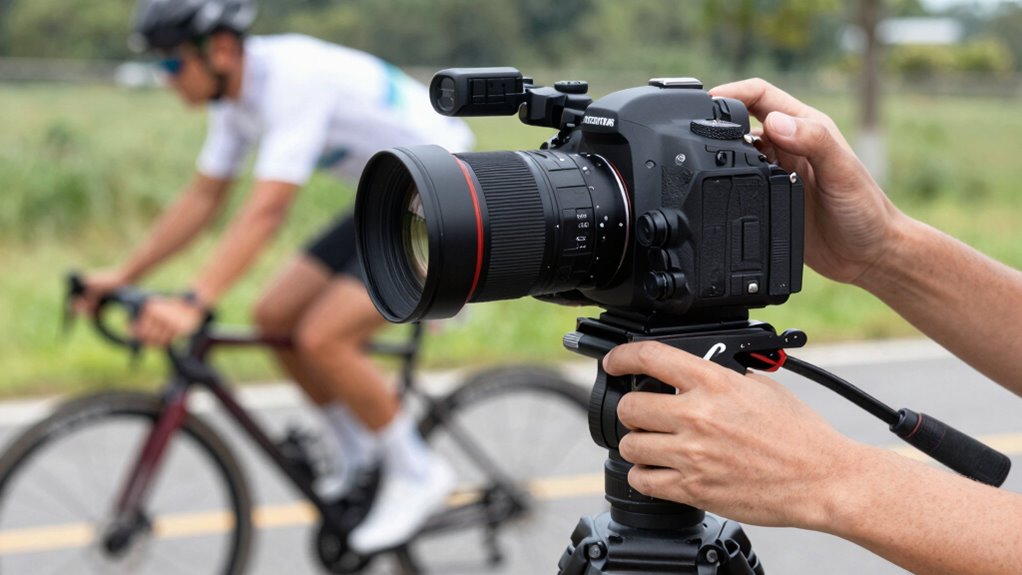
When tracking fails or footage looks off, it’s often due to the camera losing lock on the subject, which can happen for various reasons. Lighting issues can cause the camera’s autofocus or tracking algorithms to struggle, so making proper lighting adjustments can improve tracking stability. Inconsistent or harsh lighting can create contrast problems, confusing the system. Equipment calibration also plays a vital role; ensure your camera and lenses are properly calibrated for accurate focus and tracking. Misaligned focus points or outdated firmware can cause tracking errors. Regularly check and calibrate your equipment to maintain peak performance. Additionally, understanding camera settings and how they affect autofocus can help you fine-tune your setup for better tracking. Proper lighting conditions are essential for consistent autofocus performance, so assessing and optimizing your lighting setup can make a significant difference. By addressing lighting conditions and keeping your gear calibrated, you reduce tracking problems and achieve smoother, more reliable subject tracking in your footage.
Practice Tips to Improve Your Subject Tracking Skills

Improving your subject tracking skills requires consistent effort and focused practice. To get better, experiment with creative framing—try different angles and compositions to keep your subject centered and dynamic. Practice making lighting adjustments to guarantee your subject remains visible and well-defined, especially in changing conditions. Focus on maintaining smooth camera movements and anticipate your subject’s path to stay ahead of the action.
Consistently practice creative framing, lighting adjustments, and smooth camera movements to enhance your subject tracking skills.
- Use creative framing to keep your subject prominent and engaging.
- Make lighting adjustments on the fly to enhance visibility and contrast.
- Practice tracking in various environments to build adaptability and confidence.
Regularly challenge yourself with different subjects and scenarios to refine your skills. The more you practice, the more intuitive your tracking becomes, making your footage appear seamless and professional.
Frequently Asked Questions
Can I Manually Override Autofocus During Tracking?
Yes, you can manually override autofocus during tracking. Simply switch to manual focus mode to temporarily disable autofocus, giving you direct control with your lens’s focus ring. This manual focus override can be useful if autofocus isn’t locking onto your subject accurately or if you want precise control over focus points. Just remember to switch back to autofocus when you’re ready to resume automatic focusing, ensuring smooth subject tracking.
How Does Lighting Affect Subject Tracking Accuracy?
Imagine your subject as a flickering candle in a dark room; inconsistent lighting throws shadows and makes tracking tricky. Adequate, consistent lighting enhances contrast, allowing your camera’s autofocus to lock onto your subject more reliably. Poor lighting reduces contrast, confusing tracking algorithms and causing focus drift. To keep your subject sharp, guarantee stable lighting conditions and use contrast enhancement techniques, so your camera can follow your subject smoothly through the frame.
What’s the Best Lens for Smooth Subject Tracking?
The best lens for smooth subject tracking is a versatile zoom lens with image stabilization, like a 24-70mm or 70-200mm. Focus methods such as continuous autofocus (AF-C) and maintaining a steady focus point help you keep your subject sharp. Lens selection plays a key role, as a lens with quick, accurate focus and smooth zooming ensures fluid movement. Practice these focus methods and select the right lens for seamless, professional tracking.
How Do I Track Subjects in Low-Contrast Scenes?
In low-contrast scenes, you should switch to manual focus to improve tracking accuracy. Use focus peaking or magnification features to help you precisely lock onto your subject. Keep your focus adjustments smooth and steady, as automatic autofocus may struggle with low scene contrast. Practice patience and anticipate your subject’s movement, maintaining a steady hand. This approach helps you maintain sharp focus and keeps your subject tracked effectively despite challenging lighting conditions.
Does Camera Stabilization Impact Tracking Performance?
Yes, camera stabilization can impact tracking performance. When your camera’s stabilized, it reduces unwanted movement, helping autofocus speed stay consistent, especially with a steady camera sensor. However, excessive stabilization or shaky footage can confuse the autofocus system, making it harder to track subjects accurately. For ideal performance, balance stabilization with smooth camera movements, ensuring your autofocus speed remains quick and your camera sensor captures clear, stable images.
Conclusion
Mastering subject tracking takes patience and practice, but remember, “practice makes perfect.” Get familiar with your camera’s autofocus and tracking modes, anticipate your subject’s movements, and stay steady. With time, you’ll find it becomes second nature to keep your subject in frame without fighting your gear. Keep experimenting, learn from each shot, and soon you’ll be smoothly following your subjects like a pro—because the more you practice, the better you get.
NFL season / tailgating Picks
team gear
As an affiliate, we earn on qualifying purchases.