Hybrid shooting at the same event is more complex than it looks. You’ll need to balance creative storytelling with technical precision, often switching between stills and video quickly. Managing gear, camera settings, lighting, and client expectations simultaneously can feel overwhelming. Small mistakes in organization or lighting can cause delays or poor results. To succeed, you must plan carefully and stay adaptable. Stick around, and you’ll discover key tips to master this challenging but rewarding approach.

Get sports gear delivered free — and shop member deals
- Fast, free delivery on millions of items
- Access to Prime Big Deal Days deals on October 6–7
- Prime Video, Amazon Music and more included
Key Takeaways
- Balancing technical settings for both photo and video increases complexity and requires versatile gear and workflow management.
- Clear client expectations and detailed planning are essential to ensure cohesive content and avoid surprises.
- Synchronizing lighting, exposure, and autofocus across formats prevents inconsistencies and minimizes post-production adjustments.
- Managing organized content during the shoot accelerates editing and maintains quality across multiple media types.
- Flexibility and proactive troubleshooting of technical issues are vital to handle unexpected challenges during hybrid shoots.
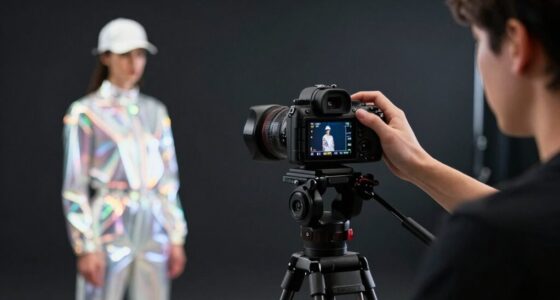
hybrid camera for photo and video
As an affiliate, we earn on qualifying purchases.
As an affiliate, we earn on qualifying purchases.
Why Hybrid Shooting Is More Challenging Than It Looks
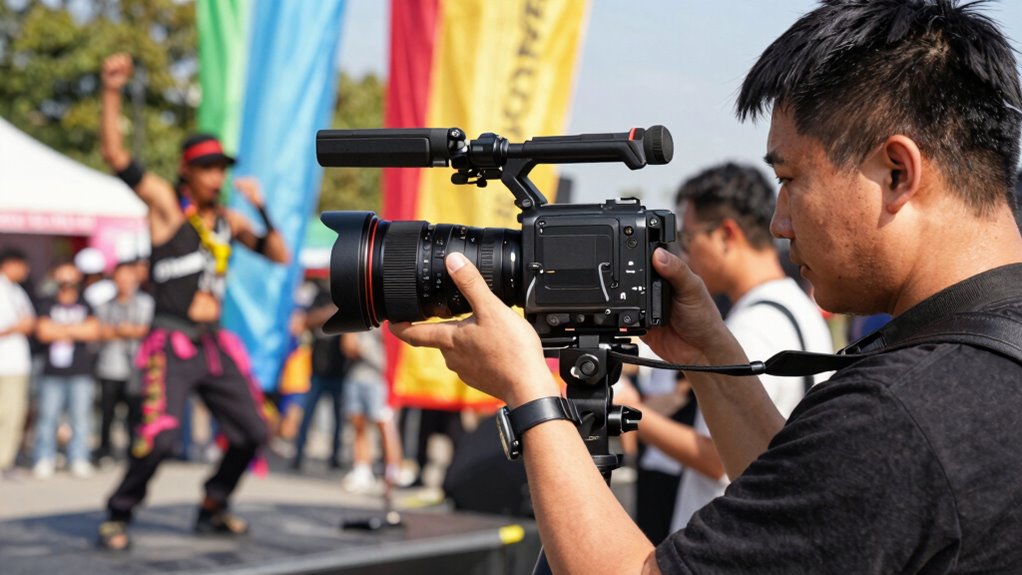
Hybrid shooting combines the demands of both still photography and video, which might seem straightforward at first glance. But in reality, it requires balancing creative storytelling with technical precision across different formats. You need to capture moments that work for stills and motion simultaneously, which can be challenging. Managing varied camera settings, framing, and lighting for each medium demands versatility and quick adaptability. Additionally, your post production workflows become more complex, as you’ll need to organize and edit both photo and video files efficiently. This process isn’t just about capturing content; it’s about seamlessly integrating these elements into a cohesive narrative. The challenge lies in maintaining quality and consistency while juggling multiple creative and technical factors during the shoot. Recognizing the importance of format-specific adjustments can help you better prepare for the unique requirements of hybrid shooting. Being aware of biodiversity and conservation considerations can also influence your approach, especially when capturing natural environments and wildlife. Developing a keen eye for lighting conditions and adapting quickly can also be crucial in managing the diverse demands of hybrid content creation.
versatile DSLR or mirrorless camera
As an affiliate, we earn on qualifying purchases.
As an affiliate, we earn on qualifying purchases.
How to Set Up Your Gear for Photo and Video Shooting
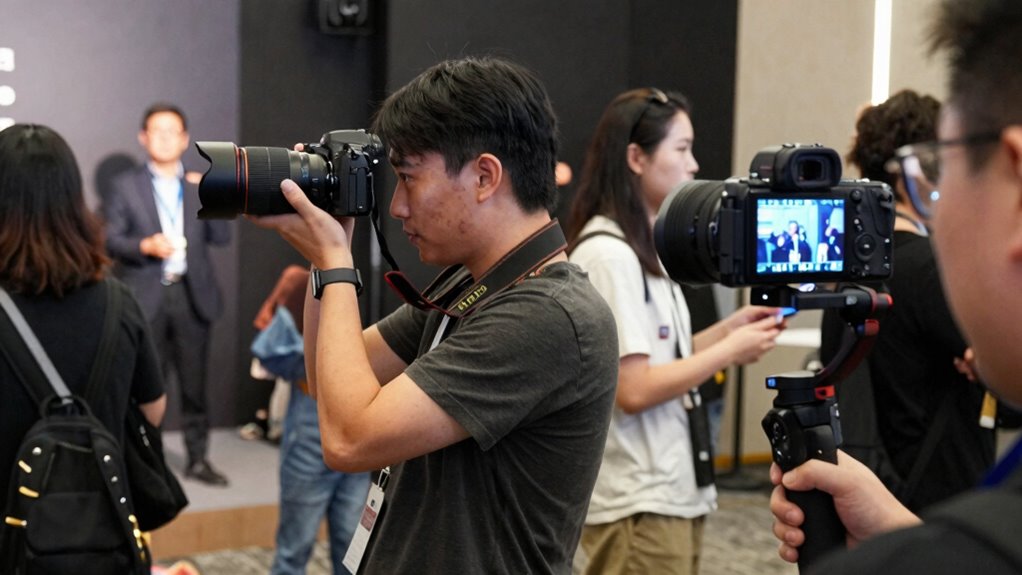
To get started, you need to optimize your camera settings for both photo and video, ensuring smooth shifts between modes. Choosing compatible lenses helps you capture sharp images and steady footage without hassle. Don’t forget to balance your audio equipment so your sound matches the quality of your visuals, whether you’re recording stills or clips.
Optimize Camera Settings
Setting up your camera correctly is essential for capturing sharp, well-exposed photos and smooth videos. Start by adjusting your ISO, aperture, and shutter speed based on your lighting conditions and desired depth of field. Use lighting techniques to maximize exposure and reduce noise, especially in low-light situations. Set your frame rate and resolution to match your intended output, whether for high-quality video or detailed stills. Balance autofocus settings for quick, accurate focus in both photo and video modes. Additionally, customize your picture profiles to streamline your post processing workflows, ensuring consistent color and contrast. Regularly review your settings during the event and make real-time adjustments to maintain ideal quality. Properly refined camera settings save time and improve the overall quality of your hybrid shoot.
Choose Compatible Lenses
Choosing compatible lenses is essential for guaranteeing your gear performs well in both photo and video scenarios. Lens compatibility impacts autofocus speed, aperture control, and image quality, so select lenses designed to work seamlessly with your camera system. Consider lenses with consistent aperture rings and quiet focusing motors to avoid disruptions during video recording. Additionally, confirm your lenses support accessory integration, such as filters or stabilizers, without compatibility issues. Using lenses that are compatible with your camera body reduces the risk of malfunctions and saves time switching or adjusting equipment. This compatibility streamlines your workflow, allowing for smoother transitions between photo and video tasks while maintaining high-quality results. Prioritize versatile lenses that excel in both formats to optimize your hybrid shooting setup.
Balance Audio Equipment
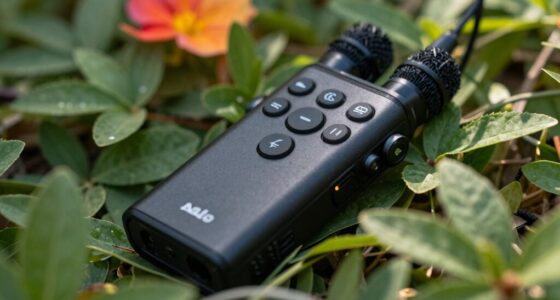
Ever wondered how to guarantee your audio equipment works seamlessly for both photo and video shoots? The key is balancing your gear for ideal audio synchronization and equipment portability. Use compact, versatile microphones that are easy to set up and move around, ensuring you can quickly switch between tasks. Prioritize lightweight gear that doesn’t add bulk, so you can carry everything comfortably throughout the event. Test your audio levels beforehand and double-check connections to prevent sync issues during recording. Keep cables organized and secure to avoid accidental disconnections or noise. By carefully balancing your audio setup, you’ll maintain clarity without sacrificing mobility, making your hybrid shoot smooth and efficient. Properly balanced audio gear enhances both photo and video quality, giving you professional results with less hassle.
As an affiliate, we earn on qualifying purchases.
Configuring Camera Settings for Both Stills and Motion

To get the best results for both photos and videos, you need to balance your exposure settings carefully. Make certain your autofocus is optimized so it quickly locks onto subjects in motion, without hunting or slipping. Adjusting these settings ensures your shots stay sharp and properly exposed across different shooting modes.
Balancing Exposure Settings
Balancing exposure settings for both stills and video can be challenging because each medium has different requirements, but achieving a harmonious exposure is essential for seamless hybrid shooting. You need to find a middle ground that preserves highlights and shadows, ensuring your images and footage match well. Use consistent lighting techniques to simplify this process, and set your camera’s ISO, aperture, and shutter speed accordingly. Keep in mind, a slight overexposure in stills can be recovered in post production workflows, but overexposed video is harder to fix. Achieving balanced exposure means adjusting your settings based on the scene and your desired look, so both formats look cohesive. Additionally, understanding exposure compensation can help you fine-tune your settings on the fly for optimal results in both media.
Optimizing Autofocus Performance
Optimizing autofocus performance for both stills and video requires understanding how different settings influence focus accuracy and speed across formats. Start by selecting appropriate autofocus algorithms—use one designed for moving subjects in video and a different one for stills. Next, regularly perform lens calibration to guarantee focus precision, especially if you notice focus drift. Adjust focus modes based on your subject: continuous for motion, single for static scenes. Additionally, fine-tune tracking sensitivity to maintain focus without hunting.
- Choose the right autofocus algorithm for each format.
- Regularly calibrate your lens for consistent accuracy.
- Use focus modes suited for subject movement.
- Tweak tracking sensitivity to prevent focus hunting.
audio equipment for video and photography
As an affiliate, we earn on qualifying purchases.
As an affiliate, we earn on qualifying purchases.
Aligning Client Expectations and Delivering Cohesive Content
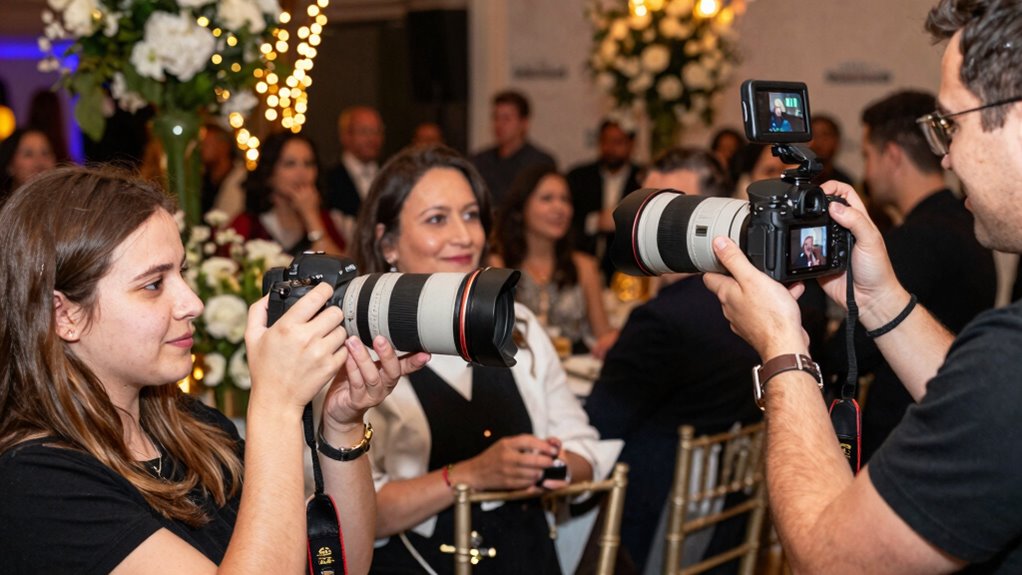
Ensuring client expectations align with your creative vision is essential for delivering cohesive content that satisfies both parties. Clear client communication early on sets the foundation, helping you understand their priorities for both photos and videos. To maintain content consistency, establish a shared vision of style, tone, and scope. Use this table to clarify expectations:
| Aspect | Client Expectations |
|---|---|
| Style | Modern, candid, or traditional |
| Color Palette | Bright, muted, or vibrant |
| Content Focus | Candid moments or posed shots |
| Delivery Timeline | Quick turnaround or extended period |
| Usage Rights | Commercial use or personal sharing |
Aligning these points ensures cohesive content and minimizes surprises, making your hybrid shoot a success. Additionally, understanding cooking science principles can help you optimize your workflow and ensure efficient production of both photos and videos. Incorporating content planning strategies can further streamline your process and improve overall results. Recognizing the importance of client expectations can also help you anticipate potential challenges and address them proactively.
Troubleshooting Common Hybrid Shooting Problems
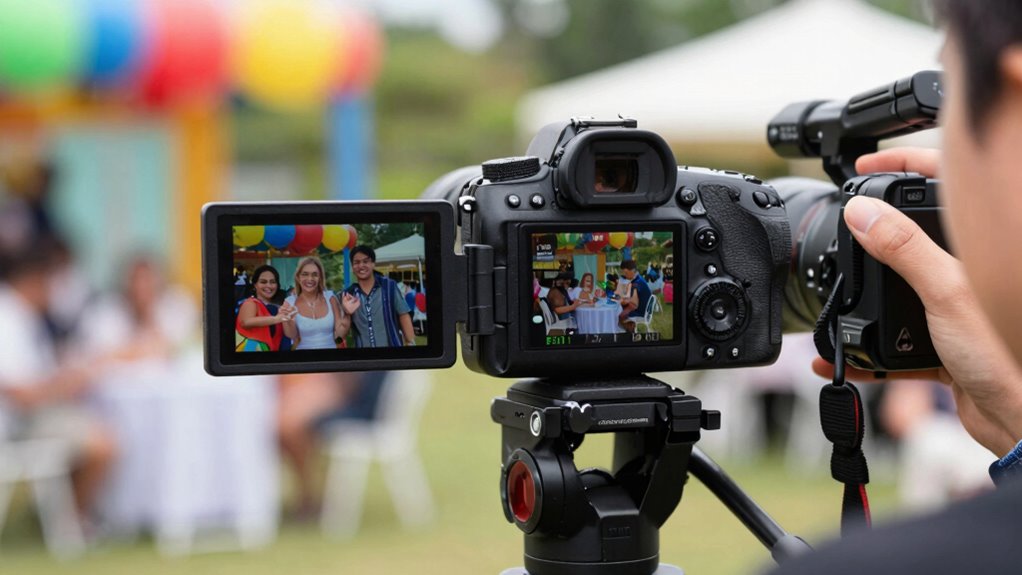
Have you ever faced unexpected issues during a hybrid shoot that disrupt your flow? These problems often stem from lighting techniques or poor content organization. To troubleshoot effectively:
Unexpected hybrid shoot issues often come from lighting or organization—stay flexible and prepared to keep things on track.
- Check your lighting setup first—ensure consistent lighting for photos and videos to avoid shadows or glare.
- Review your camera settings to match exposure and white balance across devices.
- Revisit your content organization—make a shot list and schedule to stay on track.
- Adjust your workflow to adapt quickly, preferring flexible lighting solutions when conditions change.
- Keep in mind that multimedia content integration requires careful planning to ensure seamless results. Being aware of lighting consistency can help prevent many common issues. Additionally, understanding the impact of caffeine science on alertness and focus can improve your ability to troubleshoot under pressure. Recognizing the importance of content organization can further streamline your shoot and reduce errors. Paying attention to technical setup can also minimize disruptions during the shoot.
Addressing these issues promptly keeps your shoot on schedule and maintains quality. Clear communication about lighting needs and a well-organized plan are key to resolving common hybrid shooting problems seamlessly.
Tips to Maximize Efficiency and Quality During Your Shoot

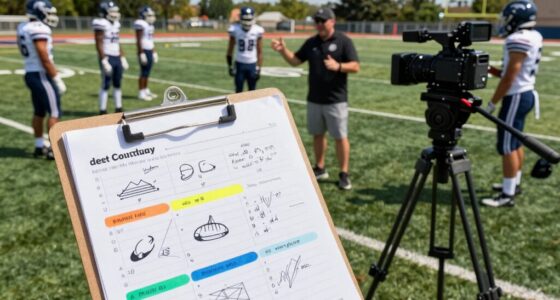
To maximize efficiency and quality during your shoot, start by planning your scenes and shot list meticulously. This preparation helps streamline your workflow and guarantee you capture everything needed. Pay close attention to your lighting techniques—using consistent lighting setups across scenes minimizes post-production adjustments and maintains visual cohesion. Use practical lighting when possible, and bring portable lights for flexibility. Additionally, consider your post production workflows early on; organize your footage and images as you shoot to save editing time later. Capture multiple angles and exposures to give yourself options in editing. Clear communication with your team and setting realistic goals also boost efficiency. By combining strategic planning with smart lighting and workflow management, you’ll deliver high-quality results without unnecessary stress.
Frequently Asked Questions
How Do I Manage Audio Recording Simultaneously With Photos and Videos?
To manage audio recording alongside photos and videos, you should use a dedicated external microphone with proper placement to guarantee clear sound. Sync your audio during editing for better audio synchronization, which minimizes post-production headaches. Always monitor audio levels in real-time, and consider using a portable recorder for backup. This way, you keep high-quality audio without interrupting your visual capture, resulting in professional-looking hybrid content.
What Backup Strategies Should I Have During Hybrid Shoots?
During hybrid shoots, you should have robust backup strategies in place. Keep extra batteries charged and ready to guarantee uninterrupted shooting, focusing on battery management. Use multiple storage solutions like SD cards, external drives, or cloud backups to prevent data loss. Regularly transfer your footage, and consider using automated backup apps to save time. This way, you stay prepared for any technical issues and keep your workflow seamless.
How Can I Ensure Seamless Transitions Between Photo and Video Footage?
Smoothly switching between photo and video starts with syncing your setups. Focus on lighting consistency to guarantee footage blends beautifully, avoiding jarring shifts. Double-check that your equipment is compatible, so transitions are seamless without technical troubles. Use the same settings where possible, and plan your shots ahead to streamline the switch. This diligent preparation ensures your footage flows fluidly, creating a cohesive story that captivates your audience from start to finish.
What Post-Production Workflows Are Best for Hybrid Content?
You should prioritize organized file management, labeling all footage clearly to streamline your workflow. Use dedicated folders for photos and videos, and keep project files consistent. During editing, apply color grading to unify the look between photo and video clips, ensuring a seamless visual experience. This approach saves time and makes your hybrid content cohesive, allowing you to focus on storytelling instead of hunting for files or fixing inconsistent visuals.
How Do I Handle Client Revisions for Both Photos and Videos Efficiently?
You might think handling revisions for both photos and videos is overwhelming, but clear client communication and revision tracking simplify the process. Set expectations upfront, explaining your revision limits and timelines. Use a shared platform to track changes, ensuring nothing gets lost. When clients submit revisions, address them systematically—prioritize urgent edits and batch similar requests. This organized approach keeps your workflow efficient and helps maintain a positive client relationship.
Conclusion
Hybrid shooting at the same event might seem straightforward, but it’s a balancing act that demands preparation and adaptability. By setting up your gear correctly, managing expectations, and troubleshooting on the fly, you can deliver both stunning photos and engaging videos. Remember, it’s all about working smarter, not harder. Keep your eyes on the prize, stay flexible, and you’ll come away with content that truly shines—proving that sometimes, a little extra effort pays off.
Fall Picks
fall essentials
As an affiliate, we earn on qualifying purchases.