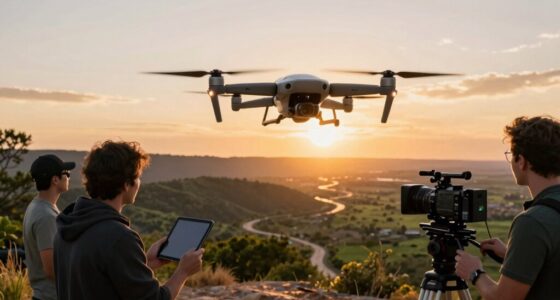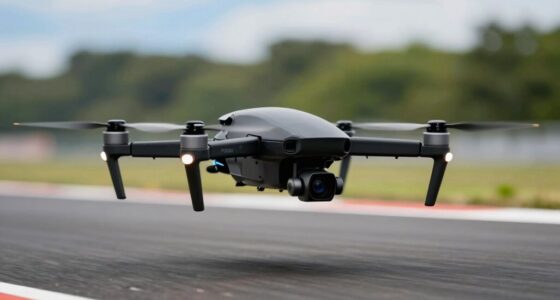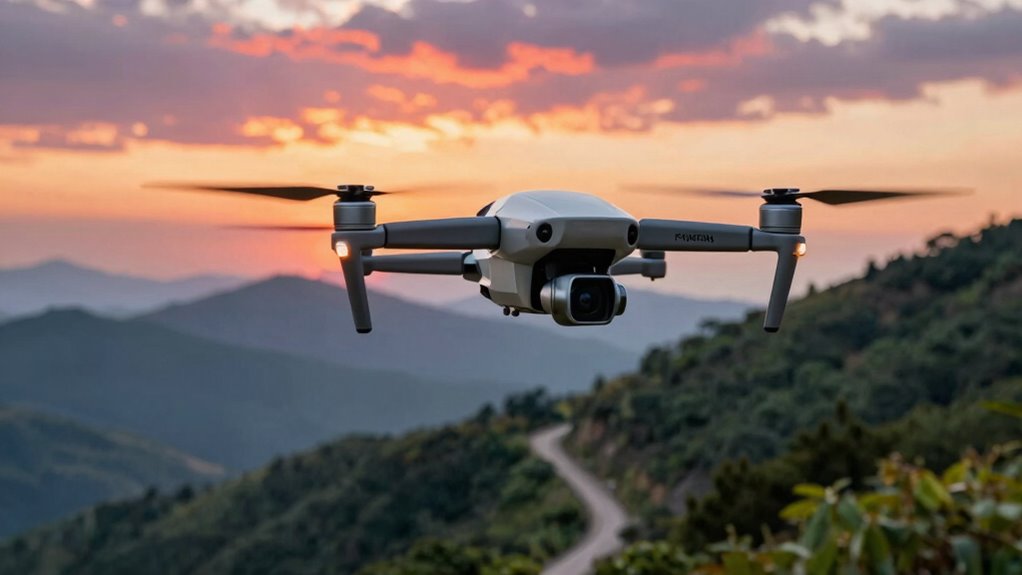

To get smoother drone turns, focus on managing your controls with gentle, gradual inputs and avoid sudden movements. Regularly check and maintain your equipment, especially propellers and batteries, to prevent vibrations and power issues. Use visual cues like horizon lines and ground features to stay oriented, and practice in open areas to build confidence. Consistently adjusting your speed, angle, and control settings will improve your technique over time—keep exploring the details, and you’ll become more skilled with each try.

Get sports gear delivered free with Prime
- Fast, free delivery on millions of items
- Prime Video, Amazon Music and more included
- Member-only deals all year
Key Takeaways
- Maintain well-charged batteries and regularly inspect propellers for damage to ensure stable power and smooth rotation.
- Use gradual, controlled inputs for throttle and pitch to prevent jerky movements during turns.
- Focus on horizon and ground features for orientation, adjusting camera angles to enhance visual cues.
- Fine-tune control sensitivity and enable gyro stabilization for more natural, responsive drone handling.
- Practice in open areas, progressively increasing turn complexity while ensuring steady speed and smooth control inputs.
As an affiliate, we earn on qualifying purchases.
Getting Started: Why Smooth Drone Turns Matter

Smooth drone turns are essential because they make your footage look professional and polished. When you execute clean, controlled turns, viewers focus on your scene, not shaky movement. To achieve this, start with a fully charged drone battery; a low battery can cause inconsistent power, leading to jerky turns. Regular propeller maintenance is also vital—inspect for chips or dirt that can cause imbalance, resulting in unstable movements. Well-maintained propellers ensure smooth rotation and precise control, making your turns seamless. Remember, the foundation of smooth turns is good equipment and proper care. When your drone is ready and your props are in top condition, you’ll find it easier to execute fluid, professional-looking turns every time. Proper drone calibration also plays a crucial role in maintaining stability and control during turns. Additionally, understanding the importance of equipment maintenance can help prevent issues that disrupt your filming. Regularly updating your drone’s firmware is another key aspect of performance optimization, ensuring your drone functions smoothly and responds accurately during complex maneuvers. Taking the time to check your settings before each flight can further improve your control and the quality of your turns.
drone battery charger compatible with DJI Mavic
As an affiliate, we earn on qualifying purchases.
As an affiliate, we earn on qualifying purchases.
Mastering Drone Movement and Managing Momentum

To master drone movement and control momentum, you need to balance throttle and pitch carefully, so your drone responds smoothly. Managing momentum involves planning your inputs and avoiding sudden, jerky movements. Practice smooth, deliberate inputs to develop better control and achieve more fluid turns. Incorporating precise control techniques can also help enhance your overall flying skills. Additionally, understanding the importance of biodiversity and maintaining a balanced environment can contribute to more sustainable practices in drone usage and outdoor flying environments.
Balancing Throttle and Pitch
Balancing throttle and pitch is essential for precise drone turns because these controls directly influence your drone’s movement and momentum. When you adjust pitch, you control the tilt that directs the drone forward or backward, while throttle manages altitude and speed. To achieve smooth turns, find a steady balance where neither control overwhelms the other. Proper balancing also helps conserve battery efficiency, as abrupt or excessive movements drain power faster. Focus on propeller optimization by ensuring your propellers are clean and properly installed, which allows for more responsive control with less effort. Practicing gradual adjustments to both throttle and pitch helps prevent sudden shifts, making your turns smoother and more controlled. Additionally, maintaining a well-calibrated drone can significantly improve your ability to manage drone movement effectively. By understanding the science of drone physics, you can better anticipate how your controls affect flight dynamics. Mastering this balance is key to flying confidently and extending your drone’s flight time, especially when you pay attention to battery life preservation.
Controlling Momentum Effectively
Controlling momentum is essential for precise drone maneuvers because it directly affects how your drone responds to your inputs. To master smooth turns, you need to manage your drone’s momentum effectively, especially during aerial photography sessions. Sudden changes can cause jittery footage or wobbling. Keep these tips in mind:
- Use gentle, gradual stick movements instead of abrupt inputs
- Anticipate momentum build-up before initiating a turn
- Limit aggressive throttle adjustments that can destabilize your drone
- Practice consistent speed to maintain control
- Monitor battery levels, as low power can affect responsiveness and cause erratic movements
Practicing Smooth Input Techniques
Practicing smooth input techniques is essential for mastering drone movement and managing momentum effectively. To do this, focus on making gradual, controlled adjustments to your controls rather than abrupt movements. Lighting conditions can affect your ability to judge distances and speed, so adapt your inputs accordingly, especially in low-light or overly bright environments. Keep an eye on your battery performance, as a dying battery can cause unpredictable responses and reduced control. Regularly practice slow, deliberate turns, paying attention to how your drone responds, and avoid overcorrecting. Over time, this helps develop muscle memory for smooth, precise inputs, resulting in cleaner turns and better overall flight stability. Consistency in your practice is key to achieving fluid drone movements.
As an affiliate, we earn on qualifying purchases.
Controls and Settings for Better Turns
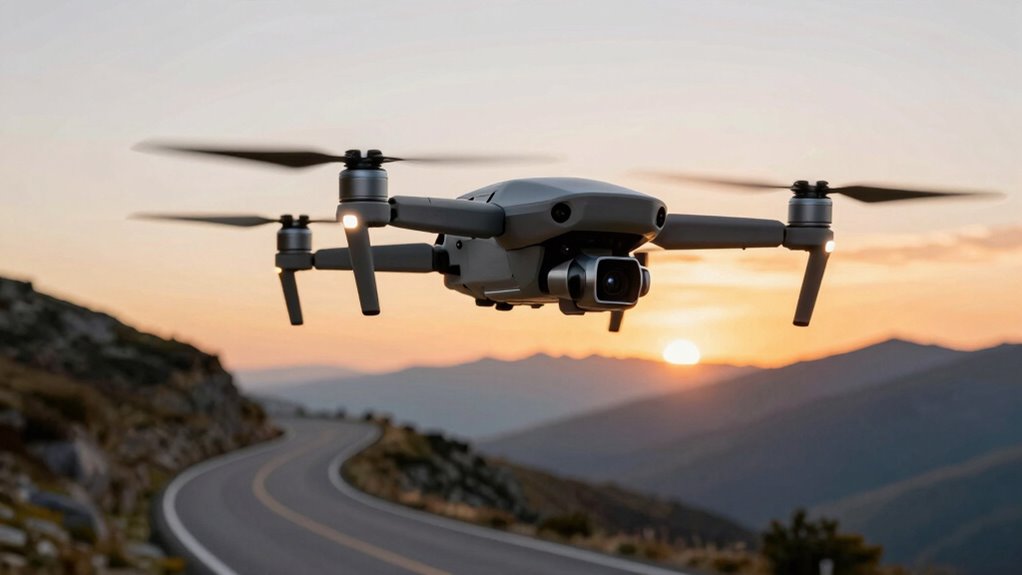
To achieve smoother drone turns, adjusting your controls and settings can make a significant difference. Start by tuning your control sensitivity for more precise movements. Enable features like gyro stabilization for steadier turns. Keep your firmware updated to guarantee optimal performance and fix bugs that might hinder smoothness. Also, prioritize battery optimization to prevent power drops during complex maneuvers, which can cause jerky movements. Finally, consider adjusting your rate settings, such as expo or curve options, to make your turns more fluid. These tweaks help your drone respond more predictably, giving you better control. Remember, small adjustments in your controls and settings can lead to noticeably smoother turns, helping you fly more confidently. Staying informed about industry trends can also help you discover new features and techniques to improve your flying experience.
drone control sensitivity adjustment
As an affiliate, we earn on qualifying purchases.
As an affiliate, we earn on qualifying purchases.
Techniques for Confident, Fluid Drone Turns

Have you ever wondered how some pilots make their drone turns look effortless and smooth? Confidence comes from mastering a few key techniques. First, verify your drone’s propellers are well-maintained; clean and balanced propellers reduce wobble and improve responsiveness. Regular propeller maintenance also prevents vibrations that can make turns jerky. Keep your drone’s drone battery fully charged but avoid overcharging, as a healthy battery provides consistent power for smooth, controlled turns. Use gentle, deliberate stick movements rather than abrupt inputs, and practice gradual adjustments to maintain fluid motion. Combining proper propeller upkeep with a well-charged battery helps your drone respond predictably, making your turns look professional. With consistent practice, these techniques will build your confidence for confident, fluid drone turns.
Using Visual Cues to Perfect Your Turns

To perfect your turns, keep an eye on horizon lines to maintain straight, level flight. Use ground features like roads or trees to gauge your angle and smooth out movements. Tracking moving objects can also help you stay oriented and improve your control during sharp turns.
Focus on Horizon Lines
Focusing on horizon lines is a simple yet effective way to improve your drone turns. By aligning the horizon during your flight, you create a stable visual reference that helps you execute smoother, more controlled turns. Pay attention to how the horizon shifts as you rotate—if it dips or rises, adjust your tilt accordingly. During flight planning, consider lighting and color grading to enhance horizon visibility, making it easier to maintain consistent angles. Using this visual cue reduces erratic movements and sharp turns, making your footage look professional. Incorporating visual reference points like the horizon can further refine your control and precision during flight. Additionally, understanding the importance of spatial awareness can help you anticipate and correct your drone’s movements more intuitively.
Use Ground Features
Using ground features as visual cues can considerably enhance the smoothness of your drone turns. Focus on nearby objects like skyline silhouettes and urban landmarks to guide your movements. These features provide reference points, helping you maintain steady, controlled turns. For example, keep an urban landmark or skyline silhouette aligned with your drone’s position as you turn; this prevents abrupt shifts and sharp angles.
| Feature Type | Example | Usage Tip |
|---|---|---|
| Skyline Silhouettes | Mountain peaks, bridges | Use to gauge tilt and rotation |
| Urban Landmarks | Skyscrapers, statues | Track their position through turns |
| Ground Shadows | Tree shadows, pavement | Use for altitude and orientation cues |
| Road Lines | Crosswalks, lane markings | Help maintain straight or curved path |
| Natural Features | Rivers, hills | Reference points for smooth transitions |
Track Moving Objects
Have you ever noticed how tracking a moving object can help you execute smoother drone turns? When you focus on a moving target, your drone naturally adjusts its camera angle and flight path, leading to cleaner turns. To improve, keep these tips in mind:
- Maintain the target within your camera’s view for steady visual cues.
- Watch the drone battery level to avoid losing power mid-maneuver.
- Use consistent camera angles to better judge the object’s movement.
- Practice small, controlled adjustments rather than large, abrupt ones.
- Anticipate the target’s path to prepare your turn smoothly.
Tracking moving objects sharpens your focus and enhances your control, making your turns more precise and professional.
Common Mistakes That Cause Shaky Turns and How to Fix Them

Shaky turns often stem from simple mistakes pilots make during their drone maneuvers. One common cause is a drained or inconsistent drone battery, which can cause power fluctuations and instability. Make certain your battery is fully charged and in good condition before flying. Additionally, neglecting propeller maintenance can lead to vibrations that shake your drone during turns. Check for bent or chipped propellers and replace them if needed. Properly tightening propellers ensures they don’t wobble mid-flight. Also, avoid sudden or jerky movements—smooth, controlled inputs help your drone maintain stability. Regularly inspecting and maintaining your drone components, especially the battery and propellers, minimizes shaky turns and makes your flying experience smoother and more professional. Paying attention to battery health can significantly improve your drone’s overall stability during turns.
Practicing Turns Safely and Improving Your Skills

Practicing turns safely is essential for developing better control and confidence with your drone. Before starting, check your drone’s drone battery to verify it has enough charge for extended practice sessions. Perform propeller maintenance by inspecting blades for damage or debris, which can affect smoothness. Practice in open areas away from obstacles, and gradually increase your turn complexity as your skills improve. Remember to keep your movements controlled and avoid sudden, aggressive motions. Using a beginner-friendly drone can help you learn faster and reduce crashes. Regularly review your progress and adjust your practice routines. Focus on maintaining steady throttle and smooth inputs. With patience and attention to safety, you’ll master those turns in no time.
Adjusting Speed and Angle for Flawless Turns

Once you’ve gained confidence in your basic turning skills, fine-tuning your speed and angle becomes key to executing smooth, flawless turns. To do this, adjust your drone’s speed—slower speeds provide better control, especially during sharp turns. Keep an eye on your drone’s angle; a slight tilt enhances the turn’s fluidity without overexerting the drone’s propellers. Remember, a well-maintained propeller ensures smooth rotations, so regularly check and maintain your propeller for maximum performance. Also, be mindful of your drone battery; a healthy battery helps sustain consistent speed and power, preventing unexpected slips or stalls. With precise adjustments to your speed and angle, along with proper propeller maintenance, you’ll achieve turns that look professional and effortless every time.
Troubleshooting Turn Issues and Improving Your Technique

When your drone struggles to execute smooth turns, identifying the root cause is essential for improving your technique. Common issues include uneven propeller maintenance, a drained drone battery, or improper control inputs. Start by checking your propellers for damage or dirt—dirty or damaged blades cause instability. Make certain your drone battery is fully charged; a weak battery reduces power and responsiveness. Fine-tune your control inputs, avoiding abrupt movements. Also, verify that your drone’s firmware is up to date. Consider practicing slower, more controlled turns to build confidence. Additionally, monitor your drone’s responsiveness and adjust your technique accordingly. Regular drone maintenance can prevent many common issues and improve overall flight performance. Ensuring your flight environment is clear of obstacles can also significantly impact your ability to execute smooth turns. Being aware of your drone’s capabilities allows you to adapt your flying style for better precision. Paying attention to flight conditions such as wind or lighting can further enhance your control and stability.
Frequently Asked Questions
How Do I Stabilize My Drone During Complex Turns?
To stabilize your drone during complex turns, focus on smooth control inputs and maintain steady throttle. Keep an eye on your battery management to avoid power drops that can cause instability. Also, make certain your signal isn’t interference-prone by flying in open areas and avoiding obstacles. Practice gradual, controlled movements, and stay alert to your drone’s response. This approach helps you execute smoother, more professional-looking turns every time.
What Camera Settings Enhance Turn Smoothness in Footage?
To enhance turn smoothness in your footage, adjust your camera settings by choosing stable camera angles that minimize sudden movements. Use a low ISO to reduce noise in varied lighting conditions, and set a slower shutter speed to create more natural motion blur during turns. Make certain your drone captures consistent lighting by avoiding abrupt changes, which helps your footage look fluid and professional. These tweaks improve the overall aesthetic and smoothness of your turns.
Can Weather Conditions Affect My Drone’s Turning Precision?
Weather conditions definitely affect your drone’s turning precision. Wind challenges can cause instability, making turns less smooth and harder to control. You might also notice that gusts push your drone off course or cause jitteriness. Plus, strong winds increase battery impact, draining power faster and limiting flight time. To improve turns, fly in calmer conditions, and keep an eye on wind strength, adjusting your flying style to maintain smooth, precise movements.
How Do I Prevent Prop Wash From Disturbing Turns?
To prevent prop wash effects from disturbing turns, you should slow down your drone before initiating a turn, which helps maintain turn radius control. Keep your drone’s throttle steady and avoid sharp, rapid movements that intensify prop wash. Practice gentle, smooth inputs, especially at higher speeds, to minimize turbulence. By maintaining consistent speed and smooth control, you’ll reduce prop wash effects and execute cleaner, more precise turns.
What Training Drills Accelerate Mastering Smooth Turns?
You can accelerate mastering smooth turns by practicing aerobatic techniques and focusing on flight path planning. Start with slow, controlled turns to develop muscle memory, then gradually increase speed while maintaining precision. Use drills like figure-eights and circle patterns to refine your control. Visualize your flight path beforehand, and stay relaxed to prevent jerky movements. Consistent practice with these techniques will help you achieve fluid, professional-looking turns.
Conclusion
Remember, mastering smooth drone turns is like steering a delicate brushstroke — it’s about control, patience, and trust in your skills. Each flawless turn is a ripple in your journey, shaping your confidence and artistry. Keep practicing, fine-tuning your techniques, and embracing the learning process. Soon, your drone will dance through the skies with the grace of a flowing river, turning with purpose and elegance, revealing the true artist behind the controls.
Halloween Picks
halloween
As an affiliate, we earn on qualifying purchases.